I basically went back 5 or 10 years and replaced every "modern" technology solution. I pay now way more than I did with iCloud, but I am back in control. I am more productive.
- Listening to Music takes 3 clicks and just a few seconds
Wired headphones never run out of battery and have superior audio quality
- I can take real photos wiht high quality instead of relying on ever newer iPhone models for thousands of dollars which will always have lesser quality than a mirrorless camera for the same price
- I have fun again discovering bands and artists on Bandcamp instead of mind numbing listening to Apple Music playlists
- Coding via neovim on a terminal and just being on my keyboard navigating not only tmux and co, but also my OS is way more productive and faster
The measurement of success in this case doesn't seem to be that he's gained new abilities, but rather the poster figured out how to gain them without Apple.
Most of these seem like pyrric victories to me, as the Apple versions rose to success with all of these as competition by providing a better experience. I certainly wouldn't want to carry a mirrorless camera everywhere, nor deal with Bandcamp.
> the Apple versions rose to success with all of these as competition by providing a better experience
At one time, Apple clearly was a better experience.
Now, with features removed and new "privacy and security" features added, I'm not sure they are a great experience. For example, my Macbook reminds me of Windows Vista, except for worse, every time there's a system update and I have to reboot to permission the camera for a web conference.
I've learned to dread OSX updates because instead of adding new useful stuff, it seems like we just move things around, change out the icons and add some more intrusive "touch the fingerprint reader" authentications... plus I have to re-permission half of the apps and hardware just to do my job. Then there's the whole reboot, unlock, install, reboot, re-lock cycle. It's seriously worse than Windows Vista. Anyone remember the I'm a Mac/I'm a PC commercials?
I have never needed to reboot because of permissions, basically just had to click “allow” a few times, so this stuff doesn’t really bother me. It’s a very slight inconvenience.
Big Sur performance on older hardware has been a disaster though. Even on a $2500 MBP 15” from 2017. On M1 though it’s excellent.
If you're referring to the Kext/DriverKit changeover, this is just false - Kexts still work in Big Sur, they're just trying to slowly shift the ecosystem to DriverKit. Nothing has truly changed there yet.
If you're referring to a broken thing within Kexts/IOKit itself, that would be a pretty severe bug that would get attention within Apple. I feel confident saying this as I've reported bugs like this and they get appropriate priority levels.
Lastly, if you're writing (signed) driver code, you generally have access to resources within Apple to get answers to questions. I'm not even a large company and it was relatively easy to get in touch with those teams - and this stands in contrast to other teams within Apple.
> I've learned to dread OSX updates because instead of adding new useful stuff, it seems like we just move things around
To be fair, that also describes Windows. As best I can tell, every release since 7 has primarily focused on renaming and adding indirection to the ways you get to the same old control panels.
And I haven't ever had to reboot to allow a camera. I have several, ranging from a microscope to an SLR that also is my webcam.
> As best I can tell, every release since 7 has primarily focused on renaming and adding indirection to the ways you get to the same old control panels.
I thought this was the UI museum feature where you can time travel back to Windows NT4 one layer of indirection at a time.
I still don't know how they managed to make the settings control panel replacement so bad in windows 10.
For example, you go to the proxy setup, the pac URL location is a tiny text box no matter how big the window, and if you have restrictions on your system you cant view the full address or copy it.
Curious what's wrong with dealing with Bandcamp? They seem just about the best place to buy music online. Majority of the money goes to the actual artist and you have a good choice of formats.
And, for the past 18 months, they've had a day where they waive all fees so bands that can't play live anymore can stand a chance of making some money.
Bandcamp is great, and there is something really wrong with Apple music in Firefox on windows. Its very slow and its seems to do authentication _after_ loading the rest of the page and often fails.
The android app is good, though I can't compare it to the iOS version. On windows, itunes works okay-ish albeit slow. On Linux, the web app is the only option and it sucks way bad.
> I certainly wouldn't want to carry a mirrorless camera everywhere, nor deal with Bandcamp.
Bandcamp recommendations and artist/album similarity ratings are top notch, and there are many clients for the platform.
I personally can't use Spotify or Apple Music after taking advantage of Bandcamp.
Bandcamp also only takes a 10% - 15% fee for digital purchases, and 10% of purchases for physical items, which is an incredible deal for artists compared to what they make from streaming services like Apple Music or Spotify.
They're still much bigger than an iPhone. Sure, if you walk around with some 13" tablet that doubles as a phone, the point may be moot, but a "regular" iPhone is much smaller than even compact cameras.
I can stick my iPhone 7 in my jeans pocket. My Olympus Pen-F (one of the "smaller" mirrorless cameras) with a small prime lens needs a pretty big pocket only some of my larger coats have. Plus it's heavy enough to pull on said coat and make it uncomfortable.
Yeah, image quality is pretty bad on the iPhone compared to the Olympus. But when I go out and about and don't want to have a bulky thing hanging around my neck / forearm or carry an extra bag, the Olympus' image quality is exactly 0. The iPhone beats that hands down, even at night.
Now don't get me wrong, I love my pen-f, and it's an incredible improvement over the DSLR I used to haul around before. But iPhones are getting pretty good for my needs now.
Not really. I have so many shitty Razr and smartphone videos that I wish I had just enjoyed the moment instead of wasting time capturing something that has the quality of a gameboy camera.
Now I am thankful my dad endured the pain and captured a lot of stuff on the JVC shoulder camera. At least the quality is pretty good even for 80's/90's.
We don't capture events like we used to anyway. No one holds there camera up for more than a minute. So we're left with all these short videos. I like watching the really long stuff my dad shot.
While not opting out of most of the convenience the Apple ecosystem gives me, I did buy a GRIII and carry it along everywhere I go - together with an otherwise capable iPhone. The difference in optics and sensor really does show in print or when cropping.
Your trousers? No. Your coat? Definitely. Unless you go for full-format ones with bigger lenses. In which case your priorities most likely aren't carrying your camera gear in your pocket.
Sincere question: Can mirrorless cameras match or do better than the result of the multiple exposure stuff that phones can do? (E.g. Apple’s “Deep Fusion” feature)
Yes, easily. Modern DSLR sensors have a higher native dynamic range, so you can get more out of a photo without using multiple exposures in the first place.
Also, most DSLRs these days have some sort of multi-exposure functionality built-in. Sometimes it's as simple as 'bracketing' (so you get multiple phones you have to merge together in post), but some fancier ones offer HDR functionality in-camera, so nothing to do in post.
I have to travel a ways to specialty shops to buy reasonably good headphones with wires. It makes me mad every time I need to buy some new headphones for my computer.
I carried a google pixel 3 which took excellent pictures.
That said, I now carry a mirrorless camera everywhere. The pictures are WAY higher quality and I have more control over the experience and the final output. Don't get a mirrorless if thats not important to you.
when I want to just take a quick selfie, I still have my phone. The iPhone is great at taking pictures but its never going to be a match for a mirrorless wihch has a enormous sized sensor compared to anything you'll get on a phone.
"Listening to Music takes 3 clicks and just a few seconds Wired headphones never run out of battery and have superior audio quality ..."
This item is the reason I am leaving the iphone and trying an unlocked/stock android device.
My music collection is a directory tree that I have curated and organized since 1996.
The correct way to deal with this is to move this directory tree onto my phone (either via network transfer or attaching a USB filesystem) and then browse those files with a music player app.
Anyone familiar with iDevices knows that every piece of the simple, standard workflow I just described is totally impossible.
Instead, you have to manually build playlists inside of itunes while "importing" your music (and storing two copies of it) and then transfer those playlists (one by one) to the idevice and ... it's just insane.
It is a workflow built for people that impulse buy a track here and there ...
> The correct way to deal with this is to move this directory tree onto my phone (either via network transfer or attaching a USB filesystem) and then browse those files with a music player app. Anyone familiar with iDevices knows that every piece of the simple, standard workflow I just described is totally impossible.
On the contrary, any number of apps support precisely this.
Having ripped some 20,000 CD tracks a couple decades ago, I use several such apps.
As a user of such apps, I'd argue with "correct" though, given Apple Match with iCloud One combo and last year's update supporting high resolution / lossless.
Over time, I have come to use those apps less than Apple Match, which mirrors my rips using tracks from Apple's library where they have them, or uploads mine where they don't, giving me more seamless access across all devices, spoken access from Siri on HomePods, etc. Match was a debacle at launch, is now almost never wrong on even the most obscure tracks.
It supports FLAC obviously but also Opus. For my phone, I've ripped my FLAC files to Opus and can carry my entire music collection wherever I go. I used their import tool to build the same folder structure that I have on my NAS. I have iTunes installed on my Windows machine (no Macs at home) but I try to avoid it if at all possible.
This app uploads your identifiers and activity to the developer without consent.
There's a growing trend these days of making every single player app into spyware, and it's sad. I won't use reader apps or player apps that read or play local files that are going to transmit my activity off device for no reason that benefits me.
Sure, I'd say I was also commenting on the idea that "Files and Folders" as anything other than an extremely obvious default (and even perhaps requires help on a forum) is again, terrible and silly.
> Instead, you have to manually build playlists inside of itunes while "importing" your music (and storing two copies of it) and then transfer those playlists (one by one) to the idevice and ... it's just insane.
This is not completely true. You can store your iTunes collection wherever you like, organized however you like. You don't have to duplicate anything, although it's true that the default is for it to "import" it.
You can also create an "all my music" playlist which you can sync with the iDevice.
I used to have this setup with my music collection on Google Drive (because it didn't fit on my MBP's internal drive) and synced some of it to my iPhone. It worked well enough. The issue was more that all the music couldn't fit on the phone, so I had to pick and choose anyway.
The real gotcha is that iTunes didn't support flac, so I had to convert everything to m4a.
"You can also create an "all my music" playlist which you can sync with the iDevice."
Yes, but then how do you deal with that enormous "all my music" playlist once it is in the iDevice ?
You can't browse by directory. You can't organize or display based on filename. So I guess I could parse all of the collection and transpose the artist/title/album out of the filename into mp3 metadata and then I would have a ... 30,000 track playlist ?
Again, all of this makes perfect sense if you're impulse buying a track here and a track there and if there is some way to move that "collection" to a new device every 2-3 years.
Well, I don't know how you organize your music "by directory", so maybe you can't reproduce what you do.
In my case, I organize it by artist / album / track number - track title; or by compilations. I then search for the album or the artist. I never have just random single tracks, so a directory is an album, which I have in Apple Music.
But I guess that you can't have any kind of organization you want, which is something that folders could give you.
> So I guess I could parse all of the collection and transpose the artist/title/album out of the filename into mp3 metadata and then I would have a ... 30,000 track playlist ?
Well, in the case of a meticulously managed collection, I'd expect the files to have correct metadata. Again, if this isn't the case, and you rely on file name / location, yeah, you're gonna have a bad time.
Just for the record, I've never bought any track off iTunes. All my music is ripped from CDs.
"Well, in the case of a meticulously managed collection, I'd expect the files to have correct metadata."
WAV files don't have metadata like mp3 files (typically) do.
I'm not saying I copy the uncompressed wav collection to my phone (~700 GB) but I am saying that my original metadata schema has all of the metadata in the filename:
Last, First - AlbumName - 01 - SongName - 3m25s.mp3
... and yes I could parse and reencode all of these populating their mp3 tags with these fields but, man ... what a load of work just because iTunes can sort by 50 different attributes just not filename:
> WAV files don't have metadata like mp3 files (typically) do.
I feel it's my civic duty here to repeat: they do, in fact they even support ID3 tags, but it's up to the software developer as to whether they support them or not.
WAV tagging has grown in support in the past few years, but yeah, iTunes certainly doesn't support them.
The old iTunes Media Library .xml format isn't too complicated - I wrote a few small tools to generate m3u8 playlists, and another to convert .m3u8 playlists into itunes library xml. Then I just import that straight into the music app.
Shouldn't take more than an afternoon of a reasonably proficient developer's time. I agree that it's not great that you should need to do this kind of thing, but it's less effort than switching to android ;)
> Anyone familiar with iDevices knows that every piece of the simple, standard workflow I just described is totally impossible.
I believe VOX Music Player allows you to upload your music without using iTunes - although it is using their cloud sync instead. Flacbox also seems to let you download and play local files from Dropbox, OneDrive, Box, SMB servers, DLNA servers, ...
My music collection is a giant pile of files (~19k tracks, according to iTunes) that I have been curating for a similar length of time, but I let iTunes do all the grind of organizing them on disc for me. My purchasing and listening is pretty much entirely on an album basis.
iTunes uploads it to Apple's cloud, since I'm paying for iTunes Match; my iPhone and iPads pull it down. It is very easy to search for a single album on the iOS players; they also make it very easy to find your most recent acquisitions, with an automatically-populated "Recently Added" playlist.
~/Music/iTunes/iTunes Media/Music looks almost exactly like the directory structure you're probably meticulously maintaining by hand (lots of Artist Name/Album Name/01 Track Name.m4a), but adding new stuff to it is a simple matter of dropping a directory full of properly-tagged files onto iTunes. Then I delete the original files after iTunes has copied it into its directory.
It breaks down if 90% of your collection is a bunch of badly-tagged files you downloaded off of KazAa, but if your collection is a mix of stuff you ripped from CDs back in the nineties and made sure were tagged properly, and stuff you've bought that the musician/store tagged properly, it works pretty much seamlessly. Except for this one weird glitch where sometimes iTunes on my Mac decides that I have both the copy of a track I bought off of the Apple store, and one in the cloud, and thus plays every song off an album twice. I've kinda quit buying stuff from Apple because of this; I'll go to Bandcamp first.
What is the attraction of meticulously maintaining a directory structure that a computer can very, very easily maintain based on the metadata stored in the files? Why are you so married to explicitly browsing a duplicate of this filesystem on other player devices?
When you drop all of your stuff into itunes, won't it automatically reencode everything to either aac, possibly leading to perceivable audio errors or to alc, bloating the file sizes to a ridiculous degree?
> Anyone familiar with iDevices knows that every piece of the simple, standard workflow I just described is totally impossible.
It is so bad that it makes me wonder who at Apple thought any of it was a good idea. Its not even 'bad from a certain perspective' bad but totally FUBAR.
I simply stopped trying to use my phone for playing music and it is the #1 reason why my partner wants to move away from iOS
Uh, did something change? As recently as a year ago I just dragged files into iTunes (or Music or whatever they call it now, but this was definitely after the split) then selected which artists I wanted to sync, and I only had to do that step because I didn't want them all on there. I didn't have to do anything with playlists.
But then, my metadata's in pretty good shape, so it barely even matters how my music files are stored. One big flat directory, carefully named folders, not that important.
To be fair, I guess I did have to convert the Flac to m4a. Drag to converter program, convert a ton in one go, drag those into iTunes. So that's one more step.
I think that manually organizing your own files is not really compatible with a large music library (I have around 2 TB of music) and, from my experience, was too much of a barrier for most people anyway. I currently use Swinsian to organize files (and various metadata-fixing tools) and Plex + Plexamp to listen to them. Mac mini server, iPhone. Works great. This is just to say that one person's "correct" is another person's cumbersome and unintuitive.
Using a file system as a metadata storage system is pretty dumb - especially when music files have ID3 tags built into their formats. There are tools that will help you fill out the metadata in the tags based on your file system layout. Once you do that you can use the tags to slice/dice. Smart Playlists are very powerful.
Or you can use one of the many other apps others linked to if you really want to stick to the whole filesystem thing.
I quickly got away from trying to organize stuff in the file system when I got my Personal Jukebox 100 (PJB100) - literally the first hard drive based MP3 player out there in the mid 90's. It heavily relied on MP3 tags so I developed tag discipline early on - and never looked back. Tags are WAY more flexible than folder structures. I couldn't care less how files are stored in the file system.
This conversation always amuses me - we don't complain the computer tracks all the parts of our files in a directory while we have no control over the layout of the files on disk - mainly because that's a level of minutiae better left to automation. For me it's a similar things with my music files. As long as my tag information is accurate (and since it's the first thing I do when I add something to my collection, it is) I can manage my music collection however I want irrespective of where the file is.
Bootcamp on a MAC is real hit or miss when it comes to Linux. Honestly never seen a modern Macbook Pro run linux natively without major compromise. Hell the window's drivers are bad enough, Apple doesn't really want users doing anything other than OSX.
I will say they have no problem booting up a VM, and everything he is doing can be done in a VM with hardware accelerated graphics. So Full screened feels just like the real thing, as long as you are not playing modern games. Boot into windows for that.
That being said there are Windows Laptops that will give a Macbook Pro a run for the money, but when it comes to the $1k price range the Macbook Air is hard to beat. I like the ARM chips for basic users, but for a Power user the ARM chips are a step backwards. Unless you want to run ARM based Linux. With my many years of raspberry pi use, ARM has gone a long way on the Linux front. But not sure if i'd want to rock that as my main.
At the same time you can do all these things on Windows as well.... Really more of a personal preference. I have limited experience with Linux for Windows Subsystem 2, but it worked damn well when I used it.
I hope things have gotten better with Linux and drivers. I'll admit I've been out of the game for about 5 years now.
> Honestly never seen a modern Macbook Pro run linux natively without major compromise.
When I was using Linux as my main OS, I was having this problem with all laptops. Desktops usually had many less issues, but were occasionally less than perfect.
For example, Lenovo, at the time, was hailed to be great for Linux compatibility. Well, for some reason, regardless of the distro I was using, I was more or less given an ultimatum -- I could have a screen with adjustable brightness or a consistent network card driver, but not both. Editing whatever file I found on various forms to "fix" the backlight issue (was permanently stuck at 100% brightness) would inevitably cause some sort issue with where my Internet connection speed would drop from around 1gbps to mbps eventually to kbps the longer laptop was awake.
It was an issue I never found a solution to, and the oddest part was that this was never an issue if I booted the OS of a live USB. Only when the OS was installed would the issue arise.
Various laptops I owned / used for work had their own issues with Linux too. I eventually just settled on using Linux in virtual machines / servers and never looked back. So, I definitely agree with your point about VMs.
I'd consider going back, but I really cannot/do not want want to sacrifice too much time getting distracted with making the OS bend to my will when I could use that time to be actually getting things done.
> Bootcamp on a MAC is real hit or miss when it comes to Linux.
Dual booting on any hardware is nuts if you ask me, pick an OS and use VMs. If you really have to have a native OS but hate it so much you wont use it the rest of the time stick it on a different machine.
>I realised that my life while using Apple products is controlled by Product Managers/Owners who want to get a raise, rather than by technology people who share the same passion as me. And I wanted to change that.
Shout out to the unambitous product manager / owner who doesnt want a raise at Fujifilm for making such nice cameras. There is no chance that they tweaked the XT-2 or XT-3 to compete with the also excelent Sony products in order to impress the guys back at HQ.
Obviously they are "technology people who share the same passion as me" and are browsing throught HN.
>Obviously they are "technology people who share the same passion as me" and are browsing throught HN.
Except they actually are? If you read their dev blogs, it's insane how much love actually goes into building the colour magic that goes into the cameras. Trully decades upon decades of love labour.
Instead at Apple camp they deliberately hinder UX for end-users if it means Apple gets to make some more profit this way.
The author agrees with you that they do not have the same incentives and have products not directed by Product Managers/Owners who want to get a raise and are apparently technology people who share the same passion as them.
I just see two companies, that want to sell stuff for more than it costs them to produce, but what would I know.
While this is purely anecdotal, I've observed a higher proportion of "mission oriented" product and even I.T. leads at Apple than at the other brands he adopted in this divorce. (He's not using Framework laptop yet.)
You can do all of them when you use a Mac, but Apple will do a lot to try to persuade you not to. That means you'll spend a lot of mental energy fighting with Apple's very effective p̶s̶y̶c̶h̶o̶l̶o̶g̶y̶ marketing department, and often you won't win. That's fine. You don't really lose anything, but every so often you'll think to yourself "I listen to the same bands all the time" or "I wish this phone had a bigger camera sensor." and you'll regret putting so much of your life, and money, in Apple's pockets.
Honestly this is by far the biggest problem I currently have with newer versions of MacOSX.
I would have hopped by now that integration with dropbox, Sharepoint/Onedrive, Google Drive would have gotten better. But they are mostly barebones.
Granted Google Drive is barebones on nearly every platform.
I'm a big 365 user, and that is by far the best experience so far in terms of fluid use between devices and apps. Especially on windows, where even sharing a file doesn't require a Web browser popup. But oh man the admin side of 365 is overly complex, and easy to see why people use gsuite.
iCloud Sucks and has always sucked. Unless that is you are 100% apple ecosystem. Integration into my onsite server is easy with 365, google, and dropbox. Icloud is super clunky and really thinking about moving the Wife to something other than iCloud.
The third dot point here makes absolutely no sense to me.
Apple music and Bandcamp are essentially the same thing, I personally use Spotify and I don't have to listen to "mind numbing" music. You can choose to let the applications play music for you, or you can choose your own music.
Spotify 10 years ago was exactly how I discovered old/new bands and artists that were not mainstream.
I don't see this persons logic in that regard at all.
The author is stating that not all music sees distribution on Spotify et al, instead it is distributed via Bandcamp or other sources. A lot of older material isn't available through Spotify et al due to licensing issues, or labels that have gone bust.
It's their tone, there is a difference between "a lot of older material isn't available on Spotify" vs saying that Spotify has mind numbing music.
Spotify to my knowledge and experience has an enormous amount of older music. Enough to make it the main source of music for my parents. I think this guy needs to realise that they don't need to listen to the curated playlists...
> Listening to Music takes 3 clicks and just a few seconds Wired headphones never run out of battery and have superior audio quality
"Hey Siri, shuffle <playlist name>" - no clicks involved.
As for wired/wireless headphones. I wasn't aware that running Arch was a requirement for using Wired headphones, but then again, i moved to wireless headphones a decade or so ago, and have changed my habits to allow me to charge them while i sleep, as well as checking the product specifications for any headphones i buy to see if they actually match my expected usage pattern. But then again, i'm weird.
The post can be distilled down to "I had a Mac and thought it made me special, but now I don't feel special so I use something else and think that makes me special".
Which...I guess? Millions (billions) of people use all sorts of stuff. Good for them.
The "I'm leaving [some platform]" posts are always extremely low value pablum for a subset.
As somoeone who did the same thing recently, just to MS and Google (I still have a hard time abandoning YoutUbe and Youtube Music along with my years-long build playlist and preferences), I can relate. Because what the OP described is basically the recognition that
- dedicated hardware does a better job than general purpose one (cameras vs. smartphones)
- the smartphone ecosystem (regardless of brand) is becoming more closed, and monitored, every year
- there are enough alternatives out there, even if those mean to give up some "conveniences" we thought we won over the last years (IMHO, most of the perceived "inconveniences" that come from these alternatives are more due to lock-in and dark-patterns from FANG/MS and phone OEMs)
There are many reasons why someone might choose some hardware or platforms over other hardware or platforms. The paradox, though, is that if someone believes it's all or nothing -- that they have to tie their ego with a platform -- their judgment is likely suspect to begin with. When people do the "I'm leaving 𝑥" type declarations, it almost always comes from an unhealthy place.
Somehow I've managed to own an SLR alongside every system I've used for the past decade+ (though it sits unused to a much greater degree given how vastly improved modern smartphones are...). I have a Lenovo Windows laptop, a Windows 10 gaming PC, an Intel MBP, an M1 Mac Mini, an iPhone, an iPad, though I've owned a number of Android tablets and smartphones (including every Nexus device) before. Every server system I've deployed in the past decade has been to Linux.
No Apple stormtroopers ever busted down my doors and demanded compliance. Never did I feel the need to wave a flag or commit to a tribe, because why would I? The notion is self-sabotaging.
Can you use an ipad as a second screen/wacom cintiq? On mac it is built in. On windows you need extra software and then it is still ducttaped on.
Linux desktop and android phone? Then you can reply to sms, share the clipboard, automute music when receiving a call,... (kdeconnect. MS and Apple have some decent copies). What if you have an iphone instead? Well, bad luck.
All these things might be "minor" or "only by default", but they matter very much to many people.
> dedicated hardware does a better job than general purpose one (cameras vs. smartphones)
Hardly headline news - a $1,700 camera with >$1,000 lenses is better than a $1,000 phone with a camera attached. If anything the gap is closer than it has ever been. Irrespective, there is litterally nothing stopping someone from having an iPhone and a dedicated camera, or if there is, then I (and practically everyone I know) are breaking some sort of rule somewhere dictated by the overlords at Apple HQ that thy shall not use a camera.
> "dedicated hardware does a better job than general purpose one (cameras vs. smartphones)"
I think that depends on what you mean by "better job." For example, I have both a Nikon D-800 and an iPhone. The Nikon takes amazing pictures and the iPhone fits in my pocket. Most of the time, the "better job" I want is a camera that fits in my pocket. On occasion, the "better job" I want is a camera that takes amazing pictures.
I would never abandon either my camera or my phone because my "better job" frequently changes.
Yeah, this is just the nerd equivalent of being a hipster. It's not even as though any of the changes are any better, they're just different. Which of course means you can then write a blog post in a cool monospace font with your cool domain name proclaiming your nerd coolness to the masses.
Not only that, but then you'd also write it in a way that low-key suggests other people probably also want to do the same thing to be just as cool.
Problem is that there are so many different people, and so many of them don't even know how to operate a device that isn't completely pre-prepped for the lowest bar to entry that they can never be as cool. /s
I guess this is the kind of data point that people might use in reinforcing their bias for a choice they are about to make. If you take two brands, platforms, systems etc. and just search for switchers between those you'll find the exact result you'll like.
Going from Debian to Arch? Amazing! Debian sucks for reasons X and Y and Arch is much cooler. But switching from Arch to Debian? Hah, those Arch losers are missing out on A, B and C so they are so uncool! Heck, you can make this even smaller. Using OpenSans as your Font? Boo! Use Fira Code, that makes your code so much better! Pick any microcosmos and you can find migrations in all directions.
This. This 100%. I don’t think my nerd cred is in any danger. I regularly write kernel code, bare metal code, assembly, etc. I know how to computer.
But the older I get, the more I find I’m just happier in the Apple ecosystem. I don’t want to fiddle with X11 settings or tons of dot files. I just want to open my computer and hack on the shit that interests me. There’s things about Apple that annoy me, but the same can be said for Android, Windows, any of the free *nixes, etc.
Every platform and ecosystem has trade offs and it’s fine to just use what you want to use. Personally I’ve got Apple laptop, phone and tablet, a Windows desktop for games, several RPis running various Linux distros, and a Proxmox server running VMs for infrastructure and tinkering. None of that makes my farts smell better than anyone else.
I read this article and was immediately reminded of “that kid” in school who was a super fan of some obscure punk band, until some other kid at school claimed they liked them too. Then “that kid” would tell everybody how the now not obscure enough band “sucked”.
It reminds me of the early MUDs and some MMO guild bulletin boards where you'd periodically get these super melodramatic "I quit and this is why" posts, which would more often than not be followed by the person returning to the game not long after.
This still happens frequently. Even before the lawsuit against Blizzard, their WoW forums would basically have daily posts from people who felt the need to cry about things they didn't like about the game and tell everyone they're quitting.
Some people don't care about their computers making them feeling special and instead just have a set of goals and choose the computer hardware and software which best accomplishes those goals.
On a mac, with say, 4 workspaces. What key combo can I hit to go to workspace 2?
Yes you can hit CTRL + left arrow or right arrow multiple times but... once one gets into a workflow that allows them to hit Super+2, it actually feels like a pain to do something else.
> I'm confused ... Which of these can I not do on a Mac?
You apparently didn't read the article properly. The author's major grouse is how he recognized slowly that Apple is very controlling about the user experience on its devices and how this is a huge limitation to do anything else "outside" of Apple's "thinking" of how a software or hardware should be used. And how Apple's product manager's have lost sight of what really adds value to the user experience, and their software and hardware choices of new Apple devices are now more dictated by their own greed / ambitions.
From the very examples you cited, the author's emphasis thus was on:
> ... but I am back in control. I am more productive.
> Wired headphones never run out of battery and have superior audio quality ...
> I can take real photos wiht high quality ...
> I have fun again discovering bands and artists on Bandcamp instead of mind numbing listening to Apple Music playlists
> ... but also my OS is way more productive and faster
So it's not just about what you can or cannot do on a Mac, but how the author has found a better way to do all this outside of Apple's limiting ecosystem, keeping in line with his new beliefs that Apple no longer cares about users like him. And I fully agree with him and share the exact feeling (I feel Apple says a "F*k you" to me everytime I want to maximise a Finder or Safari window because the "Apple way" is that you are only supposed to make them fullscreen or vertically maximise ...)
I’m actually joining the Apple ecosystem from Android/Windows for similar reasons. In particular, I wanted to use Logic instead of paying huge sums for new versions of Ableton; I wanted to use Pixelmator Pro instead of paying for Adobe subscription (although Affinity Photo is also available on windows); I wanted to use Time Machine instead of Google Drive; I especially wanted my passwords stored on my computer instead of locked behind my Google account at passwords.google.com (I was locked out of my Google account for a week once and it was temporarily life-ruining); and finally, I was so tired of trying to keep up with endless UI changes in Windows and Android. I’m not saying these were good reasons, but they were my reasons. One person’s trash is another person’s treasure I guess.
There's FLStudio (or Bitwig, or Reaper) to match Apple's Logic, 1Password (or Bitlocker from what I hear) to match Google's passwords.google.com, and Backblaze+others to match Time Machine
Sure 'switching to apple' is a choice, but only one of many. Personally I am tired of using tech designed for and by managers and SWE's gunning for promotion and not personal empowerment or passion for personal computing
Besides, everyone needs to ditch Chrome. Firefox could use the love
BB complements TM for me; it's super useful to have a local versioned backup that's updated every time I dock my laptop with the desk, and is also invisibly supplemented by a versioned backup of changes I've made that the OS maintains on unused space on the laptop's drive. Works even if I'm sitting at a cafe with all the radios turned off to get maximum life out of the battery.
Backblaze? Backblaze is there for in case my house burns down and I leave with nothing but the clothes on my back.
On the other hand, having as many users as possible use any password manager at all is an immense challenge as-is. It really doesn't matter what gets them using one as long as they do. If an OS-native one happens to have the lowest friction, so be it.
For everyone else, sure, there might be 100 people in the world that will actually audit their open source password managers. But that isn't exactly moving the rest of the industry forward (be it from the engineering perspective or the user perspective).
In this case, (almost) perfect is the enemy of good.
> "Personally I am tired of using tech designed for and by managers and SWE's gunning for promotion and not personal empowerment or passion for personal computing"
Unless you have spoken to all managers and SWEs I doubt you can make such a blanket statement about the immense workforces at Microsoft, Google and Apple.
Sure, one could argue that Microsoft is profit-driven, Google might be marketshare-driven and Apple might be UX-driven, and all of those could be true (or at least true for a major subset of both the engineers and the targeted user group). But it would be a guess at best and not helpful to your personal situation or anyone else's.
How could you possibly interpret this new world of digital sharecropping ("cloud computing") as empowering? Where is the passion for 'personal computing' when nearly everything personal about it is delegated to the cloud?
Personal computing is a box under your desk or in your pocket beefy and smart enough to solve your problems without checking in with daddy warbucks and the mothership.
Nearly everything about modern cloud computing is the opposite... it disempowers individuals and creates an unhealthy relationship with things that are out of the users control. How many peoples' livelihoods have been messed up because FANG decided to lock them out for some reason or another? How many articles have been posted to HN and elsewhere begging for a FANG employee to come along and fix their problem because there is no other option?
The server in my closet or at my datacenter isn't going to lock me out because I pissed off Google.
In theory, yes, but in practice Microsoft Office favors its cloud service when you click "Open" or "Save". Didn't they break autosave to only work when a document is backed by the cloud?
In practice, I am continually having to disable cloud-related features (worded that I need them in the most patronizing way possible) every time Windows updates
In practice, common knowledge on desktop computing is atrophying because of an increasingly acute lack of knowledgeable users on the internet. As more and more of the young users who grew up in this gilded cage enter a level of expertise, their advice pollutes forums with cloud-backed solutions and knowledge of 'the old ways' becomes harder and harder to find.
>> How could you possibly interpret this new world of digital sharecropping ("cloud computing") as empowering?
Because it lets people - such as my older relatives - who wouldn't use a desktop and would have problems setting up and configuring one - especially for an "advanced" use case such as setting up your own private cloud.
As a computer instructor back home in west Africa, before smartphones I had students (especially older ones) who struggled with even using a mouse or keyboard. I've never had to teach a single one of them how to use their smartphone (at least for things like browsing the internet, taking and editing photos, making notes, etc). Providing things like photo editing on-device, without having to download and figure out a program like photoshop (or image magic for example) is a non-starter. Now they can edit, filter, share, make home movies- all without needing any help.
>> Where is the passion for 'personal computing' when nearly everything personal about it is delegated to the cloud?
I don't know what you mean by passion, but these people love their phones and the things it lets them do, with an intuitive UI (as well as a transferable one between Android and iOS, since they're about the same feature wise at the moment)
>> Personal computing is a box under your desk or in your pocket beefy and smart enough to solve your problems
This is ONE version of personal computing, and tbh an option only available to us "hackers".
>> without checking in with daddy warbucks and the mothership.
You don't need to check in. My country has crappy bandwidth and of course it's impossible to do things like pay for iCloud or gdrive without credit cards, so most use the phone without backups, and they're fine.
>> Nearly everything about modern cloud computing is the opposite... it disempowers individuals and creates an unhealthy relationship with things that are out of the users control.
How is allowing my students, older relatives, etc - who wouldn't be able to use a laptop or desktop machine - to go online and talk to their children abroad using apps like whatsapp - disempowering? I understand your point - I miss the days when we had computers to mess around with and learn Linux and coding on. Most of us on here came up that way, compared to kids now who don't have to see the underlying OS or tinker with it - they can just play Fortnite and watch YouTube.
But most people aren't interested in these things, or even care about machine models, OS versions etc. They buy phones because they want to communicate online and talk to their friends and family. That's it.
Before whatsapp the only way I could talk to my family was through international calls, which are prohibitively expensive, so they would happen about once a month. Once they got on whatsapp though we moved to being able to talk, share videos and pics of things happening at home, every single day. In addition a large part of getting rid of our dictator was people being able to use apps like whatsapp to share the latest information, even as he cracked down and only allowed propaganda to be published even in private newspapers.
This is a net positive however you look at it - it has brought far more people (especially in poorer countries) into the digital age. I find that very empowering in the sense of putting tools in the hands of more people, including barely literate ones (my country has something like a 40% illiteracy level rate) who use things like whatsapp voice notes to communicate.
>> How many peoples' livelihoods have been messed up because FANG decided to lock them out for some reason or another?
This is true but not really related to your larger point about computing devices and how they are being used now.
>> The server in my closet or at my datacenter isn't going to lock me out because I pissed off Google.
This really doesn't happen that much often considering we're talking billions of users.
We are on a "hacker" site where most people are skilled "tech people" so of course when things break for them they write blog posts and comments and we get to see and argue over those. Most people using these devices don't know or care about any of this, and have gmail accounts going back a decade that they've used without any issues.
In summary your version of computing (which is similar to mine) just isn't the universal version. I always find joy whenever I go back home and find taxi drivers using their phones to play music, people using YouTube to check instructional videos and post their own etc. When my grandmother died my uncle gathered all the photos, videos, etc that we have of her as a family on whatsapp, and made a nice video tribute of her life to share with us. Gathering the photos and videos took longer than making the movie itself, which was a few taps, and it was a very powerful moment emotionally esp for us family members outside the country. We were able to participate in remembering her life together in a way that international phone calls and a complex (to my uncle) photo editing app on a PC under a desk would ever have let us.
I find this very empowering, and it makes me happy how far we've come and how many more people we have brought across the digital divide. Let's not be myopic because those of us on here have the technical knowledge to disdain and even dump these platforms.
And keep in mind that American / Western users' use cases are very different from the farmer who can only afford a cheap android phone, being able to come online finally to check on crop prices so they won't get cheated, send pictures of their crops to prospective buyers, and even do things like checking the weather.
How is allowing my students, older relatives, etc - who wouldn't be able to use a laptop or desktop machine - to go online and talk to their children abroad using apps like whatsapp - disempowering?
It's the tyranny of the "minimum viable user" [1]. By making information systems that are safe enough for your students or their grandparents to use, the companies have to take away the customizability, configurability and assorted "sharp edges" that make those systems useful for more advanced users. I say "have to" deliberately, because the counterargument of, "Why can't they make both," never seems to describe a real world system.
Whether its Windows, MacOS or heck even Gnome3, the more an information system attempts to cater to the needs of novice users, the worse it becomes at catering to the needs of advanced users. And the terrifying reality is that inexperienced users outnumber us hackers by two orders of magnitude (or more).
It's pretty obvious that everyone who works at Microsoft (specifically) hasn't got the motivation for personal empowerment or computing, or otherwise hasn't got the power to enact such. The end result is the same: a tech corp that oppresses the end user wherever feasible.
Some points to back up my contention:
- Microsoft does not allow the Windows serf to uninstall Edge on Windows 10.
- Microsoft is hostile to the idea of allowing a Windows serf to self-sign their own TPM.
- Microsoft does not allow the Windows serf to inspect the code that arbitrates their computing.
- Microsoft does not offer the Windows serf any ability to inspect, reject, or roll-back "updates."
Understanding these harms helps my personap situation by enabling me to make informed decisions about avoiding serfdom to Microsoft and their legion of cog-like engineers, which is definitely to my benefit. Microsoft engineers actualize the harmful policy of "Windows users deserve less;" therefore, the sniveling SWEs at Microsoft deserve less.
Part of that less which I shall forever withhold is my money and my endorsement of their basic capacity to ethical computing. Microsoft engineers are simply not respectable with regards to any ideals of user empowerment they may pretend to hold.
Backblaze is great, but it’s not a replacement for time machine (and I use both).
Being able to buy a new Mac and make it into an exact copy of the old Mac by using time machine is amazing - I’ve done it a few times over the years, and it still impresses me every time. Plus I have time machine backups from 2011 which I occasionally browse to see what my kids were up to then.
I found out the hard way that Backblaze, despite their claims of "...automatically back up all your files including documents, photos, music, movies, and more. It’s that easy.", do not back up .dmg files (among others) by default. Which seems to be a huge omission considering the numerous use cases outside of just application installers.
I'm going ot go out on a limb and say that for the majority of users, any dmg they have is a software installer they could easily redownload. so a waste to backup
No need to go on a limb, .dmg files are usually software installers. But if I'm paying for a backup service that claims to back everything up, I want them to do exactly that, regardless of whether it can be re-downloaded or not (which takes additional time, not to mention figuring out what was missing from the supposed "everything" backup in the first place).
I'm surprised that backblaze doesn't checksum the files on the user's computer to see if they already have it on their servers to avoid duplicate uploads.
They apparently do but only within a users computer (or account, I don't remember). I would be pretty uncomfortable they comparing my files checksum to a master list of sorts
This is exactly what Dropbox does: they hash a file, compare with all known hashes, and deduplicate accordingly. The file is then encrypted with the hash of its contents.
The majority of users have no backups at all. The ones that do either use one of the big three cloud syncing things (Google Drive, iCloud Drive, OneDrive) or use a local backup (TimeMachine). Everything else is just a niche. (unless you want to pull in corporate users)
I don’t think it’s a matter of blocking, they’re just filtered by default. You can edit the filter list though so those files are backed up, and that’s what I do.
If I had known about their filter list, I would've done exactly that. But their implication that everything was backed up from the beginning by default is what got me.
ISO files are included in that filter list, among other files like VMs and such. Seems like a massive exclusion net to cast when claiming everything is backed up.
Backblaze has a bunch of sheisty rules put in place because they're afraid of supporting data hoarders, and want to minimize the amount of space users take as part of their 'unlimited' plan, so I am not surprised.
Nothing is being blocked. They have a default exclusion list which works very well for the overwhelming majority of users. It prevents people spending forever backing up large downloads that they can just get newer versions of.
Removing these exclusions is very easy and obvious.
Time machine isn't that great as a backup system and has issues. Carbon copy cloner is a better system to create snapshots to restore to as a local back up system IMO.
Does that allow you to set up a new PC as an exact copy of the old one? Because Time Machine does just that, and I’d really like to find the Windows equivalent.
Probably an unpopular opinion, but I actually prefer to start from (nearly) scratch on a new machine as it gets rid of all the accumulated cruft. I use github + stow for my dotfiles, firefox sync for syncing browser history, bookmarks, etc and rclone + backblaze for backing up whatever is important enough. Beyond that, I don't care if I lose anything on the old machine.
Same. Every time I've tried copying stuff to a new machine via Time Machine the new machine feels unstable. There's so much stuff in ~/Library/Application Support type places that really shouldn't be copied so I just start the new machine empty and copy a few folders over (Documents, .ssh)
Isn't that easily accomplished by storing a disk image? (e.g. clobezilla, ssd migration software, snapshots,...). For that the OS is completely irrelevant.
Can't speak for the latter two but FL 20 absolutely steps up to Logic. And they keep adding stuff to it, for free. My license from like 2005 is still valid.
There is no windows for phones (anymore). If you aren't using an apple phone, you are pretty much forced to use google's android (or one of the various linux phones with little financial backing)
Windows/Android can be considered a natural pair, Microsoft seem to think so. Personally use Linux/Android pair, and I've been vaguely considering switching to an iphone to avoid Google.
How do they integrate at all? Windows has ability to link to a android phone to view texts, place calls etc, but no such link exists for iPhones and Windows.
If I ever wanted to get into iOS development I'd probably purchase a cheap Macbook Air for the bare minimum of stuff and use one of the multiplatform SDKs that can produce iOS builds alongside every other platform
My personal preference for a DAW is Studio One, it’s lovely. I like the efficient UI and it has all the features I ever wanted.
One of the sad ironies of my life is that once I switched to macOS and could’ve avoided all the annoyances and instabilities I’ve had with audio on Windows, I just never felt like making music again. Life is like that sometimes. :)
Of course I agree with your point that there are many options when it comes to switching. I tried, but clearly failed, to imply this very point. For me, after consideration of my requirements and tolerances, Apple seemed like the best fit, but I wouldn’t suggest that it has any kind of broader implication for the state of various software ecosystems.
Suffice to say I think all of the software in your list is pretty great and I chose what I chose for reasons that are wholly mine!
I switched to Apple from Android (still 100% Linux on desktop/laptop though) a few years ago, and I've grown to like it more than any Android phone I've owned...But it still sucks.
It feels like everything is overflowing with mediocrity, and there's no hope of it ever changing. I often have an idea for improving something that I see as being extremely shitty and perfect for improving/innovating, but there is no possible way for me to turn it into a successful product/business because the monopolists wouldn't allow it.
For example, why is the app store experience that same boring crap it has always been? Why can't that be fun, with like user profiles, Amazon-style reviews, Steam-style community features, social media-style feeds so you can sub to a developer, TikTok-style feeds of promo videos to discover new apps/games, etc. There's so much to explore there, but it's never going to happen because Apple doesn't allow it, and Apple themselves isn't going to do it because they're a monopoly and they have no incentive to (same goes for Google).
What are the chances that our government will wake up and do something about this limp noodle we call a tech industry? Or that some startup will "disrupt" these monopolists with something better and resist the multi-billion-dollar acquisition offers (backed by anti-competitive threats).
This makes me want to grab my old thinkpad and disappear into the woods. I'll become a hermit, using only my own+libre software and only returning to civilization when I need to replace the battery pack.
> Why can't that be fun, with like user profiles, Amazon-style reviews, Steam-style community features, social media-style feeds so you can sub to a developer, TikTok-style feeds of promo videos to discover new apps/games, etc.
Similar to the other comment, I read that with sheer horror. I specifically don't want to spend a lot of time in any app store. I want to find quality apps I'm looking for, download them and leave.
> It feels like everything is overflowing with mediocrity, and there's no hope of it ever changing.
I’d definitely think that about the Apple Store if they introduced some of the features that you suggested — that’s part of the problem. What one person considers an obvious innovation another person considers yet another newfangled UI design.
What's "fun" about following the developer of a particular piece of business or process support software?
Apple Store already has star ratings, user reviews, and links to publisher web sites. I don't use any of the social/community features of Steam, and I can't stand the amount of review-stacking that happens in Steam and Amazon.
The one area that Steam is useful is their discovery stream where Steam will show you more games that they think you might like — the catch being that if you like one RTS game, Steam will show you lots of RTS games and never show you Mass Effect, Torchlight, KSP, or Dad Dating Sim.
As to why Apple doesn't have a discovery stream, just look at Steam's problematic system and you'll understand: Apple doesn't have it because they haven't figured out how to do it in a way that makes sense and will help people discover apps that they'll enjoy.
There the Apple Store suffers is in discoverability: in some cases I've been looking for a specific app and the thing I'm looking for comes "under the fold" because a dozen other apps have paid to get higher rankings for that search term.
I do not want TikTok-style feeds of promotional material clogging up my App Store. I want to get in there, find the thing I want, then get out. I do not spend my life looking for inspiration from apps in the store.
Everybody has different interests and needs, but personally, I hope they never implement your suggestions for the App Store. I , like I’m sure a vast majority of the Apple user base , just want an App Store, not something filled with social features.
Not really the same. They switched from a proprietary platform to a free platform. That is a much larger jump than simply switching proprietary platforms with much larger costs and gains. They wanted control and switched to get it, whereas you just swapped out landlords.
So first of all, I don’t think it’s true that the article describes a switch to 100% free software. For example, the author bought a mirrorless camera, which is going to run proprietary software. Second, and more importantly, I think your comment implies that the only lever of control is switching between free and non free software and I don’t agree with this. For example, I am now protected against Google terminating or otherwise locking me out of my account whereas I was not previously protected. Even though I disagree with your comment, I appreciate that free software has some advantages over proprietary software and I would not dispute the claim in general.
I would strongly advise you to think twice about switching to Logic. Apple has consistently dumbed down that product since they bought it, turning it entirely into a loss leader to sell you the Apple ecosystem. Logic was great when it was Emagic's baby, I wouldn't touch it with a barge pole now. It is the archetypal example of a product steered by executive strategy instead of user interests.
If you need a low cost vendor neutral DAW, Reaper is the way to go. I'm a semi-professional musician, and well compensated software architecture consultant, so cost is not a factor in my software purchases for music, but when I want a linear-paradigm DAW, it's Reaper. That product is dope and the company is awesome.
huh, ok. Can you say more about where you think Reaper outshines Logic? I have to say that as a non-pro, I was really impressed by what Logic offers for the price, especially coming from Ableton which seems to offer considerably less for considerably more money. My main use cases these days are: 1) hooking up my electronic drum kit via midi and using Logic's built in drum kits (these sound pretty good); 2) recording and processing spoken word. For both of these use cases, Logic seems superior to Ableton, which is the software I am most familiar with. I think Ableton's interface and user experience are vastly superior to Logic's overall, but for these use cases that difference isn't worth paying for. Thoughts?
reaper was built by programmers who took advantage of everything software can do, so you can a) script the hell out of it b) customize it like crazy c) route anything anywhere. So for building power user interfaces for linear editing it's great. It does not have built in instruments. Personally, I use Rob Pappen's Punch and Addictive Drums 2 for 90% of my drum needs so I don't miss them!
In what universe does switching to a Mac to use Logic make more financial sense than buying a license for Ableton Live?
For what it's worth: if anybody else is facing the same conundrum, choose an OS-agnostic DAW like Reaper, Renoise or Bitwig, then it doesn't matter what OS you're on.
I done this with Affinity Designer and now when I successfully leaved marketing and public relations driven Apple, this decision is paying off nicely.
Running Affintiy Designer under Windows 10 VM is non issue.
OS-agnostic path is the only long-term way of working.
Now under Linux I use Resolve, BitWig and Reaper, Blender, Inkscape, Krita, Emacs and I feel confident that no corporation will dictate my workflow in the endless pursuit for world domination.
The reality is that we are living in some form of economic stagnation, worldwide changes are ahead and people will be poorer, this will drive Apples vision for 1000 dollars + smartphones and overpriced computers out of place. I have converted my business to ARCH and in the process saved a ton of money (previously dedicated to buy Apple Silicon).
Now this money will be spend on my engineers not on some half-assed marketing plan from company out of touch.
The only software that kept me inside Apple Ecosystem was Sketch. Since pandemic started for good or bad Figma is taking Sketch market-share, I don't like SaaS for design paradigm, but we adapt to clients requirements not to our own taste. I used Inkscape for interface design long before Macromedia Fireworks to offer a specific solution. So I am set for the future.:)
+1 for Pixelmator Pro. I just looked through my tool set (Figma, VSCode, Notion, a default browser, Pixelmator Pro), and the only Mac-specific app is PP - and it's awesome.
...okay; but Logic provides its updates for free (since X), is cheaper; and provides a wealth more content than stock Ableton does in the form of Logic’s downloadable content.
> I realised that my life while using Apple products is
> controlled by Product Managers/Owners who want to get a
> raise, rather than by technology people who share the same
> passion as me
Mainly because I feel exactly the opposite. I don’t find Windows, Linux or x86 technologically exiting anymore.Apple makes (IMO of course) the most technologically exciting CPUs, their GPUs are a breath of fresh air, I love their approach to UI, APIs and OS security.
NSO has an infinite supply of exports for pretty much every platform. It doesn't really matter what you run, if you are a high-profile target and don't take active counter-measures, you will be hacked. That's not what I am talking about.
Instead some things that have every day practical relevance for me:
- read-only mounted system volume that prevents me from doing stupid mistakes and accidentally sudo rm important files
- application certificates
- all executables being code-signed to prevent tampering
- built in zero-knowledge password manager with automatic synchronization across all my devices
- full hardware insulation for DMA devices on Apple Silicon
What are you talking about? You have nothing to hide?
You are so addicted to Apples "solution" that as a tech savvy professional you cannot "countermeasure" against.
Practical? What is practical in knowing that your trusted computing device is easy target? Did you not understand that "power of association" with high-profile target by false positive will ruin your life forever? And this "automated" processes will be "included" in all commercially viable OS's.
IDK but sticking with FOSS and practical knowledge looks like better solution than trusting "whatever magical <Big Corporation> tech.
But who am I to question the Apple fetishists of current day. After all in the past I was in this camp. So be happy with whatever "rationalization" you come up with. Everything is fine and dandy, the Big Apple is taking care of you.
Easy target as in „having an adversary that has millions of dollars to pay a company specialized in device hacking“? I think I’ll live. The idea that using FOSS makes you more secure is naive at best.
Using FOSS makes me more secure because of how I use it.
Because of availability of control surface, absent in Windows and macOS and most importantly the Kernel access. Yep, there are security problems in any os, but to compare custom build Gentoo with your beloved Apple toy, please grow up:) Your argument is funny and nonfactual.
To trust that a company witch publicly cooperates with oppressive governments and creates on device scanning software , breaching all "privacy" promises, helping with your security is absurd.
I have used exclusively Apple computers since early 2000s, and can pinpoint the moment in which all that I loved ended.
The moment when the iPhone was born.
Since then fighting with Apple telemetry was "business as usual", the existence of Little Snitch is all the proof that you need.
Not sure why you're being downvoted, you're right. HN commenters just love to take every opportunity to hate on Apple.
Nobody said Apple's security is perfect. People's views are simply biased because when Apple's much tighter security is breached, of course it will make headlines everywhere. Windows and Android have far more malware, but you won't see headlines about it every single day.
Either way, unless you're a journalist, politician or some other high-value target, you're pretty unlikely to be targeted by exploits like the NSO one. But if you don't care about jailbreaking, you can still update your device to give yourself peace of mind.
Zero days are more expensive for Android than for iOS. That says something when Android is much more likely to be used by a target. Android security is broken but it is generally better than what Apple does.
Normally if a platform has relative low market share - the value of an exploit is relatively low (ie, 15% market share is pretty low). An android exploit gets you 85% of your market, maybe even more internationally where these get heavily used.
Android is about $30K per point market share and iOS is around $130K per point market share (4x more).
For example, it's not that Exchange / Outlook are HARDER to get an RCE on that makes the payout so high for those, it's because they have a LOT more usage than something like postfix etc.
I mostly agree. For example, I think that Metal doesn't get the love it deserves outside of the dedicated macOS engineers. I feel like Metal is substantially cleaner than OpenGL and way easier than Vulkan, and I feel like the Linux folks really ignore this at their own peril.
I hate how closed-off a lot of their ecosystem can be, and the obvious "I prefer open source" that every engineer says, but I do honestly (and sadly) think that macOS is the least-bad *desktop OS out there right now.
Metal is irritating because of its exclusivity. Nobody wants to make games just for macOS. The supposed ease and speed of writing Metal is completely lost since you still have to write a Vulkan or OpenGL renderer. It's just more busywork for anyone not exclusively targeting Apple platforms.
Sure, there are already open source projects that do Vulkan -> Metal like MoltenVK.
But any time you are emulating one complex low level API with another, there are likely performance penalties. Not to mention you are raising the complexity of the software stack and adding more surface area for bugs.
It would be better if there was an open source low level graphics API that every OS could support in addition to their own proprietary APIs focused on ease of use.
> It would be better if there was an open source low level graphics API that every OS could support in addition to their own proprietary APIs focused on ease of use.
I guess someone could, but it ends up being more practical to use a translation layer (which inevitably ends up having at least some overhead) on a niche platform, while being able to wring every last possible bit of performance using Vulkan on the other platforms. Hence MoltenVK and not VulkMetal. Or maybe it's just about the momentum, which Metal doesn't have.
Note that WebGPU has been heavily inspired by Metal (AFAIK), and it uses translation layers on top of a number of APIs (whatever is available on the system). And it's not limited to browsers, despite what its name might suggest.
So it seems like your best bet to try something Metal-like that works across platforms.
I think the reason that Metal is not interesting people is that you can't run it outside Apples ecosystem. If you learn Vulkan, your code will run everywhere.
Sure, more or less, I'm just saying that the API for Vulkan feels pretty steep and irritating, but the API for Metal is somewhat approachable.
I'm not a graphics programmer, but whenever I've gotten the itch, I've always gotten huge headaches trying to get Vulkan to work, and had basically no issues at all using Metal.
Metal is a beautiful API and as a hobbyist GPU programer I think Apple GPUs are what's really under-appreciated. Enthusiasts usually dismiss them as "mobile parts" and turn the blind eye to the very interesting features they bring:
- TBDR with user-programmable persistent GPU caches allow you to do some really cool things smartly, drastically cutting down the amount of work and memory fetched
- GPUs are trivially exposed as what they are: machines with very wide SIMD ALUs
- resource binding graphs with full support for pointers and indirection; resource bindings that can be created and populated on the GPU
- sparse resources that actually work and are performant (nobody uses them on mainstream GPUs because they are apparently slow as f** there)
- etc.
Sure the CPU is great, but the hardware is just too unrepairable and disposable. The software is also too much about Apple lock-in. For example, Apple Music can't even play FLAC files.
> the hardware is just too unrepairable and disposable
Pretty sure it was before the millennium when computers became cheap while the value of repair skills increased, it was no longer cost effective then to have the old malfunctioning computer of any make repaired. I expect you mean that you want to repair it yourself, but if you are skilled enough to do that, your time is valuable, so it hasn't been worth your time for at least two decades to spend even 10 hours a year repairing a machine more than about 3 years old. And AppleCare is worth the cost of extended warranty, so you don't have to repair it.
> Apple Music can't even play FLAC files
That's just that software. VLC runs on Apple Silicon, so you don't need to use Apple Music, but if you did and want to play FLAC files, you'd need to transcode them to ALAC, Apple Lossless (or mp3 or aac for lossy). You could build and script ffmpeg to transcode all your FLAC files to ALAC in one CLI command, because lossless is lossless. I'm kind of curious just how fast Apple Silicon will do that... seconds I bet, because it takes only a couple minutes for my Core2Duo to transcode a full-length album of FLAC to ALAC.
> it hasn't been worth your time for at least two decades to spend even 10 hours a year repairing a machine more than about 3 years old.
The median hourly income in the United States is $20/hr. Buying a new computer every three years is certainly going to cost you more than $200 a year, unless you buy extremely cheaply. And that's leaving out the massive environmental externalities of not repairing older equipment rather than throwing it away. Also leaves out the fact that most people have free time that they can not trivially trade for more working hours.
Furthermore, 10 hours a year seems ludicrous. Apple bricked my MBP with the Big Sur update (along with many other people's laptops, it was a bit of a scandal). I repaired the rather infamously not-repair-friendly Apple device in about half an hour with a part I bought on Ebay for less than $10.
The market sets the rate for onsite computer repair between $50-$100 an hour; those hours are not prorated, so 10 minutes could be 100 bucks, and 3 separate 10 minute repairs could be $300. Cost of a support call will include the time it takes to figure out what the issue is before the actual repair is implemented, not to mention the cost of new parts if necessary. And generally, software problems will take longer to resolve than hardware problems, and there will often be more than one problem. Solutions take time, and when that time adds up to half the cost of a 3yo computer when it was new 3 years ago, it would have been more cost-effective to purchase a new machine than invest repair costs in a machine that could die forever next week with no warranty. You could get lucky, but you could also get screwed. With new hardware under warranty there is less risk of the latter.
I'm responding to the following in your parent comment:
> I expect you mean that you want to repair it yourself, but if you are skilled enough to do that, your time is valuable, so it hasn't been worth your time for at least two decades to spend even 10 hours a year repairing a machine more than about 3 years old.
So your claim about the cost of onsite repair is completely irrelevant. We're talking about the cost of repairing something yourself, which you very frequently can do, even when you're working with something as unrepairable as a Macbook.
I'm not sure battery replacement falls under the category of repair, more like required maintenance.
If you run linux, sooner or later you're going to want compile software from sources. Building software on linux is hardly if any different than building software on any other *NIX platform. Developers and package managers have made the process easy. So whatever your pleasure, please indulge.
> I'm not sure battery replacement falls under the category of repair, more like required maintenance.
Which would suggest that Apple's glued-in batteries are a bad idea? Whatever one chooses to call the process of changing a battery, this is unnecessarily difficult with Apple hardware.
I love my 2011 MacBook Pro's hardware - the case, the keyboard, the hinges. I liked OS-X Lion just fine, and every update since then has seemed to be a downgrade...I still need to use the 2011 Office I bought then now and then, or I'd have converted it to Debian years ago.
I have a really beefy System 76 laptop but after using the Mac Developer Transition Kit, I'm eagerly waiting for the Apple M2-based Macbook Pro. As much as I love Linux and linux-desktop, I miss the polish the MacOS has.
I'll give you CPUs but I hate their "dumb it down" approach to UI, and Apple's only passion seems to be coming up with new ways to lock the user in and stop them from doing what they want with the PC they bought.
For now you are only being watched and manipulated, but Apple is already working on ways shiny device will snitch on you. The progress for the shiny object to become a leash and a whip is slow and steady. You don't want the frog to jump.
Pah, folks have been predicting doom glom and total lockdown on Apple systems for over a decade now, and so far, not a single step has been taken towards it.
In fact, I feel like my freedom is more practically restricted on Linux, with its' general hostility agains distributing compiled code.
Not a single step? Please install trial of Little Snitch on your beloved Apple computer and observe. I see you don't like to listen, you just casually speak nonsense.
If this tread is showing reality of the level of critical thinking by the tech educated people, we are living in 1984 in full swing.
Attacking the author for sharing personal decisions which have factual data, disregarding arguments with personal "ease of use" points. Just totally out of touch and reality.
And when I think that most of these people are producing the software solutions of today - OMG.
I think that you are right. May be some form of denial has blinded me, but watching first hand uncensored reaction here helped a lot to remove any form of romanticism.
Greed trumps all.
What kind of ridiculous metric is "technologically exciting"? CPU/GPU speed is really just a cat and mouse game--soon enough an even crappier suite of Electron apps will make the M1 feel slow. Apple's UI approach is just terrible lately [0][1], and the OS security comment must be a joke in light of the CSAM scanning debacle--are you living under a rock?
Placing the url at the bottom is brilliant UI wise considering the height of the average smartphone nowadays. And anyway they made this an option for those who wouldn't like it. The “mess" that was discussed in your second link (the hovering URL bar) was only present in beta version and has been removed from the release. Finally, CSAM scanning has nothing to do with OS security, but with privacy.
I did not realize how much I needed this change in my mobile browser until I installed iOS 15 yesterday.
I already cannot fathom how we dealt with the URL bar at the top of these big phones for so long. It's been a long time since a major UI change in some popular software actually made me happy, let alone this ecstatic. I'm usually one to complain about unnecessary change (like Firefox's recent UI refresh)
> Placing the url at the bottom is brilliant UI wise considering the height of the average smartphone nowadays.
It's not at the bottom, but within the content viewport. Browsers need a dedicated "safe space" for notifications and symbols like a lock for HTTPS. A floating address bar over the content of the website could easily be faked using HTML/CSS/JS and abused for phishing.
Sure, put it at the bottom, but not as a floating pill over the content.
One of the biggest opportunities in technology right now is to re-run the Next/Apple playbook and create a new hardware/software technology company focused on developers. Good quality hardware married with a great OS / window manager. Most of the software we use to create software are electron apps, a thin layer of native code to run a bunch of javascript. The main notable exception is XCode, but the ecosystem of non-ios/apple developers is far larger. Wish someone would do this. I'd pre-order tomorrow.
If by "biggest opportunity" you mean "biggest opportunity to lose all your money and chase a pipe-dream" then I agree :)
'Next/Apple' isn't a quick playbook - it's an over 30 year R&D effort to create a hugely complex software and hardware business, and it spent about $100 billion in R&D to get its products where they are today (at the absolute cutting edge of technology). Writing your own modern OS and building/manufacturing good hardware to compete with this is difficult enough, and then you have the even bigger challenge of getting all the major software vendors to support your new platform.
"'Next/Apple' isn't a quick playbook - it's an over 30 year R&D effort to create a hugely complex software and hardware business, and it spent about $100 billion in R&D to get its products where they are today ..."
But isn't this much, much easier if you just piggyback on the Apple hardware ?
I always expected this to happen.
Circa 2008 or 2009 I thought that any day now there would be a linux distribution built specifically foe one single Apple laptop. No hardware issues, no gremlins, no moving targets - you would have a (very) fixed hardware target and optimize just for that. Then I, as a user, could just go to the Apple store and buy a nice shiny device and install MBAlinux on it and call it a day.
I really don't understand why this never happened. Further, in many ways it seems that the opposite of this happened - installing linux/FreeBSD is weirdly painful on Apple laptops which is unexpected since we all know what is inside of them and the installed base is huge.
So I would suggest that you could, indeed, build a hardware/software ecosystem - just let Apple build the hardware part ...
Linux is a complete mess that may likely never get fixed. The problem is people. It is a representation of democracy: a messy combination of half-arsed solutions that forms a workable cohesive. This is not a valid competitor to the Mac. It is a compromise.
Lets take Ubuntu as an example. Today you can get Ubuntu laptops that will work out of the box. Is that true tomorrow? Absolutely not. The next distro version will break something in the hardware. I have been burned by this twice now. At then end of the day the Apple premium is not really a premium. It ensures that they continue to support their legacy hardware for years. The people who bash the premium as some sort of "idiot tax" are actually valuing the software that runs on the machine at 0$. There are too many people in this world that don't understand how much effort it takes to create and maintain good reliable software. You see it on the app store where people can't fathom spending 99 cents and you see it in the bashing of Apple devices.
Lets assume that your hardware works beautifully with the current version. Then you actually look at the apps shipped with the distro. They are poorly made and do not form a cohesive OS. You are forced to hunt for other open source equivalents to basic stuff like "paint". Have you tried using the calculator or notepad equivalents? They suck compared the simple and easy to use Windows and Mac equivalents. This is something even Windows gets right. It comes from the fact that Canonical does not have the resources to build each app around a unified design and UX principle so they farm it out to the "open source community".
Finally, why do each distro version seem to break something on the same hardware year after year? There seems to be a serious lack of regression testing on these distros. For 10+ years I have witnessed how one version of Ubuntu breaks some stuff, fixes others and then the next version fixes some stuff but breaks previous working items. Then it gets worse, the subsequent version breaks previously fixed stuff again! I am forced to QA the entire OS every time a new release comes out and hope I don't miss something(which I always do)!
> This is something even Windows gets right. It comes from the fact that Canonical does not have the resources to build each app around a unified design and UX principle
Isn't it a bit on the nose that you accuse Linux of failing at the one thing that Windows is notoriously bad at, UX cohesion?
More seriously -- Linux reflects a different mentality and way of doing things. It is not for everyone. Downloading the software you want is the expected way to do things. I have no idea whether Ubuntu ships a "paint" replacement, but regardless, Pinta or Paint.NET are like three clicks away, thanks to the software repository approach.
Linux is more or less for people who want to experiment and configure things their own way, and make software that solves their own problems in the way that they want those problems solved. Creating a single, opinionated, out-of-the-box working desktop experience with perfect hardware compatibility with whatever bullshit proprietary-blob using silicon is out there is (a) hard, and (b) not what most Linux-using developers are interested in.
The people who use Linux largely recognize that yes, it is a compromise, but also that using Windows or macOS also represents a compromise. Having used Linux for nearly 15 years now myself, I can say confidently that the trade-offs for me weigh heavily in favor of Linux.
>Isn't it a bit on the nose that you accuse Linux of failing at the one thing that Windows is notoriously bad at, UX cohesion?
Yeah you can criticize Windows for trying to update their designs with Metro and the like but in reality, all the old apps that worked cohesively are still there even today. Ubuntu and the Gnome or KDE based distros never had this to begin with. Just multiple flavors of the same cruddy base applications since all the distro are using the same apps anyway.
>More seriously -- Linux reflects a different mentality and way of doing things. It is not for everyone. Downloading the software you want is the expected way to do things. I have no idea whether Ubuntu ships a "paint" replacement, but regardless, Pinta or Paint.NET are like three clicks away, thanks to the software repository approach.
Yeah thats fine but that unfortunately makes it a non-starter if you are looking for a direct replacement for macOS or Windows.
Yes Paint.NET/Pinta/GIMP are always trotted out when I post this example. Pinta has been an unstable mess every time I have installed it. Plus "paint" is a near-instant loading app that is several MB in size whereas Pinta is installing loads of supporting libraries because it is a more complex application. Your telling me that in 2021 they can't just ship a simple app to allow a user to just jump in and use to resize images or add some text to basic images? This hinders the usability of the system when I can't just quickly do a simple task and move on! It is as if the developers of this distros have never understood how a regular user uses a PC.
>The people who use Linux largely recognize that yes, it is a compromise, but also that using Windows or macOS also represents a compromise. Having used Linux for nearly 15 years now myself, I can say confidently that the trade-offs for me weigh heavily in favor of Linux.
The only thing that is a given is that any comment bashing Linux will ultimately attract someone like you that tries to twist and turn my words to justify it. I've seen it for 10+ years now without fail so i'll leave it at that.
Its a shame because I have looked at the messy bug tracker for Ubuntu and have tried to fix issues but then I stop and realize what is the point when it breaks again in some subsequent version of the distro. I wish someone would just dump a bunch of money, hire former Windows/Mac devs and properly build a lot of the supporting components of some distro, then all the other distros can roll up those better apps and then we have at least something that can be called adequate in 2021.
> The only thing that is a given is that any comment bashing Linux will ultimately attract someone like you that tries to twist and turn my words to justify it.
The only thing that's a given is that any post that proclaims the relative merits of Linux versus alternative operating systems will immediately attract posts like yours bashing it, so shrug.
> I wish someone would just dump a bunch of money, hire former Windows/Mac devs and properly build a lot of the supporting components of some distro, then all the other distros can roll up those better apps and then we have at least something that can be called adequate in 2021
My point is not that you're wrong to feel this way, but rather that you should recognize that "adequate" is ultimately subjective. Adequate for whom? Adequate how?
The Linux ecosystem is largely designed by and for people who are willing to tinker, willing to customize, who want to design software that scratches their own itches, and who aren't looking for a perfect out-of-the-box experience from a distro. A handful of people want to bring about "the year of Linux on the desktop", but they're a minority and even for them the interest is usually secondary to their own use of Linux.
There's no "twisting your words" required here. What you want is a near-perfect out of the box Linux experience. What most Linux users want is ... something else. My point is simply that that's okay. Linux doesn't have to be for everyone. Your problems with it are not everyone's problems with it. In particular,
> that unfortunately makes it a non-starter if you are looking for a direct replacement for macOS or Windows.
Most Linux users don't want a direct replacement for macOS or Windows. Maybe there's a class of "theoretical Linux switchers" out there who would switch and would be the majority of Linux users if they did, but they are not, at present, the majority of the people using and working on Linux.
What Linux provides me with is (a) a well-integrated package manager containing fully free/libre software, (b) a comprehensible system (where I can understand fully how each part works), and (c) a modifiable system (where I can change how the system operates to the extent I want). Having a perfect replacement of the MS Paint application is not even on my radar. But that said:
> Plus "paint" is a near-instant loading app that is several MB in size whereas Pinta is installing loads of supporting libraries because it is a more complex application.
Maybe you're exaggerating, but on my system Pinta has an installed size of only 2.88 MiB and has only two direct dependencies. Maybe you're thinking of the fact that it's written in Mono (the C# runtime), but that's a shared installation with all other Mono applications. It's equivalent to Windows shipping with the .NET runtime or UWP.
> But isn't this much, much easier if you just piggyback on the Apple hardware ?
Sure, it's easier, but then I'm not sure what the point is or what makes it one of the biggest opportunities of our time.
I also understand why it never happened - there is already a unix-based OS which is designed with perfect compatibility with the Apple Hardware called OSX! I'm not sure what the advantage to a consumer would be for replacing OSX with linux - other than the fact that it gives consumers choice - but of course providing a distro that only operates on a specific Mac is then limiting hardware choice so it doesn't really solve that in some respects.
And if it's just for developers, then wouldn't developers want some choice of hardware, good support for tooling, the ability to test native apps without virtualisation e.t.c.
IMO I suspect the Venn-diagram of developers who:
* want a Mac but don't want OSX
* don't mind that they can't upgrade their hardware
* are willing to run some totally-new operating system
* Accept that it will initially lack the support of the runtimes they use, and some software, and won't be able to develop certain types of software because of this.
* Accept that if they wish to continue using the OS for their next laptop they will be fully locked-in to a single hardware model.
In short, Apple does things in non-standard ways without explaining how to get another OS to work.
Apple doesn’t prioritize lack of binary blobs. The EFI firmware is all proprietary. All their Wi-Fi have been switched to Broadcom.
They do weird non-standard things to the Thunderbolt controller, e.g., you have to lie to the firmware and claim to be macOS in order for it not to disable the Thunderbolt controller.
Newer MacBooks hide a bunch of hardware behind the proprietary T2, and whatever embedded OS runs the Touch Bar.
MacBooks are not ideologically pure, and sunk efforts to get an OS working on other machines are often wasted on MacBooks because Apple does things in bizarrely different ways.
I only ever need a laptop when traveling, I have a big desktop setup at home. I plan to take my Steam Deck traveling with a portable monitor and keyboard.
I like the idea, but I worry that Apple's m.o. is to allow something like this in the margins and then cut it off at the knees if it becomes too successful. Whether by altering their hardware, using security lock-out (à la iPhone), or replicating it without acknowledging where it came from.
> But isn't this much, much easier if you just piggyback on the Apple hardware ?
Would that be even legal? I mean selling a commercial OS that would be marketed to install as a replacement OS on the most locked, most proprietary hardware on the market?
Didn't say it would be quick. Sure, it was a long cycle for them, but the ecosystem is much further along now. I think it's to bring to market in the hundreds of millions.
The problem with this is which developers? People who write embedded systems? Web developers? People who write custom Windows applications?
Any given developer subset is likely to find this hypothetical new developer computer to be either too complex to use or not differentiated enough from Windows or MacOs (or ChromeOS).
> Most of the software we use to create software are electron apps
This is not true for most people whose primary employment is writing software, or working on software teams. Most people who get paid to write code work primarily in either the Java or .NET ecosystems and use something like Eclipse, IntelliJ, or Visual Studio. (Many more are using niche-specific tools in a captive platform like Oracle, SalesForce, SAP, etc.) If the new platform doesn't have 100.0% binary compatibility with legacy tools written for Windows and/or MacOS, its addressable market shrinks substantially.
I would also argue that focusing on developers too much is actually a loss for users. Developer productivity above all is how we've ended up with resource hogs like Chrome and Electron as well as never-ending erosion of customizability in software as well as the user's level of control and privacy.
It's critical to have a great developer story yes, but to make a stellar platform that needs to be balanced with a great user story, and that means developers might not always get everything they want down to the letter.
Agree to disagree. Java is inherently cross platform. Jetbrains stuff runs on any linux platform, as does vscode and any of the modern development workflow stuff. The development stack is steadily moving away from native apps. Vscode is essentially a webapp, and indeed it can run be run as one.
VSCode is not the entire stack needed to build Windows desktop applications. There are tens or hundreds of thousands of developers who build applications for the Windows desktop. I'm not (for the most part) a .NET dev, but my current understanding is that only Visual Studio running on Windows is a first-class citizen with the ability to access all parts of the dev stack. The Windows dev stack doesn't need to move away from native Windows applications any more than does Xcode need to move away from MacOS.
>One of the biggest opportunities in technology right now is to re-run the Next/Apple playbook and create a new hardware/software technology company focused on developers.
Why would that be an opportunity though?
It would be a low margin niche, with a small market segment, of which most would stick with Apple/Lenovo/Dell.
And only a tiny fraction of them would care. I’m quite happy with my iPhone and don’t want a random HN freedom phone. I don’t ever even intend to develop something for my phone and if I did, I would want to target android and iOS.
Software ecosystems have a major chicken and egg problem.
If you wanted to create a new platform, your best option would be to go the other way and make an OS that was “just electron” and ran all the electron apps in the world faster and better than anything else. Unsurprisingly Google has tried this with Chromebooks, but their track record on consumer product development is so poor that perhaps they just didn’t execute well and someone else could pull it off.
Another challenge is that if you did that you gain wide software compatibility but you lose any obvious differentiator. The likely way to win would be if you could make a laptop that was “just as good at running web apps as your Mac, with just as much battery life and just as nice hardware” but somehow cost under $400 or so.
I actually wouldn’t be surprised if we see that coming out of Chinese OEMs in the next decade.
That would be the trick. Perhaps a screen manufacturer will realize they could make better margin if they built just enough “netbook” around the screen to sell it as a computer, or perhaps screens will just get cheaper until at some point a “good enough” netbook screen is very cheap.
Put Kubuntu on any modern Dell desktop or Thinkpad laptop. In 95% of the cases enjoy total hardware compatibility right out of the box, and a UI that will pass for "The next Windows" for most people whose needs do not exceed browsing the internet and Facebook properties.
If they need a photo manager, in my experience the most common application need after a web browser, then Digikam really cannot be beat.
While hardware may work, there are so many niceties people will have to learn to deal with. Plugging in an external monitor may or may not work. Audio may or may not switch like folks are used to. (Try telling someone to launch alsa mixer) Want to use bluetooth? It might work. If it doesn't, you're going to be messing with things deeper than a "Facebook/Internet user" wants to deal with.
I am a full time Linux user. And I'll probably support anyone who wants to try it until the day I die. I absolutely love it. But we still can't enjoy some of the simplest use cases without screwing around with configs and in some cases, writing scripts that listen to DBus or udev.... So every time I hear someone say, "just use Linux" I think... nah, just buy a Chromebook (and - yeah, use Linux). If your needs are any more than that, Linux might not be for you.
+1. I used to run Linux on my primary laptop. I'm a fairly competent Linux admin. I just got really tired of being forced to be a fairly competent admin so much of the time when I was trying to just get something done.
> writing scripts that listen to DBus or udev
Exactly. Not to mention the preceding step of spending 30 minutes in forums to find someone else who has had this problem on a system with exactly the same motherboard so you don't try the things that didn't work for them.
I'm still 100% Linux on the server, headless Linux doesn't have nearly the warts as GUI Linux.
What you're describing certainly doesn't describe my experience of the last ten years or so with Linux. Sure, there are some things that won't work with Linux by choice of the manufacturer/developer, but external monitors, audio, and Bluetooth generally just work with a Dell laptop. I've been using Dell laptops in a variety of scenarios for years and that sort of stuff doesn't even cross my mind any longer.
Reasons like these are why I switched to using virtualised Linux for most of my development, trying to run it natively on hardware works great 95%+ of the time, but that last 5% is usually tricky to fix without delving into years old mailing lists. And even if you can get things working, there's still often serious quality of life problems like the bluetooth stack randomly failing 5+ times a day
> Plugging in an external monitor may or may not work. Audio may or may not switch like folks are used to.
> Want to use bluetooth? It might work.
Sounds like the problem of installing Linux on a hardware designed for Windows. All those things work flawlessly on my Purism Librem 15, which came with preinstalled Linux. (Ok, I did not try Bluetooth, but saw reports that it works.)
A single Gladwell of anecdata: I've got a thermal printer which talks Bluetooth - works flawlessly when sending data from my Macbook; outputs garbage when sending the exact same data from a Raspberry Pi 3+ (which is definitely Linux on hardware designed for Linux.)
100%. That's what Apple got right then and one of the reasons why Linux has never been able to really penetrate the desktop or professional desktop market. Otherwise you're constantly debugging things that should Just Work like external displays, random device drivers, etc.
> Plugging in an external monitor may or may not work
Sadly, this is now true for Macs as well. Were by "not work" I mean: not finding/not supporting the proper resolution and/or refresh rate for the display.
I had a similar experience related to this in the past couple of months. My company issued me a Macbook, and forced an upgrade to Big Sur recently. I'd been working through the pandemic by plugging the laptop into a HDMI monitor using a USB-C-to-HDMI adapter from Anker (purchased on Amazon: https://www.amazon.com/dp/B07THJGZ9Z/). After updating to Big Sur, MacOS refused to recognize the Anker adapter with a notification "USB Accessories Disabled", and a note that it was using too much power. I did a few hours of research trying to figure out what the power draw actually was (with no monitor plugged in) and scoured specifications for other adapters in the hope that I could identify one before purchasing that might work, but found scant information published on the power draw of various adapters.
I never succeeded. I just use the Macbook with only the built-in display now.
I'm on a Dell XPS 13 with Ubuntu right now. People some times give examples of things like external monitors not working for them on Linux.
Here is one. Randomly, based on no relevant input from me or changes in the laptop's state, my network connection dropped and the Network Manager UI was telling me no network adaptor could be detected.
Some fumbling around in the Terminal (including various reboots not solving the issue), and managed to enable the wireless adaptor which apparently could be detected and connect to my network, though at the same time the UI was telling me in no uncertain terms that no wireless adaptor was connected to my laptop.
Then later, again randomly, based on no relevant input from me or changes in the laptop's state, the UI agrees there is a wireless adaptor connected after all. This is on a machine currently in near-factory state with certified compatible Ubuntu preinstalled.
I share this example because one can at least comprehend why random monitors or graphics cards or what not do not cooperate without fiddling, can comprehend certain apps failing and crashing, can comprehend other unusual bugs. The UI thinking and acting like there is not a network card for no reason whatsoever, on the other hand, is completely illegible to even competent users.
Someone needs to just commercialise a proprietary and at least initially closed version of Linux (so as to to turn a profit) with good design principles in mind and deal with lawsuits and license issues later. There is plenty of money in it.
What about the barrier to entry is insurpassable? Apple hardware in about a decade went from being something every developer I know raved about and loved to being something everyone complains about and is generally unhappy about. Apple went from being a computer company to a consumer electronics company. The more they expand into other consumer verticals (tablets, headphones, CARS), the more the computer products suffer.
I'd argue they're popular because no better alternative has been created (yet).
My point with the software is that most software people use to create software/apps is increasingly created with web technologies / electron apps, so the native app ecosystem on a desktop machine is increasingly weakening as a moat.
I'd say the #1 reason is that most developers (myself included) want the intersection of:
- Unix-like, developing on Windows is pure torture
- Don't waste my time with configurations, drivers and other crap, I want a machine that I can be productive with out of the box. Take my money if you have to, but I don't want to edit Xorg.conf ever again.
You can talk about polish all day, but no machine that doesn't satisfy both is even close to appealing for a majority of developers in my experience.
You are right about the native app ecosystem being less of a blocker, but that's in line with my point.
What are you talking about? Any large tech company could pull that off.
The problem is those large companies are not interested in catering to a million developers, they are interested in catering to a billion people.
I do. I remember Microsoft stores too. They went 20% of the way and stopped, and decided that extracting rent from Office and Azure was all the work they wanted to do, rather than continue investing in hardware and in person support. Same with Google and their devices, except they did not even bother with in person support.
Depends if I wanted to compete with Apple or not. I would have spent whatever it took. The board members at these companies obviously decided that cash now was more important than competing with Apple.
>A sunk cost fallacy is only applicable if the assumption is the venture would result in failure.
The sunk cost fallacy is not really about what the venture would actually do. One could be said to have fallen prey to it even if they double down and the venture eventually succeeds.
What's important is that at the time of the decision (a) the path doesn't seem to be working, and (b) they think "but I've spend too much to quit now".
This is more likely when one assumes it can still has a chance to succeed, than if they assume it will inevitably result in failure. Nobody that assumes inevitable failure would decide to continue.
I did not feel it needed to be specified since it is a trivial fact that nothing in life is certain. But Apple's product offering is a top to bottom customer experience involving in person help at stores around the country. Microsoft must have acknowledged that, since they went as far as opening stores and coming out with that line of non malware Windows products (as a side note, it is ridiculous that Microsoft even let their ecosystem get to that point). Which, yes, they might have had empty stores, but that is because they failed to continue investing in their mobile products, or even non mobile products. They would have had empty stores for 10+ years while they slowly build it all up, just like Apple had to.
All I know is at this point Microsoft had two options: continue investing into creating an alternative to Apple, or cancel their plans and sit back and let the Office/Azure revenue flow in.
Maybe it was a long shot, maybe they decided the size of Apple's customer base divided by two was not enough to satiate them, but whatever the case, they signaled that they do not have the talent/gumption/appetite for risk to pull it off. But if any company did have the opportunity to go for it, I would think Microsoft (and Google) with their income stream would have been in position to do it.
Both companies seem to dip their toes, but never follow through.
As a Mac guy I thought that the Windows Phone wasn't a bad device. My buddy had one and it had all sorts of great features but they all worked within the Windows/x-Box universe he was in.
I would have liked to see it succeed if only for there to be more competition.
Yep the phones were actually in terms of OS and hardware equal or better than iOS/Android. However even back then, the app ecosystem hurdle was already insurmountable.
This just proves it’s even harder. Even if by some insane luck you manage to build something that is very good, the general public still doesn’t want it.
I'm pretty sure it could have worked, their phones were getting traction in Europe, if they did not do the big framework screwup which destroyed their developer base, it would have worked.
Have you looked into Purism (https://puri.sm)? Purism makes its own hardware such as the Librem line of smartphones and laptops, and maintains its own Linux distribution called PureOS. Purism also funds the development of apps (https://puri.sm/fund-your-app/).
The physical kill switches work as described, but yes, the phone is "too good to be true."
It will not (yet) replace your iPhone, although you can get pretty far on your own if you don't mind SSHing into such a device and messing with stuff on your own.
>One of the biggest opportunities in technology right now is to re-run the Next/Apple playbook and create a new hardware/software technology company focused on developers.
If it was focused on developers, it would by definition not be re-running the Apple playbook. Developers are much too small a market to justify that level of investment.
i think a lot about this, these days, to be honest. re-run the next/apple playbook? no. build an integrated hardware and software company that fixes personal computing through ground up rebuilds of everything from processors to operating systems and programming languages to solve the annoyances of security, privacy, software bloat and the generally humdrum nature of new technologies being shipped these days?
maybe.
it would be amazing to build systems that are are so beautiful that they inspire people like berners-lee and carmack to do their things.
Fuchsia is really the only new OS under development that I’m aware of. And it’s not even clear if Google intends to ship it outside of niche embedded use cases like Nest products etc
I want to leave the apple ecosystem as well, and appreciate this post, but there’s an inherent limitation to “just switched” posts like this. To wit: they don’t capture the cost and benefit over time. Switching to Arch & rsync takes “just a month,” but then you upgrade something and drivers break, you have an issue on your remote machine you’re syncing to and have to debug it, your backups stop working and you urgently need to address the issue, etc etc. Either one of these can be showstopping issues. That said, Macs screw up on updates as well at times.
The general point is that “just switched” narratives like this paint an incomplete picture because one big benefit of, say, iCloud photos is that I pay a monthly fee then I never have to think about it. Not so rsync.
I've been running Fedora for the better part of a year. The switching costs for me were negligible. What I like about Fedora is that it is really stable while still being pretty bleeding edge. Vanilla Fedora (running unmodified Gnome) is really an excellent OS. So far, I haven't had any major issues.
The biggest thing I missed was the Macbook trackpad. The Dell XPS's trackpad is janky by comparison.
That said, I won't be confident in recommending this setup until I've been through another year or so of upgrade cycles.
> one big benefit of, say, iCloud photos is that I pay a monthly fee then I never have to think about it
Just to offer up a real-world counter-example, I once ran into a syncing issue with iCloud Photos where my family members stopped receiving any new photos that I posted to a shared album. I tried a few different things to get it to sync properly again, like logging out and back into icloud on my device, etc. It was basically impossible to debug because the whole syncing process is completely opaque to the user in Apple Photos. After about a month I was very nearly on the verge of ditching iCloud for photo sharing completely, and then one day it started working again just as mysteriously as it stopped.
I agree with your broader point that iCloud generally requires less effort to set up and manage than rsync. But in this particular case I would have really loved to be running rsync, because I could have easily debugged it.
With Arch you might get breakages. If you're worried about that, then go with Kubuntu. Seriously, it has been ages since I've seen hardware compatibility issues with Kubuntu, maybe eight years or longer across literally dozens of install on my own and other peoples' hardware.
I’ve been running Debian on a laptop using rsync to back up my files. This has been my setup for at least three years. Not sure why OP thinks it breaks all that often.
> The demise of Aperture, iPhoto, good keyboards and the introduction of the touch bar were just a few signs that product owners were in charge who rather wanted a raise by trying something "new" instead of technical owners who wanted to help creative people getting work done.
This is exactly how I feel.
Way too much software is being developed in the Resume Driven Development these days.
Touch Bar is a prime example of this. It solves a nonexisting problem in an imperfect way. It's a mere copycat from Optimus Keyboard, except that in Optimus each individual key was still a physical key.
The same goes for the vast majority of the web 2.0 front end frameworks, which reduce user experience, but add to the resume of people who implement all of that nonsense. The new versions of Slashdot and Reddit are prime examples — slower, less usable and accessible, but, hey, all the newest frameworks and buzzwords!
I think that anything to do with music and transferring files to your iPad or iPhone is an utter mess on the Mac. The entire iTunes project was an utter mess and breaking that up and fixing it is going to take a long time.
I was also taken back by some of the new restrictions on the Application directory with Big Sur but it appears that they aren't as bad as I initially thought and mostly seem to apply to apps that the OS installs.
I think it is great that the author outgrew his machine. They started out as a new developer and now they have brought their skills up to the point that they require a new OS to allow them to maximise their potential. That is an awesome story.
Apple has had to ride a fine line between being a lifestyle device and a computer and I think that there are times when they totally mess it up and lock out things they don't need to. Other times they seem to get it right.
Like a lot of people here I really wish Apple would stop trying to organize my music but I also realise that a large number of people younger than me don't even own music any more.
The number of use cases for these devices is huge and it is natural that the hardware can't be everything to everyone. It used to be the case but so many more people use computers and use them for a wide variety of things that those days are far behind us.
I don’t think it’s just people “younger than” you who don’t own any music anymore. Statistically, I’m pretty sure I’m older and I gave away my entire CD collection (as I had previously done with my LPs). I ripped the very few that I couldn’t find on Spotify. It just doesn’t make sense for me to keep all those plastic discs around when I can carry my entire collection and anything else I want to listen to around all the time. As for quality of sound, at my age I’m happy to hear at all.
I started getting rid of most of my 'things' a long time ago as well. Physical representations of most items seem pointless if I can get a digital version.
What I was trying to say is that while I might have a lot of ripped CDs and music on my devices it seems as if there is a growing number of people that just subscribe to services and forgo owning any music at all
I switched from a MacBook Pro to a Linux desktop a couple years ago - not for philosophical reasons, but just because I felt like at the time the performance per dollar spent was much better if I built my own machine with an AMD CPU. Switching was really no big deal - there are plenty of good alternatives out there to Apple apps, and Apple also has browser-based versions of a lot of their iCloud apps if you need to access files or Photos from a Linux PC. And I have continued to use other Apple devices in my home without any real issues.
Now with the success Apple has had with the M1 chips, and how they seem to be fixing their keyboard issues, I would definitely consider buying a MacBook Pro if the new models look compelling.
I guess my point here is that being fully committed to the "Apple Ecosystem" isn’t as big a deal as some people make it out to be. You don’t have to be all-in or all-out on Apple. It’s something to consider when making a purchasing decision, but at the end of the day you should just buy the thing that works best for your needs and budget, regardless of who makes it.
I always look at blog posts like this and I always end up a bit disappointed when people go completely in the other direction with i3 and the like. What if I want customization and pretty animations with sane defaults? Surely there has to be some middle ground between "here's your empty screen and a keyboard shortcut to open the terminal, good luck" and "this minor release will redesign the entire interface and break all your custom themes and scripts, good luck" when it comes to open source desktops?
Still, I'm glad people are getting out of closed ecosystems.
KDE works pretty well for me. The defaults are not bad, but it has lots of customization options. I mostly leave it on defaults, except for switching on focus follows mouse. You don't need to manually edit config files. It also has some nice (optional) animations. It's like a nicer Windows, with more customization and a more uniform UI (no mixture of historical UI elements).
Good grief, I wish I could agree. My experiences with KDE have been utterly horrible. Display scaling is flawed, the login screen keeps overlaying itself with a giant touch keyboard (I don't even have a touch device), my trash folder seems to end up read-only with alarming regularity, the application menu is twitchy and buggy, Konsole doesn't respect settings like unlimited scrollback properly, the System Settings is horribly laid out and crashes often (particularly when making network changes) and the people who designed KDE clearly have no concept whatsoever of whitespace (some menus are incredibly dense, other things like the application menu are huge with lots of wasted space). It feels like it was designed by programmers who know nothing about user experience.
The Pantheon desktop from elementary, on the other hand, is far closer to "sane defaults" in my mind and seems to be much less buggy.
I'm currently in the process of moving from Linux back to Windows running VMWare. For software development, I use a virtual xubuntu distribution. For browsing the web, listening to music, etc. it's all Windows. I just can't be bothered to fix broken drivers or wonky settings on Linux for stuff that should work out of the box. At the same time I still don't see an alternative for Linux as a development environment - so I hope with this new setup I get the best of both worlds.
WSL2 is pretty bad in my experience. Networking is dark magic, filesystem access is fast only when working natively but GUI doesn't work on the linux side (without using X server which has glitches), there's no systemd, docker for windows does not work identically as native linux version ...
In the end I just resigned and I'm using Linux in VirtualBox. Far from ideal but also much better than WSL2.
The article is light on criticism about Apple. Usually what happens to these people is they go out all guns blazing, spend a lot of time, figure how to do stuff the hard way, feel temporarily in control and then face death by a thousand cuts or decreased productivity. It is the case with 90% of the users. For most people, computer is a means to an end, which Apple understands spectacularly well. It gives you 5-star hotel like experience with its products. Is everything perfect? No. Does it make mistakes? Yes. There is no progress without mistakes, unless you allow many many years for ideation. Apple strikes this balance spectacularly well, they are mostly at the forefront of tech, meanwhile giving users a fantastic experience. It is Ritz Carlton of computers, you stay there, do your business, expect mostly everything to work like a well oiled machine, and you go home without sweat after finishing your work. To write 3 or 4 subjective opinions about Apple and dismissing it tells more about the author than Apple IMO.
macOS still offers benefits. If you have an iPhone, everything is synced up for you so your reminders set on your Mac will ping you on your phone. You get the anti loss/theft features of find my, the insanely efficient M1 chip and a load of other things.
Except there have been too many mistakes and missteps for a while now, it's three stars at best. I can respect a system that does what I need it to do in one opinionated way, but when that system doesn't do what I need or does too many things poorly, why would I stay? If I need to fix the system anyway, I'll use one that makes it easiest.
This generally my take on this too. When I see posts like this I’m never sure if I’m envious of the free time to faff about like this, or have pity that they have nothing better to do.
Some things never change. Talk about switching OSes and the entire comment thread becomes about dancing around calling people wrong about their aesthetic UX preferences
I think if anything, this post illustrates that no matter how many people you pay to do it, there's no "objectively better" workflow for everyone, and preferences will always be individual
When I try to convince people to use *nix OSes or FOSS tools generally, my one and only argument is the value of having control, or, perhaps more saliently, not being controlled by the company that makes your tools. If that doesn't persuade you, then just use whatever you like best. Your preferences are your own, and no amount of supposed expertise or practiced snobbishness can make your preferences override mine, or vice versa.
That's all well and good and noble. But I don't feel controlled by Apple. I have Macs, iPhones, iPads, iPods, Apple TV. The whole kit. I am "invested".
That said, I've never turned iCloud on, all my photos are on my phone or my computer, all my iTunes music is downloaded to my machine, free to take with me. (I also still buy physical CDs.) I don't sync anything.
The only place this isn't true is the Apple TV videos I've bought. Don't know where they are, but I don't really care to be honest. If Apple didn't know about my rental habits, Blockbuster would. What difference does it make.
I have enough dusty DVDs in my drawer that I don't think I'd miss if they suddenly vanished, I'm not that tied to the content I've purchased on Apple either. I know what I'm getting in to when I do it, and it's OK with me.
The other aspect would be the apps I've got from the App Store. If I were move off of iOS those wouldn't be coming with me anyway, so...no drama there.
And why do I not use iCloud? Not because of any big brother eyeball on me. I don't use it the same reason I don't use a Smart TV, or a "smart home", or anything else. It's just one more thing designed to make my life easier that simply won't. As soon as it messes up (and it WILL mess up, catastrophically, and at the worst time. Everyone has stories), whatever value its added will be washed away.
As I like to say, I love programming, but I hate computers. I hate messing with them, configuring them, tweaking them, googling for arcane stuff. I never want to hear the word "driver" ever again if I can avoid it.
My Macs and Apple stuff, that I use, pretty much "just works". I keep my profile as thin and light as possible. The printer works, on all my machines and devices! Hallelujah! Air Drop works! I can serve videos from my Mac to the my Apple TV. +1!
So, whatever control Apple has over me, I think the boot on my neck might instead just be a flip flop, and I can get up whenever I want.
Again, use whatever you like most, but you're mistaking a lack of conflict with Apple for a lack of control. You like the way Apple's products work for you. Great. You can own media you've produced, and don't particularly care about the distribution model of media you consume. Awesome. These are all great reasons for you to want to use Apple's stuff
Personally, I like to save media I consume, and increasingly this is contrary to the business models of media companies. It's good that Apple lets you take your photos elsewhere, but I don't want them to have access to what's on my device, and the reality of Apple's ecosystem is that they have root on and internet-connected access to your devices, at least the smartphones.
Personally, I like using tools that I can rely on staying the same. If software I use to make things I want to make changes, I can go back and get a previous version. I can go fork it and change it if I desire. With proprietary tools, you take the risk that a change will be made and you won't like it. You take the risk that they'll decide to move to a subscription model and deny you use of a tool you've already bought unless you start paying the company on a schedule, as Adobe users have experienced recently. If these possibilities have never affected you and don't bother you, by all means, use the tools and services you like
Good points. Personally I'm looking into moving to Linux for most of my personal and work computing for these reasons:
- Scanning each binary on macOS just makes working on the terminal -- and just being a dev in general! -- have much more friction that it needs to. I don't care if it's about my security. While my iMac Pro is "sleeping" the logs show it's actually waking up each 2 to 5 minutes; surely they can passively scan some binaries then and leave me alone after that! The whole process just becomes sluggish. I've lately worked on a Linux laptop with a Ryzen 5500U CPU which is nowhere near the power of my iMac Pro's CPU and it was still times faster for most of my development workflow. (Obviously you can't magically make Rust compilation faster on a mobile CPU but literally everything else was faster.)
- Control over photos and music. Yeah, Apple got a bit too creepy for me there. I have a ton of photos, memes, erotic photography, nature walpapers etc. and the Photos app can be much better. But alas, it isn't. At one point I'll just install PhotoSync and start backing up all my iCloud photos to my NAS. And then install a better gallery on my phone and laptop and just be done with it. Same for music. The whole thing is just tailored towards the copyright industry. One day I'll not be able to play whatever music I actually pay sub for and that's when I'll leave, in the meantime I am backing up any and all photos and music I have.
- I'll agree with OP that with time most of Apple's software became less featureful though but still, alternatives to a lot of software do exist. One thing I gradually got tired of is having to pony up cash for literally everything. Even good music players cost money.
I don't disagree with you, I use Apple gear (plus one nice Chromebook and 2 Linux laptops) but I use iCloud, Google Drive, and Microsoft OneDrive. For sensitive backups, I ZIP + password protect my financial records, consulting client work materials when they ask me to keep copies for future support, etc.
I love messing around with my Linux laptops (and Chromebook with Linux container support), but for my main digital life, the integrations of Apple Watch + iPhone + iPad + MacBook Pro are the best option for me.
I would like to see a wider ecosystem and I keep hoping that Microsoft keeps improving the Windows experience and Linux distress keep improving.
EDIT: I am also a fan of Google, with some restrictions: I turn off all data collection settings except for music and YouTube for 30 days, and GCP for forever. PRIVACY IS POWER: you put yourself in a better position vs. corporations (and governments) if you take sensible privacy precautions.
You can't even install apps outside of the app store and don't feel controlled, i mean everyone is different and have different opinions but there needs to be a limit to the amount of ham on the eyes, what should they do more, handcuff you and put you in a genius bar decorated jail?
If I use an Android libre distribution how many more apps do I have the ability to install that I couldn’t on the iPhone?
Next, how many iPhone Apps would I lose access to, and never be able to run on my new phone?
The fact is for most people there are many, many more apps they actually want to run in the App Store than there are available for the libre platforms. Unless you’re a developer and write all your own software, the fact is you’re controlled by the people who are programmers, whether they work for Apple or any platform. They decide what your choices are.
What matters to customers is the range of options they actually have, and Apple gives them a lot more choice, more of which are relevant to them, by a huge margin.
We were talking about being limited, is the ability to non sideload apps on iPhones a limit? Is this limit set by Apple? Are you then limited by Apple? Then we can go all the way through whataboutism, but that's a limit
Of course it is, but in practice they are both limitations. When a non mobile developer user looks at these limitations, they generally just look at the actual ranges of applications available to them in practice. The theoretical freedoms the libre way grants them frankly puts very few apps on the table in practice. It's great in theory, but it just doesn't come up with the goods.
Until Apple decides to use some dark-patterns to make you activate iCloud in a moment of inattentiveness. At that point, your own CDs and other data might be wiped from your computer, as has already happened to people.
Wow, I had to check the username to make sure I didn’t write this. I kept nodding all the way through. The only area of divergence is I don’t have any Apple TV videos. Otherwise, we could be twins.
Can you switch easily? Cheaply? Would you not need to sell all that hardware and fundamentally overhaul your technical life to switch away from Apple?
If Apple wants to deploy a new update that scans all your files for anything they deem undesirable, or bundles ads, or add backdoors... they can, knowing the cost of most users to switch is too high so they will tolerate it. Don't think they won't aid spying if the USG asks them extra nice.
Apple has totally sold control of their hardware in China to the Chinese government with full knowledge it will be used to help with genocide, all to maintain doing business there.
They will do whatever is the most profitable regardless of if it is aligned with your interests or not.
I only rely on open source software and best effort open hardware/firmware because freedom to me means no lock-in. No one can force me to take a software, firmware, or hardware update I don't want. My reliance on tech is highly flexible.
In my quest to become a more capable engineer it was worth the extra effort to learn how computers work well enough to make them do exactly what I want with whatever software, firmware, or hardware I want for both my personal and work life.
> Would you not need to sell all that hardware and fundamentally overhaul your technical life to switch away from Apple?
Wouldn't need to purchase new hardware and "fundamentally overhaul your technical life" to the exact same extent in order to switch to the Apple system?
My preferences are irrelevant when I can’t natively run the commercial software I require to do my job(s) on the OS you suggest.
If Linux can work for you - especially in your office - you are a privileged minority.
With MacOS, I get the underlying UNIX subsystem - and the ability to use commercial software, to boot.
Even Windows has WSL nowadays.
And you can downvote me - you can disagree with me - but deep down; you know nothing you can say is going to change the fact that - for example - I rely on Apple’s Logic Pro X; and have a decade and a half of Logic files.
It would take an immeasurable amount of effort to somehow extract the MIDI and audio data from those files, and somehow convert them into Ardour files.
I would lose EQ and compressor settings - and - even then, the plugins I use - iZotope and Native Instruments software, in particular - wouldn’t work.
That’s just one simple example - and there’s one of those for almost anyone.
The larger one is the corporate/enterprise situation, where proprietary applications are often hanging on by a thread with the office ecosystem as-is, and - no - they will not convert these applications over to Linux.
They won’t update those applications to start.
Linux is great, it’s awesome that it exists, and it can work for a very small minority of people.
It's indeed true that many times you don't have a say over what software or even OS you have to use for your work. For a lot of us the software devs we do have the choice -- but even then we naturally converge to macOS or Linux due to less friction and more productivity.
And yep, entrenching is basically the name of the game for most orgs. They are deathly scared of change. Linux will not change that. It changes the game for the professionals, not the companies (and even that is not 100% true; they still use Linux servers for almost everything).
I agree that enterprise-level collusion has locked you and many others into proprietary platforms. Again, I advocate using whatever tools work best for you, if your priority is not control over your tools. Every year the FOSS ecosystems get more usable for more purposes, but if your job tells you you have to use a particular tool, then you don't really have much of a choice, as you say.
I respect this but the X1 Carbon's keyboard is bad, and so is its trackpad. Until something like this[0] project takes off, this is just a non-starter for me. Windows at least has OK trackpad support, and now with WSL and whatnot, the surface pro laptops are maybe a feasible option, but Windows ironically has the absolute worst window management of the 3.
And of course Apple is still a moving target. I'm not going back to a x86 toaster of a laptop with 5 hrs of battery life, when i can have one which stays cool for 11. Signs point to them ditching the touchbar too.
Agreed actually, I don't use the 'spaces' feature other than for fullscreen PDF reading.
For me, BetterTouchTool is a godsend though, i can use the trackpad to 'grab' and 'resize' windows without hunting for the little <-> thing that's for some reason 0.5 pixels wide :D. BTT implements all of Windows' snappy edges and corners and whatnot.
I use Raycast (https://www.raycast.com/) as a cmd+space replacement and it's great and quick too
MacOS is strangely more customizable than a lot of things
> MacOS is strangely more customizable than a lot of things
Let's see... it lets you change accent colors, which puts it just ahead of my toaster but behind my car's infotainment dashboard in terms of customization. So you're not wrong, unless you're specifically talking about the context of operating systems.
Er sorry, you misunderstand me-- I mean customizable by downloading new software, not by turning the itty bitty knobs they give you out of the box. You know, same as linux! (Unless you're one of the cool people who has written their own window manager, most of us just download that shit and tweak it to our liking)
- there are a large handful of automation oriented apps which way outperform windows and IMO beat linux in terms of usability but not in terms of customizability. Often though, the solution you can whip up in a couple hours is better than the one you (didn't) whip up in 2 weeks https://thesweetbits.com/best-mac-automation-apps/
- thanks to superior graphics APIs on mac you can get nice polish on lots of interesting apps (eg https://slidepad.app/). Often you just can't get that on linux because nobody has the time. The selection just doesn't exist.
I use Hyperdock https://bahoom.com/hyperdock
for macOS windows splitscreen and other features that makes the experience very very good and more similiar to windowsOS
Agree, stock MacOS window management is really annoying. I’ve been using Rectangle to do split screen and maximizing windows, and I never had a problem since.
I lately bought a refurbished HP 15s with Ryzen 5500U (and AMD graphics). This thing runs way cooler than any Intel laptop I ever used in the past, even under load. The track pad is surprisingly good for a non-MacBook; still not as good but it's IMO fairly close.
I admit I don't care much about total time on battery though. I'm a dev and I need the full performance so never tinkered with power profiles and such. To me it's "100% the CPU power at all times or get out".
I toy with the idea every once in awhile. I own a M1 Mac and I actually hate it for various reasons. I've been a mac fanboi (I'm probably an even bigger Linux fanboi) for many years as I feel like I gave me so many of the things I love about Linux/BSD... and it's flat out beautiful. But as many have stated. Over the years, it's ceased to match my workflow. I've always kept plenty of Linux machines around me, so for the past few years, I've been full time on Linux. I do miss getting my text messages on my laptop. I do miss transferring music with ease - but I have to be honest. Using iTunes/Music to transfer music to my iPhone has actually been pretty painful the past few years. When I try to drag and drop, for some odd reason, it just says, "nope".
My issue is, the alternatives are just not as high quality. I looked at ditching my iPhone 12 for a Pixel 4 or a Samsung, and maybe getting the Samsung watch (which I hear can do blood pressure now?). But I've read so many bad reviews. Sadly, one of the biggest things that keeps me on Apple right now is iMessage. We have plenty of Apple products in the household, so I'd never ditch them totally.
iMessage is the ultimate lock-in. Both sides of my family use iMessage, so anyone switching off iPhone becomes the black sheep by splitting off the family thread. And it sucks because it is wholly a political decision by Apple not to add android support.
But besides that, I bought a Pixel 5a for testing of android apps. While the experience is majorly improved over my last android experience...it just feels wrong. Animations are not consistent across apps. Swipe actions sometimes follow your finger, sometimes they don't. I thought widgets would be better...but wow are they ugly out of the box. Yes I am aware you can customize everything, but I really don't want to spend hours figuring all that out when I can just have sane defaults. I feel like looking at screenshots you can say that android and iOS are very similar, but that leaves out the most important part of a touch only device - the interactions with content on screen.
I used to work in mobile web development. Playing with Android devices always felt sub-par. Not to mention, having to support Samsung's web browser was just terrible. I realize Samsung has gone to great lengths to try and make a beautiful experience. And truly, the whole fold-able (while not really my thing) is an advance in an interesting direction.
I did use an Android phone around 2010 (Nexus One) and it was "just okay". This was pre-iMessage. Now it really is annoying to have someone make the chat "go green". "So and so liked your message". I've seen people set up iMessage gateways just to get around this... but it's just not ideal.
> I thought widgets would be better...but wow are they ugly out of the box
Widgets were a big selling point in the earlier days of the Android vs iOS debate, but Google has really left them to rot over the years. Now that iOS has them, it seems like Google might be finally giving them attention again? At the very least, they're getting redesigns, but I don't know if I've heard anything about them addressing the more technical reasons of why they feel so outdated compared to the rest of the platform.
I'm probably going to pick up a PinePhone once they're back in stock, if KDE connect works with it then I might be able to finally have the PC/Pager combo I've always dreamed of...
I used Linux from 93 until around 2000, and while i'm aware that the state of the Linux Desktop is completely different today, and as a stand alone product may even compete with Windows/MacOS, the Apple ecosystem is something that is not yet beaten on Linux. People may think it is, but that's mostly because they were never "all in" on the Apple ecosystem.
Copy / Paste across devices, handoff of documents, synchronization of files that actually works and won't get stuck for weeks updating a file.
As for iCloud, one thing that Google/Microsoft/etc don't get is family sharing. We share a 2TB iCloud plan across the family, and while the plan is tied to my credit card, the data is not "mine". If i die tomorrow my credit card dies with me, and presumably so does my iCloud subscription, but all my family needs to do is start paying for another plan, and their data "magically" transfers from my icloud subscription to theirs.
The Apple ecosystem is not without flaws though. Personally i would love for TimeMachine (or 3rd party tools) to be able to backup iCloud storage without having to synchronize data locally first. I keep a Mac Mini for the purpose, which also acts as a content cache for iCloud storage, meaning most file access from our house is done at "LAN speed", but i would love to simply click a setting on my macbook and it would "magically" include that content in the backup.
Same except I got an M1 Mini. For all my hate of what apple does, I'm an ARM addict and I really love the new Mini. I really hope we eventually get full Linux support for Apple Silicon at some point just so I can play with it that way as well.
I was looking forward to Qualcomm's ARM Dev kit for Windows, but it hasn't released yet outside of what seems to be some listings on chinese websites for bulk orders of 100+ units.
It really sucks that my Pinebook Pro is still the best I can get as far as ARM linux laptops go that are easy to use and try different distros on.
It is totally worth $220. The screen is great, the build quality is acceptable for the price. All of this comes at the cost of the now ancient Rockchip SoC that struggles in a lot of instances. As a device for learning ARM linux on and doing tinkering it's great.
It also has a few issues that are unsolvable without some redesigning on pine64's part. The main issue being heat from the SoC causing the charging circuit to shut off. Under a heavy load you can watch the battery go down while its plugged in. My battery is starting to die after 8 months (voltage drops enough to cause a hard shutoff around 60%). I'm not sure if the issues are related but I'm simply going to pull out the battery and connect the internal wiring for running purely from the wall bypassing the battery. Some argue that the 3A power inputs just aren't enough for the draw the pinebook pro can pull off especially if you start overclocking (2ghz on the big, 1.8ghz on the little cores is totally possible). Personally I left everything stock.
As a daily driver I really can't recommend it unless you live in terminal and don't need to do a whole lot of web browsing. Video streaming (twitch/youtube) + Fast stream chatrooms bring that poor rockchip to its knees even at 480 to 720p.
The Pinebook Pro gets a lot of love from the community but it is a very very niche device for a particular kind of enthusiast.
This article could have sparked sympathy in me since I am gradually and slowly making my way to a full Linux dev workflow on a laptop with 2TB NVMe SSD, 32GB and a pretty good CPU (Ryzen 5500U) but... the kinda sorta ideological language the author used in the article is really unfortunate.
(And believe me, it's a huge cognitive dissonance to convince yourself out of using the iMac Pro as much as you can...)
Look, if it doesn't work for you anymore, alright. Move to Linux. Most of us the devs will eventually move to it anyway I think, since Apple just doesn't care about dev ergonomics -- especially with scanning each binary you run; try working under Linux for a week and you'll say to yourself "gosh, computers can be FAST!" -- but truthfully, many employers don't care about our ergonomics as well and they are OK with the lost productivity of waiting for tools to just... run, you know.
I agree Apple Music is a train wreck though, that's a fact.
In any case, I wish people learned to just make two small lists with pros and cons and be done with it. Using language like the quote in the start:
> I realised that my life while using Apple products is controlled by Product Managers/Owners who want to get a raise, rather than by technology people who share the same passion as me. And I wanted to change that.
...is true to an extent but it gives you exactly zero things that are actually and visibly wrong. (Obviously this is an exaggeration, e.g. they mention subscription model vs. paying for stuff once which is valid, but my overall point is about things that are technical, not business-level.)
So, good for him I suppose but the article could have been written in a much more compelling and factual manner.
You do realize you can disable a healthy chunk of this stuff, right? A dev might not want it, but end users (non-technical, as much as this term annoys me) benefit from it.
Disable SIP (recovery mode dance) and disable GateKeeper (spctl) and you're off to a decent start.
Oh yeah, I am aware. But I don't buy a Mac to tinker with it. The huge price mark-up is for the "it just works" part in the package.
Plus I am very scared when it comes to Mac security. I am pretty sure that to this day their mitigation strategy is "almost nobody is writing viruses for Mac anyway". :D I will not risk disabling SIP especially with programs like Chrome on my Mac.
The sad part is that they _can_ make it work better and be faster but they don't want to. That's why in a few years time my iMac Pro is simply going to be the most expensive day-to-day desktop machine in a 1km radius and I'll use a cheap Ryzen laptop (or expensive Threadripper workstation) for actual work.
> Around 10 years ago, during my studies, almost all of my CS colleagues had Windows laptops. A few installed Linux on it, but literally no one had a MacBook.
I recall CS grad school 10 years ago as being a sea of Macbooks…
When I studied CS 15-11 years ago in France, nobody had laptops in class. All practical work was done in a computer lab. I still find it weird to see a picture of a lecture hall and a sea of computers. What do people do with them?
This aside, in the dorm Macs were maybe 10-20% with a healthy amount of mac hating.
Very personal opinion here: Apple innovated as hell, pure lab of goodness and years and years ahead of any other OS. Sad reality is that they are now a 100 billion mega megacorp, user is second in the money dance. I don’t see them as innovative, freedom (not as in free beer) means a lot and they don’t contribute to it at all, if anything even more closed ecossystem - long gone the days of OpenDarwin. Most people I know switched back to Windows for better drivers support. UX is still second to none in Apple, but at what cost? In the end, you want to press a button to turn on the system and get things done. I think there’s more than just Apple nowadays - but unique strengths in different contexts for sure
I mostly agree with you that Arch is for folks who love to tinker.
But you must have some strange workflows going - I've been on arch fulltime for 3 years now, and my one breakage was that dash-to-dock didn't play nicely with a new version of gnome.
Frankly - it's a far better experience than the 16inch macbook pro my work issued me - that has problems with fans, problems with lag during zoom calls, problems with accelerated rendering in chrome, issues with wifi and bluetooth connections. I literally call it my crapbook it's so bad.
What I didn't know in the beginning (coming from Gentoo) was that Arch doesn't support updating specific packages. That explained some of my initial problems but I still have regular breakages.
Right now my sound is broken and it stayed broken even after an update and reboot (That you have to reboot so often is something else that bothers me. Rebooting a Linux/Unix machine feels so wrong).
Your MacBook problems sound like hardware problems. That's not something I would expect from any decent laptop these days.
Been running it for a few years now, I can only remember two or three times which have required manual intervention (and even then it was a one liner described on the arch news page).
Compared to the hell that was upgrading Ubuntu versions every couple of years, I'll take Arch's way any day.
>Arch is not something for people that want to just use their devices. It's something for people who love to tinker.
I've been running Arch (Endeavor w/KDE now) as a desktop for probably 7 years and I just use my device. I get updates that break small things in KDE, or give me major screen tearing in Firefox once in awhile, but nothing that "breaks so often". It's pretty good and solid in 2021...
Manjaro is one of the only distro's I've used that has nuked itself during updates. I moved to Endeavor because I was sick of the Manjaro maintained repos.
I've been daily-driving Arch for two years now, and I've only seen it break a handful of times. And since I set it up using the command line tools, I knew which ones to use to fix it.
Arch lets me engage with the open-source community directly and get fixes to issues faster than more curated OSes like Ubuntu. I have access to more diagnostic information and tools that what Windows provides. And privacy and freedom isn't compromised like on MacOS.
Also, it's gotten really good for games. It plays pretty much everything I've wanted to play, from Stellaris, Cyberpunk 2077, and Humankind.
I'm running Arch on my home laptop and my server. Had one breakage in ~5 years where sshd wouldn't start anymore because they deprecated and then removed a config option. What do you do that regularly breaks?
For mail, I would really consider Fastmail (over Migadu).
Fastmail has contributed a huge amount to the open source community, also include Calendar support (Migadu does not) and has a fantastic web interface (where Migadu is extremely lacking).
Even though I have no expectation that my emails are 100% private, I'm still incredibly hesitent to trust any company operating out of Australia with their horrible stance towards encryption and backdoors (which is not Fastmails fault of course, it's a pretty horrible situation for them).
I'm fairly sure that Migadu also supports caldav, although I don't think there's any UI for it on the web. I think there's pretty much an expectation that most people using Migadu are bringing their own clients rather than using the web one anyways.
I wonder why there's always such a focus on streaming music, and not the old fashioned "play what you own". You're just putting yourself at the mercy of a slightly different service provider.
Bandamp allows you to purchase music directly from the artist, in high quality, and download and own it permanently. They also let you stream it from them after purchasing it which is a useful bonus but the main thing is you own the music.
I discovered Bandcamp while trying to buy music by Hatari a few years ago and have loved it since. They have definitely done things right and the ability to discover interesting artists there is just an additional perk.
I buy stuff from Bandcamp, download the ALAC, and then iTunes Match automatically adds it to all my computers and phones. It's not an either/or proposition lol
I used to use iTunes Match but now it syncs through Apple Music’s iCloud syncing feature. It’s the one thing that keeps me on Apple Music instead of Spotify because there’s a lot of live stuff I’ve got from Bandcamp and demo stuff from Patreon that aren’t on streaming services and would be a pain to sync manually.
As someone with 60+ gigs of mp3s all organized into folders and properly tagged, I'll take Apple Music all day long. What "mercy" am I subjecting myself to? A friend says: check out this band, and within seconds I am playing it. Compared to spending a huge % of my income on records and CDs and then a huge % of my time dealing with mp3s, this is living the dream! How am I being abused? Because I don't own the music I am renting? My annual sub would buy a paltry number of CDs.
You're attributing a lot of malice to my message that I did not put there.
And yes, the convenience is great, until 1) you stop paying, 2) they go out of business, or 3) you are interested in music they don't have licenses to.
As contentous as the relationships are between spotify-alike services and the music rightsholders, I don't believe that they are a very good long term investment. I almost expect to see the music space to move towards where the TV space is now - each publisher running their own streaming service.
I get where the OP is coming from. A bit more than a year ago, I also made the move to Linux (Arch/Sway). Granted, it was a challenge to set everything up, especially when you are used to everything "working" from the get-go.
But I see the value now. I also think that Arch/Sway/Wayland is stable enough to be usable for serious work. In fact, I don't think I can get back to macOS anytime soon. Every time I use Windows/mac I feel that the operating system is getting on the way.
But there is a small price to pay: Custom configuration. My setup consists of Sway, Vivaldi, Skype, and Alacritty (tmux). I have three screens (and found Linux to be more stable in supporting that than macOS); two are terminals/tmux and one is the browser. I have a small program launcher (dmenu) and a custom clipboard logger. That's all there is to my setup. Everything else is noise. Once you get used to that, you can't go back.
I also have Skype, OpenSnitch, Eaton Power management, Docker (with a Bitcoin node and bunch of other ), around 90-100 open tabs in Vivaldi, encrypted hard-drive, automatic backups to a NAS/mounted volumes, and multiple tmux sessions open. I only restart my PC for updates, and it has been constantly running for close to a year now. I don't remember ever coming to bug that requires a restart. I had some issues with browsers before, but I can kill them and start again. The environment is so lag-free that it's ridiculous. I switch tabs, programs, terminals, sessions, etc... with a 0 human-noticeable lag. That's impossible to achieve in macOS or Windows. (at least in Windows with the same machine).
Sway and i3 are absolutely spectacular tools. If Sway just added a Start menu and a settings UI panel for usability, I would advise anyone to use it over any other desktop manager. It would be awesome if someone created something like Sway for Windows (I've tried all the options out there, PowerToys Tiles comes close).
I agree but that risks bloating Sway. There are many options for a start menu (dmenu for example) and a settings panel is not a possibility since the configuration is too sophisticated to be simplified in an interface. If you do really need a settings menu, you can install the Gnome one and it works for the most part.
> I realised that my life while using Apple products is controlled by Product Managers/Owners who want to get a raise, rather than by technology people who share the same passion as me. And I wanted to change that.
There is some truth to Apple's engineering being directed by product managers who want raises - which (given that Apple is a large company) would generally require directing it toward Apple's bottom line and promoting Apple's goods and services.
At the same time there are a number of smart people at Apple, in both product management and engineering, who work there in order to advance good design, ease of use, reliability, privacy, and the development of computing technology that benefits and empowers its users - and not just the company that sells it.
Moreover, pretty much everyone at Apple knows that you don't create transformative products by bean counting and risk aversion.
But if you want something built by and for a community of technical enthusiasts, hobbyists, researchers, and hackers/tinkerers, open source software and disaggregated systems may be a superior ecosystem for you, and that's a good thing because a vibrant enthusiast and free/open software and hardware community provides many benefits to the world.
FWIW, I've used iPhones for 11 years, I've had a bunch of iPads for media use on-the-go and kids, and I even have a macbook pro that my employer provided (a very nice $3,000 monitor riser)
But most of my home machines are Windows 10. I've lived in the MS ecosystem since the DOS 3 era and that's where I feel most at home. Using macOS is a frustrating experience for me, it feels like a toy environment (though I'm sure some folks feel the same about Windows if they've grown up in the mac world).
That said, I've been toying with Linux every now and then; I've got a couple of Raspberry Pis in the house that I self-manage (for things like pi-hole, nas, vpn tunnel, etc.), I've been using WSL2 and Docker on my PCs and even have an older laptop running Arch that I sometimes poke at. I regret not getting more serious into Linux before; it's difficult to switch now, but I don't like where MS is taking Windows (funneling everyone into their Bing / ADs with Edge being pushed aggressively and search / news being shoved more and more deeply into the OS) so I'll have to begrudgingly leave my place of comfort in search of lost freedom.
I am super happy with Manjaro. I only briefly tried Arch and when I realized I have to manually assemble everything I expect from an everyday OS I was just "NOPE!" and went to Manjaro. Very happy user.
Even their installer is actually a live environment where you can do whatever you like, and you also have the "Install Manjaro" button on your desktop. A ready and working desktop environment for you to do stuff in while the OS is installing. A rarely well-polished Linux experience.
I agree macOS feels like a toy. I use it full time for 2.5 years now and I still can't shake this feeling. Both on Windows (ever since 98 and all the way to 10) and several Linux GUI flavours I used, I could make keybinds for literally anything and everything and basically optimize my machine for super productivity. With macOS that's either not easy or requires buying several software packages to do.
"I basically went back 5 or 10 years and replaced every "modern" technology solution. I pay now way more than I did with iCloud, but I am back in control. I am more productive."
But how are you are more productive?
In what ways did the revised toolset improve productive output?
What are you producing and how do these tools compare to each other?
To me, the 'more productive' argument is a bit of strawman.
Totally cool to change toolsets and all though :-)
I'm the weird dude that uses a Mac and a Pixel phone. I'm a dev so I wanted the flexibility of being able to code for my phone without spending $99 a year. That's why I switched from iPhone to Android half a dozen years ago. It turns out that I just write web apps for my phone anyway. So, I'm thinking about switching back to iPhone. Maybe I just need a change every few years.
I went through this process a few years ago when Apple removed the iPhone headphone jack and I'll probably never go back.
The thing that cemented that for me recently was how Apple now insists on notarization for all applications, even command line applications. My current company uses old versions of lots of open source applications, and MacOS constantly freaks out about them.
I love macOS and Linux. Even Windows is acceptable, especially now with WSL. IMO, if it runs emacs, who cares what the OS is?
When it comes to hardware, Apple is a few years ahead, however. Battery life and screen technology are quality-of-life factors, especially for people who often work away from home and without an external monitor.
That, and the accessories. Going from AirPods Pro to wired headphones would be a major inconvenience as I have an active lifestyle -- even my linux box supports bluetooth headphones, and it's nice to be able to get up from the computer without taking them off.
One of my biggest issues with modern day phone sis the lack of a 3.5 mm headphone jack. Wired headphones mean total device compatibility (true plug and play), no battery issues and less risk of loosing them somewhere. Also, they are cheaper at comparable audio quality (and that is all I care about with headphones).
How come we always see articles like this about Apple and not Google? Why do nerds seem to have a hate boner against Apple but not the advertising company that is trying to invade every aspect of your private life and sell your info to the highest bidder?
The android users at my day job are extremely vocal about hating Apple, yet the people using Apple devices mostly mind their own business.
Perhaps it's an ego thing? Like maybe they can't afford Apple devices for their whole family so they buy Android and hate on Apple instead.
I use a mac because mac os X is much more stable, doesnt have a registry, has a *nix shell, doesnt seem to accumulate random stuff over time that slows the computer down to a crawl, and time machine is amazing. I have used it multiple times to immediately get up and running (once after my mac was stolen, once when I upgraded, once when my mac lcd died when I dropped it).
Im still using a 2015 macbook pro because I want my hdmi port and usb ports. I have a backup in case this one dies. Over time the computer has not slowed down at all.
I use android because the iphone system does weird things that I cant be bothered to figure out. For example we have icloud turned off everywhere, but icloud still manages to fill up and send messages. The iphone periodically requires authentication with a device I dont have on me (e.g. an ios device that I dont have in my possession). Text messages still get echoed to multiple devices meaning my kids and wife see each others' texts.
It is also still missing features that I need. The dialer still cant use T9. The calendar cant change the default snooze for 2 minutes before an event. It also wont keep reminding you if you dont kill the snooze.
My home desktop uses windows because it runs blue iris which manages my security cameras.
I think the only good thing about the Apple ecosystem is making money off it. Much easier to make a living selling apps on the app store than the play store.
I use Linux for all my server environments, but it just cannot compare to MacOS for Desktop use. The app ecosystem is severely lacking.
Linux doesn't even have a decent modern email app. The best option there is Thunderbird, which is quite good but not really on-par with the offerings on Mac. Apps like Sparrow, Mimestream, Spark etc have no Linux equivalent. Mimestream is my choice due to its deep Gmail integration.
I've tried to switch to Linux multiple times. Something is always broken.
Primary example is hidpi support. My laptop has a 1440p screen and I use a 1080p external one. And then sometimes I disconnect it and go into a meeting room or something to work without an external display.
I set 200% scaling for laptop screen when I'm at the desk and 150% when I'm out and about.
Simple usecase, but I've never managed to make it work properly and consistently. It's been like that for the last 3 years. I just keep coming back to Windows where it works perfectly.
Wayland keeps getting better, but some important apps don't support it yet. For example there IS a build of VSCode that works on Wayland, but it freezes up if you move the window between displays with scaling on.
And then there is KDE wayland session, that still loves to crash if you pull out the second screen DP cable "wrong".
Linux is not there yet, and honestly, I'm not sure if it will ever be. It might me destined to forever play catch-up with the "big-tech" OSes.
On top of that, how do you even beat the level of vertical integration that Apple has with M1 chips and MacOS?
This would be more relevant if HN wasn't getting posts about the same problem with Apple laptops over and over again. In my opinion it is broken in Linux but works better than on Macs.
So I moved from the Linux world to the Apple world about 5 years ago when my work computer became a Mac Mini.
My phone has been an iPhone since 3GS.
Just looking at the apps I use on my mac, the only "Apple" apps are Messages (along with a bunch of others like Zoom and LINE and Telegram and Skype and Whatsapp for different groups/work) and Photos.
I use Office 365 for Mac and OneDrive because it has a free 1TB as part of the sub.
I was backing up using Time Machine to an SMB box running Ubuntu, but Time Machine with APFS over SMB is painfully slow and unreliable. I went and bought Arq and it replaced my back up needs. If/When I need to bring up a new machine, I'll use Apple's stuff to do that.
I've also got the following:
* Macports: Has all of the OSS/CLI tools, libraries etc. Better than homebrew because it doesn't do stupid tricks with /usr/local and root privileges and works with the Apple frameworks cleanly
* Office 365: Needed for work purposes, I use OneDrive with Arq as a remote backup location.
* Firefox: Never seen the need to use any other browser
* Thunderbird: Happy enough as a mail client, use fastmail as my mail server.
* iTerm2: Awesome terminal that integrates with tmux and other stuff
MacOS free utilities I use:
* Karabiner-Elements: Allows me to map my EU ISO WASD keyboard
* Rectangle: Gives me keyboard window placement/sizing
* Stats: Menu bar widgets for CPU/Network etc
Along the way I've bought various MacOS utilities:
* Pathfinder: Replacement for Finder that has more features
* Bartender: Keeps my menu bar clean of unnecessary widgets unless they are doing something "interesting"
As a Linux user for the past 20 years or so I agree 100%.
The first few years it was actually some work - compiled my own custom kernels, installed a lot of extra software I needed from source.
But over the years that became less and less necessary. Kernels just work, all software I need is already packaged.
These days I just install Fedora (in my case, I assume Arch, Ubuntu, etc would have the same results) on my Desktops/Laptops and it just works.
Now, for work I still happily use a MacBook, but that Laptop is not mine anyway; I am aware and do not mind that my employer and Apple control it for me.
Similarly my private phone is an unlocked Pixel and my workphone is an iPhone.
The deal is that capital is very cheap for Insert Big Tech and the cost of customer acquisition is so easy. So at some point, the economies of scale and subsequent monetization can only be reversed by intentionally moving to smaller providers or making informed choices on supporting other businesses.
IMO - This is not a convenience factor for most people, but for those willing to embrace it, it will open up your way - and compensate many software companies very well.
I am quite sympathetic to the author’s viewpoint and have quite a few behaviors that are similar. I share files to my friends from my own server at home via aft.
But I don’t know if I fully buy the argument here. Mac OS is a scriptable environment and nothing even requires you to have an iCloud account or use all the Apple ecosystem stuff on a MacBook. My work laptop is a MacBook and I still use only open source stuff on it, which I script for greater productivity, and it feels very efficient.
Seems like largely an improvement... except the choice to get an old Android phone as a replacement for the iPhone. From a security standpoint, there's really no alternative to the iPhone. I loathe the Apple "ecosystem" and stay on the fringes of it as much as possible, not really investing in any Apple-specific apps or services, but until there's someone else in the market that isn't Google, there's really no other choice.
This person uses a Fuji digital camera, but they don't mention what software they intend to use for photo editing. I shoot with the same camera and do a lot of hobby photography; one of the things that keeps me from seriously considering Linux for personal use is the lack of Lightroom/Capture 1 for editing photos. Are any of the Linux apps (Darktable, etc) reasonably intuitive/comparable in terms of features now?
darkroom is kinda janky as OSS software tends to be, but the amount of control and the feature set is incredible. Nothing on the market comes close to it.
Most of these bullet points could still be done on a Mac.
You don't need special permission, or a hacked computer, to do the things the non-apple way.
I moved to Linux 7 years ago from MacOS (and windows before that). As I get older, my patience wanes for dealing with the, half-baked house-of-cards teetering on collapse, Linux ecosystem. I just want something that works better, and took a different direction than the modern versions of Windows or MacOS.
I was attempting to humorously point out that after 10 years Apple shortcuts, it was very difficult to relearn how to type. Not just Copy/Paste, but Home/End and Page Up/Down, selecting lines and moving things around. They are all different in Windows Linux land.
I should have learnt Vi.
(And for the record, I like Apples better, and tried to emulate them on Windows for a while but It was never quite right)
I use linux+i3 at work, but personally have a mac. The main thing stopping me from ditching the mac is how convenient it is to swap files/photos between the iphone and mac, whether it’s through icloud or airdrop. Perhaps a nice solution exists for transferring files between iphone and linux, but I haven’t found one.
The point about Bandcamp is frankly baffling. I love the website and I’ve spent too much money there on vinyls, but their library is not a replacement for a streaming service. Not even close.
I’ve seen very few releases on Bandcamp that weren’t already present in Apple Music/Spotify/Tidal etc.
> I can take real photos with high quality instead of relying on ever newer iPhone models
The author could’ve done this even within the Apple ecosystem. The vast majority of photographers use iPhones too, but manage their DSLR/mirrorless photos with iPhoto too.
I share some of the author's viewpoints and am similarly disheartened by some of the decisions Apple has made over the last several years.
That said, there's a trope displayed in this post that's getting especially old to me on HN, and that's the: "POs/PMs ruin everything (or are useless), and all they care about is getting a raise or promotion.. not the technology (or the users, or the product)."
I find the tribalism baked into this oft-repeated viewpoint super annoying. And I believe the author, and others parroting these ideas.. are projecting a viewpoint all over the place without much substance.
And I think it's actually harmful to organizations and teams working effectively together. So maybe we should look a little deeper and leave the engineers-are-better-than-everyone-else bigotry out of it.
The other HN Linux user trope here is the (sadly predictable) fetishization of tiling window managers. I used these for years and they're really not that great. If you ask me these exhibit the exact same problem the author is trying to get away from. There are dozens and dozens of them, none of them are really that interesting or novel, so they change around the keybinds and come up with weird and obscure features just to try to stand out from the crowd. It's really a mess. And plus, basically all of them are broken when it comes to a mouse-driven workflow. I find them to be completely unusable for doing anything besides programming and typing documents.
i'm leaving the apple ecosystem too but it's because:
- development on linux is superior. docker works faster. the number of packages available on linux. for devops tooling cli, linux is still first class citizen, bit higher than macos.
- tiling windows manager is hella better than those available on macos (yabai, amethyst, etc..)
- the hardware is cheaper, and even more powerful (for the same price).
My problem with macOS is that I bought a mac expecting free OS updates. However since my macbook is my desktop killer, I have multiple external monitors connected with USBC to HDMI adapters. Everything I have seen since Big Sur indicates external monitors are iffy in big sur. I'm sorry, I'm not wrecking my environment because apple hasnt seen fit to fix external monitors in over a year.
I know that M1-based Macs can only support one external monitor, but Intel-based ones can support at least two.
I'm able to run two external monitors, plus the internal display, on my work 2017 15" MBP and my personal 2017 13" MBP. The 13" MBP is running Big Sur, but work hasn't approved that for the 15" one yet.
Big Sur has given me no issues with the multi-monitor setup.
Good. To each to their own. Maybe your use case is different from others and the OS you moved from somehow got in your way.
In my case; time wasted is money lost and with no money made means affordability becomes a problem.
The best OS platform ecosystem I use is the one that not only saves time, but also saves me spending money whilst continuing to make me the most money.
I actually gave it a chance for a while, but in my experience it doesn't match up to i3, particularly on an ultrawide display. So I replaced it with VMWare Fusion running Regolith Linux.
This actually turns out to be a decent setup. My Mac handles Zoom and a handful of other things that are fickle with hardware, and my VM is where my work happens.
This resonates deeply with what I see and feel about Apple.
If you check my posts here I started being vocal about my personal Apple problems, before this I happily browsed here on HN (2008) and did not express my thoughts, mainly because here I have learned so much and witnessed startups becoming well established businesses. But something clicked after Mac Pro was released, a computer delayed for so long, that to solve my business problems I had to build several Hackintoshes.
I hoped that this time Apple will be focused on professional audience, without any tricks but no. Wheels and 1000 buck monitor stands? WTF. And the pricing. OMG.
Clearly this was a message: You wanted professional computer, you will pay the premium to stay in the Ecosystem.
Fast forward to 2021. CSAM on the macOS, but trust us we will make it better?
No way Apple. No f-ng way. This is my property, my data is my property. I don't care what shenanigans your lawyers are buried in the EULA, and what is "publicly responsible thing". You create user technology. Users have full responsibility how they will use it by law.
Can you imagine your kitchen knife to check what meat you trying to cut with it?
Because this will be the logical "tech" direction. Let's check you washing machines for illegal content. What about your Apple Car?
What about your iOS security? Pegasus/NSO, what about big bounties for security researchers, richest company of the world did not have enough to invest in effective Red Teams? GTFO.
So this was the "final straw" for me. Now my company runs ARCH on old Apple hardware and all the money that I have saved to participate in Apple's Arm transition will go towards solutions with maximum professional control and privacy.
Instead of buying Apple's iSpy devices I will run old Pixel with Graphene OS or dumb flip phone.
There are a lot of tech savvy pros that don't care. I know. They have not lived in Apple land and still thinking that "easy way" is the right way.
That the ecosystem gives more than it takes away. That may be if they participate in this monopoly they will find a small or big business success. Apple has you, by the balls. UX from hell painted with good intentions and lack of responsibility.
I on other hand will never run my data on something that is not FOSS. And will invest my money in adequate hardware solutions.
And when time comes to give some "consumer" advice I will be honest to my customers and friends. A small contribution, previously reserved for Apple hardware and software. Not anymore.:)
If you ever wanted to know if being in the Apple ecosystem is sometimes like being part of a religion, just watch at how far people will go to tell you they have left the ecosystem...
The iOS ecosystem has always been crap. I love the device and how the UI keeps becoming more android like, but iCloud stinks. Google by far as a better cloud platform for a standard user. But for a business Sharepoint/Onedrive has always been the way to go.
I personally never had a problem with Macbooks, and surprised he just didn't work in a VM. I do 90% of my daily work in a VM on my Macbook, either running Arch or Debian. Everything just works. But I can not stand with apple's choice of moving to ARM for a power user.
My Next Machine will run windows as the base OS. I'll test out their Linux for Windows Subsystem, but most likely just boot up the same VMware VM's i've been using for a long time. Between Snapshots and backups to both my onsite server and my Personal Sharepoint, I never have an issue.
Spotify for music though, it just works and easy to push music around my home.
Okay, I'll bite, because that's amusing(I find that interacting with anything Android is consistently a torture) and I don't use Apple devices so I have no idea what you could be thinking of. How is iOS stuff becoming more like Android, and how is it better than whatever it did before?
Android is more desktop like than any other Mobile OS, that goes for Windows and MacOSX.
Android simply does most thing UI better. The pull down menu and notifications, the app drawer, the home screens, the settings menu layouts, etc. Sure there are some iOS UI elements that are done better, such as gestures. But really iOS shines more under the hood.
Every year iOS keeps getting more and more Android features. App Library, Pull Down menus, more customizable home screens with widgets. There are so many things Android was doing years before iOS it is crazy. Maybe oneday Apple will fix the crappy settings menu and finally make the pulldown window a full copy of android with quick settings at the top.
Using iOS is consistently more of a Torture to use than Android any day of the week.
I almost spat out my coffee reading this. Android is horribly inconsistent, apps targeting different API levels get different default themes and UI elements, many built-in UI controls are ugly (which is why not many developers seem to stick with them) and the whole thing is made worse by manufacturers who can't leave good alone and "skin" their own launchers and equivalents to the default built-in apps. Scrolling behaviour on Android still sucks, putting everything behind "hamburger menus" is not intuitive and quite often apps just lack basic gestures. The gestures that are implemented don't even provide particularly good feedback — the little bouncy arrow thing when sliding in from the left to "go back" is awful and nowhere near as good of a visual cue as sliding-over is (like iOS does).
That's not to say that iOS design is perfect — it isn't by any stretch. It's a damn sight more consistent and predictable though and much easier to explain to non-technical users.
Apple Photos manages syncing based on things like network connection and especially battery life. If your battery is below a certain level you have to manually resume syncing. That might be part of the issue.


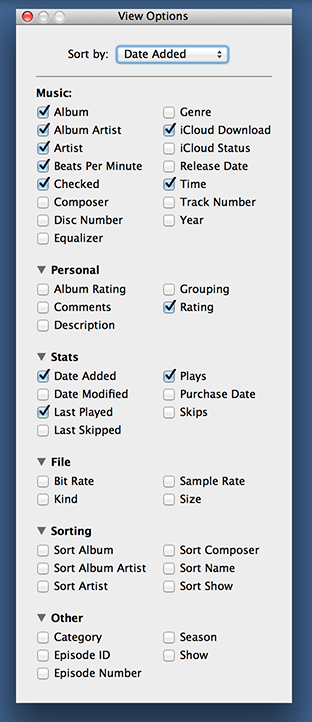
I basically went back 5 or 10 years and replaced every "modern" technology solution. I pay now way more than I did with iCloud, but I am back in control. I am more productive.
- Listening to Music takes 3 clicks and just a few seconds Wired headphones never run out of battery and have superior audio quality
- I can take real photos wiht high quality instead of relying on ever newer iPhone models for thousands of dollars which will always have lesser quality than a mirrorless camera for the same price
- I have fun again discovering bands and artists on Bandcamp instead of mind numbing listening to Apple Music playlists
- Coding via neovim on a terminal and just being on my keyboard navigating not only tmux and co, but also my OS is way more productive and faster
Which of these can I not do on a Mac?