R0 is variable over time and describes the change in number of NEW cases.
IF new cases today are less than yesterday, the R0 must be <1 one incubation period ago. That doesn't mean that R0 wasn't different a month ago, or will be the same a month from now.
That's a big if. We don't have enough testing in place to determine that currently. The reported number of cases and the actual number of cases are not the same right now.
We certainly have enough information now. You don’t need to know the total number of infections to know the trend.
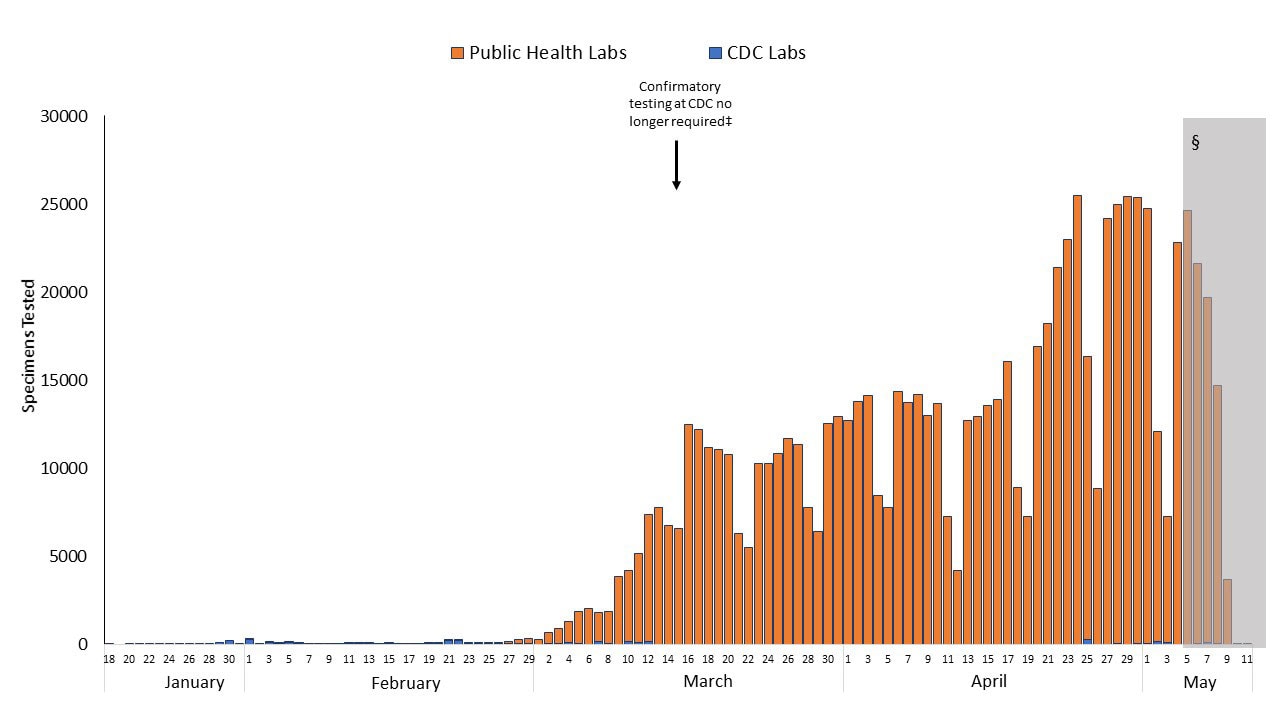
Positive cases have stayed roughly the same since April 4th while testing increased. For R0 to be greater than 1, we would have to be worse at testing.
> I think the point still stands unless you think we are identifying a lower proportion of infections
I do. https://www1.nyc.gov/assets/doh/downloads/pdf/imm/covid-19-d... indicates many areas of NYC are seeing more than 57% positive results; that likely indicates we're not even scratching the surface. We're simply not that good at identifying who to test.


The CDC paper [1] estimated that the R0 value may have been 5-6 in Wuhan, during lunar new year, and before the public was ware of the virus.
Alternatively, the R0 value is now <1 in the US and the spread is decreasing,
https://wwwnc.cdc.gov/eid/article/26/7/20-0282_article