Every country has rare earth elements. Just google "X discovers rare earth" where X is your country of choice and you'll find articles about how they have huge deposits. The underlying problem is the processing. China has figured this out and has cornered the market. Until other countries figure out how to process these materials, China will be able to leverage this capability to their advantage.
Not every country has economically extractable heavy rare earths, resource =/= reserve. X discovers rare earth is the same as X discovers plants, and then assume every country can build a robust biofuel economy. Reminder PRC has the MOST shale deposits in the world, they're just buried very deep and economically AND technically not productive to extract at scale.
PRC's main choke hold is HeavyREE, more specifically processing of ionic clays that is GEOGRAPHICALLY SCARCE like economically extractable oil deposits, which enables economic leeching of heavy strategic rare earth AT SCALE. Think hunting whales for blubber vs drilling oil, supports entirely different tiers of proliferation and use. At scale is key, west never used HREEs at scale until PRC commoditized them by exploiting specific geology mostly limited to south PRC, Myanmar, parts of Brazil but deposits now also found in Australia because Australia has everything. So the real question is can long will it take AU+co to discover and build the entire HREE infra based on deposit types only PRC has real experience with.
It's have nothing to do with "figuring it out". Both mining and processing been figured out decades ago. But rare earth mining is disaster for ecology and western countries just don't want to pay the tall and deal with political consequences. Countries like China and Russia have advantage the they can do whatever they want without caring about protests or long term effects on population of regions where mining occurs.
There quite few talks on the topic, but you can check this one by Dr. Julie Klinger of University of Delaware:
I view my phone primarily as something I'm obligated to carry on myself at all times to function in modern society. The easier it is to carry the better. When I need to upgrade my phone, I'll always choose the smallest iPhone by weight.
Same. There are really only two features I care about in a phone: a high refresh rates and weight. At 165 grams the iPhone air is by far the lightest 120hz phone apple has ever made. Second place is the iPhone 15 Pro at 187 grams. Getting ready to ditch my 15 pro.
Me too, and I’m planning the same upgrade. Always wanted to downsize but 60Hz was a deal breaker for me. Been using 120-144Hz+ displays exclusively since the VG248QE in 2013.
I was quite surprised to see this entire thread full of HN users who apparently want some brick phone to doom scroll lying flat on a table all day until the battery dies.
Right, thinness doesn't help with anything. I want smaller width and height (i.e., a iPhone 17 mini) so that the phone will fit better in my jeans pocket.
I'm not sure about this. I think that if the weight balance is weird (esp. in the heavy top light bottom scenario - I sincerely hope it's not a thing with this new iPhone), it'll act as a lever and put more strain on your fingers to hold the phone.
Not sure you'd like the weight. All the major phone makers have consumer research saying they've reached the limits of weight comfort and many makers are working hard to pull back from those limits.
HN is mostly male. We need the opinion of the women that put a lot of effort into their appearance. Not wishing to over-generalise, but they need a thin phone that takes awesome selfies and shows that they are higher status than those with old fashioned bulky phones. Apple have ticked the boxes and they have probably booked out all the prime advertising spots to reach this demographic.
I just wanted to highlight that he was also an entrepreneurship professor at NC State and shaped many students' views of what they could do with their lives.
I was one of those students. I now own my own company as a result of his teachings. He was very influential and a wonderful human being. This news is tragic.
Marshall Brain's contributions to the entrepreneurship program more broadly were extremely significant. I never had him as a professor, but his influence on the program was clear, even to me.
Is there any evidence at all that they have tons of benefits? I thought there was research that said they were mostly myths.
Decades ago I learned dvorak and used it exclusively for about a year. I honestly felt no benefits. If anything it made things more of a pain in the ass because many common commands (e.g. Ctrl-C Ctrl-V) are where they are because of their locations on a qwerty keyboard. You can re-map shortcuts but I still find myself using devices that aren't my own often enough that I find it annoying.
I remember one funny instance where I had to remote desktop into a shared server, and I remapped to dvorak and forgot to change it back, and then when someone else remoted in they thought their keyboard was possessed.
If you are looking at only speed as a benefit, it’s debatable. For ergonomics, absolutely. Look at the hands of someone typing QWERTY, they’re almost bent in half longways for certain key combinations. DVORAK on the other hand allows your hands to stay flat and relaxed.
As someone who has occasional wrist pain and is fluent in both QWERTY and Dvorak, the latter is significantly less painful to type with when my pain is present. I believe that that indicates that it is less strenuous.
Could it be that you get less wrist pain because Dvorak switches things up rather than it being better overall? With mouse use I find that a different grip can alleviate pain not because it's easier on the wrist, but because it's just different from the way I normally use it.
It's possible, but given my experience seems unlikely - I spend the majority of my time using Dvorak, and very little time using QWERTY, so there's not much switching going on. Also, most typing effort models (e.g. carpalx[1]) put Dvorak as significantly lower effort than QWERTY.
I think it'd be more likely to be the switching effect if you were going between two similar-effort layouts (e.g. Dvorak and Colemak).
>Could it be that you get less wrist pain because Dvorak switches things up rather than it being better overall?
No. It's because you don't have to do hand contortions with Dvorak the way you do with qwerty. If you want a demonstration, try typing "minimal" on both, and watch your hands carefully. On qwerty, it's almost all on one hand, and alternating between top and bottom rows. On Dvorak, it's alternating between hands (which is always better). You can see similar things with any English text of decent length: Dvorak makes you alternate between hands far better, and far more of your typing is on the home row (esp. since the vowels are all on the home row).
But is that really good? I can increase my sensivity very high on my mouse, where I barely have to move the mouse. However, this does cause me more pain than low sensitivity instead. High sensitivity makes me move the mouse almost entirely with the wrist, where low sensitivity uses the wrist and forearm.
I don't know if the same applies to typing, but I can see a mechanism where it is.
I learned Colemak in 6 months and I don’t regret it a bit. I don’t have scientific evidence for this, but with Colemak my fingers don’t move anymore most of the time, and when they do it’s a small extension to the upper or lower row. It’s like they are glued to the home row.
When I switch to Qwerty once a month, my fingers are jumping all over the place, and my hands take weird positions to reach those random keys due to them being scattered for every word.
It’s like Qwerty was created to be the most inefficient layout for the users with keys being all over the place for every word (not the fake news about slowing people who use typewriters, it’s really inefficient).
I kind of like the feeling of typing on a QWERTY board with my fingers all over the place. Maybe it’s keeping my fingers strong and limber. What if I switched to Colemak and my fingers atrophied?!
Either you’re joking or you don’t know that bad positions with a keyboard or mouse can break your hands (I’m thinking of carpal tunnel’s syndrome but I’m sure there is more).
Tongue in cheek. I’ve been using emacs with QWERTY coding fulltime for years. Hands doing fine. Just need good seating, monitor, keyswitch spring strength, and hand positioning. Cherry MX brown switches were exhausting.
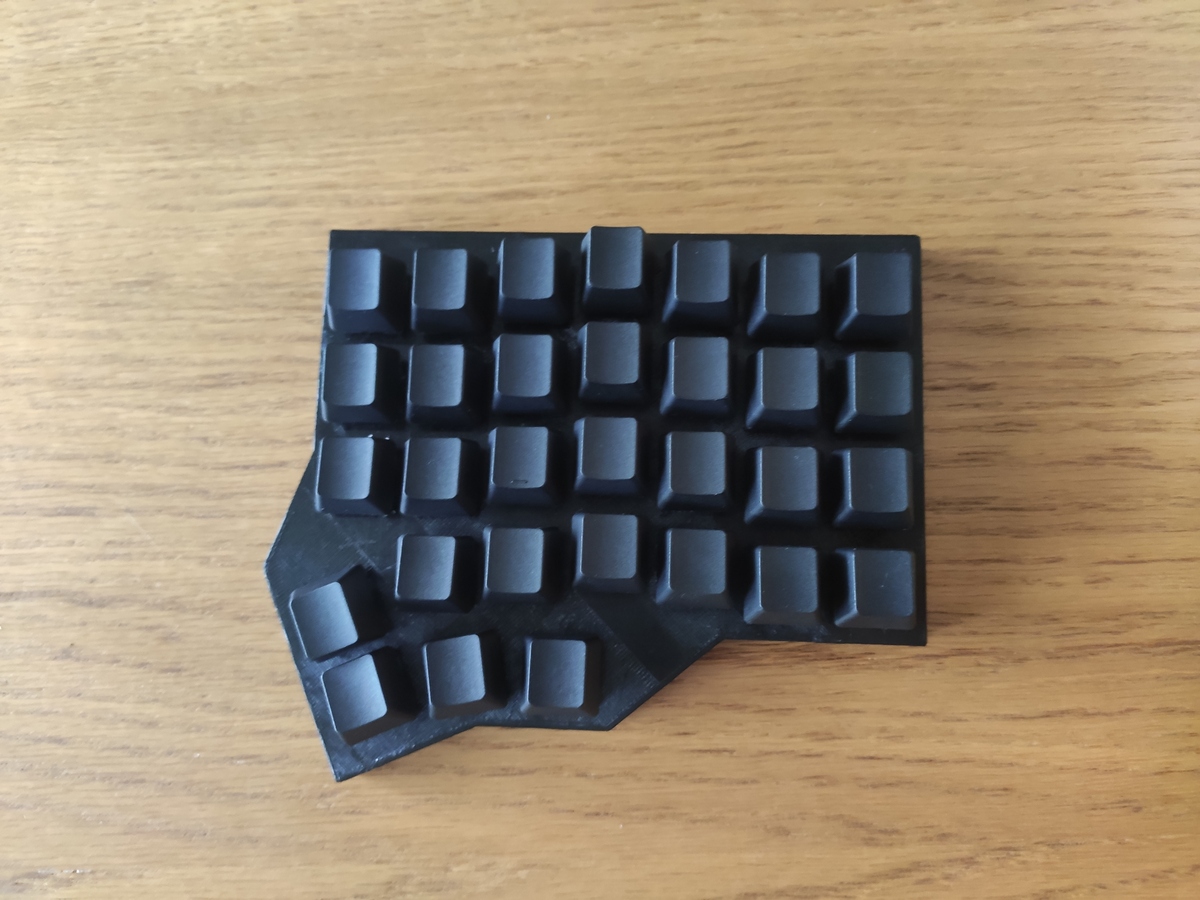
I'm a longtime dvorak user. The shortcut issue is so bad I had to write software that makes the keyboard layout switch while ctrl/alt is held. I've used at least four different implementations of this, three I wrote myself:
Maintaining this has been a big PITA though, and gets harder as operating systems increasingly don't want to support software intercepting keystrokes for security reasons.
I would not recommend learning dvorak, for this reason.
Colemak avoids this problem by leaving the most-important hotkeys where they are, so might be OK? But I haven't tried it, and I am not really sure how much benefit these alternative layouts really bring, TBH.
This is interesting—my observations on Windows 10 (mostly with a layout arranged via MSKLC) have always been that it does some kind of QWERTY-on-Control thing which I'd actually like to turn off but never found out how to; my keyboard shortcut memory seems to indirect through keysyms in a way loosely symmetrical with how my Cinnamon FDO/Linux desktop handles things, rather than being position-based, with the exception of WASD-like game controls which are positional. Is the main difference with your utility that it handles Alt as well?
Hmm. I haven't actually used a Windows desktop for anything other than gaming in decades. Probably the last time I actually used my remapping tool on Windows was in the XP days. I guess it's possible that Windows 10+ now includes such functionality by default, but this would surprise me.
Not if you have a keyboard with easily reflashable and programmable firmware (such as the Moonlander). If the firmware has built in support for layers it becomes trivial as you can just have a QWERTY layer activate when you hold down ctrl etc (Moonlander also)
It's actually quite easy! Of course, I wrote my own firmware for the keyboard I use so I'm biased, but most mechanical keyboards out there support QMK/VIA these days which makes it quite easy to create custom layouts and "layers" that activate based on what modifier keys are pressed.
Creating that firmware was one of the most fun and satisfying projects I've worked on in a long time.
> many common commands (e.g. Ctrl-C Ctrl-V) are where they are because of their locations on a QWERTY keyboard
Is that a fact? I thought they were chosen because it's C for copy, X looks like a pair of scissors, and V looks like a downward arrow (for pressing what you're pasting down). Downward finger traversal (for X, C, and V) is worse than upward, which is worse than no traversal. If they were chosen for their location I'd expect S, D, and F to be used. Or perhaps J, K, and L. The only traversal that's necessary is to hit Ctrl with the opposite hand.
Anecdotal, but back when I had my typing requirement at an Air Force Base which trained all the services for a specific technical task the trainer observed that they had _never_ had a person fail to type out (min. 50 WPM) who had facility with a Dvorak layout.
FWIW, the shortcut issue can be avoided with something like QMK, which supports fancy layers and modifiers, and it places all of that in your keyboard itself
I only know QWERTY, given an unlabeled QWERTY keyboard I'd be able to type. If you have a different layout, that's a huge group of people you'd add to your "They"...
Most of the citrus growers are just selling off their land for housing developments. Florida is still experiencing high growth. A lot of that growth is older populations trying to avoid state taxes on their retirement income. These people don't need to live near industrialized areas. They just want to live near other older populations.
I am hearing from people who are interested in going there but perceiving it is "full", that is has gotten so crowded and crazy that it is better to retire in place.
I live in FL, that take is FUD from those with vested interests in taxable incomes.
FL is a great place to retire, and no state income tax is only one out of 1,000s of reasons to move to FL instead of where you're currently residing.
If you're a remote worker, or retired you just can't beat Florida's no income tax, great climate, and affordable living.
If someone is telling you different, they're trying to sell you something. We don't have to sell anyone on Florida, here, as it sells itself many times over.
Orlando resident here. Disagree with "great climate" and "affordable living."
I honestly don't understand those who say Florida has great weather. We have basically two seasons:
Wet season: Hot and humid. Being outside after ~10am feels like being in a sauna. It rains nearly every afternoon. Usable daylight hours for outdoor activities, when you subtract the hottest part of the day and the rain time is like 3-4 hours.
Dry season: Mild & less humid. Less rain.
The problem is that wet season is like 6-8 months out of the year! I wouldn't call any place that's this miserable for this much of the year a place with "great climate."
Yesterday, I took off work and went to Bok Tower Gardens with my family (neat place, btw). It was insanely hot and humid, and I was pretty miserable.
Prior to living in Orlando I lived in Austin, TX, which is also hot but felt more comfortable because it's so much drier. And perhaps I'm bitter and making an unfair comparison, but Orlando, at least, is a cultural wasteland compared to Austin. And although real estate was luckily much less expensive when we moved here in 2021, prices have risen rapidly over the last few years and aren't quite the bargain they previously were. You can find cheap housing if you want to live in one of Orlando's many soulless exurbias, but if you want to live close to downtown or in Winter Park, prices are on par with Austin.
> I honestly don't understand those who say Florida has great weather.
Because a lot of those people are coming from areas where they get the 6-8 months of hell without good weather the rest of the year. Living in Miami after California, I had the same reaction to the weather but compared to Wisconsin or Kansas, Florida wins hands down.
Being cold down to your bones for six months of the year is a special kind of hell that we in the south are a bit ignorant of. After spending two winters in Washington I would have moved to a desert island in the middle of the Pacific to get away from it.
> FL is a great place to retire, and no state income tax is only one out of 1,000s of reasons to move to FL instead of where you're currently residing.
> If you're a remote worker, or retired you just can't beat Florida's no income tax, great climate, and affordable living.
This is a line peddled by native Floridians who don't have the skills to earn a competitive salary that they can then use to buy a house. I can only talk about Tampa and St. Pete, but neither places are "full".
Natives displaced by rich newcomers snatching up all the land and continuously pushing life in your own homeland out of reach...seems like solid ground on which to stand and say "we're full go away".
I don't buy this line. I myself cannot buy a house where I grew up due to people with money moving in, but that doesn't mean that I should be able to say "we're full" simply so I can buy a house.