The current narrative of Ozembic reminds me a lot of the 1930s narrative around amphetamine. [1] The mood booster wonder drug was used extensively in the military and civilian population, from soldier to politician. Indications included weight loss, depressed mood, alcoholism [2], and fatigue.
> Another early pharmacologic approach to alcoholism treatment used psychostimulants to create a feeling of well-being and obviate the euphoric effects of alcohol. Bloomberg (1939) administered amphetamine to 21 alcoholic patients, who became more alert and energetic and reported no desire to drink (see also Bowman and Jellinek, 1941). Reifenstein and Davidoff (1940) found that amphetamine was of benefit in cases of acute alcohol intoxication and recommended it to treat depression in institutionalized alcoholics (see also Bowman and Jellinek, 1941).
Of course, I'm interested, but I will let medical science do the damage first before I elect to dive in.
I wonder if all these other 'bonus' effects really just stem from the same root cause which is effectively food that is just really bad for us. So if you eat less poison, you get a lot healthier - not just slimmer.
Near immediate moderation of alcohol consumption in many people who are taking this drug has nothing to do with what or how much they eat. It is altering the brain function in some way.
The motivations behind alcohol consumption and food consumption aren't the same. The one "link" between them is that both are susceptible to addictive triggers. I would say most obese people essentially function and think like alcoholics, except their coping substance is various unhealthy foods.
When I'm dieting I crave beer. When I'm not dieting I prefer Gin or Scotch in moderate quantities. My body appears to know that alcohol contains calories.
This, and most likely a lot of this "research" will be debunked in due time (years, decades), and new, currently unknown side effects will come to light.
How can some engineered drug be a solution to a life choice problem? Typical human behavior to look for easy "solutions" that don't actually solve anything, just delay or temporarily mitigate a problem.
Choice isn't binary, it's incredibly complex. There're millions of individual little effects that go into each and every one of your choices. You actually have no idea how much influences you have over your "choices". In fact, almost everything you do in life is completely out of your control - you just do it, it's habit. Is brushing my teeth a choice? Certainly, I do it, but I also don't make that choice ever, it just happens.
Why is it that some can drink every week and be fine, but some can't ever drink because they are alcoholics? Why is it that I am able to eat as much as I want, and I'm not fat?
You could just be lucky enough that you do not have a propensity to overeat. Neither do I. But be humble, have some humility. You and I are privileged. I did nothing to earn this. I eat what I want, when I want. It's merely a coincidence the what and when happens to not harm me.
You're not allowed to be proud of your condition if you did nothing to earn it. I'm skinny, I did nothing to earn it. I could be proud, but that's rather sad and pathetic, no?
I would rather be proud of my achievements. I suppose if you don't have those, you might settle on pride in something more superficial.
Incorrect, because if this was the case nobody would be obese.
I would say almost every single obese person doesn't want to be obese. And every single alcoholic doesn't want to be an alcoholic.
What you're suggesting might work FOR YOU. That doesn't mean it's a solution. Look around you, is it working? No, right? Why then do you insist you're correct when every piece of evidence on this planet proves you wrong?
I'm rather thin and fit. I eat mostly healthy food with some unhealthy indulgences from time to time (cold cuts, fatty cheese, bread, croissant from a bakery). I eat controlled portions so I don't lose or gain weight. I'm hungry all the time and quite miserable. I spend most of my wake time thinking about the next meal. What life choice should I make?
Is your opposition to these drugs that you think the patients haven't somehow earned the right to be rid of their ailments, or that they have side-effects (thyroid problems, yo-yo problems for weight lost, etc)? The first one is a moral judgment, the second one is a claim that should be backed by evidence.
Why would engineering (of anything!) be a valid approach to some problems but not others?
If I want to move cars across a body of water then engineering is a great approach. Why would it not also be a great approach if I want to change my eating habits?
I tried Ozempic for three months, gradually increasing the dose monthly. Then, on the fourth month, I switched to Mounjaro and continued it for five months. It did help me lose weight, but the discomfort in my upper left abdomen turned into pain. It felt like the food I ate was still in my stomach, undigested, even four days later. I eventually stopped because I was worried it might have harmed my pancreas. A year later, I still occasionally experience the same abdominal pain. but doctor didn't didn't see pancreas issue. I It did help with my blood sugar management(diabetes) and weight though, but ill never do it again and stick to IF
I'm on Saxenda for 3 months now (basically Gen 1 of the same GLP-1 drug, Ozempic being the Gen 2, both made by Novo Nordisk).
The hunger suppression is real and what's intersting that this is the first time I've felt that I'm "not in control of my thoughts". Of course it's my own decision to take the drug is not about that. But I'm not hungry anymore, I don't binge eat anymore, and I generally don't enjoy food as before. Like even if I have my favorite foods it's just an OK experience. It's like I'm eating because I know I need energy to live but otherwise it's totally gone as the "main focus" from my daily life (which was my main eating disorder)
You perfectly summarise my relationship with food, although I’ve never taken any appetite suppressants. I spent my early adulthood competing in bodybuilding, and ever since I can’t really treat food as entertainment.
I cherish every meal I have and everything tastes amazing to me, since I only eat to hunger. Food can’t get better to me than the stuff I eat every day, so I don’t go out or spend money on fancy food. I just eat what keeps me healthy.
I’m not sure if it’s a good or bad thing that people are now able to join this camp without destroying their relationship with food through questionable activities.
If we can alter the chemical composition of peoples brains/guts to make them less hungry, how long until something similar exists to overcome anxiety? Public speaking fears? etc.
Generative AI, possibly combined with VR, could be great for people with social phobias. Or terrible, I've not decided which. It'll definitely have some effect!
Living without appetite. I get it can help some people with losing weight. But doesn’t it sound a tad sad too? Isn’t desire one of the most complex, beautiful emotions?
I don't suffer from an uncontrollable appetite, but for those who do, I would imagine that compulsive-anything is undesirable and eliminating it is an unambiguously positive miracle.
If a drug can cure an out-of-control appetite, can it cure chemical addictions? Compulsive gambling? None of these are beautiful emotions.
Funny you should say that. There's mounting anecdotal evidence that GL-1's curb addiction more generally, including the two you mentioned, SUD/chemical and gambling. There are currently trials underway to try and prove that scientifically.
We don’t know long-term effects yet. Interfering with hormones and their receptors can change the amount of the hormone the body produces and the sensitivity of the receptor.
If it’s applied carefully then it shouldn’t be a problem though and the body would re-regulate later itself for the trade of many positive effects immediately.
So I agree with all of this, but will add we do know the long-term effects of obesity, diabetes and a host of the other things it is showing some potential signs of helping with. And because of the serious damage being done by those issues ([0] heart disease is the leading cause of death in the US), it just needs to be good enough to help resolve those issues without introduction anything too major as far as long term side-effects.
This is all to say, because of the current state of health norms (at least in the US), it just has to not do too much damage long term and the pro's can still outweigh the con's of its use.
We kind of do know the long term side effects. Exenatide has been in use since around since 2005. They can include pancreatitis and thyroid cancer in a small percentage of the population. Modern GLP-1 agonists exhibit essentially the same threat profile.
EDIT - Just wanted to note that the cancer thing has only been seen in rats. Not humans. After 20 years we'd probably have seen it by now.
Thyroid cancer sounds more scary than it actually is. It's one of the weakest forms of cancer, and it's extremely easy to treat if caught early enough. Also, living without a thyroid is no big deal.
Somebody very near and dear to me was diagnosed with thyroid cancer ten years ago, and now has no thyroid. She's hardly inconvenienced by it & hasn't even gained any weight since then. Just gotta remember to take those T4 tablets in the morning, is all.
Point is: If you weigh in the balance [lives saved or QALY gained due to GLP agonist administration] vs. [lives lost or QALY lost due to thyroid cancer secondary to GLP agonist administration], it's not even going to be remotely close. "Lives saved" will probably win by an enormous margin, maybe a factor of twenty or so.
People hear the word "cancer" and think "death sentence." (Or, at the very least, an extremely difficult ordeal.) It's a scary word. Yet thyroid cancer is generally a mild disease -- especially mild as cancer goes -- and almost invariably nonfatal if caught early enough.
If GLP-1 inhibitors get people screened for thyroid cancers more frequently, or lead to improved treatments for thyroid cancer, they will almost certainly lead to a reduction in thyroid cancer deaths -- even if, as some surmise, they are responsible for an increase in thyroid cancer cases. Even without this effect, if you balance [QALY lost] versus [QALY gained] GLP-1 agonists should come out so far ahead that it's almost laughable.
In any case, I believe it is wise to talk about these things openly and without fear.
> Also, not all thyroid cancers are created equally (like papillary vs medullary)
Granted, but how is this relevant? I've heard that those drugs may -- this is still, as yet, uncertain -- increase the likelihood of follicular thyroid cancer, which is a very weak type. I have not heard that they increase one's likelihood of coming down with the anaplastic variant. (The only truly deadly one, but quite rare.) If caught early enough, papillary, follicular, and medullary are all easily treatable and indeed curable.
> not every one taking GLP-1 RAs are morbidly obese
Thanks for this. I hadn't seen that it had been verified in humans.
I suppose it helps to emphasize that there are trade offs with all drugs, and that you'll need to work with your doctor to adapt a program suited to your own risk tolerance.
Shouldn’t we have a non-negligible prior on possible cancer risks at all timescales? That doesn’t mean we don’t approve drugs without 80-year clinical trials, but I think it’s a non-negligible risk that has to be accepted.
For instance, my impression is that lung cancer rates only really become strongly pronounced — in the sense of being statistically detectable in the small population sizes you find in clinical studies, rather than the entire US population — after like 15 years of smoking. (Correct me if I’m wrong.)
GLP1s have been on the market for at least a decade, they’re pretty well studied at this point. Their sudden popularity is due to the FDA allowing it to be prescribed for obesity (instead of diabetes), not the discovery of a new drug.
> Their sudden popularity is due to the FDA allowing it to be prescribed for obesity (instead of diabetes), not the discovery of a new drug.
That's not true. I started on liraglutide, which is a previous-gen GLP-1 agonist. It was approved for that purpose in early 2010-s. It worked, but it required daily injections due to its short half-life. It also was unpleasant, as you could feel its effects wax and wane throughout the day.
Ozempic was approved for diabetes in 2018, but became available in sufficient quantities for that purpose in 2019. Doctors started prescribing it off-label for weight loss in 2020 (that's when I also got switched to it), and it was approved by the FDA for weight-loss in mid-2021.
So while we could have moved faster, it's not like there were decades of time lost.
Wait a sec. Something which provides such an unambiguous quality of life upgrade by addressing one of the biggest health problems in the country, is only now available because of regulations?
Seems wild right? Would you believe that there’s a male contraceptive that’s been actively used in other countries successfully for over a decade, is easily and painlessly reversible, and non-hormonal?
It took the FDA four years to pull Thalidomide from the market. Hell, it was OTC in the early days and often prescribed for morning sickness.
They're more cautious now when it comes to pregnancy related drugs. As someone who was not born with flippers instead of hands, I'm pretty happy about that.
> It took the FDA four years to pull Thalidomide from the market.
BZZT! Wrong.
Thalidomide had _never_ been approved in the USA for the morning sickness, thanks to the FDA. The only pregnant people receiving it were getting experimental pre-approval samples (now illegal) and during the clinical trials. See, for example: https://www.reuters.com/article/fact-check/fda-did-not-appro...
You're correct, I was mistaken. Although my mistake may actually help to support my stance.
It was used, and marketed, for morning sickness primarily in other countries (Germany in particular). It's an important distinction, because the US FDA actually stopped it's approval in the US. It seems that "only" about 20,000 American study participants were given the drug at that time. So more than half of the dead/deformed babies came from Germany.
Had the German equivalent of the FDA prevented the drug from going to market many babies might not have been born with deformities.
There are VERY good reasons to be slow in approving drugs that might impact a fetus.
We go through this every 10 years or so, for at least the last 100 years. The market doesn't really have the patience to wait to see the aggregate or long-term effects of new "pop culture" drugs and formulations so we just charge ahead and then let another generation deal with whatever mess. When the pharmaceutical companies really luck out, the cleanup can even come through yet another such wonder drug.
This is exactly right. Let the market decide. If people want to use new experimental drugs, why not let them have at it. They oughta be responsible for their choices
Ozempic was approved for medical use by the FDA in diabetics in 2017, seven years ago. Meaning it passed phase 1, 2, and 3 trials. So it's not exactly an experimental research out of China like a brand new fentanyl analogue.
We can go back to the boom of distilled spirits in the 19th century, but that's kind of cheat because it predates modern drug regulation and aren't seen as medical since people just make and consume them privately.
Or the boom of compounded tinctures at the turn of the century, but again, that's kind of a cheat, because it becomes the impetus for modern regulation and was full of all kinds of wild crap.
But once we have regulation, we get the wartime boom of amphetamines and stimulants for energy and weight-loss; the mid-century boom of early barbiturates, tranquilizers, and sleeping pills; another boom of new stimulants and weight-loss drugs in the eighties, along with a boom of anabolic steroids; another boom of anti-anxiety drugs in the benzodiazepem class, as well as new anti-depressants; then a boom of opioid painkillers with purportedly "abuse preventing" formulations; etc
Each of these booms was absurdly popular during its heyday, generating tremendous amounts of revenue and reaching into countless homes, variously disturbing both physical health and familial/emotional security in significant ways, and then was turned against because of all the secondary effects that they brought with them.
In many cases, these secondary effects were noted early on but simply held in denial because of how freaking much people wanted to feel more energized or calmer or more rested or thinner or whatever in a world that seemed to be putting impossible demands on them. In other cases, people just didn't know where to look for the secondary effects and so they weren't anticipated.
In either case, the drugs always looked really rosy to the public and generally delivered on their prima facie promises.
Socially, these drugs are fitting an almost identical profile. Medically, maybe they'll finally prove to be the exception. We'll have to see.
Oh you just done a heckin double badspeak. Not only are you not trusting my science, but you're slandering my big pharma. Big mistake. Thats a downvote.
Compared to the long-term effects of obesity, Alzheimers, and addiction? Everything treatable by Ozempic, et al. has immediate short-term effects, and long term effect that significantly effect longevity.
The fearmongering around Ozempic not knowing the long-term effects would have to be is unnessicary. Yes, it sucks to have to be stuck taking a medication for the rest of your life, but would you rather be stuck with a delibitating disease and die 10 years early, or have to take a medication for the rest of your life?
> would you rather be stuck with a delibitating disease and die 10 years early, or have to take a medication for the rest of your life?
I'd rather have a cure for that disease instead of lifelong medication. While not nearly as profitable it is far preferable over a lifelong dependency.
Nor do the therapeutic preparations, these are developed just like curative treatments are. There is far more profit to be had from therapeutic treatments in the absence of curative treatments so there is a perverse incentive to develop the former in lieu of the latter.
But we know the long-term effects of obesity, alcoholism, and every other form of spiritual weakness this thing apparently allows people to escape. The long-term effects would have to be comically atrocious for it not to be worth it. Put ozempic in the water supply.
It's so weird to me that with a vaccine against COVID the populace was going all conspiracy theorist. Saying the longterm effects are unknown etc. But with these kind of drugs there are suddenly no issues.
Ozempic and other research peptides are very popular in online biohacking communities. The same communities were against vaccines. This paradox has been pointed out quite often and it became a meme.
What makes you think these two are comparable? Just that they are drugs? No one is requiring anyone to take these drugs -- people are coming to the conclusion on their own. And a lot of people taking these drugs are not paying the companies that own the production of them. The rapid rise in compounding pharmacies (think of these as "wildcat" pharmacies) producing these drugs is currently causing an opportunity cost to the owners of patents of these drugs. There really isn't any conspiracy here.
And there is no shortage of moralizing and FUD about these drugs. Just read this comment thread.
To me at least, celebrating individuals using drugs that support an unhealthy lifestyle does not appear like a positive for society at large. I thought medicine was about aiding people to become healthy, not providing quick fixes to common problems. Why is this being celebrated?
EDIT: I do not mean to say Ozempic is useless or dangerous, only that celebrating it as a solution to the problem of obesity is. It is certainly a tool that helps people. I don't think it should be relied on continously. People need to live healthy lives to be healthy. I am not perfect, no one is. Losing weight is hard.
They don't support an unhealthy lifestyle any more than a miracle pill that stopped a harmful drug addiction would. Would you oppose its release since it's not actually "natural" to use medicine to stop your addiction, when you should instead use pure willpower? This simply doesn't make sense.
We live in a world of enormous abundance, exacerbated by companies min-maxing foods to have the most addictive properties humanly possible, at cheap prices.
I realize obesity is a major problem, but so is neuroticism about health, weight, and diet. I agree with the nagging feeling that using a drug to address hunger is likely to have negative consequences for some people.
I don't think this is true at all. Peoples' obsession with solving obesity as a cure-all for human health deserves pushback. There's also a concerning degree of moralizing it that has no place in our culture but has taken firm root.
I think you may be right that there's room for nuance about obesity, especially moralization about it, but you simply cannot deny that it's a huge problem in the US
> I think you may be right that there's room for nuance about obesity, especially moralization about it, but you simply cannot deny that it's a huge problem in the US
Of course not. I just don't like how most conversations about health get subsumed into the much less productive conversation about how destructive obesity is.
I mean obesity slowly kills you. It's no different than being an alcoholic or a smoker. There's really no healthy way to be those things, the thing itself is destructive.
The reality is, to me, obesity is born of addiction. Which is why ozempic is exciting. Because it's not a solution that relies on moralizing or fatphobia or shaming.
I don't oppose the use of this drug or its release. People should be allowed to do what they will. I see harm in celebrating the drug as a cure to obesity. Of course, certain diseases may make it easier for you to gain weight. Though obesity is not like cancer, it is a condition brought on by unhealthy behaviours
Think I generally agree with your sentiment, but my understanding of how Ozempic works is that it kills your appetite. The "unhealthy lifestyle" you're referring to is one of overeating. Ozempic doesn't support a person to continue overeating, it removes the desire to overeat. From that perspective it is aiding people to become healthy.
Sure, yes it is aiding people to become healthy in that sense. Is it healthy to rely on drugs to change your thought and behaviour patterns? I definitely see this drug as a useful tool when combined with a plan to not continue using it for the rest of your life. I see relying on this drug continuously as a problem, thinking "oh, there's no need to try and change my behaviours on my own, this drug will do it for me."
> Is it healthy to rely on drugs to change your thought and behaviour patterns?
That is the same question people were asking about Prozac thirty years ago, with the same concern about continuing to use a drug for the rest of one's life. The idea may sound scary, but in practice people make a simple calculation: so long as the drug continues to make your life better, why wouldn't you continue taking it?
If a drug has zero side effects, than it is obviously healthy.
Ozempic has side effects, so we cna do a cost benefit analysis to argue that the various benefits of not being obese outweigh its problems. We clearly see many people are unable to loose weight without it, given nearly 50% of people are at an unhealthy weight, thus its likley a net positive.
Effects or side effects, using a drug changes things. It is not easy to suggest that someone is unable to lose weight, except for clearly disabled people
I propose plans that involve the temporary use of medical tools like Ozempic that involve also changing your behaviour and living a healthier lifestyle, especially after losing weight
> involve also changing your behaviour and living a healthier lifestyle
Ah, so the same thing that has repeatedly been tried and failed every time everywhere around the world for the last 50 years. Yeah, let's just keep on giving that a go.
It depends on the person. Major depressive disorder is an inexplicable depression that is not brought on by the circumstances of your life, I think SSRIs are a suitable treatment for that. I think that it's important to consider all factors of a persons life when deciding whether or not they should be prescribed medication that suppresses ALL emotion, not just negative emotion. Positive constructive therapy to help people better their lives ought to be considered in cases that may not necessarily be a disordered condition (i.e., they have a shitty life and need to be a better person to themself and others to be happy and feel good about themself)
This medicine literally aids people to become healthy. They will gain years of life from the lost weight.
Their lifestyle changes to be healthier by eating less, which many are unable to do without help because the human body has millions of years of baked in evolution demanding we overeat if able
My father has used ozempic. He hails it as a wonder drug, yet he does little to nothing to change his behaviours because he can rely on this crutch. I see that as concerning
Weird, this drug chemically changes behaviour, so how can his behaviour stay the same?
It's been reported to reduce cravings related to food, alcohol, and cigarettes, you are saying your father while on the drug consumes the same?
Or is it that he uses it for a while, then lapses, repeat ad naseum?
If it's the second scenario, that's personal responsibility, not much to do there really, he has been given all the tools to improve but chooses not to, and that will catch up to him, no matter ozempic usage.
I dont really think an ancedote is a good argument. We have studies showing many people eat less on ozempic and loose substantial amounts of weight, and its main effect is not even the weight loss but reducing heart problems and fixing blood sugar in diabetes patients
He lost substantial amounts of weight. He sees it as a solution to his problem of being overweight and does nothing to change his lifestyle. I'm concerned that celebrating this drug as a simple solution to Obesity sends that message to other people as well
EDIT: celebrating Ozempic as a simple solution to obesity is literally what I'm referencing my Dad doing
You should keep in mind that you’re disapproving of your father’s lifestyle choices and his choices were not determined by the drug.
Many people make different choices on those drugs. Eg once they’ve lost some weight and it’s easier to move, they move more and the sedentary lifestyle changes. Similarly, I’ve seen antidepressants used to get enough functioning and control back that the chain of causes and effects can start to be addressed and intervened in.
You're suggesting that appetite is the cause of obesity. I don't agree with that notion. Repeatedly giving into your "appetite" will reinforce overeating
Its being celebrated because it is an amazing development? I think I can agree that, ideally, people will bootstrap healthy lifestyles and not need the aide long term. I don't know how you could justify that as a reason not to be glad the aide exists, though?
Ozempic doesn't make you sit around, eat like a pig and you lose weight. That's not what it does.
Ozempic makes you eat less, curbing overconsumption. People on Ozempic are also much more likely to exercise. It does not "support an unhealthy lifestyle". It literally does the opposite.
> People need to live healthy lives to be healthy
Okay, Ozempic helps people live healthy lives. Just like having a personal trainer helps people live healthy lives.
Would you say having a personal trainer is "supporting an unhealthy lifestyle"? Of course you wouldn't.
I've struggled with weight my entire life (I'm in my forties). Back in 2019, I lost 80 pounds. I carefully regulated my calorie intake to 1,800 per day. I discovered I have an absolutely terrible sense of portion size, and absolutely never feel "full" or satiated. I also made it a point to close all three Activity rings on my Apple Watch every day. I felt better, I had more energy, and I was able to enjoy more things in my day-to-day life. Even with all of those positives, a series of difficult life events during the first year of COVID took me out of my routine, and I haven't been able to bounce back. I would like to try a GLP-1 to see if it could give me a boost in the right direction again. I have no interest in being on it, or any medication, forever.
Thankfully, I've never been addicted to anything other than food. I never liked alcohol, nor did I get any positive feeling from it. So, I don't drink. I've never been enticed by drugs, so I've never used them. I went to Atlantic City once, but have never gambled another day in my life. Being spared from these other addictions isn't a matter of my amazing willpower. I'm simply not drawn to those addictions. Nor do I think that people who battle those addictions simply have a lack of willpower. I believe it's much deeper than that.
I agree that celebrating a medication as a cure-all solution is problematic. But, I don't think that's what most people think about GLP-1s. I think most most people simply want, and deserve, a little help in a difficult and complex world.
From their FAQ: "Ozempic® is a medicine for adults with type 2 diabetes that, along with diet and exercise, may improve blood sugar. While not for weight loss, Ozempic® may help you lose some weight."
They literally never tell you that. I'm so fucking sick of people just making shit up about medicine and doctors in general!
"Oh they'll all tell you you don't need to do anything just takes this pill and then the pill fixes you hurr durr!" Okay nobody says that. Nobody has ever said that. You made that up, everyone who says that makes that up.
If you go to the doctor and you smoke the first thing out of their mouth is "quit smoking". If you're obese they're gonna DRILL "lifestyle changes" into your skull.
Where the fuck is this absolute delusion that "big pharma just gives pills!!1!" coming from? This has literally never been how medicine works.
< Where the fuck is this absolute delusion that "big pharma just gives pills!!1!" coming from?
The way this is phrased is a little rude, but hey it's the internet.
I'm actually curious where this idea comes from as well. I hear it all the time, but have never experienced anything close to it in all of my years on the planet. Is it some kind of political trope? Something that used to be true that older people haven't realized changed a long time ago? Does it come from 70's sitcoms?
It's certainly never happened to me with any of the doctors I've ever seen, met, or worked with, and I have decades of experience in healthcare adjacent fields. All of the doctors I've known actually really cared about their patients and would often complain that the patient just wanted pills and weren't more compliant when it came to things like diet, exercise, and quitting their vices.
> I thought medicine was about aiding people to become healthy
This is exactly what this medication does. I don't understand what confusion there is - this medication undoes the damage that a poor lifestyle choice creates, then gives the user to choose again.
Imagine if there were a button on your head that when you pushed it all alcohol in you blood would be cleared out with no negative effect on your liver. In that case, heavy drinking would NO LONGER BE an unhealthy lifestyle. Kids would be able to drink alcohol with no problems.
What I’m afraid of is that this just ends in an arms race of ever unhealthier lifestyles versus medication to counter-balance that. These aren’t wonder drugs. People just need to stop eating garbage food, and too much of it. And the government should pass laws to facilitate that to counter lobbyists
This is a drug that literally turns off the part of your brain that craves overeating. Governments can’t legislate against human nature, as much as the nanny state wants to. We fixed food production without fixing the scarcity mindset that got us here. Now we’ve fixed that too.
Obesity is the main cause of myriad health problems. It is both treating a symptom, and fixing a problem. On average, somekne imwho is obese will love a much healthier life that is years longer than it would be without the drug. If that isn't an amazing outcome for medicine, than what is? Everyone dies, so all medicine treats symptoms at some level
Its weird that people are celebrating the fact that our lifestyle and food supply is so bastardized that it's causing people to become unhealthy to the point where they need a lifelong drug to overcome it. I get why the manufacturers and big pharma likes it, but it seems that it's also celebrated by many individuals, like you see in this and other HN threads.
This drug is a symptom of a sick culture, and not cause to celebrate. I don't at all blame the individuals that have this prescribed to them for taking it, but it just seems like a technochratic solution addressing superficial symptoms of a much larger problem.
Smoking causes lung cancer. I don't smoke, but if they found a cure for lung cancer I would celebrate that rather than griping about "personal responsibility" or whatever it is your grievance here is.
This thing objectively and subjectively improves the lives of the people you share this world with. If you have a problem with that it might be time to turn your gaze inward.
I'm upset that we just accept a society that requires a lifelong commitment to purchasing a drug as an appropriate answer, rather than looking at real causes of why people are so unhealthy. I don't think it's exclusively a matter of personal responsibility, rather a supply chain and incentive structure to produce sick people that need medication to be healthy. This is a band aid.
> rather than looking at real causes of why people are so unhealthy
I'll answer this one.
The human body is designed and built to eat as much as possible, as often as possible. The brain will prod, poke, and even force you to eat.
For all of human history and prehistory, this is incredibly advantageous. A greedy approach to food consumption allows lower risk of starvation, and fat reserves can be utilized to provide survival mechanisms when food is short.
For the first time in human history and prehistory, we have an abundance of food.
Some humans, a minority, are able to simply fight their biological urges or they may not even have those urges. If this were 10,000 years ago, they would surely be one of the first to die. Now, however, this is advantageous.
Every single part of our biology is in contradiction with modern society. It's not a shock that humans have a problem with obesity. If I gave my dog infinite kibble, I give him a month before he has killed himself.
I don’t buy this fatalistic attitude at all. Japan has an abundance of food as well, and Japanese humans are also human. Yet I don’t see nearly the same level of obesity here. The difference is entirely cultural, and yet you argue that we poor humans are destined to overeat. It’s not like the poor Japanese are suffering not to overeat every day of their tragic lives.
Instead the same measures that work here work in western countries as well. Free food at schools in the US and Europe has led to less obesity. Teaching cooking at school has led to less obesity. Teaching appreciation of the own physical self as a gift that one is responsible for rather than a burden has led to less obesity.
None of this requires throwing even more money at pharma to balance out the out-of-control American food industry (originating from the unscrupulous tobacco industry) which pays pharma to create more addictive foods. And yes, our bodies did not evolve to handle those ultra-processed foods laden with additives, but that is not normal food! Look up how the American food industry wreaked havoc in Latin America, leading to insane rates of obesity in mere years.
I don't think that anything you said here is wrong, however I don't see how any of it is relevant either.
I mean, sure... We should fix all the everything, but we can also help the people who are dying right now while we do that. They aren't mutually exclusive.
Imagine rejecting a cure for cancer because it might encourage smokers to continue. That would just be silly.
Yes, and like a band-aid it will help sick people heal. Which is a good thing, that should be celebrated.
I don't believe that I've ever heard anyone espouse the idea that nothing else in the patients life should change, or that the drugs alone are a complete answer. Although, that seems to be the counter position to your argument.
Everyone knows that fat people need to eat less and exercise more, including the fat people. These drugs help them do that. The drugs are advertised, sold, and prescribed that way and include advice to that effect in the informational pamphlets they come with in addition to usually including a lecture from your physician.
What else do you need before you can just be happy for people that are struggling a little less now?
I'm happy for that, I repeated that I don't blame the people that get it prescribed. And I was using the term band aid in the colloquial term, as in 'something that doesn't address the root issues'.
Obesity, diabetes, have all risen, especially in kids since the 90s, what changed, and what caused this? Are we still having the same causes, or because we can get a lifetime prescription to Ozempic and cover up the worse symptoms, we're ok with it? This is a massive red flag that something is wrong with this situation, not because some people are losing weight, but because some people are getting people sick and others are selling a cure at their expense. Encouraging another lifelong prescription is not addressing the causes and encouraging people to benefit off of making people sick.
I can accept that there may be larger root causes left to address, as long as we can also be clear that these drugs are also a huge win for individual health while society works on those, possibly intractable, root causes.
It's obviously going to be faster to treat individuals than it is to change our entire societies relationship with food and how we produce it, and we shouldn't just let all the fat people die while we figure it out.
I can't read the article but I have kept up with the almost daily revelations about this class of drugs so I have an idea of what its about. I am truly hopeful for the kinds of society wide changes it promises to bring about.
We seem to be rapidly approaching an inflection point, brought on by the compounding distributors such as Hims, that will need to be resolved: there are probably more people on the compounded version of this drug than most suspect and that number is growing by the tens of thousands every day. Meanwhile, Norvo Nordisk is trying to shut down this channel of distribution. That would be a bad idea and I think the FDA must be aware of that. This conflict between NN and the compounders needs to be resolved.
Personally I think the promise of this drug makes it a moral issue and have little sympathy for NNs position here: they will need to capitulate on their control over it and accept some kind of suboptimal pricing agreement. The potential positive outcomes of this drug supersedes their sole claim to it IMO.
You are right. What I meant is sole claim to production of semaglutide. If they want to produce the injector version, which is considerably more expensive and more difficult to produce (and thus justifies their exorbitant pricing) as opposed to what the compounders are doing, then they are not acting in good faith here and are purposefully slow walking a product that is in incredible demand.


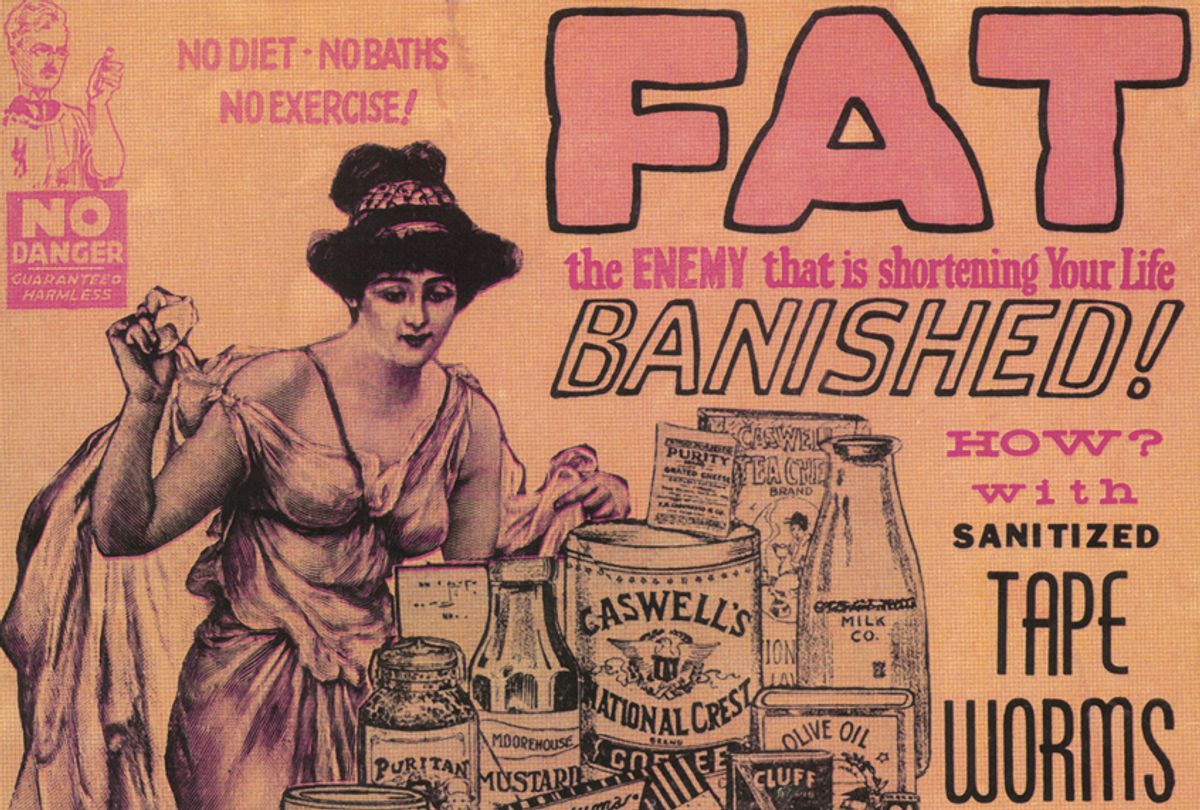
> Another early pharmacologic approach to alcoholism treatment used psychostimulants to create a feeling of well-being and obviate the euphoric effects of alcohol. Bloomberg (1939) administered amphetamine to 21 alcoholic patients, who became more alert and energetic and reported no desire to drink (see also Bowman and Jellinek, 1941). Reifenstein and Davidoff (1940) found that amphetamine was of benefit in cases of acute alcohol intoxication and recommended it to treat depression in institutionalized alcoholics (see also Bowman and Jellinek, 1941).
Of course, I'm interested, but I will let medical science do the damage first before I elect to dive in.
[1] https://ajph.aphapublications.org/doi/pdf/10.2105/AJPH.2007....
[2] https://pmc.ncbi.nlm.nih.gov/articles/PMC4453501/