When graffiti is done on public owned objects or walls, it's impact is merely aesthetic. Not like a bank robbery.
And I'd rather see graffiti, even if I find some ugly, than ads all over. And there's way more public ads anywhere than graffiti. I think local urban expressions like stickers and graffiti is pretty cool. The mainstream prefers ads I guess.
For one thing, it can be costly to remove graffiti. And when it's on publicly owned property, who pays for that removal? The public, of course.
If, for example, a train is the target of graffiti, it will often need to be taken out of service. This, then, results in a degraded service to the travelling public.
Furthermore, graffiti artists often put themselves in dangerous situations. Numerous people have been seriously injured or killed when doing graffiti. That not only sucks for them, but also has various knock-on effects.
Some graffiti art can look really nice, whereas others have little artistic value. Regardless, the negative impacts of graffiti should not be overlooked.
We're talking about public property here. Many authorities have a 'no tolerance' approach to graffiti. Even if it looks nice, it will be removed. There is a belief that removing graffiti quickly discourages it. If graffiti artists find that their work won't last long, they may be discouraged from doing it in the first place. Aesthetics doesn't really come into it.
> There is a belief that removing graffiti quickly discourages it. If graffiti artists find that their work won't last long, they may be discouraged from doing it in the first place.
Ephemerality is known, understood, accepted, and even leveraged in art. I don't think this is an efficient deterrent, or even a deterrent at all.
I'll have to disagree... the goal is to stop encouragement, rather than to start discouragement - stopping acceleration is not the same as starting deceleration.
When it comes to acceleration, it's possible to define 0 acceleration. So we can define acceleration and deceleration in relation to that 0 acceleration.
What is 0 encouragement/discouragement? It's not obviously easy to define. One definition is doing nothing = 0 encouragement and 0 discouragement. By that definition, not removing graffiti (aka doing nothing) is not encouragement, it's simply doing nothing: a lack of encouragement and a lack of discouragement.
Because we haven't agreed on a definition of 0 encouragement and 0 discouragement, saying "decreasing encouragement" and "increasing discouragement" mean basically the same thing.
To add a bit.. the gist of the broken windows theory is that the world (environment) evolves even without you or me. A broken window is an action demanding a reaction. If no reaction is taken, "doing nothing" will be read as the reaction. I think that's fascinating!
There's also the same analogy to refactoring in software engineering. If a project is well maintained with every incoming feature, then a big refactor epic won't be necessary.
"The stop of encouragement will prevent the start of discouragement" doesn't mean that the reverse is true ("the start of discouragement will promote the stop of encouragement"). So it isn't stating basically the same thing.
The big irony in social studies with the broken windows theory is that discouragement often feels easier to practice than maintenance to an outsider. Or, in analogy to software engineering, a one time big refactor feels easier to do than continuous maintenance, as all the work actually included in a refactor (team syncing, product without features etc.) is mostly overlooked during the development if maintenance is not well practiced.
> By that definition, not removing graffiti (aka doing nothing) is not encouragement, [...]
"Doing nothing" results in encouragement in the broken windows theory:
Under the broken windows theory, an ordered and clean environment, one that is maintained, sends the signal that the area is monitored and that criminal behavior is not tolerated. Conversely, a disordered environment, one that is not maintained (broken windows, graffiti, excessive litter), sends the signal that the area is not monitored and that criminal behavior has little risk of detection.
In my understanding stopping encouragement is maintenance work, while starting discouragement is social work. And by doing the (simpler) maintenance work a (costlier) social work won't be necessary.
If I smash your car, is that violence or not? What if I take care to smash your car only so much that it will still be able carry you to work and back?
They definitely have a very hyper-capitalist definition of violence. It's sort of pathetic how much people somehow care about the property of the ruling classes that they will never own.
I never said anything like that so why are you implying that I am? Nice strawman bro, I'm not crying over things people say to me on the internet. Anyone who sees a mean comment on the internet that doesn't actually threaten or incite violence as violence is just as pathetic as people who think art they don't like on a wall is violence. Can you please argue against points I actually made, thank you.
I am not at all a hyper capitalist. I would even consider myself anti-capitalist.
But imposing your own preferred art on public commons is a (minor) form of violence, in any economic system. Especially when you do so with paints of questionable chemical composition, or with images/text that is likely to offend.
I would also say that doing the same thing even on your own property can be reprehensible, as long as it is visible to the public. Just because you own a house doesn't mean you should be able to make it look however you want on the outside, especially not in ways that are actively unpleasant to those of us that need to walk by it every day: we the public should have a say in how your private property looks. A most anti-capitalist position.
Think about it this way, if we all owned all public structures, then we all have equal rights to paint it just as much as you have the right to paint your own house. The graffiti artist has the right to paint it, you have the right to hate it. You have the right to paint something they hate, or paint over their stuff. Nobody should be being prosecuted by a higher power for a minor disagreement about artistic taste. Unless someone is full on painting swastika-ridden explicitly racist murals or sth of that nature, it's not violent. The only reason the ruling class wants you to think it's violent is because property is important to them as a source of power, and therefore must be god above all under this system.
No, this is completely wrong. If we own a public structure together, then neither of us has any right to change it except if we both agree to the change. You can't take individual actions on shared goods: you need a process of attaining the consensus of everyone involved (such as voting).
I wonder how you think this works in practice. Do you think the public structures we have and how they look are not just basically whatever aesthetic taste the people we elect have?
Sometimes councils put up several designs to be voted on by the public, but they will largely follow a bunch of design norms that will be whatever the architecture firms they hired think is trendy, for example.
And how many election programs even talk about artistic taste? That's not why we elect people, and making that an election point would be a distraction from real problems, so why not let society be and if people are more artistic in one area and make more public art, let them make it?
While I agree that public control of public buildings is relatively vague in modern times, it still exists to some extent. If a mayor wanted to tear down a beloved building and replaced with an ugly one (as judged by the esthetics of the public in the town), they would face significant backlash and may lose a future election based on that: people in certain places care a lot about the look of their town (and in others, only vaguely).
Even beyond electoral politics, many cities have public NGOs and other organizations that seek to shape this sort of thing from an early stage through various legal means (and sometimes even through civil disobedience, like tying themselves to a building to protect it). If they are broadly in line with the tastes of the people, they tend to thrive; if they are not, they will often die out.
And yes, in certain cities and towns, people actually like the way grafitti looks and are bothered when someone goes and whitewashes a beautifully painted wall. That's perfectly fine, and is a part of the culture and esthetics of that place (and here, destroying the art that people enjoy is an act of violence against the public and/or the artist). But it's also perfectly fine for other places to want neat walls with clean textures, and marring their beautiful walls with grafitti would be an act that goes against the public.
I concur that sounds really good. That's not how it works now though, which is why graffiti artists reclaim the space as the people that use it. Right now, the space is decided by people in power and with money. Rarely do we ever get real say about how it looks, and we never will. If we did own the public spaces and could make these decisions together, then I'd be down for that, and graffiti probably wouldn't be the same sort of subculture that it is.
not op but violence is traditionally defined as physical force to cause harm. but now there's financial violence and social media violence and here the message in the graffiti causes harm. eg die techy scum. it's not physically violent, but some think it's helpful to frame it as a non-physical violent act because of the expression of dislike for a particular community. it doesn't cause any grave harm, but everyone who walks by and sees it is affected by it.
Violence has always extended beyond pure physical force. Calling someone a slur to their face, or spitting in their food, or defacing their clothes or home (especially with hateful symbols) would be recognized as forms of violence at many times in history way before modern times. Holding someone at knife or gun point is also very clearly a violent act.
No, the owner or rather operator (if the carriage is publicly owned) might be legally obliged to remove it just for the carriage identification to be clearly visible, the windows to be clean etc.
This has got to be the most insane comment in this thread.
“Hey, I’m going to hold a gun to your head. If you don’t give me $100 I’ll shoot you. Remember though that the cost incurred here is a choice you’re going to make if you disagree with my actions. I can’t truly force you to do anything…”
I'm going to spray a can of paint on your car and explain to judge that "it's thuuuomas's problem now, since he disagrees with aesthetics of his new car color".
The "furthermore" and the "Regardless, the negative impacts of graffiti should not be overlooked" do feel a bit AI-esq these days, but it was only yesterday that I myself felt like I was writing like an LLM by responding to a "you misunderstood, I meant …" with an "ah, now I understand": https://news.ycombinator.com/item?id=40380692
In a democratic society, if citizens are particularly concerned about the aesthetics of public property, they can make their views known to the relevant authorities and elected representatives, and it could even become an election issue. I think that's far better than citizens fighting with paint.
Sorry, I used the term incorrectly. I'm not suggesting that graffiti increases crime, only that the presence of graffiti encourages more graffiti.
I live in Japan which is usually free of litter, put a few empty beer cans on the floor and come back 24 hours after and you will have a trash pile. I don't need a paper to tell me that.
They're very cool until it's your apartment or commercial building, and you have to clean it up - because let's face it, for every clever graffiti, there are fifty that are just tags, swear words, or worse.
And your framing is odd - can you only dislike one of these things? Graffiti or ads? There are successful movements to rid cities and scenic areas of ads, or to tone them down.
in toronto it's embraced to the extent that in areas where it's common, there's funding by businesses and even residences or local gov commission it or permit it and nice work by local artists is less likely to get tagged or covered. there's at least some upside to cooperating when there's a culture to it (to some extent)
Right. That’s the point. In public spaces, the public has chosen what it believes to be beautiful. Illegal graffiti is one person forcing their aesthetics on everyone.
Plenty of cities have surfaces that are open to being grafitti’d. In those cases, the artists bothered to think about others before taking unilateral action.
Have you chosen what you think is beautiful for your city? Most city decorations are decided by direct action from the council without consultation from the public. Sometimes involving as little as one or two people.
For private property I agree with you, the owners have it how they want to have it.
> Have you chosen what you think is beautiful? Most city decorations are decided by direct action from the council without consultation from the public.
When it’s mattered, I’ve showed up. Or signed petitions saying something is ugly and would benefit from being replaced by just about anything else.
Plenty of communities embrace their mural and graffiti culture. Plenty don’t. Imagine if someone who doesn’t like murals went around whitewashing painted walls.
While I find this specific beautiful, retouched and over-saturated picture beautiful. I'm pretty sure it would look much better without the graffiti, trash and huge puddle in front of it.
I've normalized it all my life and will keep doing it, art should be around us and bring interestingness to public spaces. People like you would rather walk around in the equivalent of a hospital 24/7 and you currently have the law on your side but it doesn't mean you're right.
I hope this made you feel better. Good luck finding a new place to live or growing out of being upset from paint or it seems like you're going to be mad every couple of months until the rest of your days.
Most of the graffiti I see is on bridges over the freeway. This is distracting while driving, especially because freeway signs are also hung in that same place, so I look up there for relevant information and instead am distracted by various phrases that I don't understand. Often there's even graffiti on the freeway signs, sometimes covering up the text, making it unreadable. Yes, billboards have some similar problems, but that's somewhat mitigated because those are on the side of the road, not directly above it.
But you're right, certainly not as bad as a bank robbery.
This debate over graffiti aesthetics seems like it’s semantically adjacent to the rift between political left and right. And so: Have you seen Japanese graffiti? Compared to Japanese ads? Average tokyo ads/grafs are at least more aesthetic than the median in Western cities. With graffiti strangely better than ads by most measures. No , it’s not eye of the beholder, more like the soul of the despoiler.
EDIT, for the mods, artificial or not: Japanese spoliation aesthetics are a safe-ish counterexample for rightwingers as they localize the field of contention to the high local effort-high social payoff quadrant, where existing metrics are not questioned. You really want to constrain debate to the low local effort-high global payoff quadrant, which triggers all stripes, but are most relevant for humanity. Consider a GPT7 that requires only 10 dollars to train. Its worthwhile to think about but scares the bejeezus out of most folks.
Analogously, left wingers want to move the debate to low local effort-low global cost quadrant, because it seems straightforward to redefine cost metrics… moat and bailey dynamics really, quite curious.


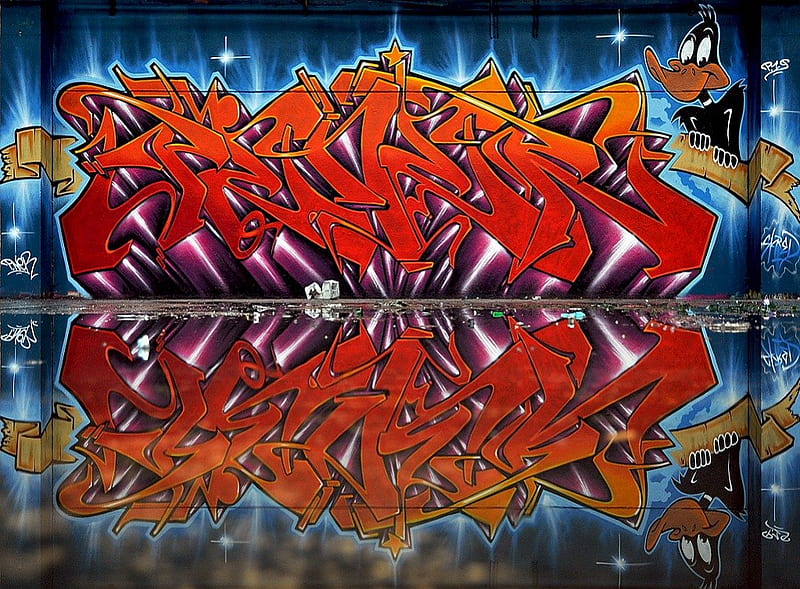
And I'd rather see graffiti, even if I find some ugly, than ads all over. And there's way more public ads anywhere than graffiti. I think local urban expressions like stickers and graffiti is pretty cool. The mainstream prefers ads I guess.