The enthusiasm with geoengineering among the HN community is worrisome. Not sure which computing analogy would drive home the complete recklessness of this mentality but the Earth is not something you can reboot to the last working state once you harebrained patch implodes.
It is true that we have been slowly geoengineering for ages (initially unwittingly, recently with eyes wide open) and it is also true that our modeling abilities increase but this is quite far from making us experts in geoengineering.
For the short term future (decades) the only strategy that seems to make sense on the face of epistemic uncertainty is to refrain from aggravating the situation while studying ever more deeply the system we are now perturbing so much.
Our biggest mental deficiency when handling complexity is that we cant think holistically in practical ways. Isolating individual factors and applying linear thinking has worked wonders in isolated problems but it is not cutting it here.
Most people here on HN are rationally capable of understanding the challenges humanity faces right now.
What many aren't capable of is accepting the conclusion that we all have to change the way we live and quite possibly even the way we organize society in order to mitigate the irreperable problems our way of living has already caused.
Deep down they might suspect this is necessary, but it is much more comfortable to believe in a solution that is only technological and go on as we did. That is why discussions around such technological silver bullets are always toxic: people want to believe.
>That is why discussions around such technological silver bullets are always toxic: people want to believe.
On the flip side, some people reject technological solutions on principle because for them, it's not about solving problems, it's about atoning for the sins of humanity.
What does the alternative future look like where we solve the climate crisis by changing the way we live and organize society? Personally, I would prefer to continue having electricity, heat, running water, sewage treatment, shipping, transportation, and the internet. It seems to me that if we really wanted to, we could keep these things around while putting a substantial portion of GDP into building nuclear reactors and removing carbon from the atmosphere. But that's not a satisfying answer for people who have made the climate crisis into a religious issue.
We have enough resources to provide heating and running water for every living person on Earth, it is just not allocated fairly and smartly (e.g. in my country we flush the toilet with very good grade water meant for drinking, because historically we don’t have separate piping for less potable water and we are rich in waters).
But do we really need to be able to order some bullshit plastic shit from China for 2 dollars? I think it is only fair to give up that for local production, even if that costs 10 dollars for the same thing. Similarly, do I have to eat argentine beef in Europe? Sure, make it available for a hefty price for the rare occasion, but it really should not be generally available. Fruit that is local and is out of season? Don’t import it from Peru, simply wait for it to be in season, or buy some product that was made locally when it was in season, like jam. Strengthening local production would already massively decrease the number of ships we need for minimal inconvenience (hell, it might just be beneficial for the local economy). Do I even have to eat meat each day?
Similary, why don’t we ban most kinds of single-use plastics? How often do you buy milk that you plan on drinking while you walk somewhere? Couldn’t it be stored inside a container you have to bring back to the shop the next time, or buy again if not? Hell, most liquids meant for drinking could easily come in a few sizes of these reusable bottles. We have goddamn shops that can auto-subtract your bought items simply by camera imaging, don’t tell me we don’t have the tech to safely and hygienically refill containers, something we had 100 years ago.
As for societal change: do my parents have to live in a separate house with way too much space for them, having them see their grandchildren only occasionally (making parents having to pay for babysitters)? Only so that they can later be cared for by some random person? Sure, not everyone has parents worth living together with, but this tendency that it is somehow a failure to not move out of your parents home is imo very harmful to everyone involved - parent not having enough self-time, grandparents being alone, slowly deteriorating mentally, children not seeing grandparents enough (also, parents having to figure out parenting from zero).
These are not big sacrifices, but we will do them, one way or another. The question is, do we want to do it with self-agency, or let nature run its course?
But none of the examples you give move the needle enough with regards to climate change.
You're just following what feels like it would be good for the environment (and maybe it is good for your local environment) but isn't actually impactful at a large scale.
Eating less beef will reduce the market price and make it cheaper for everyone else, increasing their consumption accordingly.
The whole point of a capitalist economy is to “route around inefficiency”, in the same way the internet is designed to “route around damage”. Any single player or even a large contingent of players, who act inefficiently, are only increasing the alpha available for another player to exploit.
“Inefficiency” in this sense is anything that doesn’t maximize personal benefit - profit or other quality of life. Anything that is legal according to the rules of the game (or tolerated by society) is going to happen whether it’s you that does it or someone else.
The only long term solution is that if this is what needs to happen, we have to encode that into “the rules” so everyone plays by that rule. Personal recycling or personal consumption reduction does nothing at a social level, and in fact is pushed as a deliberate stalling tactic to avoid and stall those political actions which could have a real impact.
This is also the problem with bitcoin - any one player choosing not to participate in mining only increases the reward for the remaining players who will continue to participate. If there is only one person on the planet willing to mine, she gets all the rewards. So simply choosing not to mine does nothing, you’re just transferring profit to someone else.
Humanity has already built the first AIs, they are emergent paperclip-maximizers encoded into the bylaws of corporations and market structures. And they will route around any attempt to un-maximize paperclip production according to whatever levers we continue to give them. If you don’t want people to eat as much beef, you have to build that rule into the system, it’ll never happen due to personal-level changes in behavior.
If people eat less meat because they have a larger tax, then no, capitalism won’t adapt that way. I didn’t mention how those changes should be adopted. As per Adam Smith: capitalism only works in small, well-defined markets. It was never meant as an end-all control system.
Governments can alter the rules of the game we play and they are (indirectly) controlled by us, as least in democractic countries.
taxing meat is what I'm referring to as "changing the rules of the game", it affects everyone. But a personal decision to just eat less meat yourself is not going to affect anything, because all you're doing is making beef cheaper for everyone else, and they'll eat more of it as a result.
however, you have to really change the rules of the game for everyone, such that consumption is actually substantially curtailed. even with a country-level tax, you're only making it cheaper for other countries who don't care. We saw this play out with Russian oil last year - banning it from the West didn't make it go away, it just made it cheaper for certain other states to import it. The commodity market is global.
(We can certainly enforce these kinds of rules globally when there is political will to do so - Iran sanctions are one example. If you do business with Iran, you won't do business with anyone who uses SWIFT, or anyone who does business with anyone who uses SWIFT. A line is drawn between the "sanctions-compliant" world and the "sanctions-non-compliant" world and it's generally extremely effective such that smuggling incidents are international news.)
The fundamental point I'm trying to make here is the "capitalism routes around inefficiency/morality". That's what it's designed to do, in the same way the internet routes around infrastructure damage (or censorship etc, which is fundamentally infrastructure damage). By taking a moral stand, you only increase the alpha available for other players to exploit.
These "individual moralistic stand" approaches like personal-scale recycling are inherently less effective than taxing producers, or outright bans. The reason they are pushed is because they are ineffective, and because they stall out the political will to adopt real solutions that would be effective.
No, capitalism is not about routing around inefficiencies. Me not eating meat might make it cheaper, but people don’t buy based on price alone. Similarly, if the EU won’t buy Russian oil, it does incentivizes more reliance on green energy on the long run and that will be a net decrease in oil consumption for the world. Especially that the EU is a big financial power, and in combination with carbon taxes it could indirectly greenify other countries decisions.
(E.g. india did buy up russia’s oil cheaper, but if there would have been a carbon tax in the eu with serious tariffs on products made in a not eco-friendly way, their usage might not have increased as much)
> No, capitalism is not about routing around inefficiencies
that is the observable impact though. perhaps the bitcoin example is more straightforward - if only one person on the entire planet is willing to mine, they get the entire block rewards of the entire network.
this is an extreme example, but if you have a small number of corporations who don't give a shit about environmentalism and pursue maximum profit within whatever the law allows, you get to pretty much the same result. People doing good in one area only increases the alpha available for another player to exploit.
capitalism literally is the removal of morality from economic planning - by making it about personal interests and profit, you ensure that if one player has those uncomfortable morals, that other players will take care of the problem and ensure maximum profit is pursued regardless. It's an Autonomous System designed to eliminate morality from the field of economic activity.
I think you have some good points, at the same time, here where I live, in the food store, a part of the freezer is filled with plant based food - if people hadn't voluntarily decided to be vegetarians, then, there would have been meat instead.
When enough people change their behavior, that can have an effect. And I suppose you're right that that effect is smaller than what one would hope (for the reasons you mentioned), and laws or taxes would have more effect
Harming yourself, advising others to harm themselves, and advocating for your government to enforce harm is not "right".
Further, even if what you advocate isn't exactly harmful, just neutral (ie eating local vegetables instead of imported, nevermind that the carbon footprint difference is negligible) wasting valuable political capital on useless gestures is objectively wrong.
That all sounds okay at an individual level, but to affect the massive change we need, relying on moral self-agency is not going to suffice.
So do you want governments to legislate that you must live with your parents? Or that you must not eat meat? Otherwise it's fine and good that a small share of the populace will make these choices on their own, but we need an order of magnitude more.
Carbon tax incentivizes many of my points, but it’s not like my points are the sacred script on what to follow. That and some others do require government legislations (which are a good thing in most cases, and ideally are there to protect and serve the people!), e.g. mandating a standard container, others like living with your parents would need a social change, but that can also be influenced by the government, e.g. much less tax on rent in case of multi-generational homes.
The problem is that absent technology we need to reach 0 carbon emissions. Not just what it was in 1950 or 1900 but actually 0. This implies a standard of living far worse than you suggest. And even at 0 it will take hundreds of years to undo current warming.
It’s not going to be politically feasible since 99% of people don’t want to live that way. Thus we have to pursue alternatives.
We are currently accelerating towards a cliff. We may not stop the car before the cliff, but the next best thing we can do is getting our legs off the pedal.
Maybe technology will help us achieve that last minute stop we so need, but we have to start somewhere.
> Hell, most liquids meant for drinking could easily come in a few sizes of these reusable bottles
Oh how I wish I could just bring a reusable bottle to some dispenser at the store and refill directly. Milk, common juices, soaps, etc. So many bottles going into trash/recycling all the time.
Yes, that’s definitely one of the most realistic ways going forward, though the recyclable bottles part would need separate government standards and laws.
> while putting a substantial portion of GDP into building nuclear reactors and removing carbon from the atmosphere.
The first thing takes years and we still don’t have feasible technology for the second. Not to mention that we would still have a lot of emissions from transport, manufacture, and meat consumption.
A technological silver bullet would be cool but the reality is that we don’t have one and there’s nothing in the near future. But reducing our consumption is something we can start doing now.
The problem with the term "silver bullet" when used in these discussions is that it's used to dismiss any proposal for a technological solution. I can flip that around and say "a societal silver bullet would be cool but the reality is that we aren't going to convince people to reduce their consumption." Which I actually sort of believe. I think a technological solution has a much better chance of succeeding than a social one.
I'm not saying there's a silver bullet, I just think it's our decision as a society whether or not we invest in these technologies and do the work of developing them to the point that they actually have a chance of solving the problem. We were able to make rapid progress on nuclear in the 1940s and space flight in the 1960s. We have the resources, but it doesn't seem like we have the political will this time.
If someone came to you with a problem on a project, and you had a hard deadline of the end of the week, and you had two ways to go about it - 1) this is gonna be a pain in the ass to implement, you'll all be pulling 12 hour days but it's straightforward and crystal clear in how this directly addresses the problem, and 2) some completely unproven solution, that even when fully implemented the math/logic doesn't really work out in terms of it solving the problem, but there's some small hope that it might for some reason, and you'll get to wrap up the week on a Thursday no sweat (the honest reason), which do you spend the rest of your week pursuing?
Now imagine it's not just some meaningless project at your job but a matter of life and death for the majority of life on Earth, which do you pursue?
It’s a very bad analogy because we have no know working solution. We simply have never achieved zero carbon emissions given a modern world of 8 billion people.
We certainly do have a known solution to emissions, it’s to cut them. The most straightforward way to do that is to cut consumption, drop standards of living.
The solution is crystal clear, we have real life working examples right now all over the world, for example the people living in Bangladesh are at a level of consumption that would actually be sustainable for all 8 billion of us to embrace.
The solution is clear, it’s just that we don’t like it, so we readily embrace the magical thinking that we can have our cake and eat it too.
Cutting consumption isn't the only way to reduce emissions. The other way is to change the type of energy fueling the consumption with clean energy. It seems to me like it would be a lot easier to build a bunch nuclear reactors than it would be to convince billions of people to significantly reduce their standard of living.
We have in fact several known working solutions. You don’t have to implement a solution to know that it works. The problem is that they cost money to implement and nobody wants to pay.
Growing up biomass is a good way to eliminate carbon from the atmosphere. You can build or make product from the biomass, or even just throw it into a deep ocean trench.
The problem with this is scale and cost. We essentially need to unburn all the coal and oil were burnt in the last hundred years or so. That gigantic amounts of mass.
> for them, it's not about solving problems, it's about atoning for the sins of humanity.
Never encountered that. Maybe it exists but it's extremely rare and irrelevant.
> putting a substantial portion of GDP into building nuclear reactors and removing carbon from the atmosphere
Spending lots of money, to produce lots of energy, to solve a problem we created by using too much energy...
What people don't get is that environmentalists just want to solve the problem in the most cost effective way, and that is to stop destroying the environment we live in.
> having electricity, heat, running water, sewage treatment, shipping, transportation, and the internet.
Where in the Paris Agreement did you read we shouldn't continue having those things?
>Spending lots of money, to produce lots of energy, to solve a problem we created by using too much energy...
How does this argument make sense? Why is producing energy inherently bad if it doesn't put carbon into the atmosphere?
>What people don't get is that environmentalists just want to solve the problem in the most cost effective way, and that is to stop destroying the environment we live in.
The most realistic way to stop destroying the environment is to switch to clean energy. That means spending money, and building a lot more nuclear reactors than we currently have. If the climate is truly an emergency, which I believe it is, then it's worth spending the money.
> Why is producing energy inherently bad if it doesn't put carbon into the atmosphere?
Because it costs money.
Just not polluting in the first place is cheaper.
Nuclear is probably an important part of the future energy mix but now we discussed using nuclear energy to remove carbon from the atmosphere and I believe that would be a huge waste of resources compared to just not putting the carbon in the atmosphere in the first place.
Why do you think carbon capture is a scam? It's not going to replace reduction via reducing new emissions to zero like some people seem to think, but we're also going to need to pull a lot out of the carbon cycle - net zero isn't enough.
We should be pouring a huge amount of money into nuclear fission right now, it's the most straightforward way toward a zero target, and repetition/scale with large series of identical reactors and streamlined regulatory oversight will hopefully make it cost competitive with fossil fuels.
It's a scam because the cost of removing one ton of CO2 using carbon capture (assuming we're talking about direct air capture) is so high that very few would be ready to pay the price to remove their emissions. Again, reducing how much carbon emissions we produce is way cheaper.
I've got nothing against carbon capture technology in principle, but it's not a solution that will let us continue releasing carbon into the atmosphere at anywhere near the current rate.
Ah, but there are a bunch of other carbon capture solutions, DAC is usually considered among the highest cost.
But yeah, not emitting is cheaper in most cases, and you’re right, we can’t just slather carbon capture on our current situation and not change anything else.
Those things require energy. Incremental efficiency improvements will not make a big dent. Either we continue to use the same level of energy, or we start giving things up. It’s simple arithmetic.
It's not about religion, but about empathy and justice. Some people actually think that other forms of life on this planet have a right to exist, and there's no question at all that human life has been catastrophically bad for virtually every other form of life on this Earth. You can't just apply an energy patch and presto-reverso the carbon content in the atmosphere; we've managed to seriously disrupt global ecosystems and going nuclear doesn't fix that. We're gobbling this planet up, and there's just frankly too many of us to keep living at the standard of living we are.
> Personally, I would prefer to continue having electricity, heat, running water, sewage treatment, shipping, transportation, and the internet.
Incredibly tone deaf, frankly, when most past humans had none of those things and yet dealt with it, living actual full lives. We've basically forgotten what we are, what we came from, and believe we deserve Saturday morning cartoons.
I'm not saying it's a magic fix, I'm saying it's a really hard problem that we can solve if we put the resources and brain power into it. But some people apparently think that even trying to solve the problem is pointless. Needless to say, I disagree.
>Incredibly tone deaf, frankly, when most past humans had none of those things and yet dealt with it, living actual full lives. We've basically forgotten what we are, what we came from, and believe we deserve Saturday morning cartoons.
We came from a history of mostly starving, struggling for survival, dying of infections, dying during childbirth, being illiterate, and having little shelter or comfort. I think this nostalgia for the past is a golden age fallacy that needs to die. Technology has vastly improved human life and taking it away is essentially a call for reducing the standard of living for everybody.
> We came from a history of mostly starving, struggling for survival, dying of infections, dying during childbirth, being illiterate, and having little shelter or comfort. I think this nostalgia for the past is a golden age fallacy that needs to die. Technology has vastly improved human life and taking it away is essentially a call for reducing the standard of living for everybody.
The past wasn't sunbeams and frolicking in meadows, but your take on it is totally off base. The fact is that in every period of (Western) history, the wealthy have always lived incredibly comfortable and enjoyable lives. Modern technology isn't the determinant variable. They did it by harnessing their respective civilizations--it was absolutely not equitable. They rested atop a pyramid of other people. And so do you and I! We do not live in equitable times globally. To the extent that we've made any strides morally, it's only that we've substituted technology and industrialization for slavery and oppression. But under no configuration is modern life sustainable for 8 billion people, energy, living space, and raw materials wise, so this situation is going to keep drawing down the reservoir until there is a brutal correction.
I also think your characterization of all of history being "mostly starving, struggling for survival, dying of infections, dying during childbirth, being illiterate, and having little shelter or comfort" is frankly tripe. As if native peoples lives (over hundreds of thousands of years, indeed) are such utter trash that they need to be rescued from it by technology. "Oh, the poor brown people living such primitive lives, how sad. Let's do a mission to convert them to consumerism and fill their lives with junk, get them some jobs and atomize their tribes." I invite you to visit basically any place on Earth that is not Europe or North America. It's frankly a white/western superiority complex and technology is just a fig leaf over it, a fundamental belief that today's way of life is the only one worth living and is so obviously superior that it cannot be questioned. I mean, those stupid native Americans and their huts. Good thing we fixed that, right?
>But under no configuration is modern life sustainable for 8 billion people, energy, living space, and raw materials wise, so this situation is going to keep drawing down the reservoir until there is a brutal correction.
We can fit far more than 8 billion people on the planet. Look how much of it is uninhabited by humans right now. The limit isn't living space, it's our ability to generate and distribute clean energy. Raw materials are a concern, but I don't think we're anywhere close to running out at the moment, and if we get our shit together technologically there are plenty of raw materials in the solar system.
>As if native peoples lives (over hundreds of thousands of years, indeed) are such utter trash that they need to be rescued from it by technology. "Oh, the poor brown people living such primitive lives, how sad. Let's do a mission to convert them to consumerism and fill their lives with junk, get them some jobs and atomize their tribes."
> I mean, those stupid native Americans and their huts. Good thing we fixed that, right?
I'm not sure why you needed to bring race/skin color into the discussion, or to attribute this view to me in that tone. How about we ask people what they want, rather than prescribing how they should live from our idealized/nostalgic view of native people? Let's see whether they want to live with an electric grid, medical care, and access to modern goods and services. If we judge by the number of industrializing societies across the world, it seems like people do want these things.
>I invite you to visit basically any place on Earth that is not Europe or North America.
I invite you to look at statistics like life expectancy, infant mortality, literacy, healthcare outcomes, and access to food and housing. I think you'll find that most places in the world don't do as well on these metrics as Europe and North America. You're basically arguing that these people should stay in poverty. Again, I think you should ask the people you're talking about whether they want that.
This is reproducible across time, geography and culture. It is the basic condition of humanity.
> I invite you to visit basically any place on Earth that is not Europe or North America. It's frankly a white/western superiority complex and technology is just a fig leaf over it, a fundamental belief that today's way of life is the only one worth living
I invite you to do the same, and ask the people you'd meet if they'd prefer if half their children died in their arms or if they'd prefer to live without electricity, or antibiotics, or fertilizer, or telecommunications, or vaccines, or, or, or....
> But under no configuration is modern life sustainable for 8 billion people, energy, living space, and raw materials wise, so this situation is going to keep drawing down the reservoir until there is a brutal correction.
If billions are going to die either way then instead of just giving up we should be trying everything in our power to improve our technology to increase the carrying capacity of the earth and escape another malthusian trap as we've done so many times in the past.
Unless of course you want billions to die.
As an aside, I'm very disturbed to realize this screed is coming from someone of your stature in the tech community.
> As an aside, I'm very disturbed to realize this screed is coming from someone of your stature in the tech community.
Oh geesh. As if the lines of code I have written are what I put forth to vouch for this. We should divorce the tech fantasies from the meatspace realities. My opinions are based on the many, many, non-tech days that I've spent roaming the Earth[1] and have seen what humans as a whole are really up to. I've spent a whole lot of time picking up garbage off beaches and roadsides and over the course of my short life have already seen the forests and fields of my youth get gobbled up by Lowes's and Burger Kings and endless, endless sprawl and greed. When I see a hundred acres of corn get sold off for 6 million bucks and the only thing that is built on it is a gas station, it dawns me that it's just another transaction in a long, long line of trading what was here before for the now--forests, trees, raccoons, foxes, wolves, beatles, ants, birds, bees, all...woosh. I guess tomorrow it'll be a solar/wind-powered datacenter and we'll all pat ourselves on the back. But we're fruits or flowers on the tree of life, and we're sawing its branches off.
What I find disturbing, but not really surprising, given how virtualized and fake our worlds and imaginations have become, just how blinkered the tech sector is, as if exponential growth is going to continue forever and matter and energy are just going to suddenly take up our growthism mindset and help us boost our fever dreams of...what...a hundred billion people on Earth? Or of 8 billion Elon Musks whisking around the planet on private jets? I honestly don't know what people expect. The exponential curve would naturally become an S curve at some point, but unfortunately we aren't aiming for that. We've already overshot, and the reservoir we are drawing down will eventually run dry, and that's a brutal, brutal crash.
And if you take my opinion for advocating any fascist-sounding, eugenics-sounding, kill-the-baddies-sounding recommendation, then you're reading something in I didn't write. Like if pointing out we're headed for a cliff turns into an argument about the two options: magically sprout wings or all of us cut our legs off the knees. It's a total non-sequitur and binary thinking.
[1] And yeah, it's true that I've been able to roam said Earth because of tech that's been invented in the last 50-100 years. And yes, I am lucky. And yes we are having this conversation because of tech, and yes, I don't feel great about the unsustainability of the lifestyle that all of us, including me, live.
I see your perspective but I think that it is basically wrong. Your worldview misses a few key points:
1. The human growth explosion already happened. We're dealing with the end stage of it over the next 50-100 years. There will never be a world of "a hundred billion people on Earth" since it turns out people don't want to reproduce that much. We'll hit peak human this century which means that we actually do have a shot at giving all people a decent lifestyle if we develop our technology and have abundant energy. Exponential growth is just not required. The Ehrlichian doomsday was never going to happen.
2. The past was actually really bad, even for the wealthiest. Disease, starvation, and violence were actually rampant. Rewinding the development clock in rich areas, or pausing it in developing areas, would be equivalent to the largest crimes against humanity ever perpetrated.
I find your rejection of this basic fact of history by writing things like: "if native peoples lives (over hundreds of thousands of years, indeed) are such utter trash that they need to be rescued from it by technology" or "Incredibly tone deaf, frankly, when most past humans had none of those things and yet dealt with it, living actual full lives. We've basically forgotten what we are, what we came from, and believe we deserve Saturday morning cartoons." to be wildly ignorant. These people suffered, for millions of years, and still they suffer today. Alleviating this suffering is not optional. Frankly only someone who grew up in the utterly privilege western culture could ever think or write something like this.
3. Humans are not separate from nature. This one is counter-intuitive and hard to swallow but the truth is all human activity is natural, Lowes and Burger Kings are just a natural as forests. Nature is utterly impersonal. It has no morality or opinion. Sometimes one species gets a lot of adaptions that let it dominate and reshape the rest of nature into the way it sees fit. Then other species evolve to fill the new niches that are created. We make a lot of plastic now, but bacteria are starting to evolve to eat it, is plastic bad for nature? It's a nonsensical question. Plastic is nature.
It's fine to not like this and prefer some parts of nature over others, I certainly do, but no part of it is "better" or "worse" it just IS. Any morality you assign to it is purely your own opinion. You're right that keeping 8 billion humans fed and happy has a big impact on the rest of nature. But the only moral dimension that impact has is: will it cause more or less human suffering?
Sometimes the answer is yes, and we should stop. Sometimes is no and we have a moral duty to reconfigure nature to our liking. Most of the time the answer is: "it's not clear" and then people argue about it and sometimes pass laws.
But crucially it's all about humanity.
> And if you take my opinion for advocating any fascist-sounding, eugenics-sounding, kill-the-baddies-sounding recommendation, then you're reading something in I didn't write
But surely you must realize that the malthusian collapse that you anticipate will be characterized by authoritarian violence. Times of resource scarcity always are. So by embracing a defeatist philosophy you implicitly endorse it.
Excellent points. Many people forget that human population is going to peak by about 2100. The "humans are not separate from nature" point is something most people don't believe, but it's perfectly intuitive if you zoom out a bit. A human city is no different than a beehive or an ant colony.
It won't take decades if we invest sufficient resources. It takes about 5 years to build a nuclear reactor, but you can build a bunch of them in parallel. The real problem is opposition to nuclear by the general public, not the technology.
If CDR is a meme solution for the science illiterate, then why does the IPCC include it as a key mitigation strategy?
>C.11 The deployment of CDR to counterbalance hard-to-abate residual emissions is unavoidable if net zero CO2 or GHG emissions are to be achieved. The scale and timing of deployment will depend on the trajectories of gross emission reductions in different sectors. Upscaling the deployment of CDR depends on developing effective approaches to address feasibility and sustainability constraints especially at large scales. (high confidence)
“ What does the alternative future look like where we solve the climate crisis by changing the way we live and organize society? Personally, I would prefer to continue having electricity, heat, running water, sewage treatment, shipping, transportation, and the internet.”
This is either dishonest or ignorant. We can make a huge difference by moving faster to solar, eating a lot less meat, living in denser settings rather than suburbs, living in smaller houses, switching to heat pumps, not driving huge trucks and SUVs, avoid so much waste particularly in food, driving less, etc.
If you look at some of the other comments, "changing the way we live and organize society" for some people means depopulation and returning to a hunter gatherer way of living. That's the kind of thing I'm talking about.
I agree that we can all do better on our individual choices. But we're not going to convince billions of people to that in the next 10 years. We need to fix the problem now, and the solution is to power our current level of growth with clean energy.
Bluntly: far fewer people, sustainability built into every process, no more oil, very high cost for transportation unless it is by ship, personal transport will be very costly and you won't do it unless you really have to. Think '1850' but with transistors.
That is a very good question, but it is also the wrong question. The better one would be how are we collectively going to avoid nature doing it for us?
Because I don't know what the solution is but I do know that the alternative is going to be no fun at all. One possibility is that we all end up agreeing that we should at least try to reduce our numbers. My parents brought me up with 'replacement' numbers so that we'd end up with a steady population. I'm not so sure if that was wise. And I'm aware that there are many predictions out there that our numbers will eventually top out (they will, either because we do it ourselves, voluntarily or because our resources will run out, an exponentially expanding population in a fixed environment always ends in collapse).
But unless we manage to massively reduce our impact on the environment I don't see a way for the increased consumption and eventual survival of our societies as we know them today. In another comment someone offhandedly asked whether we should all want leisure yachts or not. The obvious answer to that is 'no'. But we probably also shouldn't all want vehicles and the ability to transport ourselves to the end of the world on a whim. Hard choices are ahead of us, the time for easy answers is long behind us.
This has been my "thing" for some time. Now, carrying capacity for Earth is a function, and one of the arguments is lifestyle, but I believe that we are beyond most values of that function for anything beyond "miserable and half-starved." The population will drop. We can do it or Nature will do it for us.
Nature will be wanton, cruel, perhaps overshoot. It will be ugly and horrific. We will not be left in great shape. The only fairness it will possess is unpredictable randomness.
Or, we can do it. Harsh. Belt-tightening. Unpleasant conversations. Lengthy debates about worth. Whole societies wanting their turn at the trough. Deprivation. Lifeboat politics. The Cold Equations in a hot, hot world.
These “unpleasant conversations” have been universally the powerful talking about how to genocide the powerless. Frankly, I’d rather nature do it than follow the population control proposals we’ve seen.
Everybody who decides that what they need to do is kill extremely large numbers of other people can just off themselves instead.
See, this is what I am talking about. You immediately leap to the problems of the past as a way to misinterpret what was said. This is why people simply cannot agree on a way forward and why Nature will be doing it for us. Some have even codified this into an ethical stance.
And so the scavengers will feast and the plagues will bloom again. And because no-one will agree, we will have little local wars over resources. Maybe someone will grab a warhead or two. Technology still keeps happening, so expect at least one plague to be targeted. And some group will have a "if we can't have it, nobody can," so a self-irradiated country will get to keep a resource out of some other group's hands. You'll get real genocides, then.
Nobody wants to participate in the one way of getting their hands bloody, pretending that they won't get bloody later on, up to the elbows.
You can feel free to detail your proposed way forward. But I don't think I've ever seen anything proposed that isn't active genocide of the less powerful, let along anything resembling justice. Maybe all the mass executions in your plan will be of wealthy and middle class Americans. You might surprise me.
... you really can't seem to figure out a third proposal for changing a population number from N to some number less than N? Have you excluded the middle that hard that only orchestrated murder or Nature's nasty negligence are the only things which appear to you? If you are legitimately that baffled, I am not sure we can manage to communicate at all.
That's the problem right there: by asking the question like that you are essentially saying 'children are for the wealthy'. And that's also not how it should be. This is a super hard problem to resolve in a fair way that works in an international setting because you need everybody on board otherwise it will not work. It's the tragedy of the commons endgame.
This is a problem; with the inertia the system is carrying where there are no "ethical" choices left. That's of course no excuse to pick a horribly fascist and evil one. Yet that seems to be the inference in any conversation where you point out that fact that we're basically fucked. "Oh yeah, well obviously you are a genocidal monster. That must mean we're not fucked."
Uh, no. I'm watching this garbage truck smash into the wall, same as you. We're all in the same boat.
I don't care about what people call me, I'm just pointing out there are too many of us. Historically when there were too many people we ended up with wars or famine. I don't think this time around it will be an exception to that rule, but it's the first time this is happening at this scale. In that sense all bets are off, it is also possible that given such stakes humanity can find it in itself to pull the cart as one but I'm not too hopeful about that.
We could easily be in 'adapt or die' territory somewhere in the next century.
We're well into 'uncomfortable truth' territory on this subject, so you can expect namecalling and downvoting rather than discussion, nothing surprising but people don't like to hear that their life style isn't sustainable.
The majority of people around me would rather invest in holidays and luxury goods than sustainability and aim to increase their footprint rather than that they reduce it. I'm just as guilty because I too live in a wealthy country. And even though I bike when I can and have spent a small fortune on making this house less dependent on outside energy I make myself no illusions: I'm still a net negative on the environment, far in excess of any developing world denizen. All I have to do to have that reinforced is to look at our trash can, food bill and fuel bill for the times when we do drive. Each of those alone is probably well in excess of our 'proper' budget that would be sustainable.
And for the life of me without stopping all activity I have no idea how I can further reduce it, this is just the world I happen to live in. I guess I could not have had kids, I guess I could live in a tiny shack. But overall everybody in the developed world will increase the problem by virtue of being alive. That's not good news, but I don't have anything better.
I’m pretty sure there’s no chance that people in aggregate are going to voluntarily reduce consumption - on the contrary, the billions in developing countries are moving toward the western lifestyle, and they’re not going to accept westerners trying to tell them not to. We have to work to make this lifestyle sustainable by making clean power, cement, steel, synthetic fuel, etc cheaper than the polluting alternatives, because hoping that we’ll reduce our way out of this is wishful thinking. We need to get to negative new carbon, not just less carbon.
Ha! You sort of slid a miracle in there like it was a checkbox. "We all have to change the way we live and quite possibly even the way we organize society ..."
Your solution to this problem involves Universal Agreement and Cooperation Among Humanity. People can't even agree not to murder each other.
Any solution which requires UAaCOAH might as well have unobtanium as its focal point. It's just not going to happen. We can't agree on metric versus imperial, on language, on such weirdly silly things like an afterlife, on oppressive things like what women should be allowed to wear (in the face of the collapse of the biosphere, right now, you can find interviews with men who have chucked acid onto the faces of their wives because their peers taunt them about said wives wearing modern and "immodest" clothing: a real top priority for civilization). We can't agree on who owns what rock and we can't agree on how to govern, and our governance can't agree with its populace on little things like not lying to them about practically everything.
We are a divisive, fiercely independent species with our own thoughts about everything, however trivial, whether or not it is good for us.
Forget three nines, ignore a couple of standard deviations, getting even four-fifths of humanity to suddenly snap on to an agenda which will be personally uncomfortable to them is too much to ask. Any plan which requires that level of agreement is absolutely doomed unless you've got some kind of high-level AGI in your pocket with just one priority: stop the oncoming several catastrophes valued over the preferences, choices, comfort, even reproductive lives of each person on the planet ... and some way of enforcing it. Lacking Forbin and his Colossus, we will not unite on much of anything besides "we all want to do what we individually want."
Once you realize this, it's going to be the small (in terms of populace) projects which do not require universal consent which might have any shot whatsoever, rather than getting the bulk of humanity together, for the first time in history, to cooperate.
I want everyone to be able to live in a well insulated flat powered by renewable energy walking and biking distance from their daily needs, and with public transport (and rarely-needed EV share) for the rest. Combined with a low meat low dairy diet and less disposable consumer junk it seems like we could get a long ways with an arguably better quality of life. Maybe work half time too.
"Stop eating nice food" is a nonstarter, as is "give up personal all weather mobility", have these as a policy positions and we'll get 3 degrees rises as those would be a smaller quality of life decrease for the average American.
Replying here to your below comment because of the "stack" limit. You wrote "I want to go to visit my friend Bob who lives 10 miles away but the rain is pouring down." as a justification for ownership of a car.
We just went through 2 weeks of heavy rain here in Germany. I am only biking (not even an E-Bike) and what I did is just looked at the rain radar with a simple app, add a bit of buffer time, packed rain clothes in my bike bag and just go. I was only once a bit wet because I was too lazy to pull out my jacket as I came back home one evening.
You will always find a good excuse to keep the apparent comfort of a car, but once you start to really bike on a regular basis, in my case, I found the bike way nicer, you bring movement in your life. It helps my health and my mood, which is a nice side effect.
> Maybe you enjoy half an hour cycling in rain that's going to last 6 hours, but I don't.
At some point, people are going to have to start preferring long term survival over short term enjoyment.
I don’t love getting rained on, and there are days that the last thing I feel like doing is getting on the bike or walking somewhere, but feeling like doing something is often not the primary reason to do it. And I realize that if I can’t/won’t make the harder decisions, I have no business encouraging others to do the same.
Societies collectively need to change habits and shift mindsets about the ways we live life. It certainly won’t be because it all feels good.
I’m not saying there is no place for cars, and clearly there are situations where a bike won’t work. But that does not mean our current car culture is acceptable either.
> At some point, people are going to have to start preferring long term survival over short term enjoyment.
Two things on this: A. Electric cars are now viable. B. Even if they weren't, current climate change projections are not a threat to human survival, merely going to make life harder by a hard to quantify amount.
While some meat eating being required for nice food is subjective, I'm struggling to see what the suggested alternative to cars for all weather personal mobility is. I want to go to visit my friend Bob who lives 10 miles away but the rain is pouring down. What do I do in a carless world?
Btw: CO2 emission taxes, road taxes and congestion charges are a great idea.
This is what OP means by changing the way we live.
Sorry but getting rained on a bit is least of our troubles. Imagine there are places like Netherlands where it rains all the time and people (including very old ones) bike around the city…
the mode share of cycling has gone down in the netherlands over the last 30 years. 12% of average income households are car-free; it's 25% overall and 6% for the wealthy. this is despite the mode share of cycling in amsterdam increasing 50% in the same period. even with a cycling network fully connecting the southern half of the country, decent connectivity in the north, road design in the major cities that is intentionally hostile to intra-city car commutes, and an ostensibly pro-cycling commuter culture, people don't want to bike more than a couple miles if they can afford not to.
if you want to shape the behaviors of the world's people as you suggest, you'll need fascism. hard sell when there are already two paths to clean energy abundance, two paths to sustainable driving, and many paths to damage control competing in the public discourse.
Its exactly those type of people who call biking fascism who (once it will get tough) will bring fascism as only viable solution. Handmaids tale style.
People biking are just happily chugging along. They are not the fascists.
> Public transportation still requires you to go to the bus stop in the rain.
I want to say here that this comment sounds extremely alien to me, to the point that out of context I would have taken it as satirical.
I know you're serious, but there's probably a big portion of people to whom discussing the problem of walking in the rain to the bus stop sounds completely ridiculous, in any context, and as as something we must consider when talking about climate change policy, well, even more ridiculous.
I've lived in rainy places, and you just wear a raincoat, boots, maybe an umbrella (not always), and carry on.
This kind of disproportionate weight assigned to even the smallest levels of personal discomfort, when discussing these problems, is what most people are denouncing here. And this bias might be what pushes people towards techno-solutionism that doesn't have a chance of actually solving our problems in the time frame that we need.
If rain were a major impediment to functioning Ireland and NL should be abandoned. But it isn't. Rain is a minor nuisance. As for your friendships: in the past people would usually be good friends with people living close to them because they lacked transport. I have friends all over the world on account of the internet and I'm well aware that going to visit them is in many cases out of the question. That's much easier to decide when they are 100's (or even 1000's) of km away but the principle remains.
If a bit of rain would stop you then that says a lot. I bike thousands of km per year and get caught in the rain frequently, it doesn't even factor into the decision of whether or not I will go because when you bike a longer distance in NL the chances of getting rained on approach certainty.
i don't think a disinterest in cycling for 45 minutes in the rain each way says anything negative about me. i have a bike and use it when it makes sense. that doesn't make sense
10 miles is fine, you can have friends everywhere and you can’t expect everyone you know to live in the same urban sprawl.
Use public transport, take a cab if you need to or use a car club (shared vehicles use less resources than owning a car), ride a bike, walk the 10 miles. Infrastructure helps to reduce personal car use.
This isn't right. 10 miles is a fine distance. I met up with friends 13 miles away today. As long as there's good public transport it's not a big deal.
> Public transportation still requires you to go to the bus stop in the rain.
An umbrella solves that at minimal cost.
For the record, I don't think all car use is wrong, but the example of visiting a friend 10 miles away isn't a very good one. Someone shouldn't be expected to buy a car and its associated maintenance, tax, and externalities, just to visit someone that nearby.
A lot of people replied to you and stuff, but I don't agree with them all so I want to answer you personally.
I live in Tokyo. As I'm replying to you, I'm coming back from meeting my friends that live 13 miles away. This isn't uncommon. One of my best friends, I see her almost every week, lives 15 miles away from me.
Here's what I did: I cycled 5 minutes to the train station; I got on the train; I ran into a friend in the train, and we chatted the whole way; I got to the station, went to our meeting spot, and we hung out for hours, drank a bunch, had fun, until last train; then we all went back to the station, rode the train for 45 minutes, and now I'm home.
It wasn't raining today, but I hang out with my friends when it's raining too. We don't let that stop us. Take an umbrella or a raincoat or just walk for 5 minutes in the rain. It's not a big deal.
At the same time, I understand that this can feel very foreign to you. Our thoughts are molded by our environment. But I'm sure that if you lived in Tokyo you would also change your mind.
I don't know how to change your mind, but I can tell you that if you gave it a try you would change your mind. l
I'm not saying cars have no place, but they don't need to be the be all end all of transportation. There's very real negatives to cars, we're just blinded to them as long as we live in a car centric society.
> I can tell you that if you gave it a try you would change your mind
I've been cycling and using public transport in the south east UK as my primary means of travel for 12 years, the car is a supplement. Update your mental models accordingly.
Zoning doesn't change that a lot of people do want single family detached homes. Those zoning rules weren't handed down by some solo dictator far away they were decided by the people living in those areas.
I do agree there should be more options in the housing market, but in the end there is some percentage of the market which will prefer to not live in flats and rowhouses.
And it will be a very small amount of people because if SFHs were priced appropriately they would be unaffordably expensive or incredibly remote. At the end of the day people don't want just the SFH, they want the location too.
Ah, now you're understanding why US cities are so sprawled. Those SFH's are remote, and a good chunk of the people living there want it that way. Those people want a large yard away from a large city while still having things like some stores and a large airport within an hour or so. These people reject the thought of living in a place like New York or Amsterdam or London or other dense cities. They actively vote against expansion or creation of public transit options.
I know there's a lot of media online about people being anti-suburbia, and yeah that's a growing percentage of America. But there's still a massive chunk of the population that will continue to just move out further from the city as you densify or actively fight densification.
As I suggested, those zoning laws aren't writing themselves. They're not being handed down by some far away dictator. They're being written and continued by popularity elected local politicians. Democracy at work.
I've absolutely seen densification efforts massively fought by the people who currently live there. I know people who purposefully moved further out from the city. I've seen neighborhood after neighborhood that seem like nightmares to me get built way out in the middle of nowhere with people clamoring to buy into them even if there are similar purchase-price denser options further in the city. Because, they want a large yard, they want a three car garage, they want five bedrooms and a study and a theater room and a wine humidor closet.
Which buying way out there, it's cheap to have some massive house because the $/sqft for just the lot alone is massively higher in the city. A massive chunk of the value of the home in a city is the land it's on not the structure itself, unless it's a really fancy structure.
The sprawl is real but large swathes of cities zoned exclusively for SFHs is also real.
Vancouver is 80% SFHs because of zoning. Recently the government allowed multiplexes in SFH zones, and suddenly every new construction is a multiplex, and families are looking at rebuilding their houses to maximize value.
If there was no artificial zoning, then Vancouver would be a lot denser and current SFHs would be a lot more expensive (and they're already expensive, 2M on average). This is true across most NA cities.
My argument is not that nobody wants SFHs. I'm sure they do, but desires are not fixed. If you had to choose between an SFH 1 hour away from the city, and a row house 15 minutes away, you might go with the row house.
And yes, sometimes people want to live far. There's lots of reasons for that, and that's ok, as long as they're paying the real value of it. By the way, this would mean massive property taxes because sparse infrastructure is very expensive.
Because of opportunity cost relative to other housing options. Right now you're only allowed to build SFHs, and the market will only bear a price of 2-3M before most people are priced out, so that's what they cost.
If instead of one SFH with a large yard you build 5 row houses in the same plot, and sell each one for 1M, the SFH is only 50% efficient compared to the row houses, so its price needs to increase for it to be worth building.
It's obviously more complicated than that, but that's the underlying idea. It's the same reason you don't see SFHs in Manhattan, because the opportunity cost is too high.
Netherlands is better but here is my spot but I think we are a close second. The food culture is what one gives up to live here. Might as well cook for your self.
Especially since HNers mostly are the top top top earners in the world, having unsustainable lifestyles. No one likes to accept it can't be like this forever.
It's really frustrating that I had to work really hard, study the right things, and get lucky to be able to afford to live somewhere my direct emissions are minimal. More people should be able to afford to live car free in well insulated homes.
This doesn't seem right. Most of the world's new carbon emissions are coming from developing countries. On the other hand, the HN crowd is much more likely to live in dense cities (which are more climate friendly), have access to public transportation, drive electric cars, and can afford to pay for carbon offsets.
The only thing unsustainable about the first world lifestyle is the fact that we don't have the political will to invest in real solutions like nuclear power, carbon capture and storage, etc.
Well, you're saying "new carbon emissions", of course those are coming from developing countries. It's not the same statement as I said. And of course they should be allowed to improve their quality of life.
My point is that an average HNer lives in a country where per capita co2 per person is >10x as much as the poorer countries. And since the average HNer is a well off person with a lavish lifestyle, international travels etc., it's probably closer to 100x the amount of a person in a developing country.
Either this lifestyle should only belong to us few and developing countries should remain developing. Or we need to cut back to a sustainable level everyone can share. Which is a reality people don't want to face.
> The only thing unsustainable about the first world lifestyle is the fact that we don't have the political will to invest in real solutions like nuclear power, carbon capture and storage, etc.
It's not about "political will". Would you pay more for a product if it's external effects were priced in? Probably not. Hence unsustainable. Our level of consumption is only possible because we don't pay the true price, someone else is.
Carbon emissions per capita is going down in developed countries. It's going up in developing countries. Your implication was that the current problem is the level of consumption in the richest countries. But in reality that only accounts for a small portion of the expected carbon emissions over the next century.
We don't need to "cut back" to a sustainable level. A sustainable level is whatever amount of energy we can produce without increasing the amount of carbon in the atmosphere. If we built more nuclear, solar, and wind power, and invested more in carbon capture and storage, we could sustain a much higher level of consumption than we currently are, while emitting less carbon.
> Carbon emissions per capita is going down in developed countries. It's going up in developing countries.
But it's not going to go down far enough in developed countries and it is going up very rapidly in developing countries, the result of that is predictable, and in the meantime we are emitting a large multiple of the per-capita greenhouse gases compared to everybody else, who simply want to have theirs too.
We do need to 'cut back' to a sustainable level or we will be cut back. The amount of carbon in the atmosphere is already too high, it won't come down unless we cut back, as a species.
> If we built more nuclear, solar, and wind power, and invested more in carbon capture and storage, we could sustain a much higher level of consumption than we currently are, while emitting less carbon.
That can not be stated with such a degree of confidence, and smacks a bit of people saying that driving electric cars is good for the environment. It isn't, it's just slightly better than driving an ICE.
You're kinda proving my point. Instead of facing reality as that would mean changes to your lifestyle, you want to keep on going as if nothing is happening and just hope technology will save us.
My argument is that your point isn't based in reality. How is changing my lifestyle going to fix the problem when most of my power consumption is fueled by renewables, while most of the carbon emissions over the next 50 years are going to come from India and China?
I'm not saying keep going as if nothing is happening. I'm saying the climate crisis is a real emergency, and the solution is to build more renewable energy and remove carbon from the atmosphere.
Because while your "power" consumption is mostly renewables (again, you arguing against something slightly different than what I write), it's a small part of your total consumption. What about all the power China uses to build the things we in the west consume? That's on your budget.
Oh, I'm all for reducing consumption of useless crap. Personally I don't buy many things, most of my spending goes toward food and books.
I thought we were talking about energy "consumption", not consumption of material goods. However, I'm still not sure how much reducing that kind of consumption is going to help in the overall picture of the climate crisis. It's also not realistic to expect that everybody is just going to stop buying things in the next 10 years.
If you've either taken four long flights in the last year, or drive an SUV a little more than average, you're already above the average carbon footprint for the world, without any consideration of eating meat, electricity, other fuels, etc.
Exactly. The cumulative emissions of the United States dwarf the rest of the countries in the world[1].
The powerhouse that is the United States was built on the externality of carbon emissions. Now that the West has built their economies of this externality, they're trying to prevent developing nations from catching up by utilizing the same externality.
Yes, and when you multiply per capita by population, you end up with China and India emitting over double what the United States emits.
There is also the delta to take into account. Industrialized countries are decarbonizing and switching to renewables, while industrializing countries are building new coal plants.
It's not exactly fair for industrialized nations to have taken advantage of the externality of their historic carbon emissions, but then prevent developing nations from doing the same.
The ethical solution would be for industrialized nations to subsidize the development and decarbonization of developing nations.
Too bad the atomic energy commission is so tight lipped about proliferating reactor designs. The third world could have been powered with atomic energy by the 1980s if we didnt subscribe to cold war us vs them thinking (which our top brass continues to subscribe to even if the general populace hasn’t given a shit about the cold war since before Vietnam).
I understand I was just trying to explain to myself how they were #1 in usage. I was surprised. I was also trying to define the problem since they were outpacing the USA.
Looks like Niagara falls only produces about 16 billion BTUs or 4.9 Million kWs.
Makes me wonder if the offshoring of manufacturing from the USA ended up looking like efficiency gains. If we are indeed now anchoring manufacturing it will have a much smaller energy footprint than the manufacturing we lost. Which finally brings us back to the original topic delivery of goods.
It beats -45 I guess... (that's the lowest I ever saw on my outside thermometer on St. Josephs Island).
You make a good point though: what is and what isn't habitable will change and as a result there will be substantial movement of people, displaced either by choice or by need.
Why would I accept that there's this doomsday barreling towards us at high speed, and the only way to avoid it is economic devastation and serfdom for my grandchildren?
That sounds an awful lot like a long con.
Most rational people have arrived at the very reasonable conclusion that the more extreme the danger is, the more justified we are in attempting cutting edge countermeasures. So when the response we get back is "oh no, you can't do that, anything but that!"... the more it sounds like it was a grift all along.
This requires no conspiracy, by the way. Large groups of people can subconsciously coordinate in these ways without even realizing they're doing it. Just takes a bit of groupthink and a small dab of neuroticism.
> What many aren't capable of is accepting the conclusion that we all have to change the way we live and quite possibly even the way we organize society in order to mitigate the irreperable problems our way of living has already caused.
This seems like a euphemism for "a lot of people 'have' to die" - when phrased that way it becomes obvious the reason that many will search for active measures to take to try to prevent that.
The amount of cognitive dissonance with regard to environmental concern continues to amaze me.
Many people seem to have strong concerns about their environmental impact but few acknowledge just how damaging (relative to others) certain activities are.
The obvious example is driving. People know it is bad but few seem to be aware of just how much co2 is produced per litre of petrol used (about 234g - so about 1kg every 5km traveled). Let that sink in. At an average of 20,000km per year that is about 4,000kg. Per capita co2 emissions in the US is 14,000kg.
Sorting your recycling is so much easier than acknowledging that.
THIS! As we will grasp the effective impact of the past century of burning fossil fuel, we will first go in denial, hoping for a technological miracle.
While there might be a way to produce 84% of the energy currently used without involving fossil fuel, it would not reasonably be implemented in the next decades.
So, we might have to change the way we live. The sooner we adapt, the less painful it would be. If this is not for the climate, it would be as we reach peak oil/gas/coal.
> What many aren't capable of is accepting the conclusion that we all have to change the way we live and quite possibly even the way we organize society in order to mitigate the irreperable problems our way of living has already caused
That's because this has never actually been shown. So many people think it has, but almost none have ever seen an actual attempt at a QALY calculation for no climate change mitigation. If you've actually seen one I'd love you to link it!
Mostly it's lots of handwaving, but attempting to quantify things is actually important so we can know what measures are worthwhile (e.g. if climate change was an existential risk this century then threatening with nukes any country emitting CO2 would be reasonable).
I highly doubt many proponents of geoengineering think in terms of rebooting or isolating individual factors.
The appeal of geoengineering is you can nudge specific systems slowly into another direction. You can start small and observe expected effects and unwanted side-effects.
Reduction of sulfer emissions by ships is an interesting starting point to learn something.
Starting small doesn't work if you have a nonlinear system. In nonlinear systems, the magnitude of a perturbance isn't linearly related to the absorbed effect.
So in the worst case: small input, giant irreversible effect.
Control of nonlinear systems is common, in this case we’d be starting small by putting the system back to the state it was in when the sulfur were there. Additionally, removing an input can have an outsized effect as we saw here, so your philosophy seems to require a do nothing approach. Is that what you mean?
Of course that’s impossible to do since the world itself is doing things like erupting volcanos, shifting plates, melting glaciers, and redirecting ocean currents.
Reducing atmospheric CO2 is geo-engineering just as well. Tackling climate change is going to involve climate engineering. Some solutions will work. Others will not.
> to refrain from aggravating the situation
Easier said than done. What makes you think this is going to be achievable?
Why are you assuming the HN community isn't acknowledging the complexity and not taking a holistic approach?
It is more like geo-fly-tipping. Engineering implies we are being thoughtful about it (which is more true in the reduction case than the dumping case).
I used to think this way, but after years of trying I don't think getting people to change their life habits is going to happen.
At this point I think geoengineering is necessary. At the very, very least, carbon sequestration at scale is a fairly safe form of geoengineering if we can pull it off.
I think of it like Star Trek: Next Generation. They had this recurring character that nudged humanity into accepting their role of manipulating time-space.
The lesson being. We as humans aren't simply animals occupying a rock floating in space. Us being powerful means we have to take responsibility no matter how much it makes our internal naturalistic fallacy emotions winge.
> For the short term future (decades) the only strategy that seems to make sense on the face of epistemic uncertainty is to refrain from aggravating the situation while studying ever more deeply the system we are now perturbing so much.
Sometimes perfect is the enemy of good. If climate change really was going to kill a billion people then taking the risk with some geoengineering would be better than just letting it happen.
It’s almost like this website is full of people that let Silicon Valley money trick them into believing they are Gods amongst men and that knowing how to write software grants them some sort of transferable expertise.
I think it’s important to have realistic ideas about how climate change might actually go. For example:
- if all emissions stopped tonight, we’d still be on track for temperature rises over the next several decades
- some places would get hotter, others wouldn’t. Similarly changes in rainfall would not be evenly distributed. It may be that Europe’s climate doesn’t change all that much, for example (due to changing ocean currents cooling the North Atlantic)
- some of the facts that drove rhetoric 20 years ago have since changed, for example the cost of renewable energy has dramatically decreased such that certain kinds of subsidies or sacrifices are less necessary (on the other hand, the power/km^2 density of solar / wind in some places may still imply land uses that people would find unacceptable were they to become dominant)
- in the grand scheme of things, geoengineering (like pumping SO2 into the troposphere or dispersing silver particles in the atmosphere) is cheap and could be performed unilaterally by many countries were they to feel sufficiently threatened by climate change.
I think one reason to care about this kind of geoengineering is that it might just happen. I think it’s also useful to consider that we’re currently doing the ‘geoengineering’ of pumping more and more CO2 into the atmosphere and I think we should be careful to avoid treating ‘planned’ geoengineering asymmetrically from the side-effect kind.
     However, if we stopped emitting greenhouse gases today, the rise in global temperatures would begin to flatten within a few years.

    Temperatures would then plateau but remain well-elevated for many, many centuries.

    There is a time lag between what we do and when we feel it, but that lag is less than a decade.
>Not sure which computing analogy would drive home the complete recklessness of this mentality but the Earth is not something you can reboot to the last working state once you harebrained patch implodes.
here's one: stop writing random bits to the BIOS hoping it will fix things
That's an awful analogy. The science behind, say, sunshades is much stronger than the science behind climate change itself!
Eg. The odds of blocking out the sun not cooling the earth are much lower than the earth's temperature magically stabilising at current levels despite more co2 emissions.
No but you can appear to solve a problem with a myopic poorly formed test. Ala we got temps down but wheat yields are down but we won't blame the sunshade because that solved the problem.
We already are performing geoengineering on the Earth, as you point out. We can't not do geoengineering anymore. Either we can continue the geoengineering we have been doing, or change the geoengineering to work towards some other goal, but there isn't an option where we don't do geoengineering. If you are driving a car towards what you think might be a cliff, you can't choose not to drive. You can continue driving the way you are, you can turn, you can brake, but you can't not drive.
Anything we choose to do will require geoengineering. We can continue dumping CO2 into the air, which is geoengineering. We can try to make our atmosphere more reflective, which is geoengineering. We can try to pull carbon out of the atmosphere, which is geoengineering. We can try to completely stop putting CO2 in the air, which is geoengineering. We need to change the state of Earth, which, pretty much by definition, is geoengineering.
> The enthusiasm with geoengineering among the HN community is worrisome.
It reflects the gravity of the situation. What I find incomprehensible is a reluctance to consider investigating such steps when the extremes of climate model forecasts are so horrific.
We have "aggravated the situation" (as you put it) beyond recovery. Doing nothing will now surely lead to an unacceptable outcome. We are going to have to fix it, or resign ourselves to a huge shrinking of the habitable region of the planet, with the hunger/famine/war that will accompany that.
Obviously we can always make things worse. But when doing nothing is unacceptable, we have to start taking risks.
You have absolutely no idea if the "solutions" we try won't lead to even worse outcomes.
Up until the point climate change is becoming an existential threat, which it isn't yet, we shouldn't go doing anything too drastic. There is plenty of evidence that we can still avert the worst of it without resorting to geoengineering.
Why exactly do you place faith in evidence that says "we can still avert the worst of it" and are not willing to do the same for evidence that says "we can do even better with geo-engineering"? Presumably the scale of the problem is the same either way, so well-reasoned evidence should be able to persuade you of either.
> In the early 1990s, anthropogenic sulfur dominated in the Northern Hemisphere, where only 16% of annual sulfur emissions were natural, yet amounted for less than half of the emissions in the Southern Hemisphere.
> Such an increase in sulfate aerosol emissions had a variety of effects. At the time, the most visible one was acid rain, caused by precipitation from clouds carrying high concentrations of sulfate aerosols in the troposphere. At its peak, acid rain has eliminated brook trout and some other fish species and insect life from lakes and streams in geographically sensitive areas, such as Adirondack Mountains in the United States. Acid rain worsens soil function as some of its microbiota is lost and heavy metals like aluminium are mobilized (spread more easily) while essential nutrients and minerals such as magnesium can leach away because of the same. Ultimately, plants unable to tolerate lowered pH are killed, with montane forests being some of the worst-affected ecosystems due to their regular exposure to sulfate-carrying fog at high altitudes.[1]
One of the risks of a strategy like this is that we become reliant on it and use it as an excuse to solve the actual problem slower. Then if there's ever any disruption to SO2 production we get 20 years of warming all at once that we otherwise might have worked to avoid.
Betting on never having a disruption to that supply seems high risk to me.
It is untrue that they have no idea if the "solutions" we try won't lead to worse outcomes
It is true that they have some idea that the "solutions" we try won't lead to worse outcomes
It is true that they have some idea that the "solutions" we try will lead to better outcomes.
I think the nuance needed here is: what do we mean by "better outcomes?" It's reasonable to believe that it will help lower temperatures. But is that an "outcome" in and of itself?
If we consider the "outcome" to also include the second and third order effects, I'd like to understand how anyone could be certain that it will be better.
> There is plenty of evidence that we can still avert the worst of it without resorting to geoengineering.
We already have once in a lifetime climate event every month and the carbon locked-in of the past decade still hasn't kicked-in. I'd argue the complete opposite, there's a lack of evidence of other options.
This kind of defeatist attitude doesn't help with the situation at all. We can all do our part in reducing our daily carbon emissions, raise awareness, and educate policymakers and business stakeholders on the importance of mitigating climate change!
I want to know what the costs[1] of ignoring are likely to be so I can be sure it's worth the pain to ban non-electric cars in 10 years, ram through nuclear power plants while gutting safety regs so we can get them built in less than a decade and try and threaten India and China into reducing CO2 emissions. What do you tell me?
[1] In $, convert other units like lives into dollars as need be and be sure to value lives from different cultures at 0.1x as thats the expressed preferences of the population based on chatitable giving figures.
You can call it defeatist, but at this point it's factually true. We've made a negative amount of progress on this matter. And that's taken 40 years. We have very little time left. We have already locked in almost 2 degrees of warming.
These are all regrettable facts. But that are facts.
40 years of raising awareness and individual action has failed.
One man's defeatist attitude is another mans realistic attitude. Does it help? No, it doesn't. But for the defeatist and the realist alike that may no longer matter. I'm 'long' on humanity, but I'm not convinced we will be able to avert the looming (and for some already very present) issues. My feelings are in part because of how we dealt with COVID-19, if a pandemic can't get us to pull the cart together then nothing can.
Doing nothing is itself a risk. Better to think of it as risk in every direction, all we can do is use what we know from science to choose our exit from the roundabout.
If all human carbon emissions magically ceased today anthropomorphic global warming and its concomitant environmental changes will stillcontinue to unfold for the next few centuries or millennia, at a minimum, before settling into a new (albeit shifted) "natural" evolution. It will take millions of years for the human carbon emissions to be cycled back into the lithosphere.
In this sense, continued emissions only accelerate and compound the current process unfolding. Global warming as it exists today cannot be stopped passively.
That was the previous poster's point. We can infer that their unstated objective is the end of global warming in the near future (i.e. in the next few centuries), the achievement of which necessarily requires active intervention.
I might infer that your unstated objective is not the end of global warming, but the end of ongoing human interference per se. That's an entirely different objective, albeit no less legitimate.
If I'm correct (and I'm confident in my assessment wrt to the previous poster), then you two are talking past each other.
No problem with this, apart from convincing like 5-6 billion people to cut their standards of living to half. Also less people is needed, few children. Sounds like impossible now without concentrated media effort and all ruling parties probably would lose for decades.
We don't have the time to sit back and let epistemic knowledge wash over us. We know more or less what needs to happen (less sunlight in, more heat out). All attempts to resolve the situation require taking some risk, and it'll be impossible to quantify all those risks until we try them.
At the risk of stating the obvious: we need to measure every weird idea we try, and do our best to isolate the variables. Easier said than done. But we broke it, it's our problem now.
Talking about humility: an excess of humility leads to fatalism. Some is good, but not too much if you want anything to happen. We're talking about fixing the ecosystem of a planet, of course it's ambitious.
>You sound like someone about to perform a triple bypass with a butter knife.
This style of comment is lazy and simply trying to shut down conversation without actually making an argument. If you have an objection to the comment you're responding to, then say why you think they're wrong, what your alternative point of view is, and why your point of view is the correct one.
That metaphor implies an understanding and overview that we simply do not have. Think of it as changing bytes in an executable file which will be run in 50 years, based on what "seems reasonable" to you staring at a wall of hex without even a de-compiler existing, much less you being able to use one. The only reason to even dream of it is not having to suffer the consequences, period. And that's not just because you might not be here in 50 years, it's because you're just one person in one very, very narrow walk of life, as opposed to being billions of people.
The carbon emissions of the richest 1% of humanity are more than double than that of the poorest half of humanity. Oil and coal companies profit, while putting out disinformation, as they have been for decades. But why step on the toes of the powerful when you can just use inject sulfur into the atmosphere?
So don't do a bloody tripple bypass with a butter knife. Just stop the bleeding. Jeez, this conversation is the best illustration of everything that's wrong with geoengineering ideas.
Indeed we have practiced quite a bit. Read on the catastrophe that was geoengineering attempts resulting in what is now happening with the Sea of Azov.
There are a number of problems that all interlock. Democracies with their relatively short election cycles will naturally find it hard to deal with problems that last much longer than those election cycles and that have the bulk of the problems downstream of us. Voters are motivated by their personal issues first, local issues second and global issues dead last. Countries are going to have to collaborate in a very strict manner in order to deal with global issues.
Throw all of those in a blender and it's easy to see why democracy and global problems are not going lead to an actual solution. Individuals are going to make some minor difference but not enough to offset the larger trends as long as it isn't a solid majority doing this.
I agree we shouldn’t count on our liberal democraties to handle that. Individuals will do the job and the majority is coming, just wait for the boomers to evade in their fantastic plastic graves.
> So don't do a bloody tripple bypass with a butter knife. Just stop the bleeding.
We're way past that point, the choice is quickly became to try geoengineering or die and I'm not going to take the dying option, no thanks, no matter how immoral you think the other one is.
We’re actually curating it to get closer to the situation. Or are you seeing humanity as a kind of god that can play with earth without impacting it existence on it ?
> You sound like someone about to perform a triple bypass with a butter knife.
If climate change was a disease it wouldn't have an ICD number, no method of diagnostic in standard literature, let alone a treatment approved by the competent authority.
The recommended solutions would be to eat more healthy, more physical activity, and something to treat the symptoms.
There won't be a double-blind study for specific treatments of earth, so any kind of idea is equally valid.
Linear thinking is how we take action. Leaning back observation is how we analyze.
It’s cool to analyze but it can paralyze us into observation and this situation benefits from the former because the consequences of being wrong is so profoundly dire.
Generally agree with you, but why not be conservative when it comes to issues like global warming and species extinction and avoid catastrophe if it turns out to be as bad as it could be?
That takes linear thinking and action now. We should also analyze, but it’s logical to take action too.
More people should upvote your post. If there is a rank of how easily humanity can destroy itself and make the earth uninhabitable for itself geoengineering is probably second only to thermonuclear war.
Also I object to the use of the term geo-engineering. Engineering supposes we know exactly what the outcomes will be following centuries/decades of experience with similar systems. Including many failed experiments. Thinking we can geo-engineer a predictable change when there is no way to experiment, fail and learn safely because we only have one shot at this is massively stupid. Anyone that claims "but we've been geoengineering for decades with our greenhouse gas emissions etc" is simply wrong. No, we haven't been "geoengineering". Engineering implies conscious intent. Humanity didn't start burning coal to increase co2 content in the atmosphere. Confusing these two things are akin to finding a victim of a vehicle accident and doing a roadside open heart surgery by a random bystander. "Hey, the guy is already sliced open, we've already started the surgery so we may as well continue right?" No, wrong. That is insane.
The biggest lie today is that we comprehensively know how climate works. We don't. We don't even measure the earth's temperature properly. We extrapolate huge amounts of data. If we _really_ wanted to learn how climate works it would require not just arrays of sensors covering the entire planet's surface, but also ocean depths and the the entire thickness of the atmosphere. No, satellites are not a replacement. Anyone that knows the limitations of satellite sensing knows we can measure a lot, but reliably measuring temperature, humidity, and wind direction across the entire thickness of the atmosphere is not something we can do. We can roughly approximate some measurements across the entire thickness, in theory in good conditions we can narrow it down to certain attitudes and on this basis we make conclusions on the entire state of the system pulling the missing data from our "models". If we discovere the models are wrong? We just tweak them to match the historic data. We might know the measures in this particular place and time, but we use our "models" to "approximate" everything we are unable to measure.
This is one of the major reasons why we cannot reliably predict weather for next 3 days, and why our attempts at making climate predictions are laughable. We know a certain number of principles so we can make some conclusions like more co2/h2o/ch4 = more temperature, but even in this we have to accept there are processes (positive and negative feedback) we have zero idea of.
Furthermore, our planet has shown us huge climatic variability in the geological record. Within that variability the most dangerous to human life are periods of excessive glaciation (ice ages). We're "just" in the warming period after the last one. Is humanity taking part in accelerating the warming? Yes, is it a licence for stupidity like attempting to "stabilise" something that is inherently unstable and periodic(climate) risking we overdo it and find ourselves in a "mini ice age"? No.
Has it ever stopped us before? No. Anyone interested in results of previous "geoengineering" efforts should read up on the soviet attempts at it and what catastrophe it wrought on the region including the Sea of Azov. People in the entire Black Sea region can consider themselves extremely lucky they haven't implemented more than few percent of their plans. It is generally accepted today had more of Soviet attempts at geoengineering been implemented it would've had same horrible consequences we see near the Sea of Azov far and wide.
We have extensive records on what happens after volcano eruptions. So we know what happens. Because it has happened many times before.
And yes, if the alternative is an extinction-level event, for example a runaway greenhouse effect turning the earth into Venus, then stomping on the brakes with anything whatsoever is a perfectly valid proposal. And doing something comparable to a volcano doesn't come close to "anything whatsoever", because, as I said, we have records of how this plays out, and it happens all the time anyway.
And if you are saying that this isn't an acceptable way to proceed, which is a perfectly valid position, then very obviously the alternative cannot be an extinction-level event such as a runaway greenhouse effect that will turn Earth into Venus.
What you cannot have is have it both ways. Which is where a lot of people currently seem to be positioned. As in "we are literally destroying the planet AND geo-engineering is unacceptable". Nope. Pick one.
Furthermore, injecting SO2 into the atmosphere is easy enough that it is well in reach of pretty much every state actor whose population is going to be most severely affected by climate change, in particular "wet-bulb events". So the question of whether we want this to happen or not really isn't relevant. It almost certainly will happen.
We're actually pretty good at predicting the weather for the next three days.
The point about climate variability is a stock denialist talking point.
In reality climate predictions have been extremely accurate. There is absolute no mystery or ambiguity here. We've been improving our CO2 models for over a century now, and in recent decades the modelling has been extremely good - although if anything it's been too optimistic.
The problem isn't the science, it's the politics. We have a planetary culture that puts profit and political ambition - naive uninformed personal indulgence and status seeking, mixed with sanctioned reality denial - over collective intelligence and awareness.
While we have individual intelligence - in varying degrees - we still have herd-animal politics and economics. Our management systems have barely changed for millennia, the same issues and tendencies to self-harm keep recurring, and they're completely unsuitable for dealing with the kinds of problems we're facing.
Darwin is remorseless. If a species is maladapted to its environment, extinction - cultural and eventually physical - beckons.
> We've been improving our CO2 models for over a century now, and in recent decades the modelling has been extremely good - although if anything it's been too optimistic.
If the models are too optimistic, that still means they are wrong, right? Genuinely confused about this.
“The situation today is more dire than our previous models predict and the same models predict an even worse future so we need to take them extra seriously” doesn’t strike me as very reasonable. Not in a super non-linear system with tons of complicated feedback loops.
Any pointers to in-depth explanations of how these models work and how they are benchmarked? Definitely want to learn more.
> If there is a rank of how easily humanity can destroy itself and make the earth uninhabitable for itself geoengineering is probably second only to thermonuclear war.
But emitting some sulfer oxides is not.
Geoengineering is a very broad term, yes there are things that are in the category of "geoengineering" that could make humans extinct, but none are proposed as a solution to global warming.
How are you going to convince Asia and Africa to stop their economic growth? How are you going to convince Americans to stop driving Ford F150s? How are you going to convince Europeans to stop doing vacations that involves long-distance flights to exotic faraway countries?
Why does economic growth need to be incompatible with going green? I don’t think they are natural opposites, mostly habitual, and habits and outlooks can change if people really want. Now it’s the “really want” that’s at issue here. Maybe this year’s weather opens peoples minds.
An out-of-control spacecraft is hurling towards an asteroid. Engineers onboard argue the only solution is to invent a laser that will blast a tunnel through the asteroid so that the spacecraft can continue safely its out-of-control trajectory.
Its an insane strategy. Predicated, among others, on the impossibility of getting back into the control room and charting a non-collision course (which among others will ensure we can better handle any future sustainability challenges). I would challenge that assumption (but with a caveat).
The obstacles you mention are real and in a sense currently as complex to model and work through. Its the difference of socially engineering the complex system that is human society versus biophysically engineering the complex system that is the Earth's biosphere.
Social change is intrinsically easier and far more comprehensive insurance: There is a lot of precedent of purposeful social change and the enormous historical diversity of socioeconomic structures points out to very flexible systems. The obstacles you mention did not even exist a few decades ago. There is nothing deterministic about the current state of the world. Its all in our freaking brains, a lot of it just inane over-consumption because for a while the answer was... why not.
The caveat is that a minimum amount of social change needs to be truly global. This is something unprecedented. We are living through a historically unique moment where the random walk of political and socioeconomic evolution folds onto itself: its canvas is now a finite manifold. Cherished behaviors, power games etc may no longer be part of the solution space.
Remains to be seen how our complex system will adapt.
There is no solution. The industrialized nations used the externality of carbon emissions to build their current status. These nations are unwilling to subsidize and compensate developing nations so that they can develop while using clean energy.
Politicians can't tell their constituents the truth -- that their lifestyles are destroying the planet and are unsustainable. They'll be replaced be politicians that tell voters what they want to hear or scapegoat others.
The degree of confidence in our abstractions of reality is usually a visible process: You are able to explain things you can measure with increasing accuracy, you can predict and verify the unfolding of what-if scenarios etc.
One thing that we should not refrain from is applying 10x, 100x, 1000x the brainpower to understand objectively (as in: not captured by short-term interests) what sustainable biospheres look like and how things can go wrong.
The capacity and orientation of the scientific apparatus (universities, research centers etc) is a WIP that has been shaped by momentous historical events (WWII in particular) and societal choices. I think the sustainability transition is of far greater importance but it has not yet had a visible impact. There are a few new fields (e.g. industrial ecology) but its a slow process.
This is precisely why we shouldn’t dismiss skeptics about the cause of climate change as “climate change deniers.” Its clearly maligning - someone who doesn’t deny the climate is changing is obviously not a climate change denier.
If we don’t understand all the variables we’re probably going through make things worse. Given how complicated weather and climate are and how are models are not perfect, that seems inevitable if we embrace geoengineering.
The more radical geoengineering ideas, like deflecting sunlight from space, are truly potential extinction level events that should be regulated out of existence. This should not be some VC funded endeavor.
The idea to inflate space foam reflective bubbles to reduce incoming sunlight is one of the saner geoengineering proposals:
* It can start small and grow to measure incremental effect,
* It's orthogonal to any unintended effects as it happens in isolation and isn't deeply coupled to things unknown in the same sense as aerosols and atmospheric chemistry is.
* It's reversable as bubbles can be popped and no longer exist to reflect and have an effect.
> This should not be some VC funded endeavor.
Yeah, on this we can agree- a high degree of global nation state consensus is what's called for with most climate action .. like the 1970s UN agreements that got effectively sunk by unending Koch et al oil bro's negative media campaigning and lobbying.
'Lone' capitalists do seem to have undue sway in matters that impact billions.
How would it be VC funded? Where would the return on investment hypothetically come from? If you could produce localised effects while being able to turn them on or off then maybe you could charge for it as a service, but is that at all realistic?


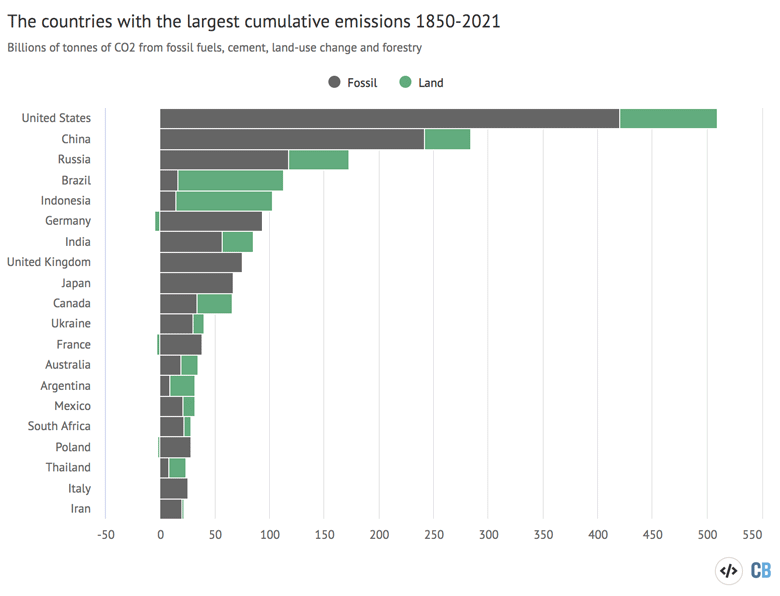
It is true that we have been slowly geoengineering for ages (initially unwittingly, recently with eyes wide open) and it is also true that our modeling abilities increase but this is quite far from making us experts in geoengineering.
For the short term future (decades) the only strategy that seems to make sense on the face of epistemic uncertainty is to refrain from aggravating the situation while studying ever more deeply the system we are now perturbing so much.
Our biggest mental deficiency when handling complexity is that we cant think holistically in practical ways. Isolating individual factors and applying linear thinking has worked wonders in isolated problems but it is not cutting it here.