Some time ago, I watched Frontline's "Policing the Police" episode that featured Newark and Baraka's efforts. The episode was fairly early in their process (2016), and does a nice job of framing up both the problem, and how they intended to solve it. Jelani Cobb hosts it. He does a ride-along, and somewhat incredibly, sees the problems first hand...despite the cops he's riding with knowing full well he's filming everything.
It's on youtube [1]. They released another documentary with the same name and the same Newark subject with 2020 updates [2]. They both have the same duration but are different.
You do need a licence if you watch any tv live as it's broadcast, or BBC iPlayer.
But you'd need a licence if you only ever watch Channel 4 and never watched any BBC content. The licence is not tied to BBC content - you don't need a licence to use the website or listen to BBC sounds or use BBC radio.
The licence is tied to watching live tv as it's broadcast or BBC iPlayer.
The story describes positive change and this is good. However the detail is rather dark.
“On Jan. 1, a Newark officer fatally shot Carl Dorsey III, of South Orange, during a confrontation in the South Ward, a case that’s being investigated by Attorney General”
The link there says that officers arrived on Jan 1 2021 at 12:03am.
Fair enough, so let's say it was 1 shooting. Based on that incident, it sounds like that's still 1 too many, but is it an improvement over previous years?
Looking at the 28-day periods, aggravated assault is up a lot, robbery is down by a lot, and most of the rest are within what I imagine are the yearly fluctuations. Is there more convincing support for the claim that crime is down in Newark?
Even if it stays stable, isn't that enough evidence that we don't need the Warrior Cop model? Being able to demonstrate an improvement in crime by toning down the violence is just gravy on top.
They’re now proof points that governments can reduce police fatalities by training their police to use more than guns. This hopefully makes it a little easier to sue a city into the ground for failure to adequately train its police force.
In addition to education, as per the article, "They hired more Black and brown officers" ; "required any officer who uses force in any way to report it in detail, and for the supervisor to review it". Resulting in "The bad cops were suddenly outed."
Sam Harris has a new, very interesting podcast with Rener Gracie about police training and how inadequate it is across the entire United States. Officers in California get one - 4 hour course every two years to learn how to subdue criminals, and of the 4 hours, only one is actually spent training, the other three are instruction.
Rener Gracie is obviously famous for Brazilian jiu-jitsu but he also trains police on how to subdue criminals in a safe way. He has some interesting ideas about how to identify bad cops also.
My BJJ gym offers deep discount to police. This is a good thing. I’ve rolled with many police fresh to grappling and even with my limited skills they are very easy to subdue. No wonder they resort to weapons (lethal and less than lethal) so quickly. I have been training a few years now.
I think American wrestling and or BJJ are much more practical than Judo as a martial art for police, but Judo is better than nothing. Judo is good for getting things to the ground, but the ground system of Judo is inadequate for many situations. (I’ve trained Judo and with many judokas, even advanced ones just aren’t very good on the ground without some other ground fighting system). Regardless it’s a big step in the right direction.
It’s unfortunate because there are some aspects that could make judo a better groundfighting base than BJJ for this type of situation. When a judo match goes to the ground, the competitors must be clearly making progress toward a pin or submission or the referee stands them up. This favors more explosive movements (resolving a situation quickly) over a slow positional game from your back.
Of course, a skilled BJJ practitioner could also make quick work of an untrained opponent. But judo’s focus on quickly establishing a dominant position has some advantages.
Unfortunately this ruleset also enables competitors to “turtle up” in a defensive position on all fours. It’s hard for your opponent to quickly get a submission or a pin from this position, so the fight will quickly be reset by the referee. This has led to a lot of even competitive judoka having very weak ground game, as they can get by for the most part by assuming this position. Obviously that’s not going to be very effective in a real-world situation.
BJJ has its flaws for this sort of thing too. At least in the gyms I’ve trained in, there was very little focus on throwing. So once a fight is on the ground someone with a BJJ background will excel. But against a resisting opponent, they don’t have nearly the tools that a judoka has to bring things there.
In the end I think either one will give you a massive leg up, but it’s important to keep in mind why you’re training in the first place and understand the bad real-world habits that their respective rulesets can encourage when taken too seriously for the sake of competition.
Good points, gyms can vary a lot. My gym and most gyms I have visited focus on wrestling style takedowns, and maybe some Judo stuff too depending on what the instructors know.
Honestly, for the general self defense you only need a few well practiced takedowns. We drill single leg, double leg, and I drill a couple collar based judo trip/throw. It mostly comes down to spending time on the feet. No-Gi at my academy lets you do basically anything from standing. My gym does a lot of MMA and has a strong competitive nature (we train for comps a lot) so we get a lot more focus on the standing game I think.
FWIW I have done Judo some too and find it fun. Except when I get slammed lol.
It seems like a great idea, and that they’ve gathered significant evidence that other police departments can now take advantage of to start their own similar programs. That’s really exciting. The episode did kind of devolve into a commercial for Gracie JJ though. Well, maybe that just keeps it simple for others. One phone number to call for training...
I disagree. The largest factors are likely to be culture (coming from leadership) and higher scrutiny (mentioned in the article as a requirement to report and investigate any use of force).
They disbanded the entire department -- breaking the police union in the process, and then hired far _more_ (but somewhat lower-paid) police than before.
The new, larger, but reformed department has done dramatically better than before. So there's really something for everyone -- breaking the union was important, _increasing_ funding was important, but also increased de-escalation training helped.
As another comment noted, that was Camden. There’s also more to that story - the city significantly stepped up its surveillance of public spaces (https://www.insider.com/inside-camden-new-jerseys-high-tech-...). Personally I think using technology to ensure public safety, with the right safeguards to prevent government abuses, is both acceptable and very possible. However, the anti policing activists are now against the Camden model - they initially held it up as evidence that defunding works but quickly changed opinion when more details came out (that funding simply shifted to the county level). You can find an example of arguments against Camden’s surveillance model at https://jacobinmag.com/2020/07/camden-new-jersey-police-refo...
My grandfather was an AP (MP) for decades and never shot at anyone, despite handling uncountable hairy/critical situations with individuals trained in killing.
Shoot first and ask questions never? Deescalation and self-control should be job #1 along with verbal/social skills to solve problems before jumping to the nuclear option out of fear.
I'm not sure about entire departments, but for individual officers, it's not rare. Many if not most police officers never fire their weapon on duty for their entire careers.
Police kill about 1000-1200 people per year in the U.S., depending on who's counting. See for example the Washington Post data. So it's not just tens over a decade.
First, that means ~99.9% of police officers in the US don't shoot someone, so that isn't rare, as the post I responded to suggested.
Second, I didn't say the police only kill tens of people over a decade, I said tens of incidents have made the national news. Only the noteworthy cases make the national news, which is kind of the point here. People's opinions are shaped by the most extreme incidents.
I think we should try to reform how policing is done to improve these issues. But I also don't think it's the crisis that our society has made it out to be recently.
> I think we should try to reform how policing is done to improve these issues. But I also don't think it's the crisis that our society has made it out to be recently.
Perhaps because you don't see yourself as being affected by said perceived crisis. For affected groups, it is very much the crisis it has been made out to be. Besides, shooting statistics are often symptoms of deeper issues that need addressing.
One thing is that the murderers are not punished. They are instead rewarded with paid leaves, pensions etc. The other thing is that police brutality isn't only about murder. There is assault, including sexual assualt. Most are not punished. Even if one gets sentenced, they might get out soon like this fellow.
The CDC WISQARS database contains fatal and non-fatal injuries for many different mechanisms, including firearms. The law you are thinking of is the "Dickey Amendment" which forbade the CDC from spending its budget advocating for gun control. It was named after Republican and galactic asshat Jay Dickey of Arkansas, who thankfully has been removed from influence over national politics by his much-awaited death in 2017. His idiotic law passed out of effect in 2018. Just before he died, in a meaningless act which did not redeem his evil life even slightly, he recanted and called for government funding of research into gun violence.
How would the CDC be allowed to advocate political positions contrary to the constitution, and without congressional approval? As far as I know, it's at least looked down upon when federal agencies advocate that sort of thing, even in roundabout ways.
Different training. Different level of accountability/liability/etc. Cops are not trained to deescalate, their are taught to have commanding control and respond aggressively. And they are trained to shoot to kill. They are also taught to fear a lot, the emphasis is on danger they are in.
And plus, this behavior is rewarded with promotions. And courts progressively removed legal obstacles to the above.
Shoot to wound is not an option in USA. Elsewhere it is literally trained and seen as option. And I am saying that cause I personally know non-American cop that has it as regular part of training.
There are also such options as shoot as warning, not shoot at all and generally use tactic that is less likely to create situation on which you have to shoot.
> I'm a highly educated individual, commonly read dense scientific works, philosophy, political science etc.
For a second, I thought you were going to mention MENSA. So do many of HN old guard. Appeal to authority isn't evidence; it's an opinion, and not even an expert opinion.
> threatens the law and order of a civilized nation
The US has the highest incarceration per capita on the planet (sans Seychelles), disproportionately imprisoning minorities. Consider the works and interviews by Chris Hedges, who teaches classes in prison. Many of his students are in for petty drug crimes. Furthermore, there are numerous aging inmates who were snared by the War on Drugs and in prison for no good reason. Remember, the WoD was explicitly used to target Nixon's perceived enemies: hippies and minorities. Then, (Nancy) Reagan decided it would be a good idea to go after drugs while simultaneously arming the Contras using cocaine, leading to the crack epidemic.
> George Floyd robbed a women by holding his gun to her pregnant stomach.
A quick DDG says this is an urban legend, or do you, Mr. "Highly educated individual, commonly read dense scientific works, philosophy, political science etc" know better?
And did those things you read justify the death he suffered? The cops didn't even know his past, and even if they did, so fucking what, their job isn't to judge someone to be worthy of death and then executing them...
But well, it's easy enough for people like you to find excuses that "those people were bad guys" who "deserved it", so you can sleep at night and not admit to yourself that maybe you're biased.
> Police are more frequently in life threatening situations. The demands on them to act perfectly are enormous.
The 4 fuckers had 9 minutes to change the situation and not end up being shit cops, with at least one of them rotting in jail because he was deemed to have broken the law (although maybe not in your book(s), Mr. Dunning Kruger?). Were they in a life threatening situation for those 9 minutes?
You got me to search on this - I used startpage - Only used the first three results..
I learned more about the situation than I had 'heard' before - so thanks for that. I do not think the 'undisputed' facts make the thing total 'urban legend' however.
It seems there is some questioning as to whether or not the girl was pregnant or not - even the places that seem to be trying to downplay the 'social media legend' - aka politifact giving a "false" because a wrong picture was being used on an instagram (meme?)
- It seems that there is no debate that he (with others) forced into a home, and using a gun, threatened a couple of people and a toddler - at one point shoving a gun into the stomach of a woman - demanding to know where the money and drugs are.
I do not write this to justify anything - I am a seeker of truths, which more and more these days seem to elude 'both sides' of many discussions.
For what it's worth I wish things ended differently with the Floyd situation, and I think a majority of people on either side/any side also feel the same.
> I'm a highly educated individual, commonly read dense scientific works, philosophy, political science etc
And yet you wrote something as cringey as that.
> Adam Toledo was known in his neighborhood as "Lil Homicide”
Imagine having such a highly educated brain, filled with dense scientific works as well as philosophy, and using it to justify the murder of an unarmed 13 year old child by the state.
None of the examples you used in any way justify their death nor do they lend any evidence to the idea that systematic racism within the police force doesn’t exist.
Edit: to the person who replied saying that not liking kids being shot by the police is nothing but ‘the "woke" liberal "narrative" that is leaking onto HN’ then deleted their comment, seek help.
"George Floyd robbed a women by holding his gun to her pregnant stomach." Even if true, cops aren't supposed to be judge, jury, and executioner. Talk about threatening "law and order".
"Adam Toledo was known in his neighborhood as "Lil Homicide"" Even if you believe this, let's just kill all children with violent nicknames, eh?
I don't know why I bothered, when you opened your comment by boasting about your alleged intelligence. I hope you are never in a position to hurt anyone with your law and order.
'If it is fact, not fiction, that violent street crime today is almost exclusively a minority phenomenon, then it would appear that one simply may not speak about it. That proscription injures law-abiding residents of high-crime areas most of all, people like the aunt of a child victim in St. Louis, who told the Washington Post in October: “I live in fear of living in St. Louis. I feel trapped.” Such citizens beg for more police protection and see the police as the only thing standing between them and anarchy.'
Logicslave said: "Its my opinion that violent crime, and especially brazen violent crime is just flat out more common."
The data don't seem to support that.
Obviously violent crime still exists in the USA, and from my point of view in NZ the rates seem scarily high. That doesn't mean they haven't decreased.
@mkI In San Francisco where I am violent crime has absolutely exploded since theft under $950 per day has been reduced to a misdemeanor. Adding fuel to this fire are opioid addicts stealing to feed their habit, a toxic combination of extremely violent attacks coupled with endless petty crime. The big Walgreens drugstore chain Walgreens has closed ten stores in SF primarily due to rampant crime, with a lot of small retailers also closing to protect staff.
Except more harsh policing is not the answer to this, especially the opioid crisis. If you want to see less crime and drugs, you improve the conditions that lead people to crime and drugs and then increased social work when people do run afoul.
The current police system in the US does not do that, and the prison system is purely set up to incarcerate folks and then ensure they will fail when they get out so that they end up going back in because gotta grease the wheels of prison capitalism.
> The demands on them to act perfectly are enormous.
There shouldn't be pressure to act, or take action, the preferred outcome should be to resolve the situation. Newark actually puts more pressure on the police with more detailed reporting, and more training including deescalation, where previously they had none.
It's quite clear a lot of American policing has problems, correct training, being over militarised, too powerful unions, being used for wrong situations, cutting budgets from things that actually reduce crime and increasing police budgets, inappropriate use of civil forfeiture to name just a few.
> law and order of a civilized nation.
Law and order, well theres underlying fault with American policing right there, the law and order approach. Plenty of countries are civilized without the law and order approach eg Peelian.
Why keep posting lots of comments with the same arguments about why its not racism, and instead ask/comment on the article like why the approach used is working.
I had never even considered the possibility of something like this. I wonder what effective interventions we might be missing simply due to lack of creativity.
I imagine a version of these wide enough for a person’s waist and with a locking mechanism could be used for knife/fistfights and be much more humane than shooting. Perhaps they could be stored in squad cars the way shotguns are.
Significant to note that Newark Police officers did not wear body cameras until early 2020. It seems like part of the same “decree” but I didn’t see the article mention it.
I recall a similar stat from CA where body cameras reduced complaints by 80%.
Also it looks like Merrick Garland reversed Jeff Sessions’ limitations on consent decree.
Anecdotal counter-argument: police have been filmed planting evidence, assaulting suspects, on their own body cameras. It may be useful at catching them, but not necessarily a deterrent
Instead of comparing the murder rate to the entire U.S. it’s more telling to compare Newark’s current murder rate to it’s historic rate [1]. In 2019 it was at a 6 decade minimum.
Probably not causation. Crime rates are up nationwide. NYC is seeing a spike too and we've got the most expensive police force in the world. More likely the pandemic is to blame.
In 2016, Portland had 20 murders. In 2020 they had 55 murders (50 of which happened in June or later). This year they’re on track to break 100. Crime has gone up in the nation, but not by a factor of five. Portland’s problems are very much due to Portland’s policies.
It has other countries that were always bad. Western europe and asia are fine as ever. And some do it with unarmed police. Which is why it seems overwhelmingly likely to be determined by social policy (ie healthcare and gun control) and not enforcement.
I don't know what the OP meant but I certainly would mean specifically "the pandemic is to blame".
If there were no discernable response to the pandemic from any organized institution in society there is a pretty good chance the pandemic itself could be blamed for a /lot/ of terrible things.
Probably both. 550K people are gone and we are likely experiencing a peak in fear, grief and despair. But business and school closures are probably not helping. And given the prevalence of domestic violence, quarantine is probably prison for some percentage of people.
This is the most pathetic attempt to lie with statistics I have seen all week, congrats!
JFC, can you not even be bothered to read the stat you tried to pick to prove your point? The rate according to data you provided was 20.3/100k. The murder rate is proportional to population density across the country as a general rule, so the 'US average' is a bullshit stat to try to use for comparison with a large city. If you compare Newark to its own past rates they are currently at a rate that was last seen in the 60s (this period of low homicide and crime rates was present _before_ covid, so do not bother trying some sort of 'all because of lockdown' lie.) While the general trend in large US cities is downward, Newark started from a higher rate and has dropped significantly faster than comparable cities.
I can see why you would create a throwaway account if you are not even going to be bothered trying to provide a truthful stat.
Reacting with this kind of attack and breaking the site guidelines this badly is not cool. It destroys the commons and discredits your argument. Supposing your argument to be correct, that is particularly bad, because now you're discrediting the very truth you're advocating for (https://hn.algolia.com/?dateRange=all&page=0&prefix=true&sor...). Not only does that not help, it causes harm. If you're in possession of more of the truth than others, you have a responsibility to handle it better. On this site, that means responding to inaccurate information with better information and explaining why it's better without attacks, swipes, or putdowns. Here's one edit that takes all of that out of your comment:
The rate according to data you provided was 20.3/100k. The murder rate is proportional to population density across the country as a general rule, so the 'US average' is a misleading stat to try to use for comparison with a large city. If you compare Newark to its own past rates they are currently at a rate that was last seen in the 60s (this period of low homicide and crime rates was present _before_ covid). While the general trend in large US cities is downward, Newark started from a higher rate and has dropped significantly faster than comparable cities.
That would have been a fine post, much more effective in persuading readers, and without provoking the tedious off-topic flamewar that we got below. Would you please review https://news.ycombinator.com/newsguidelines.html and stick to the intended spirit of the site? We'd appreciate it.
Why reply like with insults like this ("pathetic", etc), and most of all, why did people flag the comment? Assuming your own stats are correct, you refuted his comment really well, and using abusive language only diminishes your response.
If HN is going to actually engage in these political debates (and I question whether it's wise to do so for the community), then people are going to have to stop flagging comments that go against whatever they believe, and just refute them like you just did (using your facts, not your insults).
If you believe (like I do, increasingly) that HN should avoid the political topics, then flag the whole article, not individual comments.
PS: the reason why people use throwaways for unpopular opinions is because they are well aware that there's a large group of people out there who will go after their jobs.
It's not a different belief, it was a flat out lie and spreading of misinformation, their own source doesn't even back them up. Stop pushing a narrative that misinformation should be "equally considered" or is "just another point of view".
I'm sure you you would agree that there are limits. Or what would you say if someone here started to create throwaway accounts spreading persinal lies about you?
Would you still argue that it's enough to just correct those lies? What about if the person isn't just a single person but a group.
Also, I hope you do realise the irony of arguing by calling someone's opinion gestapo tactics.
This is where you and I disagree, and frankly why our country will continue to decline into more polarization and violence.
I believe that you convince people that they're wrong by making a reasoned argument. You seem to believe that you convince people that they're wrong by shutting them up, and censoring them.
And as a free human being, I'll push whichever POV I so choose.
If you make a statement and provide a source that contradicts your statement, yes, you should be questioned on why you even provided that source in the first place, and if you actually read/comprehended it. That isn't "shutting them up", they invalidated their own claims with their own source.
I don't see why the HN community has to honor/uphold/tolerate/defend the opinion of a throwaway account posting inaccurate information its own cited source refutes. These alternative viewpoints need to have some level of credibility to them, we should not defend every rando's opinion blindly.
I don't think an "open society" has ever actually existed or is even possible. All freedoms are measured in degrees based on the society. "Open society" likely leads more to vacuums filled by whoever has the best propaganda. George Soros, one of the bigger proponents of Popper, what with his Open Society Foundation inspired by Popper's works, has noted that deceptive modern advertising and propaganda casts doubts on the viability of Popper's vision of an open society[1]. However, Soros is often viewed as a liberal mouthpiece propagandist attempting to suppress conservative viewpoints, and is often the target of misinformation conspiracy theory campaigns himself.
How much tolerance must we show? "The sky is purple"? "2+2=5"? Society must acknowledge these viewpoints? The mere act of acknowledging them as "viable alternative viewpoints" lends them credibility, which only festers more misinformation. It feels like as of late there has been increased pressure by certain groups to recategorize repugnant viewpoints as not being repugnant, but simply "a different perspective, worthy of tolerance and legitimacy".
> I don't see why the HN community has to honor/uphold/tolerate/defend
Those are all very different words. And you do the same below when you mix up "tolerate" and "legitimize". Are you trying to confuse the debate? To be clear, I'm solely arguing for tolerate and not censor, not any of the other things. And wow, looking at that comment that was flagged, I can't comprehend how you would believe it's so repugnant that it's worthy of censoring and suppression.
> Soros is often viewed as a liberal mouthpiece propagandist
He's the target of unfortunate conspiracy theories, but I want to get this straight: you don't believe Soros is a liberal propagandist? Do you also not think the Koch brothers are libertarian propagandists? Of course, they all are!
But yeah, I strongly disagree. I think censoring people who disagree, combined with the power and income inequality that was created by the plutocrats, will together kill our country. I don't want to give away my identity since I'm aware there are lots of people who would try to get me fired for disagreeing with them, but I've seen ethnic conflict up close and see every sign that the US is heading in that direction.
Not really. You are arguing that misinformation needs to have a place on this platform, and have a chance to be heard. Again an outright misinformed post, that couldn't even back itself up, needs to be here. You are defending and legitimizing it with this point of view. Much evil has been done in the world because people "tolerated" things and just let injustice slide.
>you don't believe Soros is a liberal propagandist
Yes, but practically everyone is a propagandist, and has bias. Though he has more sway because money speaks.
>I've seen ethnic conflict up close and see every sign that the US is heading in that direction.
Where have you been for the last 250 years? The US was founded on genocide and slavery. Ethnic conflict has been here forever.
Here is a more detailed discussion of the data. Tragically, Pew Research describes the situation as dire even back in 2014, which was before polarization really started to accelerate.
As you can see, both parties are moved toward the extremes, but in recent years the left has moved further to the left than the right toward the right.
These moves to the extremes of the right and left are driven partly by social media, and partly by traditional media (since most traditional media these days originates in social media: original reportage is getting increasingly rare).
That says nothing about the actual policies, only how polarized they are against each other relatively. Since 1992, both parties have moved to the right, just the Republicans have moved moreso. That's how we ended up with Newt Gingrich and the Heritage Foundation's 1994 HEART Act becoming Obamacare and radioactive to the Republicans two decades later.
Go check out the concept of the overton window and see how a window can move to the right while both sides become more distinct within that window.
Why don't you at least look into the study methodology before answering with such certainty? Since Pew Research uses the same questions, there's no shifting of the "Overton Window" (I'm well aware of the concept).
So this poll measures both absolute and relative movement.
I actually agree that there has been some shifting to the right of the Overton Window in fiscal and economic issues only as the Democratic Party has abandoned its traditional working class constituency. But that has no bearing on this poll.
I've read the entire study many times. Perhaps you can point out how explicitly how they adjust for shifts of how definitions like "consistently liberal" shift over time?
Even the fact that "liberal" means left now is a function of how far to the right the democrats have gone, the Third Way Democrats having cemented their hold on the party.
Additionally being "fiscally right wing" is an overall right wing position. Being lukewarm for left wing positions only on the condition that it doesn't come out of public funding is at best a center right wing viewpoint.
> Perhaps you can point out how explicitly how they adjust for shifts of how definitions like "consistently liberal" shift over time?
Once again, the questions are just policy questions. They don't mention anything about "liberal" or "conservative". They ask policy questions, which is exactly what you seem to have wanted initially. If you've read the study methodology, then you should be aware of exactly what the survey respondants are asked.
> Additionally being "fiscally right wing" is an overall right wing position
If you believe that, then the coming years are going to be a big surprise to you. The GOP of Reagan is on its way out. People like Hawley, who are happy to work with Bernie Sanders on certain fiscal policies, are on their way in. You may well still hate them because they are populists, but they have a different outlook on multinational corporations and the ultrawealthy than the old GOP.
> Once again, the questions are just policy questions. They don't mention anything about "liberal" or "conservative". They ask policy questions, which is exactly what you seem to have wanted initially. If you read the study methodology, then you should be aware of exactly what the survey respondants are asked.
Then you should be able to list one policy qustion they asked in 2014 and 1994 that doesn't use the word "liberal" or "conservative"?
> If you believe that, then the coming years are going to be a big surprise to you. The GOP of Reagan is on its way out. People like Hawley, who are happy to work with Bernie Sanders on certain fiscal policies, are on their way in. You may well still hate them because they are populists, but they have a different outlook on multinational corporations and the ultrawealthy than the old GOP.
I'm not sure why you started thinking I hate people for being populists, or that you think Hawley has even a modicum of support from the Republican party as whole (both voters and politicians).
Those are the actual questions they ask. They "grade" them as liberal or conservative as shown in the columns (they mention that in the methodology section).
Also, it's not just 1994 and 2014. They've done it at 3-5 year intervals since 1994 up to 2017. Look at 2017 in particular, since that explains a lot about where we find ourselves today.
Personally, I'm glad there are people like Hawley. GOP has been in the pocket of big business for far too long. And now the Democratic party is thoroughly embedded there, too. There is a strong grassroots contigent with more reasonable fiscal views (read: much less plutocratic) coming up in the local and state GOP (unfortunately, some of them are also conspiracists, which is very bad). They may lose in the end, but there will be a fight for the party between the old wing and the new wing.
Edit: Those have been the questions all along. I've followed this poll for a decade. I'd pull up evidence of that, but I suspect you'd put some new requirement in for being convinced. I mean, you thought that the questions included "liberal" and "conservative" in them initially. And I'm really not interested in continuing a debate with someone who feels the need to ask me to "stay on task" with how he feels the discussion should proceeed (Hawley came up because you said right == fiscally conservative and he's a counterexample). So I'm out.
Those are the questions they asked in 2017. I specifically asked for a question asked in both 1994 and 2014. My whole point is that the shape of the questions would change over time to reflect the shifts in the overton window.
That citation does not reflect the requirements I set out.
And I'm not sure where you're going with this Hawley stuff, but it seems pretty off topic from the line being discussed. I'd appreciate if we stayed on point.
Thank you for the link to the Pew research. Here’s my response to the claims of the research and this response is solely based off of my observations and clearly my observations could have led me astray.
In 1980 anyone claiming Jimmy Carter’s wife was a man would have been labeled a kook by the vast majority of Republicans. Today we have a nontrivial amount of conservatives/libertarians who believe this claim about Michelle Obama. We have non-trivial amounts of Republicans who think Covid is a hoax. We have non-trivial amounts of Republicans who think vaccines are harmful. I’m not talking about Covid vaccines but another measles vaccines and polio vaccines. We have Republicans today call the affordable care act socialism when it was a proposal of the Heritage Foundation in the early 90s. We have Republicans today decry cap and trade when cap and trade was used by Reagan to combat acid rain. Today any Republican who says that the tax on labor should be less than the tax on capital would not be supported by the party and this was Reagan’s position. The list goes on.
The Republican Party has shifted into crazy land. They supported a President that mocked a former prisoner of war in their own party. The party of family values supported a serial sex abuser. They supported a man who wondered if nuclear weapons could stop a hurricane. They supported a man who thought Obama wasn’t born in the United States.
This is a party that resides in cuckoo land. There is no middle grounds with such spineless, inconsistent, hypocritical people. There is no way to reason with such people. The party is detached from reality.
I appreciate the clarification. I do find it interesting that population density is a factor for understanding these rates over time.
Pardon my ignorance, as I am just trying to understand this (not my field of expertise). What is the relationship with violent crime rates and population density? That seems to be an important factor in this that isn’t getting highlighted enough. Are we jamming too many people into a small area?
I am asking because I am from a large city. I moved outside of the metro area years ago for work and found it to be refreshing, even though I first hated it and found myself stereotyping these people as ignorant bumpkins. After I got over my initial prejudice (not something I am proud to have felt), this place is more home than any place I’ve ever lived.
It’s an anecdote, but I have experienced a major benefit to living in a place where humans aren’t stacked on top of each other like factory-farmed chickens. I’ve never been put in a position to have to fight for my life out here. Could population density be a factor for increased crime rates? Could we help people by spreading them out a little bit and giving them space to live their lives? Access to nature, etc. Is this a housing problem? I think that more people could move out of the cities if we broke down the stereotypes and made sure to enforce equal housing rights.
This has kind of been a pet theory of mine but, again, I am no expert in this field and I only bring it up here to see what people with better info think about it.
> can you not even be bothered to read the stat you tried to pick to prove your point
Don’t do this here. The HN rules specifically discourage it:
Please don't comment on whether someone read an article. "Did you even read the article? It mentions that" can be shortened to "The article mentions that."
I did not claim they did not read the article, I explicitly called out the fact that the source they reference in support of a numerical claim actually said something completely different. Please do not try to be a pseudo-mod, we already have people with that task and they seem to be doing a better job of it than you.
I think this only addresses half of what's wrong with Newark PD.
Newark still spends about a third of it's city budget on police, at the expense of essential services like infrastructure and education.
Newark PD still arrests Black people at a much much higher rate than white people. The disparity of arrest rates is even greater when it comes to drug possession.
Budget seems like the least of our problems in fixing U.S. policing, though I recognize in some cities it may be more of a problem than others. The biggest problem seems to be the huge amount of resistance from police to any change at all.
That surprises me as well! Particularly if it includes departments like ICE and FBI within that definition of policing.
I tried to search for the original source to see if I could find how they are calculating theses costs but didn’t have any luck.
I mention this because NYPD budget is often referenced as $6 billion, but that’s only operating costs, and the actual amount is closer to $11 billion (including fringe benefits like overtime and funding the NYPD pension).
With a 2020 GPD of $20,936 billion
Then 0.8% of that is $167 billion
If we assume that policing costs are more closely tied to population rather than GDP we’d expect that NYPD costs to be about 2.5% of national amount. That’s approximately $4.2 billion.
But NYPD costs are $11 billion, which is 6.5% of estimated national policing costs (for 2.5% of the population).
Admittedly, I can imagine that there are reasons why a big city area might have higher than average costs, but 6.5% makes me feel that the 0.8% of GDP might be either underestimating how much US spends as part of GDP, or calculating national costs using different methods for different countries.
> The biggest problem seems to be the huge amount of resistance from police to any change at all.
A huge problem is the massive, and influential, police union. Police resisting change at an individual or local level is one thing, but their union is a huge coordinated lobby that works against anything that would be better for the public if they perceive it as even slightly unfavorable to police.
Arresting at a hire rate means in comparison to the demographics of the city. In 2020, 50% of Newark residents were Black but 80% of arrests were of Black people. 80% of victims of police use of force were Black. A third of the city is white but only 4% of police use of force victims are white. [1]
The problem with all this data is that it doesn't inform us of who is actually committing crimes.
If we are overly fixated on racism by the police and confuse correlation with causation, we might entirely miss other structural/systemic factors that might be leading (or forcing) black people to criminal behavior more often than white people.
I am aware of some research that tries to estimate propensity to actually commit crimes using victim surveys instead of police data, but I see so many conflicting results from different academic fields that I don't feel like I can form an opinion.
All I know is that measuring disparities in arrests is not enough and cannot possibly be enough to distinguish police racism specifically from other racial disparities.
> The problem with all this data is that it doesn't inform us of who is actually committing crimes.
Arrest records do not provide this data either. If an area or activity is policed at a lower rate, it will look like fewer crimes are committed there.
Example: there have been public "420" festivals all over the country dating back to well before the recent legalizations. These were not accompanied by mass arrests, despite mass public lawbreaking. Drugs and underage drinking are endemic on college campuses. Somehow police are unable to arrest these lawbreakers. If you prefer finance, what percentage of financial fraud do you believe results in an arrest? Or consider the discretion allowed to police in deciding when to arrest someone for riding an unlicensed bicycle. There are many other examples of less-policed spaces.
Arrest records frequently tell you more about who is permitted to break laws than the number of crimes committed somewhere.
valid points, but I think some may read this as 'police choose to penalize based on race' kind of proofing.
I recently had some deeper insights around this. I have witnessed reasoning for these things being different at different times over the years, but the main factor has been calls/reports/complaints from the communities.
Busting people at an airbnb in a quite retirement neighborhood as opposed to a college campus, drug complaints blocks from an elem school in a low income area as opposed to breckenridge, co - (which told it's police to leave weed alone many moons ago) - these things are not driven by a nationwide predisposition from those who swear allegiance to the blue cult of the country.. these things are actually driven by the individual community in most cases.
I'll admit sometimes that 'community' could be real-estate developers looking to gentrify or whatever- sometimes it could be 'x color people who fear Y people at X place' - and the bicycle thing in the news recently was probably someone complaining and pointing out safety concerns - which had bad optics when viewed through the 'but you don't do that to X percentage of other bikers' - sure..
I also understand there are places where people don't call cops do to fears or reprisal - and I don't think this is a color of skin thing so much.
I'd love to deep dive in this further, but my point is that it's not so much cops as a whole are some type of way - it's often more a reflection of individual neighborhoods and communities and their tolerance or lack of tolerance for various things - and often that is what is reflected in reports more than number of crimes committed in X or Y place.
Thankfully these things can change - sadly I already see some of pendulum swinging the other way however. In places where people are finding additional freedoms through "progressive DA's, and progressive law changes" some are not considering how their use of such affects other near them. So I expect an ebb and flow of these things based on how annoyed people are by effects - no matter the color of those involved.
Now you can point out disproportionate court cases, pleads, incarcerations and all those kinds of stats and get similar points made - and certainly there may be places that look at racial things - but I believe there it is more of an issue of socio-econimc access to legal assistance more than anything - and that is complex too.
You went into a lot of detail, but I just wanted to redirect attention to your initial suggestion that higher arrest rates of minorities is indicative of higher crime rates among those folks. You were just posing a question, I know. But the rhetorical device you used (whose name escapes me) prejudices the reader by presuming that the question has a knowable answer, which it does not. And citing arrest records is a red herring, for many of the reasons you elicit.
> it's often more a reflection of individual neighborhoods and communities and their tolerance or lack of tolerance for various things
Combining this with the larger discussion, are you suggesting that predominantly white communities have a higher tolerance for lawless behavior like drug use, and thus are comfortable being policed at lower rates? (Or the converse, that communities of color are less tolerant of lawbreaking and demand more policing.) I admit that I haven't heard that before. And it makes me uncomfortable, because on balance people I have known across ethnic groups are pretty much the same. It would be a little odd to discover that white communities are generally more tolerant of criminal behavior.
> Busting people at an airbnb in a quite retirement neighborhood as opposed to a college campus, drug complaints blocks from an elem school in a low income area as opposed to breckenridge, co - (which told it's police to leave weed alone many moons ago)
Intentionally unequal application of the laws starts with this kind of thinking, and leads to downstream problems that spring from the resulting distrust of the justice system.
Your Breck (95% white) example is telling. Communities shouldn't be able to exempt themselves from state & federal laws just because most of the residents are white and they have decided they don't like those laws. Even writing it sounds absurd. And it's definitely not a privilege that is afforded to communities of color.
Indeed, "arrest records is a red herring" basically yes - but it depends on the community and the time frame. Look at new york city in the various time periods - sometimes lots of arrests equal more votes for politicians / DAs.. different time period, same place.. lower arrests equal higher property values. I've seen similar in other places around the US.. my point is that there is always lots of crime, the amount of arrests have to do more with local politics than anything else, however in many cases those local politics are pushed by the local community - if a predominantly black area has lots of black arrests - normally it's (at least a portion) of the community is asking for cracking down on crime.
So I think it's not fair to paint 'cops' as letting "X peeps" go across the whole country and stats.. just as it's not fair to say "Y peeps" are committing more crime.. I agree stats do not reflect actual crimes committed - it more shows the local areas tolerance for types of crimes. Which why the opposing view about 420 parties and such you mention is not a good opposing view - it's a local thing. Comparing the arrests in Chicago to tolerance for non-violent smoking in Colorado does not show apples to apples.
Those different communities are pressuring politicians differently. Often times a crackdown on arrests for minor things in a 'broken windows' community is done to prevent other crime not the petty stepping stones that are reflected in arrest stats.
When you say "redirect attention to your initial suggestion that higher arrest rates of minorities is indicative of higher crime rates among those folks" - I think you are thinking of a comment made by someone else, don't think I was inferring that.
Hey, I am with you on the unequal law is bullshit - and I've been advocating for changes in policing for some years now. Unfortunately the climate for discussions on this have the country so divided by arguments with race that it's hard to really get all citizens together for true change.
Why is breck mostly white telling? it's the only example I am aware of that did that decades ago - I think if we take the race out of the equation we can have some better discussions about cities VS state on issues like this - we are having large battles in states vs cities with all sorts of important issues these days. The atlantic had an article about this not too long ago. I've watched many city vs state things biol the past several years - it's interesting, and I hope it leads to more people paying attention to state elections and legislatures!
If you want to focus on the 'communities of color' not getting similar policing - there could be interesting answers to questions around that - but they may not fit the narrative that is popular right now.
In the cities I have experienced lots of blue lights, there are lots of requests from residents to police. It appears to me that things like gun shots bring more cops, assaults on citizens and such bring them out, fighting for territory beings them. If no one called the cops they would rather be eating donuts somewhere I am sure.
I know this can vary locale to locale, but I think in general in most places around the US, harder policing is brought by request, and more is brought by increased violence.
Now - the time period that bloomberg had his "stop and frisk" - that huge unconstitutional violation of rights for years - I will march with you that the disproportionate results of that crap appear to be focused on mostly minorities - and even if they try to say the results justified the means - I disagree and could not believe we had that going on in this country.
Even then - look at the country, it's a very big place, and bloomberg's persecution is a small blip on the map by square miles - so most of the country is not doing that kind of thing the past 50 years.
I am glad writing "because most of the residents are white and they have decided they don't like those laws." sounds absurd, because it is - the local community there wrote laws to stop the local police from coming down on weed smokers / sellers.. they did not get a pass from the state and feds, but they also did not have multiple shootings every week over it - which would of brought pressure to crack down on things.
Truth is - many 'communities of color' have been asking for strong policing, because they have been hotbeds of violence and don't like it. I do not say this to be divisive by color - I've noticed a big shift since we occupied Afganastan in more 'communities of whites' having had increases in lifestyle changes that have had a large increase in request for more hard core policing in their neighborhoods.
I wish we would take white black and all that out of these discussions and get more to citizens expect X types of service from the men and women (and whatever other pronouns) in blue..
we should all at least get the protections listed in the bill or rights.
Sadly I have seen recently many asking cops for more intrusions into people's lives and property to stop 'assumed crime' - and this is about white people.. It's like the citizens around here don't even know what the bill of rights says.
I assure you this is an American citizen VS the state thing - much more than it's a white vs black thing - in most of the country, most of the time.
The police don't get to decide who committed a crime, the judicial system does.
Yours is the same argument that George Floyd deserved what he got because he was a criminal. Being arrested or frisked by police does not a criminal make. Conviction does.
It seems oddly philosophical to suggest that a crime hasn't been committed until its would-be committor has been convicted...
Regardless of what you want to call it in the time between the event later deemed criminal, and the sentencing, surely you see that that's what GP was referring to? That there may be differences in demography of 'who is involved in these events'.
It's not philosophical, it's the law. And GP dismisses the overwhelmingly higher rates of arrests for non whites as not being a systemic racism issue and assumes that white people commit fewer crimes with no data to back it up.
> If we are overly fixated
Sorry but that is gaslighting and victim blaming. Tell the parent of a black teenager to not be overly fixated on police reform.
All of these are considered crimes in all jurisdictions I know of in the USA: theft/burglary/robbery, violence or threat thereof, and reckless endangerment. If you commit one of those acts, you have definitionally committed a crime, even if you are not convicted in a court of law.
> dismisses the overwhelmingly higher rates of arrests for non whites as not being a systemic racism issue
I encourage you to re-read what I wrote, because that isn't what I said.
My post raises a question of causality. There are several common proposals for why arrest rates for blacks are disproportionately high:
1. Police are racist, so they arrest black people at higher rates than other people, regardless of criminality.
2. Criminal law is written specifically to target black people.
3. Black people, due to systemic racism elsewhere in society, end up committing more acts-that-are-legally-defined-as-crimes, and this eventually leads to a greater number of arrests.
4. Actual racist ideology, which is generally vile and I will not repeat it here.
The reality is probably a combination of explanations 1-3, and there is surely mutual causality among them.
Any serious attempt to understand the problem must attempt to disentangle these explanations from each other.
> assumes that white people commit fewer crimes with no data to back it up
I said that we specifically don't have good data, but it's not safe to assume that all demographics commit crimes at the same rate. See above.
> Sorry but that is gaslighting and victim blaming. Tell the parent of a black teenager to not be overly fixated on police reform.
This is a bad faith misrepresentation of what I wrote.
If anything, the media getting stuff kinda-wrong but still raising awareness is a net positive.
Also it should be obvious that police reform is necessary, and obviously people will care the most about the issues that affect them personally.
Moreover, nothing ever seems to get done without single-minded people focusing intently on a single problem. We need people working on all aspects of the racism issue, including racism in policing and law.
But you simply cannot look at the arrest numbers and assume that the discrepancy is definitely and entirely because of police racism. It would be fallacious to do so, and if you intend to put forth policy based on data then you should try to avoid logical fallacies in the process.
It seems like a completely different argument to me. He's not arguing that committing crimes (or being involved in events that may be legally deemed crimes after the fact) means that someone _deserves_ to have force used on them. He's saying that it makes sense that police would be more likely to use force against people who are more frequently involved in said events.
> it makes sense that police would be more likely to use force against people who are more frequently involved in said events
Hence the systemic racism problem in a nutshell. It only makes sense through the lense of human bias and racism. Are those "people" really more frequently involved in said events, or are they more frequently policed?
The police do get to decide on probable cause that a crime has been committed. That's not enough for punishment, but it is enough for arrest and investigation.
It doesn't mean anything without specifying the denominator, they could've meant per unit time, population, or crime.
Now that you've specified though, the only remaining wiggle room is 'who is actually committing the crimes'.
80% arrests being black people is 'fine' if 80% of 'arrestable crime'[^] is committed by the black population; it just points to something other than policing needing improvement. Education perhaps, or welfare.
[^] by this I just mean that not all convicted crime involves an arrest, and maybe there are demographic differences in the types of crimes committed
I’d assume it’s some combination of the cops being racist, or actual differences in crime rates among demographics. I see no reason to conclude it has to be one or the other, not sure if there’s any actual way to determine how much each cause contributes though.
This distinction is critically important and is almost never even mentioned in popular media discussions of police racism.
Yes, policing and criminal justice in America fucking sucks (especially if you have dark skin) and needs major reform no matter what. But I don't want to start seeing ghosts where none exist, and chasing after them instead of focusing on other problems.
This is vague and leads to confusion. We shouldn't imagine we can learn anything simply by judging the characters of individual officers. If our laws and police practices are racist, the beliefs and actions of the officers themselves won't matter. Of course, there are racist officers, just as there are racist judges, legislators, grocers, veterinarians, etc. I doubt that Newark has a high concentration of racist police officers relative to the rest of the nation, however.
A disparity that high is unlikely to be rate of crime. It is hard to study rate of crime, obvious reasons, but when you slice drug use by race, blacks use more, when you investigate drug contraband found per traffic stop, the is not a high racial bias. I tend to believe the crime rates aren't effected much by race, it seems really unlikely a difference that high is race.
Won't there always be racial disparities in policing outside of the police's control if different socio-economic classes commit crimes at different rates, and different races are differently distributed among the socio-economic classes?
This sentiment about arrest rates really needs to go.
I've done a deep dive into the numbers. Murder rate data from the FBI has a large "unknown" category, so I'll handle that in a few ways for simplicity. Focusing on murders rather than other violent crime is the best thing to do because, while there may be a lot of ambiguity about what constitutes "assault", how often it's reported, etc., there really isn't much ambiguity about murder. We don't lose track of bodies very often. Here's the murder rate in the U.S. broken down by race. All numbers are murderers (offenders) per 100,000 people:
White (simple, ignoring "Unknown"): 1.8
Black (simple, ignoring "Unknown"): 13.3
White (assuming all "Unknown" are White): 3.7
Black (assuming all "Unknown" are Black): 23.2
White (splitting up "Unknown" by existing proportion of total): 2.6
Black (splitting up "Unknown" by existing proportion of total): 18.8
The difference is stark. Using the 2.6 vs. 18.8 numbers, probably closest to the truth, Black people in the U.S. are about seven times more likely to murder in a given year than are white people. The number becomes even more stark if you compare Black to non-Black (because Asians are less likely to murder than Whites), and yet more stark if you just look at men (women murder at something like 1/8 the rate of men, so having them in the system dilutes all differences). If you remove Black Americans from the system, U.S. murder rates look like much of Western Europe.
This is a hard thing but it is a true thing. Most of the differences in how police treat Black vs. White people in the U.S. are driven by this phenomenon, not racism on the part of cops or "the system". There is an argument to be made about a legacy of slavery or systemic racism, and maybe it's important to do that, but those arguments are completely irrelevant to the cop who's walking a beat in a bad neighborhood--White or Black. That cop will (involuntarily) collect statistics on the world around him or her, and will act accordingly. We call it learning. You can't help but do it. I think some small proportion of this enormous difference is due to a feedback loop, i.e. people end up murdering more because they're policed more.
Insofar as you are "outraged" by this simple statement of fact, you are part of the problem--not the solution. Real solutions to the real problems of murder and differential policing in the U.S. require people who are brave enough to look the problem right in the eye. Ignoring the obvious truth proves to me that you don't really care about actually helping people, and are really in it to impress your friends with how woke you are.
There's a lot of work to be done, please be part of the solution.
I don't believe white and black people are on the same footing economically. They've been held down since slavery and it still affects them today. Here's a few examples: real estate redlining (even though that was banned it's still happening today in other forms https://projects.newsday.com/long-island/real-estate-agents-...), the Tulsi race massacre (This story is crazy), urban renewal (Fillmore, West Oakland), all the neighborhoods they destroyed building freeways through them (https://www.theatlantic.com/business/archive/2016/03/role-of..., https://usa.streetsblog.org/2021/01/11/senate-considering-10...). The crack cocaine sentencing disparity split up families, creating the single parent unit, throw in the gang explosion in the 90s, and tough on crime sentencing, it's amazing people make it out of the hood.
Do you think we can improve the damage we've done through policing?
>I don't believe white and black people are on the same footing economically.
I agree! I infer you think it has some causal connection with murder rates. I think that's probably true, but that the relationship is weak. Black people in the U.S., while poorer than average compared to the rest of the U.S. population, are some of the richest people in the world in terms of their actual material consumption. There are lots of poorer (and much poorer) populations out there who do not display similar murder rates. I take that as evidence that not being on the same footing economically is probably not a primary driver of the high murder rate among Black Americans.
>Do you think we can improve the damage we've done through policing?
Yes! Step one is stop causing new damage. I think the easiest way to accomplish this is to end the War on Drugs once and for all. It's the lowest-hanging fruit--a watermelon-sized apple really. We're starting to go down this path as a nation, and it's imperative we keep going down that path. There will be negative effects, but I think the positive effects will greatly outweigh them.
If you want to try to paint a picture of the modal murder in the U.S., it's "Young brown man argues with other young brown man about something silly, things escalate, someone pulls out a cheap pistol and shoots the other guy"
Gang murders, while profitable fodder for mass media, are a clear minority.
And, I should note, "violent gangs" are by definition going to be the gangs committing violence, so that's a circularity in your logic. And I would also wager that there is a very strong correlation between gang membership and skin color, so that's a problem too.
I have heard the 'red-lining' problem, at is is a problem in wealth accumulation but it still doesn't explain high crime rates at all.
Problem is that you have lots of poor immigrants that immigrated here from former communist countries, or latin america, or Laos/Cambodia, with no money and no savings whatsover. Some came as starving refugees, and are still poorer than the average.
Yet, they don't end up doing crime at the same rate as some other poor people.
Being poor seems like a copout and doesn't address the issue.
I imagine immigrants self-select for traits like conscientiousness, ambition, and drive. Comparing them to the general population won't yield useful results.
Those statistics are probably "correct," but missing lots of context.
First of all, most police stops and arrests aren't for murder, but for various petty crimes (particularly drugs and traffic violations) that are certainly unevenly enforced, even controlling for other factors (see e.g. see e.g. https://scholarship.law.columbia.edu/cgi/viewcontent.cgi?art...), so citing murder statistics here to seems a little irrelevant, as they are such a small fraction of police stops. It is also probably not an effective means of catching murderers (instead turning communities against the police, perhaps contributing to the pathetic murder clearance rates achieved by police). As you probably know, many have argued that there is both overpolicing of petty crimes and underpolicing of violent crimes in minority communities ( see, e.g. https://www.vox.com/2015/4/14/8411733/black-community-polici...).
But, sticking to murder rates, these statistics also ignore a lot of dynamics. At least in urban areas (I don't have much familiarity with rural areas), most murders aren't individuals acting independently to commit murder. Instead, a large fraction of murders are gang-related (either directly, or collaterally), suggesting that to large extent, differential gang prevalence might be a dominant factor in the difference in murder rates.
Why are gangs prevalent today in some communities and not others? 100 years ago, gangs in places like Chicago were predominantly ethnic white (think Al Capone), though those gangs have largely declined and no longer play a larger role as far as I can tell. Nowadays, 90% of gang members appear to be Black or Hispanic (https://www.nationalgangcenter.gov/survey-analysis/demograph...). Gangs of course are not all the same (some are probably more violent than others), but maybe the right question to be asking is why are gangs so prevalent among urban minorities.
I don't have any special knowledge here, but I imagine that in many cases, differential policing may certainly be a direct or indirect contributor to high gang prevalence. . There of course other many other reasons (community disinvestment, inertia, the "war on drugs."), but differential policing has the potential to cause a positive feedback loop here (unfair treatment -> higher gang membership -> higher violent rates -> unfair treatment) that probably needs to be broken. Of course, historically, unfair treatment of Blacks well predates the formation of Black street gangs (according to https://www.sagepub.com/sites/default/files/upm-binaries/434..., Black street gangs didn't become prevalent in large urban areas until the 50's/60's).
It might be "natural" for police to treat communities with higher murder rates differently, but that does not mean that it's the smart or right thing to do.
Parent is probably using murder rates because murder is very unlikely to be unevenly enforced, with the implicit implication that these differences extend to other violent crimes (but the data there is muddied by differential enforcement).
We should be careful with what we're talking about here: stops vs. arrests vs. crimes committed vs. offenders. They're all different things. The argument I'm making is basically this: the murder statistics are the most reliable, so we'll look at those. We should expect a very strong correlation between murder rates and other violent crime, though. And this expectation of much higher rates of violent crime in general should lead us to expect much higher arrest rates among Black Americans relative to other populations all else being equal. Now, all else obviously isn't equal. But the magnitude of the difference in murder rates is absolutely enormous (and it'll about double when we're just thinking about men), so we should expect that the majority of the difference in arrest rates is driven by the same thing...whatever is causing Black Americans to murder at 7x the rate of everybody else.
As I commented elsewhere, it isn't actually true that gang-related killings are most killings.[0]
If you want to try to paint a picture of the modal murder in the U.S., it's "Young brown man argues with other young brown man about something silly, things escalate, someone pulls out a cheap pistol and shoots the other guy"
Gang murders, while profitable fodder for mass media, are a clear minority.
Perhaps this doesn't generalize outside my city (Chicago), and perhaps data from the CPD is not to be trusted, but here the police claim that ~50% of murders are "gang-related" and 80% are "gang-associated" (i.e. either the suspect or victim is believed to be involved with gangs). The number of suspected gang members is not so high that you would expect 80% of murders to be "gang-associated" by chance (though it's not clear which way the causality goes, it seems highly plausible that people in gangs are more generally violent, but perhaps generally violent people also always join gains). There are also second order effects--more violence around you probably makes you feel more like violence is an acceptable solution?.
Note that applying 50% to the number of 2019 Chicago murders already saturates the nationwide "Gangland killings" in the FBI UCR, suggesting that perhaps many of the "unknown" murders would fall into that category. It would also not surprise me if many of the "other arguments" killings are also gang-related or at least gang-associated. Of course, it doesn't help that ~half of murders go unsolved here (and in many other cities) and gang-related violence is especially unlikely to find cooperative witnesses.
That said, this is only place with a police department not known for its honesty. Other places might be different. Southern states all have above average white homicide rates, but only Louisiana seems to have an above-average Black homicide rate, at least according to https://www.cnn.com/2018/04/23/health/gun-deaths-in-men-by-s... (caveat 1: this is victims, I could not quickly find corresponding data for offenders. caveat 2: most Blacks live in the South, it's not surprising those states might drive the average.).
Interesting. You've made me revise my estimate of the % of murders that are due to gang violence up.
My gut says you're right, Chicago probably doesn't generalize well to the rest of the U.S. It could be that there are huge swaths of the country where there basically are no gangs, and so all murders are not gang-related. But still, the data you're showing makes the federal numbers seem way too low...
This [0] suggests that about 1/3 of murders in the U.S. go unsolved.
Well the FBI UCR criteria might be very different from whatever CPD uses. It's amazing how much of an outlier Illinois is in homicide clearance rate...
> Newark still spends about a third of it's city budget on police, at the expense of essential services like infrastructure and education.
How does that compare with other metros? My impression is that police and schools are some of the most expensive services cities provide, and both consume a significant chunk of most cities' budgets.
I'm sure I'll get downvoted but isn't it possible that BOTH the real crime rate is higher in more poverty stricken areas AND that cops are more likely to arrest blacks in general? Does it always have to be one or the other, rather than both?
>Newark PD still arrests Black people at a much much higher rate than white people.
And if it's the case that people in the city's black community are committing arrestable offenses (however stupid some definitions of what is an offense for which you can be arrested and charged with for are), then what should the department do? Not arrest people for doing things it's been ordered to arrest people for doing just because it's bad PR?
It's apparently not popular to mention and undoubtedly there are many social victimization factors at work contributing to it, but young men in the black community really do commit more violent crime and crime of many other types than do many young men in a number of other ethnic communities.
There is a lot of evidence, that is easy to find, that laws criminalize African-Americans (e.g., drugs abused by poor African-Americans are criminal and result in prison; those abused by wealthy white people are sicknesses and result in treatment); that police harass and are brutal toward them (e.g., driving while black, predictive policing, and all the well-documented brutality and racism), and that prosecutors and courts sentence them to disproportionately harsh sentences, including long probation and loss of voting rights, and the inability, with a conviction, to get employment.
In my city I've seen the police in action many 5 times. Twice, it involved clear abuse and harassment of peaceful African-Americans. It's just my anecdotal experience, but are the odds?
Your argument is decades-old at this point; we know so much more now. What do you think of all that's been learned in the meantime (and by learned, I mean learned by the wealthy white population - it was known by some for generations)? Are we going to just rehash decades of learning? Nobody is making the points you are arguing with.
You must be referring to the crack/cocaine sentencing distinction. That policy was rectified many years ago. Besides that, you're incorrect that black and white Americans consume "different drugs". I would argue that your argument is also "decades old". And the way in which you suggest that issues of race and crime in America are settled, or that we've "learned" the right answer, suggests that you believe people on the other side of this issue are somehow remedial. Surely you see how this can be an obstacle to convincing them you are correct.
You're half right - the 2010 Fair Sentencing Act reformed the punishment ratio from 100:1 to about 18:1, and later in 2018 Congress made this change retroactive. This certainly improved the issue, but lawmakers continue to discuss whether it should be eliminated entirely.
If black Americans smoke weed rather than alcohol then yes, they take different drugs. Weed is criminalised far in excess of any justification based on personal or social harms. It just seems normal to drink, in a rational drug policy it would be more controlled than many other drugs.
No I wasn’t suggesting that. However in black populations in the UK at least smoking weed is more ‘normal’ than it is in white populations. By normal I mean accepted and not deviant, not necessarily to imply higher consumption.
I see. There is a history of racist or xenophobic criminalization of marijuana (when it was called that commonly) in the US. See reefer madness and associated politics. Disparity in use is no longer the case in the US.
Cannabis is typically used a pretext to police Black people for other things (that is, police assume they can get them for another crime, and even if they can't, they can still use cannabis charges).
White people consuming cannabis is not typically a police priority.
You're speaking with a white person who has been charged and convicted of cannabis possession. It certainly seemed like a priority for them when I was in the back of the squad car, and when they knocked on my door and arrested me at 5:30 AM in my underwear for supposedly failing to pay a fine I had actually paid.
I listed a few examples; there are many others that are well known and easy to learn about. If you want to provide evidence, address the issues, and advance our knowledge, please do!
> you suggest that issues of race and crime in America are settled, or that we've "learned" the right answer, suggests that you believe people on the other side of this issue are somehow remedial. Surely you see how this can be an obstacle to convincing them you are correct.
But these strawperson characterizations and this victimhood are more distractions from the issues, as is the ignorance of the GGP post I responded to above - they are well-known ways of halting progress. And yes, there are some things that are well-established (though again, I haven't said the words you put in my mouth); I'm not going to spend time reviewing all human knowledge (also a well-known technique of stopping discussion). I'm here to move forward.
One thing they reference during this podcast but don't talk about in much detail is the case of Tony Timpa. Many of the things many claim only happen to black Americans are in fact more general issues of police brutality, poor training, or hard realities of policing. And that means yes, it happens to white Americans too.
The last thing I want to do is distract from the issues. I want us to move past these surface level discussions that we are inundated with in both the professional and social media realms. Please watch the Glenn and John episode above for more on what I mean.
Edit: Apologies. To be clear, Tony Timpa was a white man killed by a police officer in Dallas a few years ago via knee on neck. No media attention or mass protests.
The thing is, it can be true that the police are both generally brutal and racist. In fact that seems the most likely thing given my limited observations of US policing.
It seems like it’s quite widely known that US police shoot everyone at a higher rather than any developed country. You can google those stats as well as anyone. That’s evidence for ‘brutality’, not excluding the possibility that they may also be brutalised by a difficult job with poor training.
That is known. I'm asking for the evidence of racism. That charge is much more suspect when looking at the data, despite it being widely believed.
I'll add that much of the international criticism of the number of police shootings in America fails to take into account the number of guns the citizenry has, legally registered or otherwise. This leads to greatly increased risk for all involved and leads police to use tactics that might not be needed elsewhere.
> Not arrest people for doing things it's been ordered to arrest people for doing
Yes. No one’s ordered police to focus on anyone one kind of crime. Police in America have total discretion to choose which laws they enforce and which they don’t.
In Arizona you can get six months in jail for spitting in a public park, but you don’t see Arizona cops trying to arrest everyone for that. It’s a federal crime to let your dog bark in a National Park but the park police don’t really care. Similarly, there’s nothing forcing cops to focus on marijuana possession.
> It’s a federal crime to let your dog bark in a National Park but the park police don’t really care.
The regulation (36 CFR § 2.15) says it is prohibited to take pets to any “area closed to the possession of pets”, or to “[allow] a pet to make noise that is unreasonable considering location, time of day or night, impact on park users, and other relevant factors, or that frightens wildlife”. It is entirely reasonable to have this written down, so that it can be enforced if necessary.
The presence of dogs has a significant impact on the behavior of wild animals, and park rangers absolutely do care if you bring your dog to areas of a National Park where it should not be, or if your dog is incessantly barking or howling in areas of the park where it is a nuisance. They will walk up to you and tell you to take your dog directly back to your car, or tell you to shut your dog up or leave.
If you refuse to follow directions / give them a hard time about it, this regulation gives them authority to take further action, including charging a fine etc.
> Black and brown people are left out of the windfall and continue to be arrested for selling weed illegally.
I would hazard a guess that if they were instead selling bootlegged booze illegally they would also be arrested. I’m not clear what point you’re trying to make.
1) Selling bootleg booze has health/quality risks that selling weed doesn't. You don't see crackdowns on people selling other plants without a license.
2) Legalizing possession and then only giving licenses to well-connected people who are excellent at getting paperwork through the system is, well, a lot better than nothing but doesn't really solve the whole problem.
Selling is different, I think, than possession because dealers are often not just selling one thing like marijuana, but more dangerous drugs as well. I can understand an arrest in the case of dealing.
Missed this so late reply, but there are a bunch of papers concluding both personal and social harms are higher for alcohol and I think also nicotine
Results:
Alcohol, heroin and crack emerged as the most harmful drugs (overall weighted harm score 72, 55 and 50, respectively). The remaining drugs had an overall weighted harm score of 38 or less, making them much less harmful than alcohol. The overall weighted harm scores of the EU experts correlated well with those previously given by the UK panel.
Why does the business of selling cannabis need to be so accessible?
If someone wants to do it, they can put in the work to 'get the paperwork through the system'; if they just want it to be available to them and their friends, well, now it is, because someone else has put in that work. I don't really see the issue?
(But then, I'm glad to live in a country that hasn't legalised it, so what do I know.)
In most states the licenses are extremely hard to get, it's not a matter of just 'putting in the work'. They're effectively out of reach for your standard weed dealer.
A standard weed dealer is not on the same level as the person that would get the license. A standard dealer is part of a very large organization. They're the equivalent of a person working a cash register. I expect it's extremely hard for someone who starts out working the register at a McDonalds to become a franchise owner.
That's not to say that getting a license isn't harder than starting a fast food franchise, but the metric of difficulty we use here shouldn't be the typical weed dealer.
Probably a better comparison would be an entrepreneur trying to start a liquor store. Even then, it makes sense to me that as society tries to figure out the best way to do this, it goes carefully & with a lot of scrutiny to figure out how to do it right. It's not the sort of thing that should have a "move fast & break things" approach.
Life isn't 'the wire', your standard dealer is a dude with a medium-grade connect and some friends.
As far as 'move fast and break things'.. in one sense, preserving the status quo is conservative, but it is also continually breaking things all the time. Glass, ribs, lives, etc. Compared to the status quo, we could break fewer things.
Will you? It depends on the law, the resources law enforcement dedicates to moonshine enforcement, the attitude toward you of the individual officers, and your personal power - including your ability to afford a good lawyer.
And much of that is strongly correlated with race.
Making your own moonshine can kill people via methanol poisoning. Weed can’t kill you. What’s your point again? Hundreds of thousands of pounds of weed are sold via the black market every year, yet nobody dies[0].
You could also never be caught for moonshining, I know drug dealers who have sold for years without any police contact.
[0] People died from consuming THC carts that were tainted with Vitamin E acetate. Otherwise, weed products have not killed anyone ever.
> People died from consuming THC carts that were tainted with Vitamin E acetate. Otherwise, weed products have not killed anyone ever.
there are also concerns about microbial contamination with weed that is improperly grown/processed. this is exactly why weed ought to be legal but regulated. people engaged in grey market sales are performing an end run around the new safety regulations.
I dunno, probably depends on the microbe? there are also laws that apply to produce growers over a certain (very low) revenue threshold, if that's what you're getting at.
but anyways, that's kinda besides the point. if people are growing stuff for their own consumption, I don't really care how safely they do it. I'm all for people distilling whiskey at their own risk. but if you're going to make money selling stuff to other people, it should be as safe as is reasonably possible. somehow I get the idea that random dudes selling flowers/concentrates/cartridges aren't looking that deeply into their supply chain. people died recently from what should be a fairly harmless plant.
With vegetables they are part of a regulated legal industry that has the ability to perform nation-wide awareness initiatives & recalls if there is some form of contamination.
And events like that also represents a significant financial loss to the producers, which itself acts as a form of accountability above & beyond regulatory penalties that might apply.
Basically, it doesn't matter if microbial contamination of weed isn't any more dangerous than for vegetables because current agricultural products have a remediation process in place to mitigate the danger, a process that doesn't exist for unregulated weed.
Is there a reason to believe these drug possession arrests were primarily for marijuana? New Jersey passed a law in mid 2020 to decriminalize it starting January, so I’d be surprised if it were a big police focus in the interval.
That article only covers homicide, which is a relatively rare crime. There are many other types of crimes that can warrant a police response and arrest such as property crime, assault, robbery, etc.
In addition, the link provided only covers relative homicide rates, ie what percentage of homicides that occur are committed by member of a given race. It does not address what percentage of individuals in a given demographic that have committed homicide.
These sources from the fbi provide a bit better context:
Of course, looking at crime statistics only through the lens of race and ethnicity also misses a lot of context. Poverty rates have a huge impact on crime rates and due to racism, both present and past, poverty rates in the American black demographic are much higher than poverty rates in the American white demographic.
Please do tell me what's "disgusting" about mentioning a statistical fact? Feel free to look at the FBI's uniform crime statistics, among others and see what I mean. Ideological considerations only make progress harder when they blatantly try to ignore realities. As for your claim that police disproportionately kill black people, well, actually it's a bit more complicated than that and doesn't quite negate what I mentioned above about crime stats. Every unjustifiable death of a black individual or anyone at the hands of the police is a tragedy and a probabl crime that needs to be addressed, but here, read these if you like, for additional perspective: https://www.bostonglobe.com/2020/06/11/opinion/statistical-p...
You posted the link to USA Today which cites and links multiple times to the exact same FBI Uniform Crime Reporting statistics, which are the USA's canonical summary of national crime data.
I am flagging this because you're a throwaway account who's calling people Nazis and "hardcore racists" for referring to the exact same dataset you yourself brought into the discussion. This type of grossly unprincipled behavior is why having a productive discussion about crime in this country is impossible.
Those stats don't say what you think they say. Those show that white people are no more likely to kill black people than black people are to kill white people. They do not say that black people are no more likely to kill someone.
Large % of black Americans don't trust the criminal justice system and police, I expect this leads to more extrajudicial crime fighting carried out by the community that skews assault/murder rates.
That's not skewed numbers, "extrajudicial crime fighting" that ends with someone dead is correctly categorized as murder. Lack of trust in the system is a problem, but retributive killings are not the solution.
> "extrajudicial crime fighting" that ends with someone dead is correctly categorized as murder.
That is no more true than it is without the word “extrajudicial”. It’s homicide, sure, but not all homicide is murder, and not all exteadjudicial crime fighting that results in death meets the definition of murder (or even criminal homicide.)
> Lack of trust in the system is a problem, but retributive killings are not the solution.
Retributive killings (and extradjudicial response generally) aren’t intended as solution to lack of trust in the system, they are solutions to other problems for which the palpable hostility of the system forecloses otherwise superior solutions.
Dismantling the system and replacing it with one that is trustworthy is the solution, but it was one that is actively opposed by those whosd relative position is supported by the features of the system that render it untrustworthy to the population at issue.
Yes but how the data is recorded and interpreted is definitely skewed by a population not being able to rely-on/trust what should be public services.
What is the correct solution for tax payers that are criminalized by the institutions that they are forced to fund?
For decades nobody even believed the black horror stories about police misconduct until body cams/camera phones were widely available and the news was forced to cover them.
I think the article uses an odd way to frame it. To me, a rate should be measured in "people per year" or "people per year normalized by population size". Meanwhile the article is using the word "rate" to refer to what is actually the ratio between two different rates.
The FBI stats seem to back up the above commenter (however one would expect policing biases to be reflected in their statistics). If you compare a random white person[1] and a random black person, the black person is ~5x more likely to be murdered by someone of the same race[2]. Even though the absolute number of murders is about the same, the population sizes are very different, which lines up with one group being disproportionately represented in arrests[3]
1: It's worth noting that the FBI stats lump most Hispanic/Latino people under 'white', I'm not sure if the numbers would look different if you used the colloquial definition of 'white'
2: 0.001% chance of being murdered per year vs a .006% chance
3: If anything I think that's proof of of institutional racism's impact. I'm guessing the disparity is really just showing income inequality
>You say you're not sure, but you seem to be suggesting something. Care to say it out loud?
I'm suggesting that the fractions might be different but it's a pain to do that math on my phone's calculator while also referring to pages in a web browser so I won't bother. Feel free to run the numbers if you're so inclined and update me!
>But, you spent the whole post talking about race, but you really think it is income? I'm confused.
I don't think it's controversial to say that racism and classism in the USA are inextricably linked. Sometimes this is even enforced via laws (a common example being the disparity in sentencing guidelines for crack vs other forms of cocaine).
>Is there a Goodwin's Law for citing FBI statistics yet
Don't make bad faith attempts to invoke Godwin's law. I cited FBI statistics because you used them first in your own comment.
> Yeah so “defund the police!” Should actually be “fund better police training!”
Most people saying the former would support it being accompanied by the latter, however, they will note that that the past several decades have involved several police reform movements that have driven additional net funding to police at the expense of other local services, contributing to the expansion of police roles. “Defund the police” is about driving down the proportion of local funding consumed by paramilitary law enforcement and, along with it, the scope of responsibility. Increasing the share of those remaining resoueces devoted to training, and even moreso the quality of that training in respect to the remaining role of the paramilitary law enforcement services, is not something “defund" activists oppose, just something that they see as inadequate and not the first priority.
What if there is bias in the criminal record? This ignores the idea of rehabilitation and assumes that one crime, one bad decision, makes someone a criminal for life.
1. Making organ "donation" default and you have to "opt out".
2. Talking about a 100% inheritance "tax" so parents can't leave their possessions to children.
Talk about fascism, most people can't even see it coming.
Once you're dead, what's wrong with being used for parts? It's like the “would you kill 1 person to save 10 people” thought experiment except the 1 person is already dead.
If you object, object. It's not like that's being taken away from you. There's a change in policy that will save hundreds of lives, at the cost of… no problem for anyone who cares enough to fill in a form.
Edit: apologies for not reading the source carefully, I was mislead by the search I used to retrieve it. That was for all of New Jersey, not Newark, where homicides have been flat (and that is unusual for the United States in general).
Given the lack of commuters and total cancellation of sporting events limiting tourism, I’d expect a drop in overall crime of all kinds in Newark. A flat number with the lower flow of people isn’t necessarily a drop.
I don't know the reasons, but that wasn't the case for murder. Murders in US cities were almost universally up, by big numbers, in 2020. "Flat" for Newark was an actual accomplishment.
One of the big differences between the US and Europe. Violence is way down here, as the nightlife is pretty much gone because of the covid restrictions.


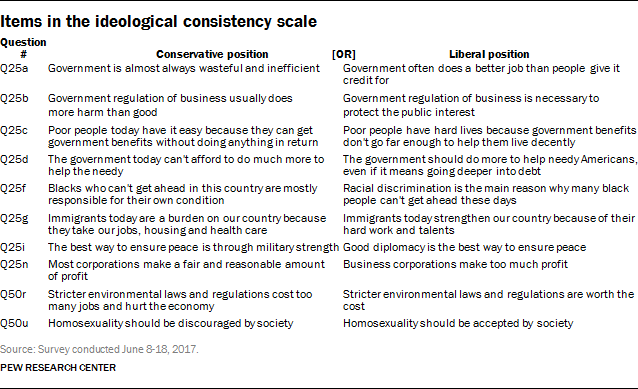
https://www.pbs.org/wgbh/frontline/film/policing-the-police/
Edit: Apparently this link works outside the US: https://player.pbs.org/widget/partnerplayer/2365792793/