I'm really impressed with Mazda, they seem to be staying on the right side of several trends where the industry is going in the other direction. They still make cars that are a bit more responsive whereas the industry is making either luxury floaters or crazy horsepower monsters. Good handling, they avoid CVT and have a very practical approach to tech. If anyone is a fan of MotoMan, he's done some cool deep dives:
https://www.youtube.com/watch?v=nMke4Fl4gyw
(Sorry if this sounds like an ad, I'm not affiliated with them but have been scouting for a car recently.)
I drive a base model Mazda 3 which has needed no major repairs whatsoever and runs like a top. Meanwhile my wife drives a Nissan Murano (by all accounts a much “nicer” car) and we had to effectively replace the entire steering system at a cost of several thousand dollars.
Yeah, the most they have done is a capacitor attached to an oversized alternator for regenerative braking. They have pushed ICE pretty far out there with skyactiv-x but they aren't bringing it to the US market soon. It's over in Europe for now. https://www.caranddriver.com/news/a15339942/mazdas-gasoline-...
have a 20 year old mazda miata that has been abused and needed next to no work, drives super well still. Next car would be a mazda but i want a manual truck to offroad in so i'm going toyota.
I have a 29 year old Mazda miata (it's older than I am FYI) and it's been really great! I drive it year round in pretty harsh winters and I find it no less capable than the econobox I used to drive.
1989 Miata checking in. I drove it daily for 2 years. Now I have a newer car and I still pick to drive the Miata every time I’m alone or I’m not going to Home Depot (I’ve taken it to Costco though with great success).
I’m getting a bunch of turbo components tomorrow so that may change things.
The only things I’ve HAD to repair are... the top. $250 and 4hs later I have a new one on that’s been great. Everything else has been track oriented upgrades and tinkering out of boredom.
It’s even running on an old Megasquirt ECU I put together as a teen, so it’s not even Japan reliable, and it’s still more reliable than many of my friend’s cars.
I don't know about "good" or "bad", but they tend to be less responsive and create more of a spongy, floaty feel. In terms of creating a more connected driving experience, the best would be either manual or dual clutch systems. Obviously you can create good or bad transmissions in all of these categories and you may prefer a softer ride - there are customers who pay a lot of money for a softer ride or even be driven along, it just depends on what you want.
> but in regular drive, the lack of hard shift is really pleasant.
I sometimes drive an US-designed car with, I assume, an US-designed automatic transmission (traditional planetary sets + torque converter) and I was actually surprised it doesn't shift very smoothly, worse than a good driver on a manual and much worse than dual-clutch transmissions. With the latter it's pretty much impossible to tell when it is shifting if you cannot hear the motor rev.
(When you switch that car to 4L... oh dear, every shift feels like a learner driver learning to shift with the entire car jerking around. Everyone nods in approval!)
> I sometimes drive an US-designed car with, I assume, an US-designed automatic transmission
regular Automatic transmissions (not CVT) have been commoditized and are usually subcontracted out to dedicated vendors that make transmissions and sell them to auto manufacturers all around the world, so the nationality of the car vendor isn't going to tell much about transmission quality.
For example, the largest market share of car automatic transmissions belongs to (Japan based) Aisin, which sells transmissions to Ford, Toyota, BMW, Skoda, Chevrolet, Suzuki, Volvo, Hyundai, and many others.
https://en.wikipedia.org/wiki/List_of_Aisin_transmissions
A lot of the bus and truck transmissions are made by (US-based) Allison and they are sold all over the world and have the largest share in duty engines.
https://en.wikipedia.org/wiki/Allison_Transmission
There is large variability in perceived transmission quality, depending on everything from how the software controls it to form factor (real wheel or front wheel) to issues of reliability and build quality, but there are excellent US transmission vendors as well.
Even in the world of PEV there is a trade off between fuel economy and performance, so this has nothing to do with transmissions.
The fact that you use energy stored as electricity does not get around the laws of inertia or air resistance -- accelerating a mass quickly will always require more energy than accelerating it slowly. And in the PEV world, since re-charging can take an hour instead of a minute, the consequences of draining the battery more quickly are going to be more of an annoyance.
Transmissions come up in that this is how some automakers meet efficiency requirements -- by taking away some control over acceleration from the driver by using a transmission that is programmed to shift gears in the higher rev ranges, with no manual override. But this makes the car less responsive.
Here, Tesla's brilliance shines, not because it doesn't have a transmission -- they can and do put in software that limits acceleration, so they could have done the same thing to improve range, but onlike others that improve efficiency by making the car less responsive to the driver, they improve efficiency by having a more efficent engine or a lighter car, while keepig the car very responsive to the driver. The real brilliance of Tesla is in building cars that are fun to drive (read, responsive), and indeed most of the innovation of electric cars that has been successful in the market was based around improving acceleration and adding more torque, making the car more fun to drive. That's why models like the Tesla or the old Ferrarris with electric assist are much loved by drivers, even though models like the Leaf and Bolt are not. Drivers care about good handling.
> Even in the world of PEV there is a trade off between fuel economy and performance, so this has nothing to do with transmissions.
CVTs are not efficient because they control the rate of acceleration. You can over-rev a CVT and get as much acceleration as your engine (and it's transmissions losses) will allow. CVTs are efficient because they allow the engine of the car to operate in its most efficient power range more of the time.
EVs run into this same issue, but the way Tesla anyhow solved for it is pretty wild. Dual motor Teslas have 2 different motor/ drivetrain gear ratios. The rear wheels are most efficient at lower speeds and when you are driving slower, they get most of the power. The front wheels are most efficient at higher speeds and when you are driving faster, they get the most power. This way the most efficient motor is always doing the most work at any time. This is likely why the AWD Teslas have so much more range than the single engine/ RWD models.
There is a good article talking about EV transmissions here, the bit about Tesla's 2 gear ratio setup is about 12 paragraphs in.
I can't speak for nowadays, but my experience with early non-hybrid CVT vehicles was negative. I test drove a Nissan Versa and the engine was sitting at around 4k RPM doing 60 MPH on the highway. It was very loud for a small hatchback, and generally unpleasant to drive.
I think I tested the Versa in 2008. I specifically raised this concern with the car salesman who was sitting in the passenger seat; he insisted it was normal. Weird!
I had a CVT car, and that never gave me any problems (over 180K kms).
My newer car has a traditional automatic - the only reason I didn't go for a CVT is simply that the model I have doesn't come with that option (otherwise I would have opted for it).
They're supposed to be more fuel-efficient, I guess? I've only driven one or two, but my perception is that they're slower to respond.
My minivan has a 9-speed automatic transmission and the engine spends 99% of its time either off, idling, or around 1.9k rpm, so it seems like it's efficient enough.
No. It's like when some some old farts try to tell you that 24fps is just great for movies. The reality is only that people are accustomed to the lower temporal quality of 24fps movies from childhood onward, and don't like the change to something better.
Unless you have some evidence proving me wrong, my feeling is that the people who don’t like them are very loud is saying so, while the rest of us simply focus on other things. Some manufacturers like Nissan just did a really bad job tuning their CVTs at the beginning, but I hear this has since been addressed. I never had a problem with the CVT in other vehicles.
I just wanted to see how the things evolved and apparently in 2021 some new Mazda's DO HAVE touchscreen infotainment: https://youtu.be/eIfP2vcZD7M?t=582
On the Mazda MX-5 2020 the touch screen only works when the car is not in motion. When in motion, you have to use their "Command Controller" knob that's near the shifter.
This is an annoying misfeature because it doesn’t allow the passenger to manipulate the touchscreen either. I hit this all the time. We get started with my wife driving and I want to input the address or browse to some music but NOPE you need to be fully stopped for even the passenger to do anything. Thoroughly stupid.
Every new car has a sensor in the passenger seat to turn on the passenger airbag when it's occupied. It would be no issue to also turn on the touchscreen.
This is how my 2016 CX-5 operates. The touchscreen aspect stops working above 5 mph. It does suck if you have a passenger co-pilot, as it's impossible to enter detailed nav directions without stopping. Thankfully Mazda offered an Android Auto/Apple Carplay upgrade after manufacture that allowed you to use better voice control then their built in solution. (Touch in Android Auto is entirely disabled even when the car is stopped)
That’s because the 6 is the old/current 6 with the old nav/infotainment whereas the CX-5 is new. Once the new generation mazda6 comes out I assume it’ll get updated to the new dash/infotainment.
As someone currently shopping for a new car, the current CX-5, the current MX-5 and the Mazda 6 come with a touchscreen setup.
*EDIT: Also all the VW models in the Golf and Passat Range come with a touchscreen, the low-end Fiats are the same, Mercedes is no different, even the low-end at Dacia comes with a touchscreen. If you can find a car manufacturer that does not think a touchscreen is the way to go, I'll be surprised.
\EDIT2: Since I looked at everything else in my neighborhood as well... Audi does a touchscreen center console for everything. You can get the Renault Twingo without any electronics but if you take the climate control you also get a touch screen. Honda and Hyundai will include a touch screen with everything as well. The only cars I got offered without a touchscreen center console is the Mitsubishi outlander and there it is only 1 model.
All new cars are mandated to have back-up cameras. This means they have to put a screen in the car for every new car. It probably doesn't add much to make it a touch screen... but the irony here is that we added backup cameras for safety, and now we've got a dangerous distraction piece on the car.
My mazda 3 has a touchscreen too - but its disabled while the car is moving. Every function is quite accessible from the physical controls, and they're in a good location, good tactile feedback and different sizes of buttons to knobs etc.
It is clearly designed away from "touchscreen", but if you are parked it functions fine with touch.
> Despite selling some vehicles with high ratings in other categories, Audi, Honda, Infiniti, Mazda, Mercedes-Benz, Mini, Subaru, and Toyota all joined Lexus at the bottom of our satisfaction ratings when it came to ease of use for in-car electronics.
> The infotainment screen mounted in the center of the dash isn’t a touch screen; users must adjust audio and infotainment features using steering wheel controls or the rotary controller and buttons mounted between the front seats. Unfortunately, some steering wheel controls are hard to see and difficult to use because they have silver text on a silver background. The rotary knob and buttons in the center console are also challenging to use since many of the buttons are difficult to see at a glance, and the lack of an easy-to-decipher menu structure forces drivers to spend too long looking at the controls instead of the road.
As can be seen from your first link, the main control method is a jog-wheel knob at your knee next to the gear shift lever, mounted facing up, so you turn it left and right to select things and push in to "click"/confirm. CR says that with this control system, and the menu hierarchies that Mazda's UI makes you go through, you end up more distracted than with the better touch-screen systems they review.
That X is not good does not automatically mean that Y is better.
Touchscreens in cars are really distracting. I had to yell to an acquaintance of mine once -- they were trying to change the music while going with 40-50km/h in a suburban area and she almost hit a dog. The reason? Cheap touchscreen that doesn't register half the touches. But it wouldn't matter for the poor creature that gets one ton of steel driven through them.
Maybe the car infotainment system's controls belong to the steering wheel? Or a bunch of extra levers? Who knows, but IMO the touchscreens aren't that good as well. The jury is still out on what's the best way of approaching this.
The problem is that basic controls got moved into touch screen interfaces.
Before I could turn my fan speed knob by feel. It was "stepped" so I knew what level it was at when I moved it, if it was min/max. Same with heat and cool. Knob to adjust what vents. All could be done with eyes on the road.
Now? OK you can change climate control, go into touch screen, open up controls, tap to change 5 times to different vents, some crap slider to control fan speed, all requiring to look in order to see where to touch. The lack of tactile feedback just sucks.
On a phone yea sure it's great because I'm looking at it when I use it - it's function is to look at it. Not in a car.
A major issue is that the UI of touchscreens is horrible and the hardware used is so slow that it makes the experience dangerously bad. I don't have issues using the Maps app on my phone even though that's a touchscreen. I also don't have issues playing music through my phone (accessibility settings help a lot with this). On the other hand, every time I've had to use a car touchscreen I make sure I'm not moving because I have to look at the screen to find the button location and then keep looking for another second to make sure the press was registered.
The idea is right, but the implementation doesn't seem great. I can't judge it fairly, because I've never used it, but based on your description, and the article, I completely believe that the way Mazda is going about this is horrible.
>Mazda is looking to add more simple, tactile controls into the cars. A quick tilt of the volume knob to the right or left goes forward or back single tracks
Ugh, if only there were some kind of dedicated control for some of these things that are being moved out of touchscreens. Something you can just tap on, sort of the way you do with touchscreens, but that never moves or changes, so you can tap it without looking.
I have a Mazda, and the system works perfectly. You have to get used to it (maybe a week of use), and after that is like using a trackball. Do you need to look at your mouse to locate the buttons or the wheel? The Mazda knob is exactly the same: left is media, central is home, right is navigation.
Obviously, if you only test drive the car for an hour, you cannot get used to it, and you have to look down. Same as you had to look at your mouse the first time you used it.
sorry since I don't have much to say about the article itself, wanted to share this though.
I dislike almost everything about modern cars (touch is the least of my problems) ; usability, 'repairability', electronic assistance, cameras, trend towards SUVs (even if only for driving children to school), weight and size increase, technical gizmos, et cetera ... don't want to write that rant in full right now.
- even in fast cars you often can't turn off the esc (electronic stability control)
- it might actually not allow you to make unusual maneuvers (handbrake turns, etc) ; this actually can trigger the automatic emergency hotline call (been a witness)
- it beeps at you for not wearing your seat belt (even while driving across an empty parking lot going 10 mph, or being on private property)
- it has distance sensors (car beeps at you when driving out of a narrow parking garage constantly)
- it warns you when it's cold, wet, you drive too fast ...
- you can't set height of headlamps manually anymore (good for xeon which burn out everyone else's eyes even with default height settings...)
- it might check whether you are in lane and warn when you go outside of it
you might not agree, but all of that frustrates me (and does, whenever I have a rental), and makes me feel less in control and being treated like a child.
-> add to all that : many electronic pieces are hard to replace, repair, debug if something isn't working ; not even talking about the full blown modern electronic gizmos where you now have to theoretically worry about your car getting (or not getting) software updates.
Being in total control for me includes the ability to shoot yourself in the foot. I realize this isn't what your average 'a car is just a utility for me' driver wants, but what an enthusiast wants.
to maybe come up with an imperfect analogy : average users use windows, power users use linux ; as long as I have linux as an option, I am happy. But the current development goes to a windows only world (in this metaphor), and it's rare to find cars that are exciting anymore.
It is a very imperfect analogy indeed, since you cannot instantly kill a family of 5 with a flick of your wrist, while using linux.
Cars kill one and a half million people a year. Let that sink in. That's a loaded jumbo jet going down every few hours. Cars are not supposed to be exciting, they are (or should be) supposed to be safe.
If you want exciting cars, buy a dedicated one and play with it exclusively on the track. There's already enough morons doing "exciting driving" in public roads.
> Being in total control for me includes the ability to shoot yourself in the foot.
Yeah, if it would only be yourself you'd endanger, I'd say knock yourself out. But you can harm others, so you shouldn't have that freedom.
ESC, seatbelt warnings, road condition warnings, even a simple alert when you've been driving for a long time without breaks, all those things measurable save lives. I'm sorry you feel annoyed, but I find that a very self-centered thing to say.
The annoying one for me is the trunk ajar warning that doesn't time out. That means listening to a constant beep the entire way home from the hardware store when I have something that doesn't fit completely in the car.
I know someone who wrecked an Audi on a track day at Mosport Ontario and is 100% convinced it was due to a bad algorithm. He was coming out of a high-speed turn in a compression and started braking, and just about bent the pedal having to apply so much force, and yet went into the wall. Seems the ESC, which he had turned off (so some backup system engaged), thought the conditions matched ice, so overrode his pedal input and backed off the brake line pressure.
I'm also reminded of the manufacturer system that got a border patrol agent killed in a firefight in Mexico a few years ago. The security company that installed the bulletproofing and other upgrades didn't notice a trivial feature. The agent was ok until he stopped the car, then the doors automatically unlocked - dead.
Driving around your property picking up tree branches or other debris.
Backing a boat down a boat ramp.
4 wheeling where you have to hang out the window to see where your tire is.
Basically there a lot of off road type situations where you want/need freedom of movement. I would guess from your comment that you don't these things, but many of us do.
The one that kills me is it dings when the 'passenger' doesn't have their belt fashioned. Where the passenger is a box, or groceries, or whatever. I end up leaving the belt permanently put in, which is slightly annoying when I do have a passenger get in.
> even while driving across an empty parking lot going 10 mph, or being on private property
Being on private property does not imply you can break the law. And also being on private property does not imply lower chances or killing you self.
If that were the case, construction workers would be in a really bad place since all of them work on “private property” - does that imply that they should not pay attention to health and safety?
> you can't set height of headlamps manually anymore (good for xeon which burn out everyone else's eyes even with default height settings...)
Why would you need to change the height of the headlights? Would you prefer for police to be given devices to detect if your lights were misconfigured when they stop you so that they could enforce that?
Any safety methodology would tell you it’s easier to make sure people are unable to make mistakes rather than trying to make people conscious enough not to make them. Aviation industry is highly praised for that.
> Being in total control for me includes an ability to shoot yourself in the foot.
That’s the case where shooting yourself in the foot also implies shooting the brains out of a person who was stupid enough to stand a floor below you when you were shooting yourself in the foot.
> power users use Linux
But for example hardware running on Linux with high externalities if misconfigured is generally locked up (for example 4G modems and WiFi radio equipment). It will be really expensive for you to get your hands on “hacker” equipment to play with this.
Being on private property does not imply you can break the law, however, many road vehicle/traffic regulations explicitly apply only to roads open to public traffic (which may include some private property e.g. parking lots).
If the law says "it's forbidden to do X on public roads", you're not breaking the law if you do that thing on a private track. Details vary between locations, but seatbelts, roadworthiness, insurance, speed limits, etc generally are things that you are allowed to ignore outside of public traffic.
In your example of construction workers, other regulations (e.g. OSHA) would cover your concerns; but, for example, a truck driving up the ramp in a strip-mine would generally not be bound by traffic laws; construction sometimes uses various vehicles that simply can't ever legally participate in road traffic, they just get delivered as "cargo" or assembled/disassembled on-site.
Can you please explain to me how it is safer not to wear a seatbelt on a private property? i.e. from one side of things it's obviously legal not to wear one, but from the reality side of things it's obviously stupid.
That being said are you sure this is not only the case in the US in the first place?
I think they're an awful addition to driver controls. You simply cannot be distracted while driving for more than a few seconds before you're endangering yourself and others and there is no good place to put them that doesn't take your eyes off the road.
When I use a mapping app for driving I use one I can place on the dashboard and quickly glance at it but I don't fiddle with it.
Watching videos of those pile ups in Texas this month was just stunning. Everyone who rear ended the car in front of them was an idiot. There is no excuse for driving faster than you can react to the car in front of you coming to a full stop. None at all.
I grew up around and working with body men who repaired crashed car and the people who crashed them, custom and race car builders, and race car drivers, and some of those drivers broke world speed records, and some died racing. I also designed and built "zero effort" driving systems for C4-C5 quadriplegics so they could drive while sitting in their wheelchairs. Most of them couldn't pick up a sandwich but they could safely drive the vehicles we built for them.
Of all the crazy things people have asked me to do to their car, none of it would be more dangerous than a touchscreen for driver controls, and especially one with entertainment features. That's the ultimate stupid feature. And I have been asked to do a shit ton of crazy things to cars people drive. Evel Kenival wanted me to build a show car that "exploded the body off", and I did. And as far as know, no one was ever injured by it. If he'd asked me to build him a car that he could change the radio station with a touchscreen TV in the center console while driving down the highway I'd have told him "No. I won't do that".
What scares me is people buy and use this stuff now while barreling down the hwy at 70+mph.
> Of all the crazy things people have asked me to do to their car, none of it would be more dangerous than a touchscreen for driver controls, and especially one with entertainment features.
I drive an older car with an old fashioned CD player rather than an infotainment system so what do I do? That's right. I put my phone in a cradle next to the steering wheel and use Spotify.
Apart from the serious issues caused by the lack of tactile feedback and the fact you have to look at the interface to use it, it's like the Spotify product development teams have gone out of their way to make the app clumsy and dangerous to use whilst driving. It is crappy and unresponsive, with way too much clutter.
I swear, Spotify have a giant engineering team and I have literally no idea what they spend their time doing: it's certainly nothing that I find useful or that improves my experience.
So in order to avoid dying or killing anybody else I plug the phone in to the aux socket on the car stereo (no Bluetooth in my car), select a playlist before I set off, and then let it do its thing. I'd switch back to CDs but they're a pain in the ass to carry in bulk. Or I listen to an audiobook.
Holy hell, Spotify. I've been using it a lot up to about 4-5 years go, both desktop and mobile. It was a fine app, I used it a lot to listen to music during commute. I curated some 20 personal playlists, and a bunch of shared ones too. But after I didn't need to commute anymore, I stopped using it.
Fast forward to January, my wife learned there are some good nursery rhymes on Spotify, and she installed the app on a spare phone. Few days ago, she was busy and asked me to play the Spotify playlist she usually plays to our kid. I couldn't do it. The current UI is completely inscrutable to me. All I could do is find a few album covers that, upon tapping, led to something that perhaps was a playlist, perhaps a "radio", perhaps something else. In 5 minutes of focused attempt, I couldn't find a way to list what songs are a part of the playlist I selected.
So I ultimately played something that looked like the right playlist, it played a song I recognized, then it played an ad, then it turned out to be a "radio".
It's rare that bad UX triggers a strong emotional reaction in me these days, but that did it. What the fuck, Spotify?
How old fashioned is the CD player? My Civic from the (past (past decade)) supported MP3/WMA CDs and it ruled. I'd burn a couple hundred tracks of whatever I was obsessed with atm, put it on shuffle, then be set for a few months. No screens and no disc swapping either.
I do this where I can. Unfortunately lots of newer music increasingly doesn't offer the option of a physical copy, or physical copies are produced only in limited numbers.
The other trend I've seen a bit is digital and streaming releases, with a vinyl physical release, but no CD version. I mean, fine, whatever, if that's what the market wants I suppose.
I don't tend to mind too much if FLAC is an option (usually the case if available on Bandcamp), but it's pretty annoying when the only options are MP3s or streaming, which tends to be the case with albums only available through more mainstream distribution channels such as Amazon (I'm looking at you Dark Country album series).
The only thing I have that can play cds are video game consoles.
I did the whole binders of cds and the giant cd towers to hold my music, that was a giant pain. I jumped on mp3s as soon as I could, and then once Spotify launched in the US I joined and never looked back.
Exactly! People seem to underestimate the power in preparation before you leave for a trip. Pick what you want to listen to, and suck it up if a song comes up that you don't like. Before internet everywhere, you had to load up the CD, or you were stuck with the radio. We all still survived. The convenience of all this crap seems to just enable people to start driving before they think about their trip.
This goes for navigation too. You should review your route before you leave, and at the very least have it plugged into your nav unit before you drive off.
There's no excuse for fucking with all this stuff while you drive. If you really need to change something, just pull off for for a minute.
Spotify... Isn't meant to be used while driving. Nothing on your phone is. It's illegal. You're not supposed to be doing it at all, ever...
I do think that it's ridiculous that Spotify hasn't improved their app in the 5 years I've been using it and is still missing really basic playback features, but when the competition is Apple Music, they're still by far the best music service that exists.
But I don't see the complaint that it's not got to be used while driving. Phones aren't supposed to be used while driving altogether.
I don't know about the apple equivalent, but Spotify is available as a music app in android auto. The interface is intentionally trimmed down such that your touch interactions are limited.
Instead, it wants you to do as much as possible by voice. It almost works, but is frustrating enough I learned to just get the songs and albums i want lined up in advance and can get to in 2-3 touches. Not quite the same as tactile controls, but pretty close.
In the UK it is legal to use a phone in your car handsfree as long as the phone is in a cradle/bracket. Since, I think, last year the gov closed a loophole so you can't have the phone in your hand for any reason whilst driving.
Might vary in other countries/jurisdictions of course.
> So in order to avoid dying or killing anybody else I plug the phone in to the aux socket on the car stereo (no Bluetooth in my car), select a playlist before I set off, and then let it do its thing. I'd switch back to CDs but they're a pain in the ass to carry in bulk.
Way back when, I had a Zen Stone to play music in the car. It was everything I wanted; it stored music and was operated purely by touch, not even having a display. It was tiny and easy to carry (though mostly I just left it in the car).
Since that worked so well, I now have a SanDisk Clip Sport which appears to channel the same ideas. Sadly, I've never really had occasion to use it -- I don't do much driving anymore, and I've never had a car with an audio in port. (I plugged the Zen Stone into a cassette tape adapter...)
But if you really think CDs would be better than your phone except for the bulkiness (and I would agree), that's probably the way to go.
Is Spotify car mode still too much in your opinion? I don't look at my phone when driving as much as possible (except for directions, honestly), but it's pretty good for limiting distraction.
This looks pretty good, although of course lacking Bluetooth I've never seen it. Looks like you have to go into Settings to enable it manually when you're connecting with a cable but, yes, seems like an improvement. Thank you!
Even better is Pandora. I switched to Apple Music mostly because my car forced me to use some shitshow built in Pandora mode that works poorly and locks out the Pandora interface on the phone!
I hate driving and fill the navigator/DJ role in the car. Assuming I’m driving in a 7 passenger car is dumb.
That is another good point - having a passenger. Our Toyota has safety features prevent bringing up a keyboard (mainly for the gps to search for new locations while driving). The car needs to be stopped. For a solo driver this makes sense ... but I know my local area ... the only time I ever need this is when I'm on a roadtrip and usually the passenger is the one making the change. I want _more_ powerful interfaces and touch is fine for a passenger coordinating with the driver, even though a physical interface for the driver with better integration into apps would work better for that use case. One-size doesn't fit all.
Some songs and artists I like it is so bad at recognizing that I learned to just preload everything in advance. Honestly, it is vetter that way- voice controls are frustrating enough to soak up too much attention, even though your eyes don't leave the road.
"There is no excuse for driving faster than you can react to the car in front of you coming to a full stop. None at all."
Not offering this up as an excuse but rather sort of a pattern of behavior.
When I leave lots of room between me and the car in front of me, it invites crazy behavior for people cutting into that big open space. Especially with people that don't know how to merge onto a freeway.
It's sometimes hard to tell if following technically too close is actually safer for that reason.
Note that I've never rear-ended anybody, but I've certainly had some exciting panic stops.
I used to get annoyed at people cutting me off and used to try to close the gap in front of me.
That is just known as tailgating, it is 100% more dangerous, and the mentality that leads to it is a minor form of road rage -- getting annoyed at other drivers and rationalizing dangerous behavior because of it. And all you're doing is, very definitively, rationalization -- tailgating is never safer. That is a form of "I am very clever and counterintuitive" rationalization or how otherwise fairly smart people wind up making dumb decisions.
If you allow enough space -- which should really be well over a semi-trailer of space -- then you allow people to "cut you off" but everyone is ultimately safer.
You get where you're going at basically exactly the same time as well. Even if you get caught at a light, you'll probably make it up at some other light where you'd never make it anyway because the backup is 2+ lights long anyway (or else you're driving somewhere at some without any traffic and it doesn't matter anyway).
It also greatly helps to just get the fuck out of the left lane entirely and get out of the mentality where you give any fucks over it. That goes equally as to if you are one of the left-lane speed police OR if you're one of the left-lane-is-for-passing police. Both of those people are actually road ragers. Stick with one of the other lanes and open up a nice wide gap in front of you and watch people zip over to the left lane and get into each other's headspaces.
And you'll get to wherever you're going within a minute or two of whatever your maps app predicts.
And often the left lane isn't any faster because half the people think they drive faster than everyone else and zip over there and crowd it up.
> Note that I've never rear-ended anybody, but I've certainly had some exciting panic stops.
I can't remember the last time I ever had an "exciting panic stop". I'm pretty certain I can guess which of us is a generally safer driver. So that should be your answer.
I don't think they mean they didn't like leaving the space because people moved into that space, but because they did so in an unsafe manner.
I've observed much the same thing. After a certain distance, you will find people taking extra risks just to find a way into that space. Then once they have managed to weave their way into a position where they can move into that space, they will frequently do so mere feet in front of you. They will not take advantage of the giant space available and simply get in front of you at all costs as fast as possible.
It's really not about somebody getting in front of you, as it is discouraging them from risking their life, yours, and multiple other people's around you, to get into the somewhat larger space available.
If I've left more than a semi-trailer of space in front of me, I haven't seen people trying to zip into that space right off my front bumper dangerously.
If you're commonly seeing that, you're likely doing something to antagonize other drivers.
Tailgating in order to prevent that is rationalizing unsafe behavior.
That is what I was thinking. Hard to get the benefit of the doubt here sometimes. I actually do mostly leave a big space in front of me. But it is frustrating when that invites crazy behavior.
"The theory that things that improve our safety might provide a false sense of security and lead to reckless behavior is attractive—it’s contrarian and clever, and fits the “here’s something surprising we smart folks thought about” mold that appeals to, well, people who think of themselves as smart." -- Zeynep Tufekci
Having to do a panic stop can still happen from a safe distance. The car in front of you might have significantly better brakes and traction. Or someone can pull in front of you and brake before you're able to establish distance. You sure are concluding a lot from one data point.
The need to commonly panic stop is entirely due to tailgating. Eliminating tailgating though can't ever completely eliminate the need to panic stop. But I can't think of any time in the past 30 years that I've needed to panic stop. True accidents do happen, but the majority of time "panic stops" are due to inattention and insufficient stopping distance.
And I'm not going to carefully research something that should be very obvious if you have any experience driving at all. You can go out and talk to a thousand driving instructors and police who will tell you the same thing.
Anecdotes can also be right. You can't prove something wrong by screaming N=1 you can only argue its not proof. So prove my experience wrong with statistics and data (I will bet you that you cannot).
When people cut into that big open space then I ease off the gas a little and let more room open up between us. Someone else cuts in, and I just keep doing the same. Just because they're going to drive dangerously doesn't mean I have to.
Sure and I guess we get home the next day I suppose. There's being safe and then there's being paranoid. The OP quoted a pile up in Texas during one of the worst winter storms in history as example of not following distance, while the right thing to do on that day would have been to _not drive at all_. Even on normal Christmas mornings which are typically one of the iciest days of the year in Dallas I used to take a bus ride to see how many cars I can count in ditches. Just don't drive in Texas if the roads are icy.
If you have distance-maintaining cruise control, you can safely ignore this phenomenon. Also, learn to ignore that little voice in your head that equates being in front of another car with having higher social status.
"Also, learn to ignore that little voice in your head that equates being in front of another car with having higher social status."
It's not that. It's that following a bit closer is arguably less mental work then dealing with the unpredictable encroachments, merging cars pacing you exactly versus speeding up or slowing down to merge, etc.
I have distance-maintaining cruise control. But the quantums of distance go between clearly too close and uncomfortable (and I think there's one closer), or engraved invitation.
The problem with putting out the engraved invitation is it means never passing the big trucks. I don't like following directly behind big trucks because of visibility and fumes. But it you leave a big space, people will keep passing you on the right to get into that space, and then you may as well sit in the right lane behind the truck, because you're not going to pass it.
It's true that some brands have bad distance options. I use the one that's ridiculously far. So far back that I'm never in the stink zone or afraid the automatic brake isn't going to work in time. I'm frustrated when I drive a car without that option.
I find that drivers willing to cut into a small gap ahead of me are very likely to change lanes again in 30 seconds. I'm not convinced tailgating saves any time at all.
Where I live people merge onto the freeway as quickly as possible. If I try to merge the "correct" way, people think I'm cheating and will speed up to force me to go have to merge behind them even though they were previously going pretty slow in the right lane.
Is there an entity out there trying to solve the design issue around cars? Like, why is it possible to do the erratic behavior you describe when you leave room for the car ahead of you? How can we change the design of either cars or roads to inhibit dangerous behavior? I'm sure most people who read this have driven on an American highway and observe dangerous behaviors from other drivers. It's curious why, as a society, we ignore this as a given for independent transportation.
> Everyone who rear ended the car in front of them was an idiot.
Are you serious? Winter driving is no joke. I sympathise with people in Texas who did not have a daily encouter with snow and ice. When I was in the midwest, I was pretty good at driving on ice, guessing where black ice was etc. I will never forget Jan 25, 2010 in Iowa when I successfully made home - it was literally like driving blindfolded on a glass sheet [1]. Driving north on I-35 at 15 mph. It was one of the proudest achievements of my life.
Hint: if you see an overpass, brake gently before you reach there. You are betting that there won't be black ice below it, and that's not a very safe bet. The steering wheel might buck once on the black ice, but you can recover if you are slow, and you go into the skid rather than against it.
You are absolutely right. But if you are on the road, I was saying that it is possible to regain control of the car even if you momentarily skid/slide. I think winter driving definitely takes getting used to, there is no point in blaming drivers who may be encountering this for the first time in their lives.
> Everyone who rear ended the car in front of them was an idiot.
I find this comment baseless and insensitive to those that were killed. The Texas accident was attributed to a failure of road ice management. Bystander video clearly shows vehicles attempting to stop sliding for hundreds of yards on ice.
Those videos also show people successfully stopping without smashing into the car in front of them, and then getting rear ended by the driver behind them.
One could make the argument that the drivers were not aware of the dangers of driving on ice, but then it's a fault of the regulatory body that issues licenses to these people. However, I do think it's the drivers responsibility to assess the road conditions and pick an appropriate speed. Whilst it is a failure of government authorities to not de-ice the roads and spread salt, any driver can at any point in time be caught off guard by terrible weather, and they should be ready to deal with those situations.
Agreed, I don't think OP ever tried to figure out what happened in that scenario, just waved it off as dumb drivers, "I would have had different results", rather than the sudden undetectable absolute loss of traction event, which probably wouldn't even have a high chance of being detectable by any fancy Vision/Lidar self-driving algorithms (black ice, no change in contrast).
Are you referring to the pileup caused by the black ice on the overpass? At those Texan speeds, managing to stop a sixteen wheeler on ice would be a miracle.
Edit: removed part that was saying ABS is useless on ice.
You are right, a few searches reveal that ABS is supposed to help on ice. I confused another piece of information I read that was saying that ABS is worse on snow, due to not creating that snow wall as the tire digs through the snow, that a locked wheel would allow.
I grew up in an area that 5-8 feet of snow annually and drove old cars in it. Don’t listen to internet nerds arguing about what a super skilled driver can do. A pile of snow pushed in front of a wheel isn’t stopping a car.
After front wheel drive, ABS is one of the major ways to improve winter driving. Not only in snow, but in black ice and similar conditions. The big issue is driving too fast and losing control and going into the ditch or a spin.
ABS makes it easier for you to know you have a problem and to avoid it. It may or may not bring you to a full stop in a shorter timeframe, but it will shed speed so you regain control.
After ABS, all season tires and AWD are the most important enhancements.
Thanks, great points. It's true, ABS can provide helpful feedback. On several occasions I had to abort cornering and keep going straight, because I once the ABS was engaged I knew there's no way I was making the corner (this was low speed on a patch of ice covered by fresh snow).
Also, I find the electronic stability control system extremely useful for detecting black ice. A slight acceleration attempt provides instant feedback if the road is slippery, but not immediately obvious.
The primary function of ABS is to allow you to keep steering control, rather than "improved braking" (though I guess it could be said that you get 'improved braking' by being able to control it better ie. by being able to also steer away from an object).
It applies equally to snow, wet or dry conditions.
It sounds like you aren't familiar with ice driving.
The worst pileup in Texas occurred on one side of an arched overpass. Drivers coming from one direction couldn't see the pileup forming at the bottom until they were already coming down. At such a velocity and slope, there was no recourse. This is in spite of the long distance that remained to the start of the pileup.
For context, ice accumulates on bridges before the rest of the highway.
I once had to report an uber driver for watching a movie on his laptop. Almost scarier than the distraction watching the movie, was that every turn (or swerve) caused the laptop to slide on the dash and he'd reach way over the passenger side to move it back. Scary ride.
> There is no excuse for driving faster than you can react to the car in front of you coming to a full stop. None at all.
The other reply aludes to this, but it's very simple
The easiest way to cause an accident is to behave in an unexpected way
Leave a gap when no one else is? People will cut into the gap and put you and others at risk.
Brake early to increase the space you have? People not paying attention will rear end you expecting you to have braked later.
Drive slower than most traffic to give yourself more reaction time? People will pass you unsafely, and you again run the risk of being rear ended since going slower than people expect is a similar outcome to them coming across an unexpected obstacle.
That's why we see fully autonomous vehicles getting in so many not-at-fault accidents. The most experienced drivers realize there are a lot of unspoken conventions that, for better or worse, people rely on to get from place to place.
Sometimes those backfire like in that pile up, but this isn't really something you fix by being the only person doing otherwise.
You'll quickly find that you're putting yourself at the mercy of other drivers (and yes you won't be at fault, but not being at fault never saved someone in an ICU)
I have one rule when driving: “stay the fuck away from me”. All other rules follow, including leaving tons of space, signaling, passing appropriately. Also includes moving right when someone is too close to me.
I consider myself an extremely safe driver, and I’ve definitely been in way more close calls when someone else was driving than when I was.
I don’t think that logic you’ve proposed really holds in the parts of the US that I’ve lived in (East coast, Midwest).
I driven 80,000 miles between CT, NY and NC with 0 accidents* in the last 3 years (almost 70,000 in two years, COVID obviously put a damper on recreational driving)
Right now I live in NYC and I can tell you leaving tons of space (outside of zipper merges) is just going to leave you slamming your brakes for overaggressive drivers all day, and if you're unlucky someone will hit you or swipe you.
That's not saying you need to tailgate people until you can smell their breath, but the ideal following distance at highway speeds is 6 car lengths at 60 mph for example.
6 car lengths between the car in front of you here would leave people treating you like you have a disabled car, rushing to fill that gap immediately in a mad rush.
It sucks, but at the same time that's how people drive sometimes. To me the safest way to drive is to not to have hard and fast rules you follow regardless of situation, but to adapt to situations quickly.
For example, if trucks start passing me on the left, I'd rather be in a "left-er" lane than the one I'm in, even if it means giving up some of my ability to make space. The action of the truck switching lanes twice in close proximity is creating more risk for me than driving at the same distance the rest of traffic is
-
Also in most pile ups like the one mentioned following distance isn't even the main issue, it's things like target fixation, where you come around the bend see a giant crash and "lock up"
Space will buy you more time to get over the fixation, but I'm willing to bet most people wouldn't be able to handle that in 6 car lengths at 60 mph.
Early in my instruction on performance driving, the thing that created the hairiest situations, even on an closed course with not a single car for another few turns, was always target fixation.
It's not easy to get over, and I feel like a great antidote is to not think in terms of "I have to make space, this space is a safe zone" but "what if this is not a safe zone, what are my options" and continuously think of that
* one accident happened when I was not in the car, parked car got smashed by a driver confusing their pedals
I keep my smartphone with shazam on when I listen to the radio. While moving I'll hear a song and just press the big round button in the middle. The simplest gesture possible on a phone. I noticed that when I do so, even if I make a conscious effort to:
    - keep eyes on the road 100%
    - not even tilt my head to look at the phone
    - don't insist if I miss
even then I can see my brain lose focus of the area around me and somehow only have a mental image of my limb / arm / hand
It seems very unnatural (unless trainable .. can't say) to do those two things at once without turning into a high risk.
No, it isn't. It is a general criticism of hypothetical behavior. It isn't focused on any particular person or group, much less any particular commentator in this thread. It might be better to say "a poor driver" rather than "an idiot", but that's a style issue rather than one of decorum.
It was the nicest thing I could say to such a disgustingly inhumane comment. Oblib clearly lacks understanding of the Fort Worth incident, but chose to blame the victims anyway. More people died in that collision than live in Bill’s little hamlet, so maybe it’s just a lack of perspective.
They were not poor drivers. Conditions rapidly and invisibly changed in above-freezing temperatures causing a sudden loss of traction. Several professional truck drivers (who likely had prior experience in winter weather) were involved. Anyone would have been helpless in that situation, which is why more than 100 vehicles were.
Obviously we don't want the Westboro Baptists picketing any funerals with "Idiot!" signs. We're not in that context now; we're online discussing highway safety. The blizzard was not a surprise to anyone who had seen a weather report in the preceding week. No one is a perfect driver, so it's certainly possible for anyone to take part in a collision. However, it is smart to consider the actual causes of a particular collision, in order to avoid those situations while driving in future.
Several professional truck drivers (who likely had prior experience in winter weather) were involved.
Every time I see something truly stupid on the interstate, a semi truck is involved. Around the same time as Texans were having problems, I passed by a semi truck in a ditch. The two drivers who (or, presumably, one of whom) had missed the entrance to the filling station that dumps sewage into my creek, were wearing long-sleeved T-shirts while they shuffled about watching the warmly-dressed wrecker driver hook up cables and the temperature was in the low twenties. Clearly these guys weren't ready for driving in February.
Empathy is a fine, human thing. In other nations, empathy has led to helpful emergency payments for workers and small businesses who have suffered during the pandemic. In USA we don't have enough empathy for all that. (Maybe $1400, but certainly not $2000.) Still, weather has even less empathy than Congress. E"R"COT are some other Texans who should have known that already.
It won't be a fad if it's cheaper to add a touch screen than adding mechanical switch gear to cars. I agree with the article though, it can be dangerous. Unless there are legal consequences, I don't see touch screens going away.
In Germany, a driver got in trouble for adjusting his wiper speed on the touch screen, then drove off the road from the distraction,[1] but I'm not aware of other rulings.
> "The touch screen built into the Tesla brand vehicle is an electronic device [...] which the driver of the vehicle is only permitted to operate under the conditions of this regulation without it being a matter of what purpose the driver is pursuing with the operation.
> The setting of the functions necessary for the operation of the motor vehicle via touchscreen (here: setting the wiping interval of the windshield wiper) is therefore only permitted if this is done with only a brief glance at the screen that is adapted to the road, traffic, visibility and weather conditions at the same time corresponding averted view of the traffic is connected ".
It's idiocy not to have basic car and environmental functions accessible via easy to access physical controls. I'm less concerned about infotainment so long as that's all in the optional category--though, ideally, voice controls would be fairly useful.
As far as infotainment is concerned, there's no excuse for not having a physical volume control. Everything else (channels, track/source selection, equalizer, etc) is potentially fine to have on a touchscreen, but volume is always relevant, and making it difficult to change could pose a safety risk (e.g. if the audio has become distracting to the driver and they want to turn it down).
Have insurers determined if touchscreens result in more accidents? And have premiums accounted for this?
I was told decades ago that insurance companies analyze vehicle make, models, and colors for accidents, and adjust the premiums (heard red cars were often at fault and white cars were often hit because they were missed by other drivers while merging lanes, not sure if that data is still true in 2021). Surely they also include these features into their analysis
They should handle it like radios: let the user just yank the whole thing out and leave CAN/power/speaker connectors. Then reasonable organizations can build the controls.
Unfortunately, it's extremely possible. Up until recently, Lexus didn't have a touch-screen in its lineup. Android Auto / Apple Carplay forced their hand on bringing them back.
Is that a serious question? Vehicles simply didn't have have navigation prior to separate GPSs like Garmin. Once they were built into cars, they used the same touchscreen interfaces. The entertainment "system" (radio/CD) simply used a few buttons. The "navigation system" was a map that, if you were by yourself, was something you tried to follow without taking your eyes off the road too much
> Vehicles simply didn't have have navigation prior to separate GPSs like Garmin.
But we're not talking pre-Garmin here - the person I was replying to said recent Lexus didn't have them. They must have had navigation in a recent Lexus surely? So how did you input an address?
also lol at people downvoting me who don't drive a Lexus and think I'm wrong about my claim that they don't use touch screens. Maybe they had one model that kept a touch screen but the RX series didn't get one until I believe 2020. It had 4 years of not having one at least. That's by far their most popular car. I don't remember the ES or GX that I test drove having them either until recently...
I guess I'm surprised that such things existed. I never saw one, but then I still don't have a built-in touchscreen system. I just use a phone. I guess I assumed that any built-in nav touch screen was controlled by touch but maybe not.
There is a delightfully awful feature in audis where you can draw letters on a sort of touchpad and it works out what they are correctly a good 10% of the time. It's a cool tech I guess, but a really quite awful idea for cars, both in terms of UX and keeping concentration on the road.
Voice interface (of the "pull the lever to speak" variety), physical buttons (e.g. T9) , physical dials (e.g. rotate to select key then press to confirm), drawing letters on a touchpad (seen it), etc.
The voice entry on my MB can be frustrating sometimes, mostly when telling it street names, but the entry knob it has is easy to use. It dials clockwise and counterclockwise, works as a four way joystick, and presses down as a button.
Wow the website says they're still running a CD player. I'm not sure that's really realistic today for most people and most consumers wouldn't accept that for entertainment.
There are certain systems that probably have to be a combination of touchscreen and voice. What's happened though is that a bunch of parallel knobs and buttons have been removed.
My 2019 IS300 doesn’t have a touch screen at all. It has a small wide-screen display on top of the dash but it’s controlled by a physical controller in the centre console like a mouse, and it’s only for GPS and audio. Same goes for all IS models until this year when they got CarPlay/etc.
Just bought a Tesla so kind of new to the whole touchscreen thing. The big thing I noticed is the bulk of what you need to use while driving is either on the steering column or exceedingly easy to get to on the touch screen. Wipers, cruise settings, basic music controls, are all right there. Climate control is right on the bottom and easily adjustable.
The thing which does bother me is it can be a rabbit-hole getting at some of the other features. If you want to enable seat heating on the back seats? It’s about 3 clicks in which is bad.
Since the car has pretty damned good drivers assist technology it’s very easy to let the computer do the driving while you poke at the screen. Which... is not good.
I love the autopilot. But it is very easy to lean on when you shouldn’t.
The single worst feature with Tesla is it takes at least two taps to turn on wipers. During that time, it has just started raining, which is a dangerous time to take your eyes off the road. And you must take your eyes off the road because the taps are in two different locations on the screen, and there is an animation involved, and after that animation you must decide which speed setting to tap on. All this time your eyes are not on the road. There is an Auto setting there, but Tesla's rain-sensing tech is unusably bad. I never use Auto. All my other luxury cars with rain-sensing I've always used Auto, but not Tesla.
Star Trek was an outstanding achievement on so many levels and for so many decades. However it did burden us with the idea that voice controlled computers would be a good idea. They're not and for many non-obvious and non-trivial reasons. But the idea is pernicious and doesn't seem to be going away any time soon.
In fact I bet there's a very similar essay like this one about voice control. Several, posted every few months for the last two decades.
Voice interfaces are fantastic in specific realms. Controlling complicated things when you don't have the bandwidth to control it with your hands is ideal. Also text messaging and dictation.
Outside specific realms, they are far less useful.
I would argue that all falls off the cliff in terms of usability when we consider the rest of the world in terms of multiple languages, accents, creoles, and dialects.
Every interface is going to have limits and constraints.
Visual interfaces are great for people who have excellent vision and precision control. A friend of mine had a weird stroke which affected his cognitive functions and he lost the ability to read. He could see fine, speak reasonably well, had cognitive abilities... he just couldn't read. He ended up using voice controls and speech for everything on his computer.
If we let the things which affect individuals limit what interfaces we use, we'd quickly end up with nothing.
Ideally, we have 2 or more ways of doing anything to try and deal with the limits of individuals and the software/ hardware we interface with. Having both audible controls and visual controls as they do on the Tesla is ideal.
Your argument is flawed. The density of appreciable variations in speech patterns in English speaking countries is far greater than the differences in abilities to navigate visual interfaces in the same population.
Doesn't hitting the button on the end of the left stalk turn on the wipers for you for a short period? Should cover any dangerous just started raining scenario. Maybe it's gotten better over time but the auto setting seems to work fine for me
Just tap the end of the stalk. Or auto works well. I’ve never manually adjusted them and it’s rained damned near every time I’ve driven it (Oregon, February).
Sounds like how happy people are with the auto setting varies greatly.
> If you want to enable seat heating on the back seats? It’s about 3 clicks in which is bad.
IIRC, you can use voice commands for that particular case. "Turn on the right rear seat heater." There's definitely other use cases that still aren't covered by voice commands, at least the last time I tried. I can't exactly recall what those cases are, though. I should check the latest user manual, in case there's an exhaustive list of all supported voice commands...
I'm sorry, but why doesn't the person in the right rear seat have a button to control their own seat heater, without interrupting whatever conversation is going on? Can they at least operate their own window still?
As for "why," your guess is as good as mine. The entire design of the Model 3 eschews buttons in favor of the screen interface, so this likely is another example of that. In practice, I usually ask passengers before we start driving if they'd like their seat heated, if it's cold enough outside that it's a reasonable question to ask.
Window controls do remain physical switches, in the standard configuration (e.g., the driver can control all four windows, and each passenger window has a nearby switch as well.)
Yea that's what I said - you need to have important/urgent controls physically on the stalk because it's faster than voice commands. What am I not getting? Slow is clearly the problem - that's why they're on the stalk.
I’ll have to try the voice controls more, that would be perfect. It’s not entirely intuitive to talk to your car, but maybe if I do it for a while it’ll work.
I’ve owned the car for 2 weeks and it’s rained nearly every day. Turning the wipers on has been a non-issue. If they don’t automatically turn on, tap the stalk (not unlike on any other car) and they are on for 4-5 seconds and the control is up on your screen. Tap the speed you want. But auto works so well its something that has never bothered me.
Why this guy hit a tree or whatever is beyond me, I’m not a Tesla expert by any means, but it seems to me like tapping the stalk or saying “Wiper on” doesn’t require looking away from the window..
The new Model S has no more stalks for turn signals and wipers and shifting. So at least some of that is being moved to the touch screen, or touch buttons on the wheel.
There are buttons on the yoke for turn signals, wipers, high beam, horn?, and their voice control. These are in addition to the dial controls on the existing cars. So seems like nothing is being offloaded to the touch screen.
I have an admittedly simple minded opinion about this: If I can’t operate it without looking, it’s dangerous.
Of course, there’s always a learning period. After that, with knobs and buttons, you don’t need to look (and sometimes very little).
We have one vehicle with Apple Car Play. Once you understand the cognitive load required to operate certain functions it quickly becomes a scary thing to consider.
A second simplistic perspective: If I can’t operate it without looking, while doing 120 at Willow Springs, it’s dangerous.
Third perspective: I would not want touch screens on our Haas and Bridgeport CNC machines. It would be very dangerous. Why would I want one in a car.
Touch screen UI’s are fragile and potentially dangerous because you don’t know what you are touching, the controls don’t maintain tactile state and it is too easy to click the wrong thing.
I do understand the value for manufacturers. I have designed and worked on a range of knob-and-button and hybrid control panels, including one that went to space.
Physical control panels are difficult and expensive to design and manufacture. They also require tons of testing because it’s a hard commitment. In sharp contrast to this, you can just throw a touch screen at something and worry about the UI later. Easily a 1000:1 development cost advantage for any non-trivial project.
As a designer, I complain about touch screens from the perspective of their awful usability and ergonomics. When that fails, I take a different tack, and praise the tactility, precision, and overall fit-and-finish represented by high quality physical knobs and buttons. So far, automakers have not taken notice, and I am beginning to think they don't much care what I think.
I hope the author of this article gets more traction by being outraged about the accessibility concerns. That might work. Good idea!
> So far, automakers have not taken notice, and I am beginning to think they don't much care what I think.
On the one side, you have improved ergonomics and increased safety for the driver. But that needs to be weighed against:
- Lower and more streamlined production costs, because if you stuff the UI into a touchscreen, all the car designers need to worry about is where to place a rectangular slab of glass; all UI design and adjustments can be made in parallel, likely by a contractor, and it has zero impact on manufacturing the car itself.
- Better marketability, as you can present touchscreens as high tech (despite buying the cheapest possible ones that can render an image and occasionally register touch events).
That other side benefits the vendor much more than user satisfaction.
Nothing wrong with wooing tech enthusiasts, but when that comes at the expense of safety we can take a second look. These screens may contribute to more accidents and if research eventually shows this no one will want one.
I don't see how screens reduce cost since software has become an added cost, and tactile buttons have worked at low cost for decades.
> I don't see how screens reduce cost since software has become an added cost, and tactile buttons have worked at low cost for decades.
Half of the software is already done (those touchscreens don't get programmed from scratch, there's usually Windows or Android in them). You can outsource making it.
But most importantly, this decouples car's UI from the rest of the design work. With physical knobs, you have to design, place and route wiring for panels, which interferes with designing and placing and routing of everything else. You have to mind the BOM and manufacturing - maybe getting the kind of button your designer wants, in a kind of panel they want, is prohibitively expensive? Making any change in controls arrangement involves altering physical elements of the car, which may need coordination with other teams designing other parts of the interior.
Touchscreen gives you a nice separation from all of this. From the POV of designing the rest of the car, all you need is to fit a glass slab somewhere, and route wiring to that single place. Then, the UI people can do whatever they want. Change shape, arrangement and color of buttons 20 times a day. They can work on it while the physical desing of the car is already finalized. Hell, they can redesign the UI even after cars have already started to roll off the line. This kind of flexibility and decoupling saves money.
Just don’t use ”infotainment” when driving. Changing the lights and wipers or heating the windows isn’t infotainment and should be dedicated buttons you can find without taking your eyes of the road.
But changing the car setup, choosing a navigation destination or changing playlists? Excellent on touchscreens. Almost impossible to even make well any other way. So don’t do that while driving! That touchscreen has 3 uses 1) as a read only screen for the driver when driving 2) as an interactive screen for the driver when parked 3) as an interactive screen for the passenger.
What’s important is to not conflate entertainment and setup on one hand and driving on the other. Those are completely different use cases and need completely different interfaces.
If a car brand puts lights or wiper controls on the touchscreen please don’t call it “infotainment”. It’s like putting the steering wheel on the touch screen. It’s driving controls. They don’t belong there.
>Changing the lights and wipers or heating the windows isn’t infotainment and should be dedicated buttons you can find without taking your eyes of the road.
It should be but isn't unfortunately. Also the radio is important, in the US at least driving for hours at a time is pretty normal and you need any tool you can get to keep yourself awake, that includes things like the radio.
>Excellent on touchscreens.
IMO the only thing "Excellent" on touchscreens is scrolling and that's only multi-touch screens which many cars don't have (and you absolutely shouldn't be scrolling and driving, heck have some beer instead of doing that.)
This isn't good blanket advice - listening to the radio for example is a good way to stay awake and alert on long drives, good mapping can mean you can plan things like exits more early and safely than if you have to wait for signs, and reversing cameras can show you blind spots where dangers can lie.
Radio has different UIs for setting up (finding) stations, making lists of favorites etc. Great on a touchscreen. Just cycling presets doesn’t need a touchscreen and I’d assume almost all modern cars even do that on the steering wheel (volume up down and track/channel step).
Right but I thought you were arguing "Just don’t use ”infotainment” when driving" and these are still part of the infotainment systems. No need to throw out everything just because of touchscreens.
Tesla too. Vent control strikes me as one of those things that has no business being driven by the infotainment system when manual or dedicated controls are so easy and intuitive.
Also see the tesla wiper speed case - touchscreen caused crash when driver tried to adjust wiper speed, but ruled to be his fault as using the touchscreen while driving was illegal [0]. Those touchscreen controls are not only dangerous, they are gonna be outlawed. Something to consider when buying a new car; Even if you don't value your safety, might value the lost value of the car...
Touchscreens will be on the way out. But what I do expect what will come down the line that hasn't been done yet is custom shaped screens embedded within analog controls. Since notches in phone screens started becoming a thing, the ability to manufacture non-rectangular shaped screens has an array of so far unexplored options for dynamic information communication without foregoing the tactile user experience.
I was in the market for a car last year, and wanted to specifically buy a car from $BRAND. To my dismay, all their 2020 models were replaced with touchscreens, after many years of being behind on replacing their older hardware controlled infotainment.
I ended up buying a second hand lease return model from 2018 instead. I understand why they don't provide that as an optional upgrade (increased manufacturing and maintenance costs for two different systems), but I really wish they did.
Obviously it seems intuitively plausible that touchscreens for drivers are dangerous.
But it seems suspect to me that an author (such as this one) is arguing this based on hypothesizing, rather than on actual evidence, when cars with touchscreens have been around for years now.
Surely there must be statistics showing or not showing correlations between touchscreens and accidents or deaths?
Hell, for all I know they could counterintuitively keep us more alert with constant quick context-switching.
So is there evidence they're dangerous? Are government agencies measuring it? Or are they not measuring it, which is a scandal? Are insurance companies measuring it? Are states not banning touchscreens because they're actually fine? Or are they not banning touchscreens out of incompetence or corruption?
It's easy to hypothesize. But what's the evidence say?
Thank you for bringing some sanity to this thread.
I think the vast majority of drivers are taking their eyes off the road to adjust media / climate controls even in cars with traditional tactile controls. It's a glance to see what the current setting is, or to make sure you hit the button you think you will, switching stations until you find the one you want, or more.
That's not to say there are no drivers that exist that actually do operate these things without glancing off the road. I just think they're not nearly as common as these HN threads make them seem. And even cars with touchscreens often have voice controls, which allow for keeping your hands on the wheel in addition to your eyes on the road. Beats tactile controls even, for safety.
We know the data's out there and we know there's a very vocal group that would pounce on any supportable conclusions. At some point, a lack of data is data. The Tesla Model 3 has been out since 2017, and despite thread after thread decrying the touchscreen, we've got no evidence of any measurable impact. Maybe it's worth burying this dead horse and moving on.
That's a great point. There's truly no difference in terms of distraction between changing the AC with a medium-sized button on a touchscreen, or changing it with a small physical button or medium-sized knob in the center console where it's always been anyways.
If anything, the touchscreen is usually higher than where half the physical controls in the center console usually were anyways, and therefore keeping more of the road in your peripheral vision anyways.
There's a huge difference between traditional physical controls used constantly during driving that we find and use purely by touch (e.g. blinkers) and the massive grid of badly labeled radio and climate controls in the center console that always required you to look anyways.
I view articles like this as a call for research to evaluate a hypothesis. Nothing wrong with writing a hypothesis. I don't think it's an easy thing to write since there are significant numbers of vehicles currently using touchscreens.
One of the biggest problems I have with these touchscreens is that, as they're generally included to reduce unit cost for the car manufacturer, they also usually have woefully underpowered hardware backing them.
When I glance at my display after an audio cue and there's a one-button option to change to a faster route thanks to real time traffic data, there's an enormous difference between quickly tapping that button and having it work as expected, vs me forcefully jabbing the screen repeatedly (while staring at it) because the processor is so overwhelmed running the maps app that the display polling isn't registering my finger. You can argue that the touchscreen is a danger either way, but one of these two scenarios is much worse than the other.
Engineers have proven themselves unable to solve this. I will do so now:
(1) have ONE pushable and turnable knob, somewhere - steering wheel, dash, doesn't matter
(2) 25-30 one-word voice commands: "volume"/"louder"/"hotter"/"A-C"/"radio"/"front"
Want to turn on the radio? Say "radio", push button. Louder? "louder", turn knob. Cooler? Say "A-C", push button, turn knob. "Fan", turn. Maybe some white noise feedback while turning it, to indicate whether you're in the low range or high range. Done!
> Have you actually tried using voice commands in a car? It just doesn't work.
I have 3 years of experience with a CarPlay-enabled car, and Siri mostly just works as a voice interface. (But to your point, car makers' home-grown solutions are almost comically bad.)
> car makers' home-grown solutions are almost comically bad
Exactly. Judging by how they are managing to make the worst possible decisions wrt touchscreen offerings, I'm not holding my breath for siri-like voice activation from car makers
I'm hoping that by offering simple and intuitive words we could have success where most have failed (overloaded so that hotter, temperature, colder, heat, heater are all recognized, but all mean the same thing).
You don't have to have ADD to find these things hazardous.
My 1980s Toyota heating controls had separate, independent switches for defrost vents, face vents, floor vents. My friend's US car had weird features like "bi-vent" with a slider switch. You had to look at it. I recently rented a Toyota and sometime since then they'd gone away from the simple controls that feel different and have some spacial analog. You can no longer manipulate any state beyond wipers, turn signal, and radio volume without looking away from the road.
I dunno, I own a 2017 Lexus RX 450h which does not have a touch-screen but instead has a joystick type system which I can only imagine was designed to make it easier to use while driving. Not that you'd use it for much when you're driving anyway though, since most functionality is locked unless you're parked. I'd prefer a touch screen because the only time I want to use it is for plugging in destination names which is currently very slow with the joystick. In my case, I feel that a touch screen would not increase my risk of being hurt.
I think the author is right that using touch-screens while driving is extremely distracting, but I think the point of (many) of them is to be used when you're not driving.
Going onto the whole idea of "assault of information", I find as a driver that I would ideally never take my eyes off the road except to look at mirrors. This is why I cannot believe that some cars have absurdly complicated dashboards and dashboard/infotainment combinations (e.g. Audi). I tell people that my cars HUD is one of the best safety features ever made for this reason - because I keep my eyes on the road while getting info about my speed, gas usage, driving instructions. I don't ever look at the infotainment or dashboard when driving because of this HUD.
I'm extremely excited to see the new AR HUDs coming from the Germans and I'm increasingly frustrated that Tesla won't make HUDs and that aftermarket options for them suck. It seems that few have similar driving experiences to myself which honestly shocks me.
If the HUD covers part of the view of the road, I don't like it. If it covers part of the view of the hood (i.e., it is lower), then is it really different then having the dash designed so it sits higher up and you don't see your hood?
>I tell people that my cars HUD is one of the best safety features ever made for this reason
Interesting, I have the opposite take. I feel like the HUD in my car offers me a constant flow of information, but it's always in my field of view and is a distraction as a result of it. With information restricted to my instrument cluster, it's not in the way and easy to ignore.
Maybe it's because I live in a more urban area, but I don't need to constantly be aware of my speed because it's mostly limited by traffic and road geometry.
The low-end 2019 Nissan Versa has hand crank windows, manual locks, manual transmission... yet still has a touch screen, because state law requires a back-up camera.
One big reason for touchscreens that is often overlooked is the fact that the traditional automobile industry moves slow. Very slow. Even software running all the basic functions has to be finalized like a year before production and knobs and buttons have to be designed and frozen much much earlier. With a touchscreen you have a lot more freedom and you can even ship upgrades afterwards that adds more features or changes the behavior.
I agree. I am glad my 2018 Volt has nice big buttons right below the screen, both for radio controls and climate controls. It is also nice to have a few unique controls on the steering wheel, as opposed to the new trend I'm seeing where there are thumb rollers and selectors on the wheel.
The only thing it is missing is a dedicated air conditioning button! I guess the car thinks it is smart enough to turn ac on if the temperature setting is low.
What happened to voice commands in cars? I have a 2012 model that's about perfect from an ergonomics point. That is tactile buttons got first choice on positioning and every button is easily reachable from my driving position and there is an overall logic to the ordering of the buttons. Plus some of the buttons have little bumps on them similar to the home keys on a keyboard. The touchscreen got second choice so it's a little awkward to work, but that's fine because you're not supposed to fussing with it when in motion. The manufacturer tried to compensate for this by giving you voice controls to do things on the touch screen/nav system but you have to say the magic words just right so it's kind of a meh experience, as was a lot of that earlier voice controlled stuff.
Went into look at the same model of car in 2020. Now two touch screens and just a few buttons, also no more voice commands. Tested a couple similar models that did have voice, but it feels like it has barely progressed, especially when compared to say Siri.
We did't need all these dual touchscreens and such. We just needed the voice commands to get better.
One insight I did gather was that my 2012's buttons were apparently costly to the manufacturer since they had to worry about the feel of the buttons, their layout had to be worked out, you have to make sure they hold up, it's moving pieces you need to quality control in your build, and of course if you ever want to redesign this cabin you have to do it all again for those faceplates. So touchscreens are cheaper. Which is probably why even though a lot of manufacturers probably know they could offer a better overall experience if they put more effort into the buttons, they go with the touch screen.
I liked the "accidental solution" in older Prius (2007 I think?). It had a touch screen for address input/map and some setup. But it was so far away you actually had to lean in to reach it. You would never do that while driving so you wouldn't play with it - the inconvenience was a good thing. Putting lots of controls on the steering wheel with tactile differences for each helped too.
The entire purpose of designing pilot/driver interface is to reduce pilot/driver workload and improve focus
Touchscreens do the exact opposite in the UI of any vehicle, and are inherently dangerous
1) They provide zero haptic feedback. There is no way for the driver to know without focusing their eyes on the screen if they have even touched the intended control. Then there is no way for them to tell if they have activated it.
Contrast with almost any kind of mechanical switch or knob - after using it just a few times, you can reach for it, find it and activate it, without even glancing and barely thinking, and know that you succeeded.
2) any activity REQUIRES that you take your eyes off the road and mirrors for an extended period of time, and focus on a text and menu system.
Contrast this with a properly setup analog gauge cluster where a quick glance will show all is good or highlight any off condition. The dials are set so the normal condition puts the needle straight-up, so anything off (e.g., over/under temp, voltage, etc.) immediately shows up. A good digital cluster has either good mimicry of analog gauges or large clear numbers clearly indicating the correct status at a glance.
I could plausibly see an interface with hardware switches and controls that activated controls on a map, as at least that can be learned to use by feel. The knobs used by BMW and Mazda to control their screens are better than touch screens, but not yet there.
And infotainment on top of that? Absolutely insane
I literally have zero insight into what these "designers" are thinking, if they are. Based on some replacement prices I've seen, it does not seem that touchscreens are cheaper than switches and knobs. Customers think it is pretty or cool? IDK
Just because you can, does not mean you should.
Yet they do.
When I bought my VW GTI, there was one model above the base, the "Wolfsberg Edition", that didn't have a screen. The controls were straightforward and tactile.
I checked recently and that option's gone, which made me a little sad as I wrestled with having to restart CarPlay in our other vehicle to get it to talk to my iPhone.
I think it might be possible to make the touch screen safe by making it tactile. It can have possibly some permanently fixed borders and button areas of diiferent shapes or textures. It can also be made to vibrate such that you can feel when your finger is on some control spot on the screen.
The touch firmware or higher level app software or maybe a touch library would have work a little differently to allow you to be touching the screen continuously as you feel around, and somehow register an intentional press some other way like pressure sensitivity, instead of just reacting instantly when you first touch anywhere, but this should be a solvable problem. It could provide haptic click feedback to presses too.
There must be all kinds of ways to make the screen tactile like the old knobs and switches.
And the point of bothering to make a touch screen you don't have to look at would be you still get software-defined-controls just like a regular visual app.
You could make a set of hardware controls that phone apps could use as inputs, but you'd never think of everything that random apps might want. Maybe the right idea is both, a screen and some common hardware controls that the apps can use as well as the screen. Not just a set of undifferentiated border buttons that all feel the same and you have to read the screen to identify the buttons, but push-clickable rotating knobs, maybe with detents and end-stops. Play pause ff rw pickup/hangup controls. Mode selector: physical answer to a home screen, select between entertainment, nav, hvac... though I think main media volume and power, and hvac should have dedicated controls that don't change. You should always be able to shut the thing up in one step without navigating a menu, even a hardware mode selector.
But now I've wandered into the weeds of details.
The main point is, probably there is no getting rid of screens even if it would be better. And probably there is a way to make the screens ok instead of just wishing everyone would agree not to like them, by just making them tactile.
One way this was solved is the UI in airplane cockpits. For "Multi Function Displays" (or MFDs for short), they have a central screen, and buttons around the perimeter.
I disagree. I get into modern cars and there are so many single-use buttons and dials that I need a 30-page manual to figure out what they do. Only to find out it's something I would use at most once-per-decade. Touchscreens make this simpler IF they are done correctly. Therein lies the problem; most car makers can't design a good UI if they tried, because they are just so incredibly bad at designing software.
The only exception is Tesla. Everyone I know who has actually tried driving one immediately changes their opinion about the touchscreen, because in the Tesla is actually works and doesn't feel like it was designed in 1995.
Other car makers need to get their shit together on software; stop outsourcing, and try actually giving a damn about your product for a change.
Tesla tries so hard to be KITT from knight rider but if KITTs turbo boost botton would have been buried in a touch screen menu he would have crashed before Michael would have been able to press it.
Tactile buttons are important and give you the ability to operate them blind. This is not yet possible with touch screens.
Except Tesla puts wiper speed (a thing you actually use while driving) on Model 3 in the touchscreen. That is the dumbest thing ever. Touchscreens are fine, but the controls you use while driving should be buttons or via steering wheel controls + HUD.
Yes it is dangerous, they are at times unresponsive, visibility can be obscured depending on daylight.
Travelling at 60mph you move 45 meters or yards in one second.
Would you run full steam ahead 45 yards in a tight jungle?
I think plenty of people here have been done with smart/touch crap for years now. It was kind of neat when the technology was new and the premium option but when the choice of a decent UI went away it really started to suck.
I find CarPlay + the BMW dial to be a useful level.
Trying to do anything touch related is a nightmare while driving, so it's still tactile, and CarPlay itself is pretty well optimized for viewing things at a glance and not overwhelming you with things to decipher.
I legitimately do not think that that touch screens and infotainment like this should be in cars, but I think the closer we get to self-driving cars, the more you're going to see this stuff pushed as it fits that model.
I just wish there was at least some effort/mandate to make the UIs the same. Every touch interface I have used is different, which is second in terribleness only to the horrible latency. This is such a stupid problem to have in a car.
I think uniformness in interface will probably make it a lot harder for cars to be flexible to the needs of a driver. The fact that the interface is different from car to car is probably only a problem if you jump around between cars a lot, but the fact that you have to learn an interface that you have to look at to use, while at the same time operating a vehicle, is probably the main cause of frustration for most people.
Plus, there's some argument to be made about regulations hurting innovation. I'm not usually the type of person to make those arguments, but this seems like one of those cases where the ability to actually make a good, dynamic interface might never happen.
It's possible to have all kinds of differences while also having a standard framework or paradigm. One just hasn't gelled yet.
The first cars didn't all agree on even the most basic controls like steering, braking, accellerating. Ony after some time did the currently universal framework establish.
The same thing could happen to car computer interfaces. Some sort of paradigm evolves for some common elements that all car consoles have, and that framework of recognizable bits is good enough.
The cars would all still be different as they all are now. I can easily switch from my manual transmission 4wd 4runner to my gf's prius, and I only joke about being baffled by the pushbutton ignition, missing clutch pedal, and the ridiculous shift lever on the dash for comic effect.
The important paradigms of operating different vehicles are either the same or are recognizable by some same cues, even though I have two shifting levers and 3 pedals and they all do direct physical things, and she only has 2 pedals and 1 lever and they're all just fancy light switches, and some cars have cruise control and backup cameras and rear wipers and other cars don't even have those things in any form let along a different form.
On the other hand, she can't drive my 4runner at all. So, maybe that's a point against my own argument. That there are already differences even in the basic controls that make it difficult or impossible for someone used to one vehicle to operate some others, long before any car computers came along, and so, who cares if the car computers are standardized or not?
This is silly when I think of the touch screen in my Model S. The "Infotainment" us 100% useful for the 45 minute charging sessions I occasionally endure. And while driving it isn't used.
I wasn't trying to brag about my self control. I'm just pointing out that the "infotainment console" didn't seem to contribute to this person bringing a DVD player into their car and watching a movie on it.
The infotainment console wasn't used for that and couldn't be unless it was modified. That stuff only works in park.
Do you park to change the wipers if it starts to rain? Someone in Germany crashed while using the touchscreen in his Tesla when it started to rain and was fined as using it while driving is illegal.
Also I can control them from the wheel. IMO they should be able to be controlled by the wheel in all vehicles, though I know that is not currently the case.
>Pretty much every study of in-car touchscreens' effects on drivers reaches the same conclusion: They're a serious distraction.
I think serious flaw in these studies is that B case is users without distracting displays in the cars. But B case is people using their phone to pick the next podcast or change the album. To me google car is less dangerous because i am not using my phone to look for traffic patterns, change music ect.
Well if your hypothesis is that it's a problem then you shouldn't be comparing it against a known problem. You will either end up showing it's not as problematic, which doesn't say much; or you end up with a negative result, meaning you can't really tell either way.
Besides this isn't an either/or problem, we should aim to remove all forms of distraction, not go for the least bad choice. Driving safely takes precedence over avoiding traffic or enjoying music.
I agree in general, however the rise of touch screens has also coincided with a dramatic increase in other safety features, like lane keeping assist, auto braking capability, and even android auto/iOS carplay (which at least allow attention to be focused on the dash instead of down on the phone). I would not be surprised if these are somewhat mitigating the distraction issues by actually allowing distraction to have less risk.
I’m not saying it’s perfect or even desirable, but it is at least there.
Also, I think a contributing factor to touch screen problems are the absolutely terrible GUIs the auto manufacturers come up with, and their insistence on using the cheapest (slowest) CPU they can find just to save $2 on the build. If these screens were much faster to respond, you wouldn’t have to be distracted for multiple seconds just waiting for the command to have an effect.
Research shows that even using voice control of Apple carplay is way worse than driving at the legal blood alcohol level and also worse than cannabis. So while I agree that it is bad with the often slow CPUs and bad UI (like Tesla's) it isn't much help if the fix still include anything but old knobs and dials.
those “safety” features can be dangerous in a few ways, like generally deskilling drivers over time, thereby increasing accident rates and severity of accidents. i’ve personally had auto-braking (on a rental car) almost cause an accident, which i had to counteract to avoid.
The latest S-Class pretty much just has a giant touch screen in the center, I'm not so sure if I buy the just a fad argument [0]. If you don't know much about cars, S-Class is the standard other car manufacturers aspire to when it comes to tech, FSD notwithstanding.
I don't want your down votes believe me I don't like them either, but the truth is touchscreens are cheaper than having a million buttons that break all the time, you can push a software update to fix bugs or heck even upgrade the entire UI if you wanted to. If you're a car manufacture why would you ever look back?


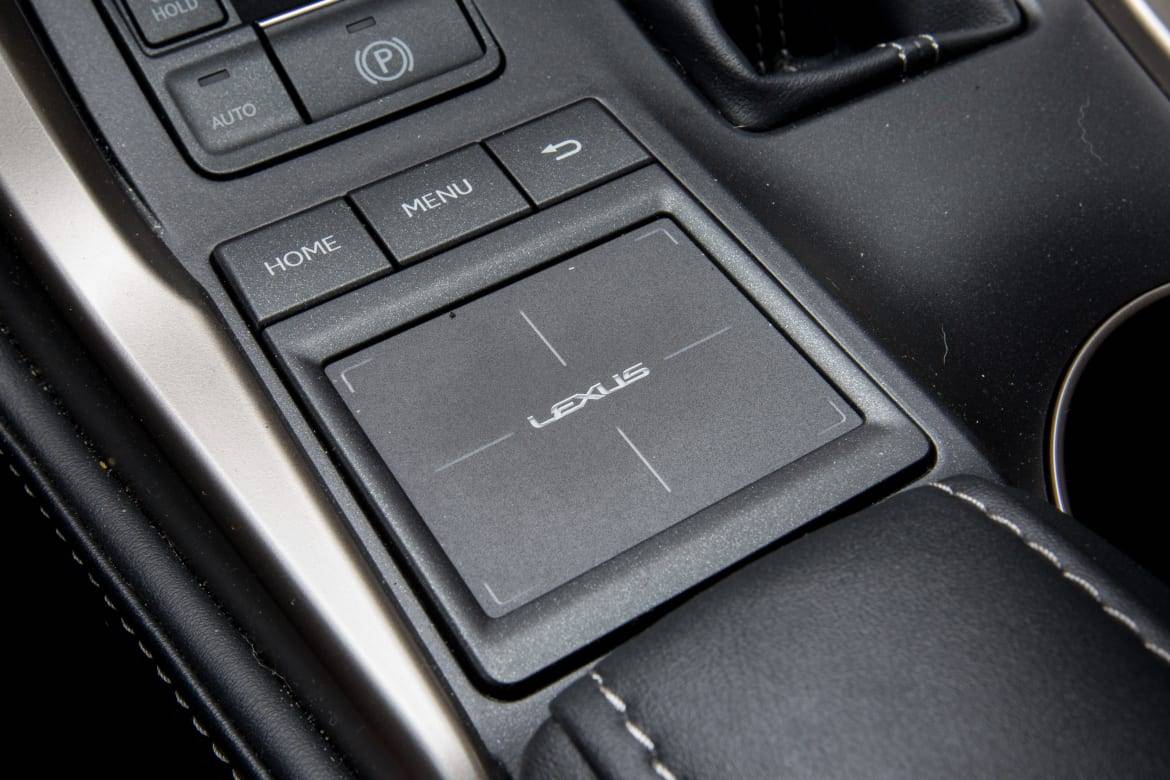
https://www.motorauthority.com/news/1121372_why-mazda-is-pur...
Discussion: https://news.ycombinator.com/item?id=20200335