TBH I don't really feel the same most of the time. I give the LLM little chunks to do. I read the code. I think. I plan. I write a bit of code. I have the LLM crunch out some bullshit task like setting up an annoying C repo. There aren't that many moments in building with LLMs where things line up so the AI can just absolutely nail some code and save me a ton of time.
I think a lot of people have a sort of “slot machine” experience with it at some point. You just start firing off prompts on some new project, wait a few seconds, see what prize you got. Then you start doing that over and over just letting the LLM code and code and not even review what it’s doing. It really is like getting hooked on gambling. You’re getting a thrill from anticipation, not the actual results.
This is what I personally consider “vibe coding”, not simply using LLMs or agents or whatever in your workflow
I’m confused by the people that “don’t even look at the code anymore”. I’m looking at the code Opus generates. And I’m glad that I am, because it needs revision.
Absolutely, vibecoding is addictive, agents being able to do all of these hard things that would otherwise take days or weeks to figure out how to do by hand.
It's just another avenue of dopamine addiction, not unlike scrolling TikTok, Reddit, or wherever except vibecoding is disguised as being productive.
> There aren't that many moments in building with LLMs where things line up so the AI can just absolutely nail some code and save me a ton of time.
Your workflow is similar to mine, and not "agentic". The proponents of Agentic workflows would have you handover the bulk of the edits to AI, and you'd hand-hold/course-corrrect its approach via chat while it does the thinking.
I tried the agentic approach for code-gen once, and found it mentally draining. Its like pairing with an over-enthusiastic junior on cocaine that can also type 2000 wpm.
Chunking small changes is great because you don't need the latest and greatest models, Flash variants are more than enough.
I hope that after a short period of delusional expectations and layoffs from employers we're at least left with a more consistently competent set of professionals in our industry. Some people have imposter syndrome. Others are actually just imposters.
> Some people have imposter syndrome. Others are actually just imposters.
I'm sorry to say, but AI coding assistants paved the way to professional imposters whose only skill is prompting a model to do something. I already had the displeasure of working with a software engineer who not only introduced a bunch of regressions that by mindlessly vibe-coding things against the requirements but also complained that not having credits to use the most expensive frontier models was, and I quote, "stifling my creativity".
Nonetheless, would still trust Claude to be generally more reliably competent in a random area of software engineering than the average professional. Sure they might still be better in a particular area of their expertise, but we've all had to play the imposter before on the stuff we care less about and figure it out as we go. AIs are still inferior sometimes but usually a decent 7/10+ on most topics - which really fills the gap.
I hope that after a short period of delusional expectations that top management is going to reap the rewards of these AI capabilities we get a whole lot more comfortable with just doing the full business stack - including management, sales, branding, etc - and hierarchical structures crumble into flat collectives of do-everything true-generalist programmers.
Enforcing your rights under your contract by patching out some cert validation checks seems legal to me. Maybe not in places with anti-circumvention laws, but elsewhere it seems fine.
It’s most likely about the severity of the bugs they are fixing. I’m OK for my laptop to save my work and self upgrade if that closes a browser drive-by RCE vulnerability that could have hit me.
This happened to me. I was able to notice it from network activity lights and stop it by disconnecting the network. Other people I know weren't so lucky.
For an MDM managed computer (JAMF I know for sure), it can be configured that way per a company policy. I am not 100% sure of the answer for a computer not managed by JAMF as I have not experienced a forced update while using a non-MDM managed Mac in ~1.5 years of using a pre-owned M1.
I use postgres for very simple apps. I have a Dockerfile I use in my boilerplate repo. It takes a single make cmd for me to build, start and run migrations. Its as simple as using sqlite.
> But now you have another process to babysit. How do you keep it healthy?
I've been assured by many HN users that running apps/sites on a single VPS requires near-zero maintenance or monitoring to achieve acceptable uptime 24/7/365 for years on end, sooooo...just pretend it will never fail like your main server process?
Call me old-fashioned and quaint, but I don't like to build software that doesn't work all the time if I can help it, whether it's for 10 users or 10 million.
24/7/365 is needed (or achieved) just about never. our big tech is proving 90% will soon be utopia as well. being down has always been fine for 99.999975% of all projects on the planet.
Or you can run postgres on the same machine as the application, which lets you much more easily migrate if the time comes when you need to scale to multiple application servers.
There's a world between "local file" and "network DB server", running a DB server locally has lots of benefits from being able to easily query from outside if needed to forcing you to consider concurrency without the latency overhead of a network hop.
This decision tree doesn't make much sense to me. Why you someone forego performance today in favor of adding a completely unnecessary network layer to every DB query in order to "satisfy" future imaginary "scaling concerns"?
They have great software support and Google-ability, which also means LLMs understand how to work them. I use them in scenarios where I want both Linux and GPIO. Specifically, right now I have 4 Pi 5s running kiosk displays with RGB LEDs around the outside of each. The displays show a web page, requiring something powerful enough for modern Firefox, and the LEDs are synchronized to the state of the web pages. You could do this with a mini PC and a microcontroller, but it’s just way easier, and cheaper, to use a Pi.
I wouldn't quite go that far. Linux runs on nommu systems. With some psram you should be able to get a version to run on at least the rp2350 using the riscv cores with relatively minimal fuss.
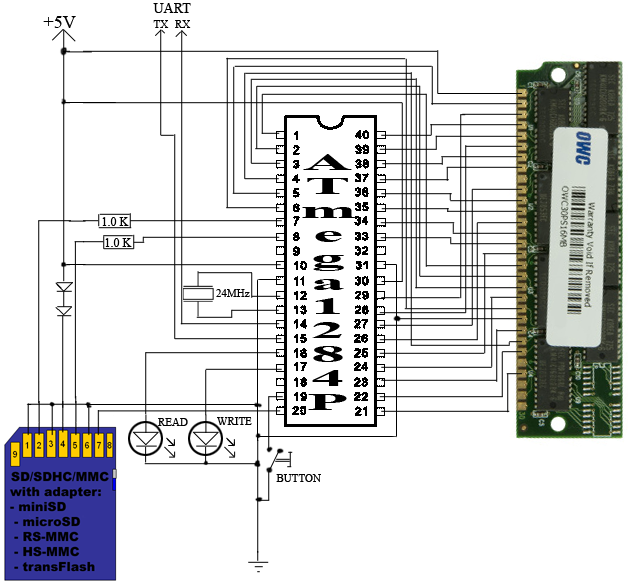
Opus is so bad at electrical work it's really disappointing. And when it tries to draw schematics as SVGs it's a complete disaster. They should either focus on training their LLMs on this task specifically, or have it refuse.
Hmm, what kind of electrical work? I had it "watch over my shoulder" as I swapped out the pressure switch on our home well and it was a big help. And in the run up to that when I explained opening the 220 box and checking that was "above my paygrade" it limited our investigation to just the less sparky parts.
have it write python porogram to generate the svgs. then use the program. circuit diagrams are rrlatively thin corpus but it knows how ciruits work sufficently to write a program.


reply