Considering Hokusai was Japanese, the descriptions are probably written in Kanji. The word “kanji” itself means Chinese character, so I wonder what exactly is your point?
Refereing to chinese character as Kanji is inaccurate. (Also the meaning of compound Hanzi and Kanji is often different, take "jiudian" as an example).
> Refereing to chinese character as Kanji is inaccurate.
"Kanji" is often translated into English as "Chinese character", so the two terms tend to be used interchangeably even when someone is referring to text written in Japanese.
In Japanese there is no distinction between kanji and hanzi, they are the same thing, and written equally - 漢字.
In English, it would be most appropriate to call Chinese language characters hanzi, and Japanese language characters kanji, but this is an English distinction, not one in the native tongues that use these characters.
As the author of these drawings is Japanese, the correct term would be “kanji”, but the word “kanji” literally means “Chinese character”.
Not intentionally I don't think, but people might do that if they're not sure which language the characters came from or if they just don't know the term "hanzi".
But in this specific case, it is a Chinese character (because that’s what kanji is, and that’s what the word kanji means), and the character is actually kanji, since it was written by a Japanese author.
Apple, Quibi, Amazon are trying to plan the perfect breakout show.
It doesn’t work like that. A lot of the networks’s and Netflix’s breakout shows were not planned to be great. That’s why they just greenlight a bunch of random pilots and see what sticks to the wall.
> It doesn’t work like that. A lot of the networks’s and Netflix’s breakout shows were not planned to be great. That’s why they just greenlight a bunch of random pilots and see what sticks to the wall.
There's a great interview with Bryan Cranston, where he's talking about the origins of "Breaking Bad."
Basically AMC wanted to compete with HBO, but they didn't have HBO money. So they gave the creators a limited budget but a lot more creative freedom. AMC basically created an environment where creative people who had a passion project could get it off the ground if they were willing to work for less money.
In particular, Vince Gilligan had to go to the mat for Bryan Cranston, because AMC wanted Gilligan to cast someone else.
This may not be relevant at all to the topic at hand, but they also made concessions for their budget (which HBO likely does, too). The pilot was written for East LA where nearby JPL was where his former founders worked. They shot the series in New Mexico because of the film subsidies. Many shows may not have been green-lit without subsidies.
> It doesn’t work like that. A lot of the networks’s and Netflix’s breakout shows were not planned to be great.
That might be true for a lot of breakout shows, but not all of them. House of Cards was arguably Netflix' first breakout show, and Netflix outbid other networks for House of Cards when they were just starting to focus on original programming. That was always painted in showbiz media as a very deliberate plan based on Netflix' data about their users' preferences.
We know now that they didn’t really have that data at the time. They just heard Fincher was available and bought his idea unseen for a lot of money so no one else could get to propose to him.
Netflix pinning a lot on winning a bidding war for Fincher sound suspiciously like investors placing massively outsized bets on the Dreamworks/Disney guy with the startup savvy CEO being the Next Big Thing in digital media...
House of Cards was an adaptation of a widely acclaimed British TV show, directed by one of the best Hollywood directors, starring an A-list actor. Plus it probably didn't cost 1.8 billion.
Yep, entirely different risk profile. Netflix already had a brand, platform, and customers, and they already offered TV shows and weren't experimenting with a new format. The House of Cards risk was all in execution, not brand, concept, product, talent, etc.
Actually they are all based on the book by Michael Dobbs (1989) who was the chief of staff for Margaret Thatcher for a few years. I heard him at a book show say he wrote it almost by accident as therapy on a vacation after getting squeezed out of politics.
The difference is that the sample size for Fincher is a lot larger - 9 of his 10 films have grossed >100mil, so we have very good confidence on his hit rate.
Startup Savvy CEOs have 2, maybe 3 successful companies under their belt, so it's harder to judge how much of their success is due to repeatable factors.
Katzenberg revived Disney and cofounded Dreamworks so he's not exactly short of samples of his ability to produce hit movies. Also getting the scaleup eBay CEO to sort out the internet bit was a bonus...
Even their first original show Oz (1997) [1] was good. It was clearly experimental and low budget (it's set almost entirely inside a prison so needs very few sets, props, costumes, etc.), but designed around that limitation to focus on the writing and characters. Netflix tried a similar strategy with one of their first original series, Orange Is The New Black.
There's a not-very visible but nonetheless real amount of planning and "portfolio management" that goes on behind the scenes into choosing which ostensibly "random pilots" to produce. Yes it's kind of a "reptilian" strategy by design (as opposed to "mammalian", focus-on-one-baby-at-a-time), but there is a lot of careful selection done, even if the results look random. More and more, this is a data/ML-driven space, and less and less reliant on human expertise (with human insights but also human blindspots and biases).
Absolutely, but that process is absolutely not data driven.
“Feeling” about a show, and connections to the people running are the two major factors driving those decisions.
Data driven shows tend to be forgettable and ignored by newer generations, who are the ones holding their parents’s credit cards, and therefore, a major audience for hit shows.
The trailer for Apple's new Foundation show reeked of this. All of their heavily marketed content (See, Servant, Greyhound) look like they had the same person doing the trailers.
I don't really think Amazon should be included with the other 2. I can't think of anything they've made that was "planned to be a breakout show" and didn't succeed. Their pilot program that they used to run might've been the reason for that. They're also really quick to give up on series that don't do well (which is pretty similar to Netflix).
The Grand Tour maybe hasn't become the cultural touchstone that Top Gear was, but i'm fairly certain it's still getting a ton of views. Every top gear fan i know watches it. It's not getting the buzz a new show would because it's essentially just more Top Gear, but it's definitely being watched.
I'm sure a lot of us are looking forward to it -- it's good source material, but there's no guarantee that they will pull it off well, or that even if they do a great job, that it will be a hit.
Yeah the thesis of the books (well until the Mule) is that no one person makes a big difference and it's all due to larger historical forces. Although it'd be hilarious if we follow a hero only for the show to conclude with "welp guess macro effects in galactic trade are really what caused the Empire to fall"
Kinda off-topic, but I recently read The Last Astronaut[1], and got the sense that it could make a great movie adaptation, which I almost never get from sci-fi books.
Yes but every network in existence does it and is forced into that paradigm. Every premium channel on cable (HBO/Showtime/Starz etc) have had to have a new breakout hit pretty much every year with a pretty small slate of new content - and Quibi has been able to combine this with some formats that actually should work (News, short form comedy etc).
I think the biggest issue is that there is a deluge of news and short form comedy, and it's free and good quality with a very tolerable amount of advertising on YouTube, Snapchat, Facebook, Instagram, Twitter, TikTok, television, etc, etc.
To succeed in short video they needed something that was beyond a bombshell, something desperately sought after but not forthcoming. Highly polished DeepFake Beatles concerts, with new music written by Paul McCartney. I don't see how you succeed charging for something that qualitatively better than YouTibe. You'd have to at least have new interactive elements (choose your own adventure? I don't know, but something cool).
That's what I find striking. With all their experience & expertise, the major studios spend a tremendous amount of money and consistently produce a surprising number of failures. Personally, I like the wider seeding creatively in general (as you describe with Netflix.)
And those are just the failures you see! Friends in the industry tell me there are many more failures behind the scenes where shows can get arbitrarily far down the production pipeline only for studio execs to come in and scrap the whole thing.
We're not so different from those 1000 monkeys writing shakespeare :)
I have zero idea about Netflix, Amazon, or Disney, but I hear the high turnover in execs at the big network TV studios cause this. The story I often hear is the "new guys" are terratorial and kill off projects of their predecessors so their own projects can succeed.
Not to be trite, but this was the whole biz plan of Huffington Post, Buzzfeed, et al. The algos will generate the hits. Unfortunately, it doesn't seem to work that way. Algos will identify the hits earlier, but they won't "make" them for you.
Yes it's hard. But they got 1.8 billions in funding, and they are trying to get a foot in a crowded space, so expectations are high for them to deliver something. You can't stay long in the TV business with just a couple million paying subscribers
I don't subscribe to prime for the video service, but they've got a couple good shows. My kids like Disney+ but I would cancel Disney+ over HBO any day.
At some point, the EU has to see a pattern of degradation and corruption, and start engaging actively with the people of the countries, instead of just expecting places such as Bulgaria and Romania to wake up and decide to be rich and developed out of nowhere.
The EU has also created conditions to move the health, young workers and the educated class out of there, and into the the West, which is an existential shock to their system. It's hard to institute reform when the people most able to commit to it have been given 2x their paycheck to go elsewhere.
You are right, but I would like to point out that this very article lists multiple ways Bulgaria is already improving. It is not all doom and gloom, even if there are outstanding serious problems.
The EU knew the state of Bulgaria and Romania before inviting them to join.
The general idea was that a certain amount of nation-scale wealth transfer (e.g. via infrastructure projects, ag subsidies) and individual wealth transfer (e.g. remittances of people working abroad) would help bring the former Eastern Bloc countries up to speed, gradually remove corruption and transform towards democracy.
Let's keep it at "the idea was nice, the actual execution was... flawed".
Both to be honest, and that's not just for Bulgaria/Romania but all former Yugoslavian and USSR countries, and even Western-allied countries such as Greece and Italy.
The EU failed to predict local government's corruption or outright destructive behavior (e.g. Visegrad blockade in refugee questions), its foundational assumption was that member states were all aligned towards one common goal and not behave actively destructive. Local governments failed to uphold their values and more often than not saw the EU as a cash cow waiting to be exploited.
In a union, how can poor exist without rich, how can rich exist without poor?
See, people will leave their country for better country if there is opportunity to do so which is plenty in EU when you compare the average quality of life of a German Vs Bulgarian
If Bulgaria is losing its people, maybe it's the intended effect of the free movement of labor?
Still on the subject of Romania, no, it's not the mythical EU funds that fuel this growth, because the funds are tiny compared to the size of the economy and 2/3 end up not being spent at all because extremely strict anti-corruption measures that make it a massive pain in the ass to try and access EU funds. Government debt is at 35% of GDP, growth rate is constantly among best 3 in EU, constantly over 5%, unemployment under 4%, wages grow between 5-7% annually, inflation is under 3%, criminality is way lower than the West etc. Is that bad? And I think Romania could do even better if not for EU's idiotic trade policy and regulation bullshit.
It may not be EU's funds that fuel our growth (although they help), however not sure if you're aware but the growth you're talking of happened after we entered EU, not before.
Before EU we were at the same level as Moldova. Our growth is perfectly correlated with our EU membership. If you want to see what would have happened without EU, look at Moldova.
And it's easy to see why. In spite of regulations, compared to the 90s we have a market to sell our products to. We no longer build tractors that nobody wants. And we exported our poverty, the poor and uneducated becoming seasonal workers, that no longer need a passport and visa to travel and that then send money home.
Also the anti-corruption policies you mentioned have been fueled by EU membership too, things moving under foreign pressure. Speaking of which it's not actually anti-corruption measures that prevent us from accessing EU's funds but our government's incompetence.
We disagree. I think Romania would be the shithole that it was in the 90s if it wasn't for EU and its "trade policy and regulation bullshit". The arrangement was and continues to be mutually beneficial.
> If you want to see what would have happened without EU, look at Moldova.
Heck - if you want to see what would have happened without EU, look all around: Ukraine, Moldova, Serbia. Serbia and Ukraine were miles ahead of us until we joined the EU.
I am getting impression that you are implying that living in Serbia is terrible, or at least worse than living in Romania.
I live in Belgrade and I like it here. I visited Bucharest 2 years ago for EuroBSDcon and I liked it as well. Belgrade hosted EuroBSDcon 2 years earlier. I haven't noticed much difference between developed and historical parts of Belgrade and Bucharest. I noticed Bucharest's decayed parts are in much worse state than Belgrade's.
Belgrade is not representative of all of Serbia and you should get out into the provinces. As someone who spends pretty much each summer cycling in Romania and Serbia, I agree with the OP: in so much of Serbia south of Belgrade, the tertiary roads (which were the pride of Yugoslavia) are often no longer maintained and municipal buildings are decaying. In Romania, conversely, a lot of provincial roads have been upgraded and municipal infrastructure renovated thanks to EU funds.
I got the impression, not that Serbia was terrible, but that the advantage Serbia has over Bulgaria is much less marked than it was earlier.
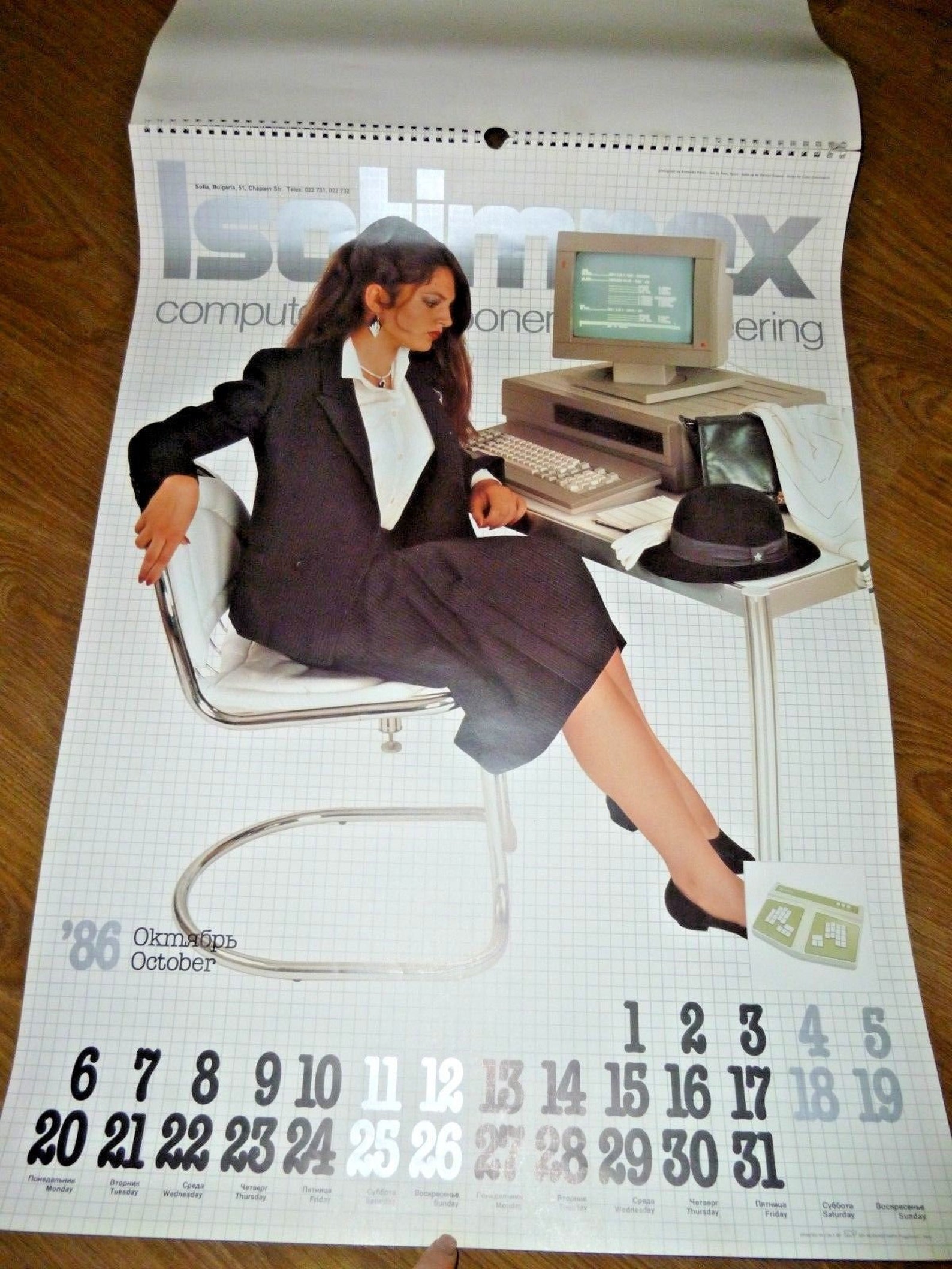
I don't know your region at all, but for instance mid 80's Računari was a regular magazine, while all I can find for the same period in Bulgaria is an Isotimpex calendar:
(of course, ghits are a lousy way of judging, but since we have many EE voices in this thread I figure being wrong on the internet is a good way to get better information.)
I generally agree. Back in 80's, Romanian and Bulgarian construction workers lined up near "Park of Vuk" in Belgrade in hope to get daily construction site gig for cash. They aren't there since 90's when shit hit the fan.
Best wine I ever bought in supermarket was in Bucharest, not Bordeaux. Tastiest dinner I ever had in a restourant was in Sofia, not Paris. Best nightclubbing in Belgrade, not Berlin.
Belgrade is pretty nice man; I didn't mean to imply Serbia is terrible - just that it has fallen behind. It used to be that Serbia was the neighbour we looked up to; nowadays... it just doesn't seem better anymore.
Also - Bucharest is terrible, compared with its potential, because we've had extremely shitty mayors. But if things change now (and it's not out of the question!), it can really take off. The GDP of the region is already way higher than Belgrade, I believe (but, the natural setting is way worse, that much is true).
Growth happened before EU accession in 2007 and it was faster and more robust as it's pretty obvious from the graph I linked. What triggered our economic expansion was reforms that began when we almost defaulted, around the time the first non-Communist government (Democratic Convention in 1996) took power. We stopped printing money to cover huge budget deficits and got rid of hyperinflation. We privatized, simplified and decreased taxation, opened the country to foreign investment, stopped in large part protectionist measures, massively deregulated the economy etc. From a closed economic model inspired by North Korea, we now have an economy that's more free than most of Europe, including our regional competitors like Hungary, Poland, Ukraine, Russia or Turkey. UE big government career bureaucrats that can't even "fix" their own failing countries, had nothing to teach us and have no merit in what we have achieved.
Great point! I'd generalize this and say you have to do this with any minority group that is "below" some desired level (within a country, community, etc.). And concretely, you need to invest in access to money and high quality education first.
You’re both right. You have to empower the disenfranchised through active engagement and investment, but also use financial repercussions against those who would continue to subjugate another class. Without both, success is much more difficult.
Fight corruption with a financial boot. I imagine Bulgaria needs the EU more than the EU needs Bulgaria. This requires more spine in Brussels though.
Not going to happen, especially in this climate with sovereignty and nationalism demands in rise.
In EU, countries preserve most of their sovereignty and all EU can do is cutting funds and no country will give up sovereignty to enable EU interfere with domestic matters.
Bulgaria is like that because Bulgarians like it this way, EU cannot enforce anything because it doesn't have the authority to make Bulgaria being governed like Germany or Netherlands.
I wonder if there's a regional component to it. This might be yet another one of those cases where trying to say anything about America as a thing is nonsense.
The problem is that a developer doesn’t really understand the business complexities and nuances - he studied computers, not business.
I feel there is a gap to be crossed, and settling into a common language and common communication practices are ways to bridge it, but I could never say I understand the business.
I get some basics. We have lots of areas, we need workflows, we design parts, then make them, then sell them. But I certainly don’t have enough knowledge to really understand it.
Translation needs to involve at least one person who is native-level in each language, and you're lucky if it's possible for both of those to be the same person.
An effective team needs people who understand the computers and people who understand the business. Though it can sometimes end up a little like https://www.youtube.com/watch?v=yfSnaY1Wp_U .