I do have an Apple ID, which was banned due to fraud and customer support couldn’t do anything about.
The thing is, that account was just used for dev. things for the US company, which builds/sells software for the US federal government (among the other US entities).
Nothing like a full rewrite. I migrated multiple projects, but while there is a significant amount of work involved its a tiny fraction of what a full rewrite would require.
Did it a couple of times. Not something you can do with your eyes closed, but not even close to the nightmare of upgrading a JS application or upgrading a rails app.
Does it matter which side of the plane you are on or how close to the wing (engines) you are? I could imagine an audio difference between left and right if you were sitting at a window near an engine.
Just got back from another flight, where my seat was in the middle of airplane (3 set of rows). No issues whatsoever. One thing I’ve noticed, if I press AirPods harder, I do start hearing hissing in my ears.
with buds, whichever connects first (usually right) is the master, and the other bud connects to that one as the slave, instead of connecting directly to the source device. probably has something to do with that
It seems there is some weird grouping of the language data which LLM cannot distinguish well. I wonder if it is the same for other similar languages like scandinavian or western slavic
I was thinking about separating the two groups when I was writing this but was afraid of getting too verbose, though in retrospect that probably would have made more sense regardless of the historical lineage. My apologies if this came off as inconsiderate.
I updated my original comment, and learned a good amount about that dispute as a result, so thanks for calling it out.
I think some people get touchy about them being lumped together if their last period of commonality (per the article) was 1400 BCE. For comparison, I believe all the Slavic languages were mutually intelligible around 1200 AD. But much more recently than this, in the last few centuries, there have been notable attempts by east slavs to absorb the Baltic language cultures and deny them.
I may be off by 100-200 years, but this is what I read. There were accents and regionalisms but they were all mutually intelligible.
It is an example I think of often, about how quickly languages can change. In the scale of 1000 years, a lot changes. Most of the diversity in Romance languages is from around that timescale too, it really started to diverge substantially around 900ad-1100ad.
Depends on your standards, too. Even today, any pair of slavic speakers should have a head start in understanding each other. Put them next to each other for a month and they should be talking, at least about basic everyday things.
I was in Crimea for about 2 weeks (in 2012) they split me Russian there. I couldn't understand a word they said. And I didn't learn to understand than for 2 weeks of travel there.
I could understand some words from Ukrainian (I traveled by train from Lviv).
Another example is Croatian, I've been there on vacation and renting a room. I couldn't understand a word they said and didn't learn any.
TlI can understand some Czech (because this is the closest language together with Slovakian to Polish) but that's it.
I wouldn't mix Slavs from different groups together. They evolved separately and are as close as English and German.
Well there is if you go far enough. It's just the question when did they split off from each other. However there is no question that Baltic and Slavic are more closely related to each other than any other non extinct Indo-European languages.
The fact they they are the closest surviving relatives on it own doesn't mean it makes sense to group them together (i.e. Italo-Celtic is also a theorized subgroup in a similar way but nobody is disputing that Celtic and Italic languages evolved into distinct groups).
Then there is a huge amount of missing links and unknown unknowns. e.g. Thracian and Dacian probably were also pretty close to Baltic or Slavic (maybe even closer to Baltic than Slavic is but we don't know enough about them to make any conclusive claims at all... but we at least know these languages existed)
Plenty of wrong here, considering Lithuanian and Latvian are utterly unintelligible to slavs, save for loanwords, but Slavic languages between themselves retain some level of intelligibility, which even spawned two competing constructed languages.
Yup, most of Eastern Europe are Balto-Slavic. While the division from the Eastern Slavic languages (Russian, Belarussian, Ukranian, etc) is distant, they are still Slavic. From Eastern Europe, only Estonian is not a Slavic language.
I regret being that loose with the designation :), Romanian and Hungarian are valid counter arguments.
In my mind, I was thinking of the belt of countries between Russia and Central Europe, starting from the Baltics down to the Balkan (excluding Greece).
Even by your definition, I can count at least seven countries where the official language is not Slavic. And that's not even including all the Altaic, Romance and other assortment of regional languages, many of which have some sort of official status.
Some of my fellow Romanians will also claim they're Central European, but in my mind, all the ones I listed are Eastern European countries. I'd even include Turkey and Kazakhstan in there, part of the latter is to the West of the Urals, which is what we normally consider the border between Europe and Asia.
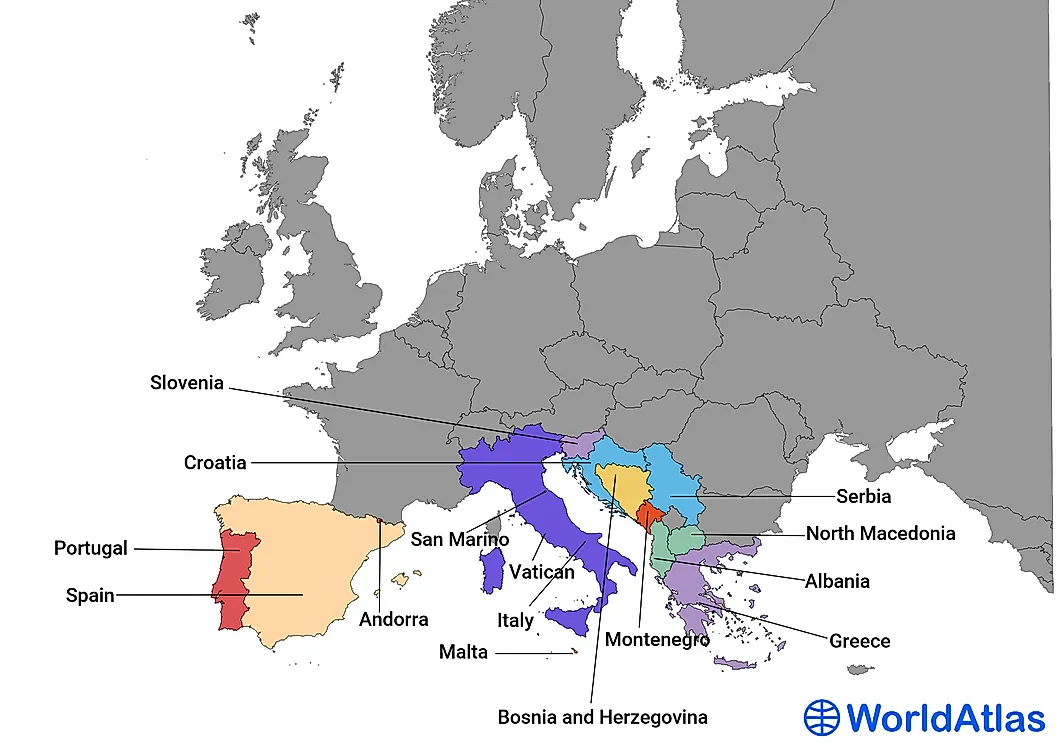
That's cute. It is clear thats an outdated political organization and not geographical. Read at the groupings. Greece is more eastern than Albania (and it is one hour off timezone), and it says 'western' which is not the case by any geographic means.
“There’s a question” implies that there is a ground truth that might be discovered to resolve this rather than simply a clash of different purely arbitrary definitions of the same terms.
The Visegrad 4 (Poland, Czechia, Slovakia, Hungary)are generally taken to be "Central European". The strict East/West division is largely a product of the Cold War and the Iron Curtain.
No, the distinction into West/Central/East Europe was also relevant in the centuries prior. You're right with, that East Europe starts with Belarus, Russia and Ukraine.
Ah, yes, how could I forget! As a side note, though also Finno-Ugric then similarity in sound and appearance from Finnish or Estonian at least appears very far.
I've yet to understand the point of OLED, if it sits at 400nits. All Apple's devices from iPhone to Studio Display are brighter, some of them are much much brighter even with OLED :/


The thing is, that account was just used for dev. things for the US company, which builds/sells software for the US federal government (among the other US entities).
It would not be very wise to do fraud.