Have a look at these [1] polar diagrams for tall sailing ships. The radial distance from the center is the theoretical boat speed and the angle is the direction that the wind is hitting the boat, with zero on the nose and 180 from the stern. Each plotted line is the boat speed for a given wind speed. They show how the square-rigged ships can't sail upwind any closer than 55 degrees or so and are fastest on a broad reach (wind from just back of the side). You can also see how longer boats are generally faster, but a smaller boat with triangle sails ("Bermuda rigged") could easily get away from a big square-rigged ship by heading more upwind.
For a close second here's a 1985 issue of the TPUG Magazine [1], from the Toronto PET Users Group. I attended a few meetings of the Niagara Commodore Users Group and spent all of my paper-route and fruit-picking income on arcade games and my C64 system.
Supply management does have its problems, but given the involvement of imperfect humans nothing will be without problems. Canadian pork, beef, and vegetable farmers that I personally know also complain that they can't enact supply management for their sector. They also envy the appearance of high profits, an easy life, and government subsidies & bailouts (yes, Canadian dairy farmers still receive those) for those in a supply managed sector.
At the end of the day, consumers get stable and somewhat realistic prices and supply, while farmers also get stable income.
> consumers get stable and somewhat realistic prices [...] while farmers also get stable income.
Which? You can't have both. Input costs are subject to the whims of non-supply managed markets. When, say, input costs rise either the farmer has to absorb that cost (unstable income), or the cost has to be passed on to the customer (unstable consumer price).
Maybe not. I grew up on a Canadian dairy farm, and have continued to farm in Canada ever since, so that is beyond my expertise. I have not participated in US-based farming. I can only meaningfully speak to Canadian agriculture.
A connection to the USA is interesting, but what you are trying to get across is not entirely understood on my end. Perhaps not having ties to the USA means I don't have an implied context? Fill me in. I am curious.
You said "You can't have both" on "consumers get stable and somewhat realistic prices [...] while farmers also get stable income."
So, you say a country can't have stable income for farmers and realistic prices for consumers? Allowing to waste some produce and subsidizing farmers seems to be working in Europe (and probably in Canada). We have stable (but higher) prices. When you said we can't have that, I thought you are from USA, they are famous for having problems that are solved everywhere (like universal healthcare and gun violence) and it's a very known meme[0][1][2].
> So, you say a country can't have stable income for farmers and realistic prices for consumers?
The topic is supply management. Supply management cannot offer both consumer price stability and stable incomes for farmers at the same time, as was explained in more detail in the previous comment. At least not in a world where the non-supply managed markets aren't also stable. Of course, if non-supply managed markets are also stable, then this whole thing is moot. The original premise was that non-supply managed markets cannot be stable, thus why it was said supply management is necessary.
> subsidizing farmers seems to be working in Europe (and probably in Canada)
The whole idea behind supply management is that there isn't a (direct) subsidy. Technically the government compelling consumers to buy from an organized monopoly is still an indirect subsidy, granted, but indirect subsidies lose the control that direct subsidies have. You are right that in theory a direct subsidy scheme could allow both stable incomes and stable consumer prices at the same time, but that is not the system Canada uses here.
> I thought you are from USA
Why? What would someone from the USA know about Canadian agriculture? I expect most Canadians don't even know anything about this topic. If I weren't a Canadian farmer, I sincerely doubt I would have been able to contribute anything.
My experience supports nearly all of this. In 2022 I decided to keep my 2019 F-150 gasser instead of getting a Lightning because the Lightning was ridiculously expensive, even though Covid kept the value of my truck close to what I paid for it. I also didn't want all the Lightning's luxury features that tend to fail and highly depreciate over time. We do >12hr drives for work & family through remote BC and I was still willing to try the EV for such trips but didn't see the payback. In hindsight it was a good choice given the actual range experienced by Lightning owners.
Our favorite is still PDF-XChange [1] which has been our daily driver for years. Only dislike is the difficulty in opening a document in a separate application window. It's either everything in one window or everything in its own window.
You're right. It's clear I should have had an LLM write my comment rather than do it myself before a cup of coffee. I've already spent an order of magnitude more energy thinking about this article compared to an LLM.
Also, since I live a first-world life style which consumes multiple KW of power, I've probably consumed multiple orders of magnitude energy more than an LLM on this topic.
As another comment mentioned, papers get revised during review, usually in response to reviewer comments. Also, some journals (not sure about Nature) do not allow authors to "backport" revisions made in response to reviewer comments to preprints; I guess they view the review process as part of their "value add".
Its quite common to revise papers. For example, they might have uploaded to arxiv in order to submit to a conference. Later, they revised and submitted to Nature.
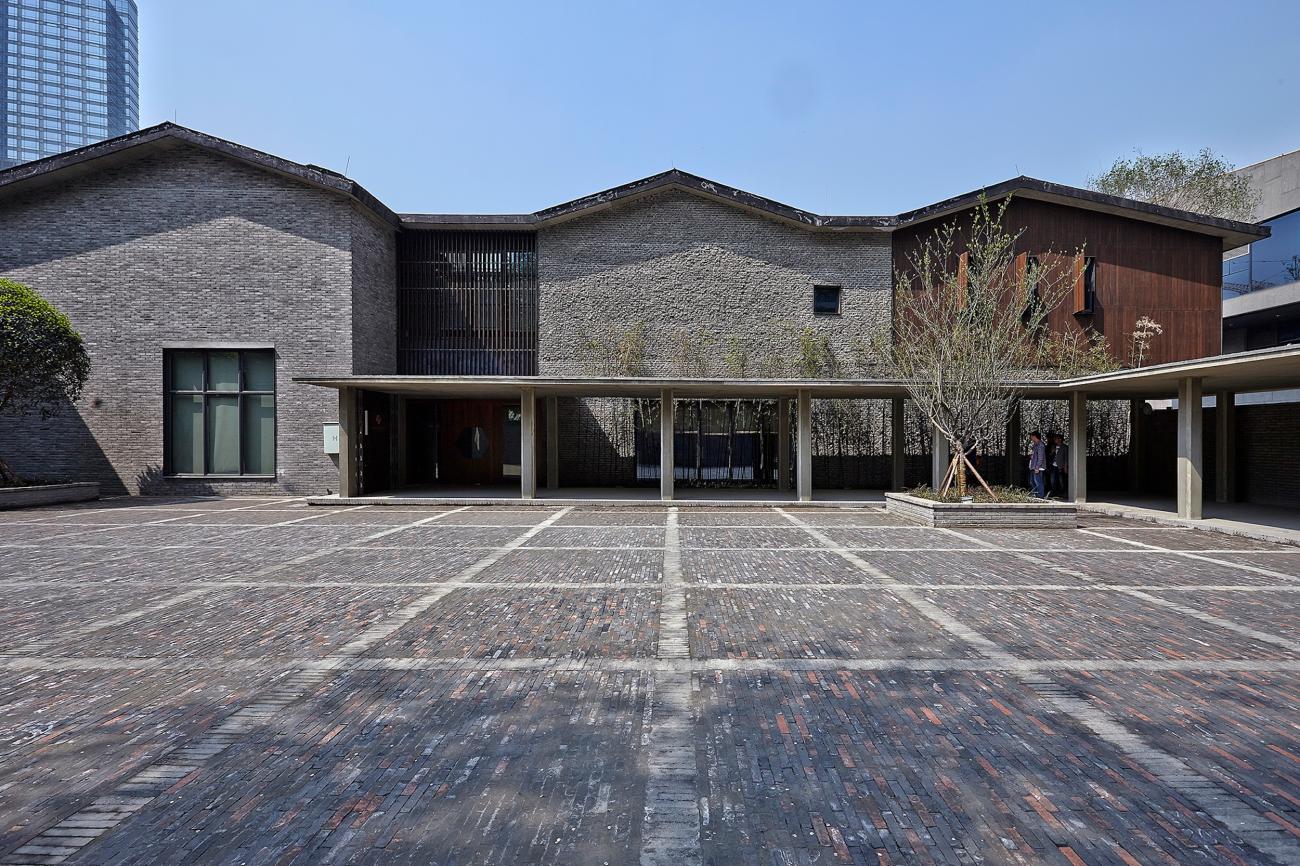
They have their beauty as objects of art, but certainly not as a place that I would enjoy occupying or being around. Brutalist architecture with a Chinese flair.
And why do you think that matters to this topic at all? I don't live in SF I don't know about its crime rate. How on earth is the architectural quality in any way shape of form related to crime rates? Why even bring up such a ridiculous unrelated point?
Its about aesthetics and if you can't figure that out then its obvious why you find bleak soviet apartment blocks appealing and concrete bomb shelters.
That location in SF then isn't an example of brutalism or soviet aesthetics either if I go by the photos I found on the internet. It was a totally irrelevant example.




[1] https://forum.zegluj.net/download/file.php?id=23628&mode=vie...
reply