As technology gets more powerful, the oops factor comes into play. Oops, I dropped a flask in my lab: 1 million people dead. Oops, the SCRAM system for a reactor that's out of control, it had a software bug: 10 million people dead.
Technical people understand how fragile modern systems are. As life gets more complicated, innocent mistakes can turn a country into a desert. Malicious intent raises the body count even higher.
I go to a coffee shop often and among other things, I notice people's machines and how they interact with them. Two observations:
1. People with non-Mac machines always plug their laptop into AC power before starting work (unless it's a netbook). My previous Windows laptop had battery life of about 2 hours while my Macbook Pro has about 5 hours.
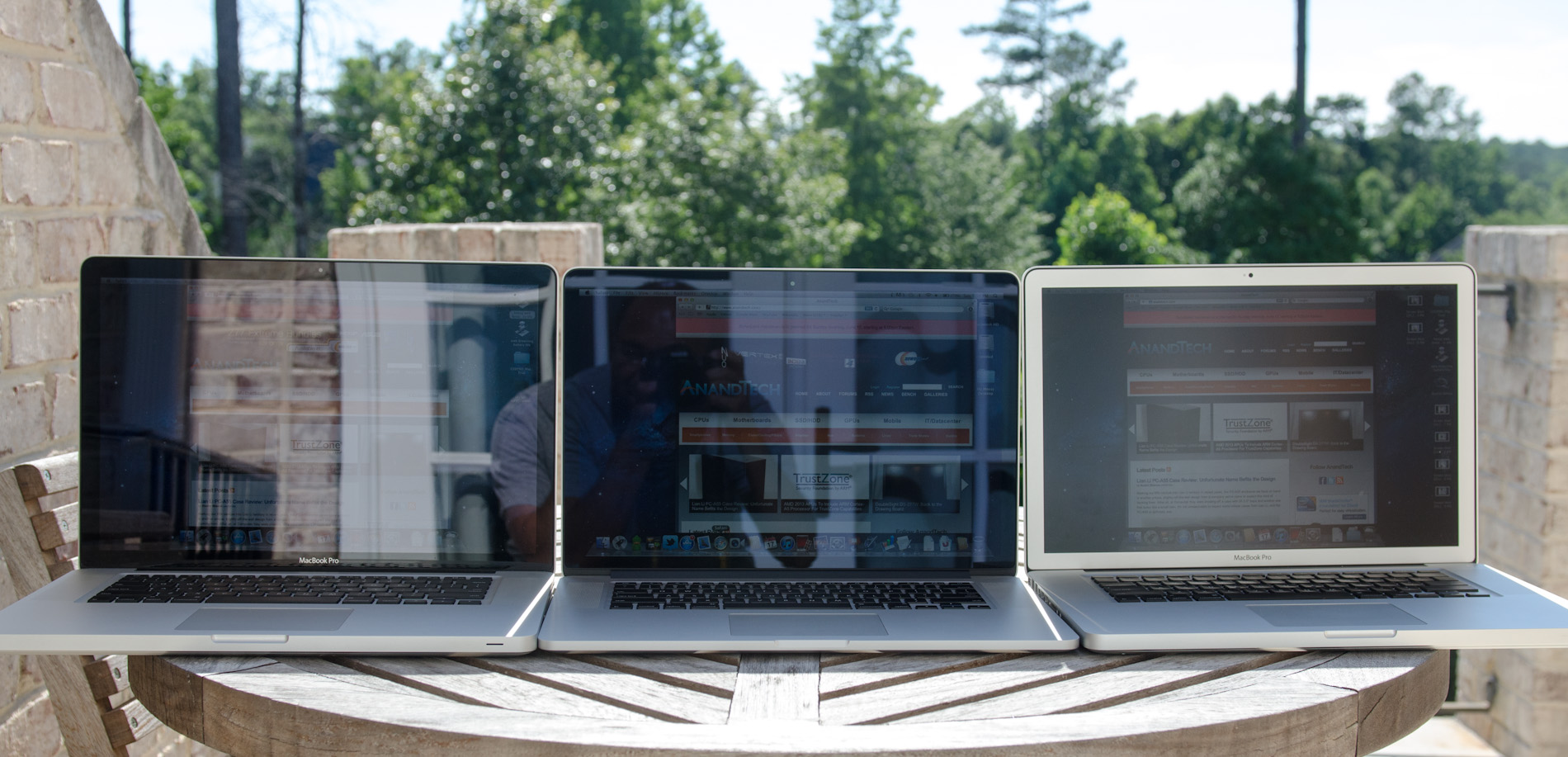
2. People with non-Mac machines have to be very careful where they sit, or the glare from the outside makes it impossible for them to see their screens. This was my experience with a Windows laptop as well.
With every new release the Mac operating system becomes, in my opinion, more complex and harder to use. Mac hardware on the other hand, just gets better.
Much more accurate would be to say "people with shitty laptops" or even better "people with laptops that have short battery life or glare screens".
I have a non-Mac and I don't have to do either of the two things you listed. That's because I put great care into selecting my machine and because I don't like paying out the ass for Apple's overpriced laptops, although I know a lot of people who do. (I do have an iPhone 4S, but not because of the hardware)
1. My notebook has short battery life because it wasn much less important than price for me when I chose it.
2. My notebook has a glossy screen because I didn't find one with a matte screen < 500€ with the same performance.
With every update my Archlinux system is approximately around the same difficult to use. I wouldn't care if I used it on Apple hardware or not but it's just more expensive.
Hmmm...I live in Florida so our outside glare is pretty bad. I have a one year old MacBook Pro and have never had a problem (even outside in the shade in the summertime).
I'm sure there are very good Windows laptops. As the previous poster wrote, if you do your research, you can find one. I don't want to do research.* I want to walk into a store and say "I'll take that one," and have it work.
* Useful, accurate online information on laptop battery life and other performance statistics is pretty much nonexistent. The only trustworthy information source is to ask strangers "How do you like your laptop?"
Your "a good Windows laptop is hard to find" statement is a non-sequitur. I wrote that glare is an issue on Macbooks. It is. It doesn't matter if Windows laptops are very good or very bad or don't even exist.
I believe that you're able to deal with the display, but I'm not making anything up. Check out this photo from an AnandTech review[1] of the Retina MBP : http://images.anandtech.com/reviews/mac/retinaMacBookPro/DSC... From left to right, it's MBP, MBP retina, and MBP with matte display.
+1 on recommending Buddhism the philosophy, as distinct from Buddhism the religion. The philosophy teaches that everything changes, and all you have is now, so keep your mind on the now and the later will take care of itself.
Mindfulness meditation is extremely useful in tamping down panic attacks or dealing with chronic physical pain.
We live in a society where mental problems are considered to be a spiritual problem, not a medical one. The brain is an organ and organs malfunction. I think the younger people see this and are more likely to get the help and medication they need. It seems to be the +60 year olds who will go to their priest instead of their doctor.
Our society decided there's no survival value in living a virtuous life: saving money for a rainy day, delaying gratification. This is unfortunate because the word virtue used to mean excellence and valor.
>Our society decided there's no survival value in living a virtuous life: saving money for a rainy day, delaying gratification.
I think the problem is that it's not society that decided that (as a collective) but individuals.
And it's a shame, because while maybe "there's no survival value in living a virtuous life" for an individual, it's an absolute necessary survival condition for a society.
This "every man for himself" is the undoing of society. That's how you get crazy high homicide rates (that make the rates in similarly developed societies like Germany or Japan pale in comparison), substance abuse, rising poverty rates, etc.
Ben Franklin was a hacker god. He visited Europe by ship and instead of curling up with a book on deck, he grabbed a thermometer and a notebook and discovered the Gulf Stream.
Seriously, I'm amazed at the width of his accomplishments. Maybe, tt would be difficult for someone today to significantly contribute to so many fields. Even in a relatively new profession like CS, we tend to specialize.
Part of Franklin's success was his ability to focus on big problems instead of using his energies gambling, drinking, or wenching. Franklin's moral principles had nothing to do with being holier-than-thou. He wanted a life of meaning, and his moral code was the means to the end: a life as a world-famous scientist, businessman, author, and diplomat.
Edit: Men like Franklin see their moral code as a tool to get from point A (a humdrum life) to point B (a life of significance.) Today we see a moral code as some kind of legal document and look for violations. Aha! I see that you violated Section B Paragraph 5 "No wenching during business hours."
> Even in a relatively new profession like CS, we tend to specialize.
I suspect that this is exactly the challenge. From what I know of him, Franklin did not specialize. Was that the nature of who he was, or an artifact of the time? And, of course, what about the survivor bias? We probably wouldn't hold Franklin in such high regard if he had only excelled in one of the many areas that he's known for.
There are scientific names throughout history who shared Franklin's love of discovery. da Vinci, Pasteur, Einstein and Feynman all come to mind immediately. Who from our generations will join that list? I bet that whoever does will also have a broad set of accomplishments.