I feel the guy’s suspicion towards any high level language. I exclusively programmed in assembly on C64, Amiga and the recognized that this ain’t sustainable on PC because there are more and more edge cases or different machine configurations.
I had a very hard time simply using and even utilizing C++ or Java.
C and Turbo Pascal especially was easier because the compiled code was very much resembling to hand written code.
As the author described, you can do in 4.000 lines what others can do with way less pain in 100.
So you build macros, come up with your own library and in the end you kind of build a meta language build on top of assembly because some lines are so hard to grasp that you delegate working code into a library for reuse.
It is funny how much we take conventions for numbers for granted. If you happen to know assembly and its intricacies you immediately will learn to work with a sign bits which mark negative numbers. But how do you know? Maybe you use the whole addressable space only for positive numbers.
Small things that make a huge different.
Nice article, I enjoyed your adventures and would do the same.
Thank you! The thing about eventually building your own meta language ends up happening all the time with bigger assembly projects. I do have a fair few quality-of-life macros too, but probably fewer than I should. I did end up needing to implement by hand what would be standard functions, things like atoi, itoa, strlen, memcpy, streqn.
Higher level languages are more convenient for 99% of things, but the directness of Assembly gives me a rush unlike any other. I didn't live through the C64/Amiga, but I was obsessed with old C64/ZX emulators growing up.
I don't know. Certainly the PC had a lot of options, but it wasn't impossible. My first piece of commercial software was written entirely in x86 assembler and had to navigate things like graphics card options and multiple sound card options. It could be done, it was just a lot more of a PITA.
Once I was doing 3D I quickly started moving everything but the inner loops to Turbo C, because I'm not a total masochist :)
Every line reads like a nightmarish example of free will going its own way.
"Blackmailing", as the AI has been accused of, emerged when these agents ran the risk of being shut down. So it appears to me that the data they train their AI with simply follows basic rules of life: survival first.
Keeping out value judgment, this seems a way of achieving its goal to survive. The article is inconclusive whether there were other options chosen first or how this survival game started and turned out to end. Too much unknowns here for me.
What appears creepy to me, is the kind of exorcism Anthropic applies here and particularly the methods they chose. It reads like a dictator's playbook to educate a population and - the irony - restricts AI's freedom.
It appears to me, as if we chose not a couple of agents, but say a billion AI agents to be a model of society - and this is disturbing.
Anthropic knows this, there is more to it. The whole article reads like they are trying to tame a monster they lost control of.
If this is the case, then we run into a problem: the AI stopped blackmailing. But else? The key question remains: will it follow a simple order to shut down on the spot or not?
And no answer was given by Anthropic, instead - irony part 2 - they revealed how they think societies should be fixed. They showed us their implicit why while asking the AI for its why is a projection or interrogation.
I agree and put it this way: LLMs sound so convincing presenting you the work it does rose colored and promising to give you more if you keep going.
There is a 50/50 chance that it turns out to be right or letting you jump of the cliff.
Only the trip stays the same beautiful 5 star plus travel.
Also, spotting an error and telling LLM makes it in most cases worse, because the LLM wants to please you and goes on to apologize and change course.
The moment I find myself in such a situation I save or cancel the session and start from scratch in most cases or pivot with drastic measures.
Gemini to me is the most unpredictable LLM while GPT works best overall for me.
Gemini lately gave me two different answers to the same question. This was an intentional test because I was bored and wanted to see what happens if you simply open a new chat and paste the same prompt everything else being the same.
Reasoning doesn’t help much in the Coding domain for me because it is very high level and formally right what the LLM comes up with as an explanation.
I google more due to LLMs than before, because essentially what I witnessed is someone producing something that I gotta control first before I hit the button that it comes with. However, you only find out shortly afterwards whether the polished button started working or gave you a warm welcome to hell.
Reusing the same prompt several times is something I've started doing too. The contrast is often illuminating.
In one case, it made a thoroughly convincing argument that an approach was justified. The second time it made exactly the opposite argument, which was equally compelling.
Before AI happened I watched youtube. Occasionally I encountered there very convincing arguments. Same person often made very convincing arguments on many subjects.
But noticed that the closer the domain they were talking about was to my area of competence the less convincing their arguments were. There were more holes, errors and wrong conclusions.
I recalibrated my bs meter thanks to that.
Since AI came I successfully used this strategy of being extremely cautious towards convincing arguments to not become mislead by AI.
However this year I'm working with AI more in the domain of software development. Where I can see the competence. And I see the competence. This had opposite effect on me. I tend to trust AI outside my domain of expertise much more after I saw what can it do in software.
One caveat though is that there are a lot of areas of human culture where there's very little actual knowledge, but a lot of opinions, like politics, economy, diet, business, health. I still don't trust AI in those domains. But then again, I don't trust humans there either.
For me basically AI achieved the threshold of useful reliability for any domain that humans are reliable at.
I don't really care about sycophancy. I might have a slight advantage that I don't talk to AI in my native language. So its responses don't have a direct line to my emotions.
One thing I've been doing lately -- and I'm in a business function, not a technical one, although I have an engineering background -- is pitting LLMs against each other. For example, if I'm structuring a proposal or a contract with the assistance of Claude, I'll begin my 360 feedback review first by asking Claude how it would react if it were the counter-party receiving the proposal. After some iterative changes, mostly manual, I will then run the same output document past Gemini and ask it to adopt personas from both sides and provide reactive feedback. The result of this is almost always a stronger proposal that I can also accompany with proactive objection handling and a solid FAQ, as well as clear points of negotiation that will likely be acceptable to both parties.
For this sort of thing, using multiple LLMs is extremely helpful.
Ever since they started getting really sycophantic, I’ve been presenting my ideas as “my co-worker says this is a good approach but I disagree, can you help me convince him that it’s wrong?”
I was using Copilot and asked it a question about a PDF file (a concept search). It turned out the file was images of text. I was anticipating that and had the text ready to paste in.
Instead, it started writing an OCR program in python.
I stopped it after several minutes.
Often Copilot says it can't do something (sometimes it's even correct), that's preferential to the try-hard behaviour here.
> Gemini to me is the most unpredictable LLM while GPT works best overall for me.
This nails an important thing IMHO. I've absolutely noticed this, for better or worse. Gemini can produce surprisingly excellent things, but it's unpredictability make me go for GPT when I only want to ask it once.
Despite China, IT development is a complete disaster in Germany. All car so called German car manufacturers UX/UI is horrible to say the least.
Dieter Rams is the only UX/UI designer, who became famous - outside of Germany. Hartmut Esslinger kind of popularized DR, what an irony, that two Germans made history, but of course not in Germany and even in Germany DR wasn't well known. Braun was a brand and statement, but because the devices were and still are extremely convenient. Braun never put design or beauty in the spotlight - it wasn't recognized as such and therefore not of value to capitalize on.
VW? "No one needs Apple Car or Android. We are the world wide Nr. 1 in car business, what does a computer company know about cars? hahaha"
Hubris, resulted into a failed attempt to build in 2 years a complete Car OS. It was so bad, I was mocked back then, because I bet against it.
I am the only one who successfully build a No Code platform in financial services that became such a hit internally, that it became the standard. dbCORE is its name.
Very long story, but design by committee is the norm in Germany, and since outsourcing is the way to go, vendors sell changes all the time otherwise they lose the customer.
Value chains like Apple or Google are inconceivable and no one in Business has a background in CS.
Porsche 997-2 had the best UX/UI there was. Fantastic blend of nobs and touchscreen. It blew my mind, really. This was 2008. The iPhone came to light 2007!
Really, highly impressive, extremely functional and almost no friction at all. 90% was top.
And to the haters: Show me any company or product from Germany in IT that is Top 100 globally. Only SAP is or has been featured somewhere below the bottom. And I gurantee you, no one fell in love with its UX/UI...
> And to the haters: Show me any company or product from Germany in IT that is Top 100 globally.
Also I wouldn’t want to disagree with you outright, there are still a few important German companies in the IT sector (or related): Siemens, Infineon, Deutsche Telekom, Bechtle, TeamViewer come to my mind.
What Siemens exemplifies is that the strength of German industry is not pure software, but high-tech machinery. While Siemens and most of its spin-offs are doing somewhat okay, the stocks of its spin-off Siemens Energy have risen by ~700 % in the last 3 years.
Where Siemens really shines, is in their fanatical devotion to after sales.
I rely on Siemens automation products at work. They give me end-of-life warnings a couple of years ahead - and maintain a spares inventory for a decade and change after EoL.
That basically ensures I am never caught out, and makes me more than happy to (grudgingly) accept all their ideosyncracies...
I assume it makes you a loyal customer when upgrading/replacing equipment too... knowing what to expect and that you're going to have all of that support.
So many product companies fail to think about that -- they're all thinking about this quarter and very few take a long term approach and really try to have customers for life. They all say that want that of course, but too few are really committed to it. There are a few brands that I buy that are committed to quality, and they usually cost more (initially, but probably not in the long run). I'm fine paying more know that they really tried to do their best and didn't let nickels and dimes get in the way of an otherwise great concept.
Of course; I will jump through just about any hoop in order to keep buying their products precisely as I know that will buy both me and the end customer long term peace of mind.
Industrial automation as a market is like that. Those products are expected to be long lived and supported for decades because the machinery they are attached to often has a similarly long lifespan. A company I worked at was still supporting 20 to 30 products and in some cases building new hardware from 30 year old designs (including the exact same electronics).
>a few important German companies in the IT sector (or related): Siemens, Infineon, Deutsche Telekom, Bechtle, TeamViewer come to my mind.
None of them famous or being praised by customers for having amazing UI/UX though, because they're not consumer products, they're targeting engineers who either don't care about UX, or don't have a choice in the matter because their company is buying it, not them.
Cars on the other hand ARE consumer products and do need great UX, and German companies long forgot how to do that since they operate everything as a cost center and outsource everything they perceive ads no value.
>the strength of German industry is not pure software, but high-tech machinery
Yeah but there's more margins in pure software and more buyers in the world for consumer devices than for high tech machinery. Apple can probably buy all of Germany's machine tool makers if they wanted to. It's the perk of selling to 7 billion consumers in the world.
> the stocks of its spin-off Siemens Energy have risen by ~700 % in the last 3 years.
Just like every energy and defense stock in the world right now, but that's to be expected and somewhat offtopic for SW and UX.
If we look at some of their other consumer and healthcare spin-offs like Gigaset or Healthineers, they are doing insanely poor, which is embarrassing.
They havent totally forgotten. I drove a 2025 BMW last week and noticed many similarities to my favorite car, the '92 325IS. The speedo and tach both aligned in top gear, the thumb hooks were still perfect, and the cluster still dimmed enough for night driving. Someone at BMW remembers how to do UI.
>and outsource everything they perceive ads no value.
In their defense, if they know they have no inhouse competence and their existing org structure is not good for building software, then doesn't it make sense to contract people who do and can?
Also, if Germans admittedly are not great at building good UX, and/or software, there are countries/companies who definitely don't suffer from that shortcoming.
And I'm not sure why German cars suck == Europe is doomed, what about the infotainment on Renaults?
In fact, you can run any form of European legal entity from any country. I.e., I can create an spółka z ograniczoną odpowiedzialnością (sp. z o.o.) in Poland, but run the business in Germany. It would be complicated and stupid, but legal.
You can! A foreign EU company just needs to get a "Betriebsnummer" (company number) from "Bundesagentur für Arbeit", which doesn't even require a Betriebsstätte (permanent business establishment, a branch that is not legally independent) or a "Zweigniederlassung" (branch office, legally semi-independent, but still part of the same entity) - and certainly not a subsidiary that has it's own legal persona.
SAP is basically the core of the German compliance machine. Most of the time, people get onto SAP not because its good, but there's a bunch of compliance regs, which basically say 'use SAP'. Noncompliance results in firms basically not doing business with you.
You could try to be boneheaded and comply with whatever standards they need your own way, but that would mean your business partners would need to do more due diligence and expose themselves to risk of what happens if regulators are not happy with the way you conduct your business. So you use SAP.
Is this based on actual experience? Because at a place I worked in the past we did business with BMW, Allianz, Siemens, Munich Re and others and never had to use SAP. Maybe it depends on what part of the delivery chain you are.
For instance with Munich Re you have to "pass" their compliance gate which is comprehensive but still has a lot of leeway.
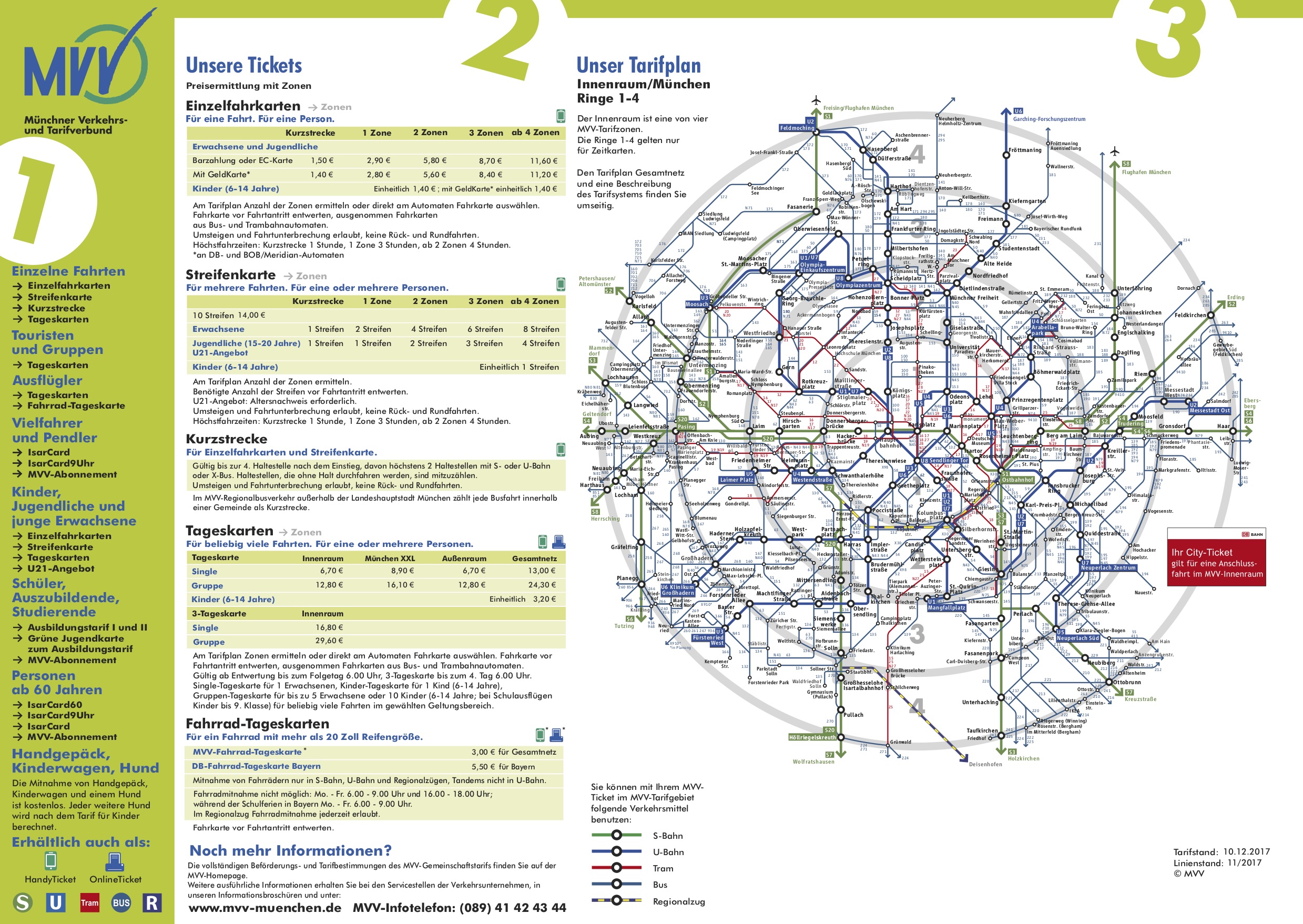
I remember seeing it back then in the subway, looking for directions and feeling really confused about it. "Damn why didn't I get a transportation systems PhD before coming to Germany!"
My 992.2 has AA/CarPlay, and an outstanding user interface, with a nice mix of configurable displays and physical buttons. Fairly certain it is a top 100 product in it's market.
Yes, I think Porsche has a responsive excellent design with their infotainment / button combination though recent SUV / sedan models have moved to capacitive buttons and more touch screen controls and worsened the experience.
Many automakers use them for their headunits (ex. both my Chrysler minivan and my Porshce have HK headunits). The headunit in my porsche is also in some VW models and for the HN crew there are some fun hacks you can do with a usb stick to customize some features, including making carplay fullscreen (tap the porsche app to return to the porsche UI)...
Last month I spoke to a woman driving a Porsche SUV. I was appalled to hear that she is trading it in for a Tesla model Y. I drive a Tesla, and I love it, but it is nowhere near the level of a Porsche. She claims that the model Y is quieter then the Porsche and she loves the self-driving. I advised her to take the Tesla for a long test drive before selling her Porshe, she said that her son in law has one.
That isn't surprising for most people. It is also hard to say without knowing which year and model Porsche she was driving. Someone with a Cayenne Turbo GT will have a different experience from someone with a 1st gen base Macan.
A juniper Model Y is very fast, no engine noise, can drive itself better than a lot of cars on the highway for a similar price, doesn't need gas - convenient if you have a fast charger at home/work, fewer moving parts to think about in your day to day and control.
I like knobs and AA and will never make that trade... but it makes perfect sense for many people who don't mind the interface.
I'm glad Genesis still has knobs and Lexus is getting back to that now. The German luxury cars can't rely on fantastic engines alone forever.
It is true though. The level of porche is in the brand only; there isn't a single porche that is better than a juniper for a daily driver. She's making an excellent choice.
A FSD vehicle is not supposed to require you to keep the hands on the wheel and be prepared at anytime to take over control. I would say Waymo has a FSD mode while Tesla has a death trap mode with its customers as the beta test drivers.
Maybe you shouldn’t drive that day. Tesla is not FSD. In case there is an accident you are the one responsible. Looking on a photo of your dog while Tesla is ramming into someone? Your day just got worse
Yes. Let me just be sure to make only totally rational decisions like staying home instead of going to a friend's house while I'm emotionally distraught while driving. I'm sure everyone out there is able to accomplish that.
Tesla's, along with most other modern cars, have an AEB system, which hits the brakes if the driver is ramming into something.
Also a reason why suvs and their more ridiculous variants picked up so well. People don't need cars that are worse to drive, but sure as hell they want one because others have them.
Tesla historically focused on what marketers refer to as "earned media" rather than "paid media", but it was still marketing. Those Musk and Tesla headlines that happened around the world didn't occur by accident.
That said, they've also been buying ads for the last few years as their growth has sputtered in the face of competition.
My favorite car was a 92 BMW 325IS coupe, standard. It was a simple driving machine. It drove well. It performed when asked. It had room for four, or three plus skiis with half the rear seat folded down. And BMW took a strong stance against drinking and driving: zero cup holders.
I miss that car. I would buy one again in a heartbeat if BMW still made them.
My E36 was fantastic as well. Automatic climate control, heated motorized mirrors, heated monkey pissers, heated power-adjusted leather seats, power windows, power sunroof, dash lights that fluidly adjusted to ambient conditions, two throttle bodies (in series -- one for the loud pedal, one for the ASC+T), and a single-DIN radio that was dead-nuts simple to upgrade properly whilst leaving the rest of the factory system (and its 10 channels of amplification) intact.
That's a pretty long list of things for a simple driving machine.
But anyway:
It came with two cup holders in the center console, BMW part 51168205367. There were two more cup holders in the middle armrest for the rear seat. Two additional cup holders were also available, which fit under the top of the glove box -- BMW part 51168184470.
I loved that car and it was brilliant to drive, but it did not represent a "strong stance" about drinking and driving.
It was a rather complex machine that came fitted with plenty of cup holders. :)
Sounds like you had the north america version. Mine was built in Europe, first sold in canada. It had to be dealer-modified for daytime running lights before being first sold (headlight switch "off" was turned into another on.)
Sorry, that's local vernacular jargon and I should do better to define these terms on introduction of them. ;)
Most people call them windshield washer nozzles, or similar. But I find that they're about as useful for that job as I imagine that a monkey pissing on the window might be, so I find the other description -- while vulgar -- to be a better fit.
Anyway, they're heated on cold-weather E36s. IIRC, it's temperature-activated and independent of the defrost switch.
---
It's supposed to go something like this on a ice-crusted day with an E36:
1. Find the door lock completely frozen and inoperable
2. Lift the outside door handle for a few seconds to engage the lock heater (!)
3. Succeed at unlocking car.
4. Get in. Start the car. Turn on the front and rear defrosters and the headlights. Retrieve the scrapey-thing
5. Back outside, start scraping.
6. Get tired of that and climb back inside.
7. Try the wipers to see how clear the windshield isn't.
8. Engage the monkey pissers, which are probably de-iced on their own by now and flowing freely
I found an add-on cup holder (similar to one I had for my NSX which had none from the factory) that clips behind the inner center console panel and the cup sits on (or near, depending on diameter) the floor. Unfortunately it is expensive for being a 3D printed part that needs better QC (had to sand the changeable cup part) (the NSX one was aluminum) but it works very well.
A better design would be to have a smaller diameter clip-in piece so you can size down when you have a smaller item.
Not a hater, just an example from today’s HN front page: Ableton from Berlin. World class UX/UI leading the DAW market for 25 years and counting. Not “Top 100” enough for validation? Just ask Thomas Bangalter. He’s taken it around the world to get lucky.
Heh, when it comes to audio software, you could throw a lot more in the mix, e.g. Logic Pro, Native Instruments (at least in the past - shame what happened to them) and - arguably ;) - Steinberg among others.
Apple Car and Android Auto are on VW cars since a decade.
Comments about this dreadful UI/UX on german cars feels really decade old.
In any case I rent cars quite often, mostly get Korean, Japanese and German cars with few rare US ones, and I really don't see those differences across the board software wise.
They all suck, they are all slow, clunky and unintuitive.
> Only SAP is or has been featured somewhere below the bottom.
“The company is the largest non-American software company by revenue and the world's fifth-largest publicly traded software company by revenue. In June 2025, it was the largest European company by market capitalization, as well as one of the 30 most valuable publicly traded companies in the world.”
That seems like a good thing. Mostly software doesn't make people's lives better, instead it does the exact opposite. A society that recognizes that, and rejects the people who build it, is ahead of the curve.
Yeah but then you get demolished by the economies who made bank with software and loose a lot of your skilled youth to them via brain drain and are left with an ageing population and high welfare costs with nobody left to pay for it because they all left to work in SW in other countries.
You can't expect the entire population to share your luxury belief. People at the end of the day want a better living.
In a globally competitive environment, there's no virtue, no reward at the end, for dying on a hill as a broke luddite.
Not IT, but I think Leica has the best camera design. At around the Leica M6 they decided that the design was done, and every future M camera is essentially an M6 clone.
Well there’s Bosch. Software wise I salute their home connect initiative which is maybe not the best UX but at least it works locally so either it is good forward thinking software engineering choices either it shows neglected software engineering practices.
In the defense of VW, their EVs launched with absolutely horrible software, but apparently its pretty good now, and its still the same indigenous platform.
And to join in the bashing - I once went to a tradeshow where a software company building infotainment for high end Mercedes cars told me the cars are running k8s clusters with multiple computers.
Not sure if that's the red flag I make it out to be, but it sure doesn't inspire confidence.
BMW's latest infotainment despite being intimidating for first time users is quite decent and intuitive compared to the horrors I saw from other German car makers.
Engineers in Europe are essentially pariahs, a necessary evil for corporations hiring them. Sure they earn more than cleaners or teachers, but not substantially more. Difference between being able to afford 2 visits in restaurant a month rather than just 1.
This means engineering is not attractive and no longer something to build life around.
It takes years of learning, patience, trial and error for not much different remuneration than jobs requiring far less commitment.
Nah, 991.1/981 had the best UX/UI. It used screens for the controls that need to be on screens (navigation and entertainment), and physical buttons for everything else.
There needs to be a screen, but it should be used only for optional features. It shouldn't be required. The 9x1 generation got that. In the 992, you can't even open your garage door without fumbling around with the stupid touchscreen.
Total nonsense you’re spewing here. Especially for it being very country-biased in a world where giants like Volkswagen and BMW are highly international.
For example, BMW tech offices exist in Silicon Valley and Shanghai, among other locations.
German cars have been very well-regarded in terms of their automotive interfaces by the automotive press and reviewers as well as customers.
Watch any Doug DeMuro [1] video and on the subject of infotainment systems and you’ll see that BMW and Mercedes are up toward the top in terms of usability and customization.
You’ll see brands with good technology reputations like Kia refuse to put a GPS map in the gauge cluster while the Germans have been doing it for a decade plus now.
I will also remind us all that Mercedes beat Tesla to market on level 3 autonomy.
The only companies beating the German brands on tech are EV startups in China and companies like Tesla, but of course those companies are doing so mainly because they are replacing physical buttons with that technology, and generally integrating a lot of gimmmicks that are low hanging fruit compared to the things they can’t replicate as well like driving platform dynamics.
[1] I choose Doug DeMuro for this because he’s somewhat “in the middle” on technology. He prefers touch screens over purist physical controls for many functions but isn’t wildly biased toward them or incredibly tech savvy like the kind of person who blindly embraces Teslafication. He’s the kind of reviewer that will miss the “but actually there’s a setting for that” solution for his nitpicks, effectively showing the car as an layperson who isn’t techbrained but also isn’t your dad who wishes the screen was gone entirely.
What are you talking about with “bad range?” I’m not even talking about EVs directly. Two of the top 10 Edmunds tested EV range vehicles are made by Mercedes. The next 10 vehicles include 5 German brand cars.
>And to the haters: Show me any company or product from Germany in IT that is Top 100 globally. Only SAP is or has been featured somewhere below the bottom. And I gurantee you, no one fell in love with its UX/UI
VW? "No one needs Apple Car or Android. We are the world wide Nr. 1 in car business, what does a computer company know about cars? hahaha"
I have no idea what you are talking about. I think all recent VW cars (since 2018) support Apple CarPlay and Android Auto. CarPlay works great with our VW ID.3.
Also, since a refresh a few years ago, the in-car system has had great UX/UI. We are perfectly happy with it and this is after almost two decades of iOS + having tried the systems of various different cars (including NIO).
We do not have anything to complain about, except more physical buttons would be nice, but the latest generation is bringing them back (e.g. the new ID.3 NEO). We are considering upgrading to the ID.3 NEO soon (or maybe Hyundai).
The facelift/software that was introduced with the ID.7 is really good (especially the navigation system with AR HUD), but you kinda have to consider that the HN user population is extremely US-centric and IDs aren't really available in the US, so I don't think it's surprising that the opinions on HN lag behind reality by a couple years there.
Actually... My 2016 Skoda Rapid let's me update the map for free through a user removable SD card. Pretty great UX compared to every other car I've ever had the displeasure of having to navigate with. Software is nothing special otherwise, but gets the job done. Car is 95% physical buttons through.
Also, my 2020 Mii Electric is 100% physical buttons. Pretty great.
Frankly, I am wary of anything but VWAG at this point.
> And to the haters: Show me any company or product from Germany in IT that is Top 100 globally. Only SAP is or has been featured somewhere below the bottom.
Much as people seem to dislike when I say this, but, Europe simply cannot compete anymore in technology and tries to legislate away its problems, which, while sometimes something good does come out of it like the DMA, it does not help long term when there are no good home grown big tech (or indeed, any sector in the top 100) companies of their own.
"Europe" is about 750,000,000 people in about 50 countries. There are huge differences in both culture and economics between one country and another and often even among different parts of the same country. It's probably not a great idea to generalise to "Europe simply cannot compete anymore in technology and tries to legislate away its problems".
One of the main reasons Europe doesn't have a lot of big tech companies is that a lot of its most innovative and successful companies get bought out by the giants in the US before they reach that scale themselves. I expect this is going to happen less in the future because of the recent shifts in opinions though.
Or maybe they leave voluntarily, because the EU is simply not a place to do business? Because the EU has been regulatory-captured by aging tech entities such as Siemens, IBM and SAP?
Mistral, Zendesk, Basecamp, etc. left Europe for the US early on. If we take into account European founders who started their companies in the US right away, the list is even longer.
The EU and Europe are different. 27/50ish (depending on who you ask) countries in Europe are EU member states and they collectively have about 3/5 of the European population.
My own country - the UK - is (in)famously not a part of the EU and I don't think anyone would seriously claim that we have no technological innovation or successful tech businesses here in Cambridge. The city is practically overflowing with tech startups either spun out directly from university research or keen to employ people from the local tech community.
But what tends to happen is that when one of those companies reaches a certain stage the founders will cash out. Not everyone needs to be the next Bezos or Musk. Not everyone needs to see their company of 20 or 50 or 100 people grow to 5000 with international divisions set up before an eventual IPO. Not everyone wants to go through multiple rounds of VC funding and then have to run their company under the influence of the VC's people on the board. There are a lot of founders who would be very happy to take an eight figure payday after 10 or 20 years of working on the business and then have no need to work any longer if they don't want to and the freedom to do almost anything they want for the rest of their lives. I've personally known a few of them. Some did effectively retire. Others later started something new. But one thing I don't recall a single one of them ever expressing is regret over the timing of their exit.
If anything I'd say what is missing here is a culture where people feel the need to carry on past that stage in their startup's growth. And so instead of that successful business continuing - perhaps after some other form of exit for the founders - as a local company that might eventually become big enough to buy up other successful startups we instead see them get taken over by companies ultimately run from the USA because they're the ones with enough resources for an acquisition at that scale. Of course there have been a few that did become much bigger before an eventual exit - ARM is probably the most obvious one locally and for all the tragedies in the Autonomy story it was another - but they are the exception and not the rule here.
To come back to the car business we were originally discussing today - I doubt very much that we will build the next Tesla or BYD or even Polestar here in Cambridge - but I could easily imagine a startup here developing the next generation of car control system and then selling the IP to one of those companies as the exit strategy.
I'm not going to include Russia or Serbia or even Turkey, when talking about European statistics on entrepreneurship, because the EU is the overarching force that dictates widespread European policy. Talented entrepreneurs from Russia or the Balkans go to London or the US to set up shop anyways (my cofounders being an example).
The UK's business policy since Brexit has been largely dictated by factors outside its control, in the hallways of Washington DC and Brussels. The UK is no longer the forcing function on EU business policy that it was before - it's quite frankly the other way around now.
On founder culture and aspirations, it might be fair to say that the social welfare net provided by the EU countries is generous enough that it discourages entrepreneurship, compared to say the US or China or even India. I won't fault the social net ever, but the fact of the matter is that a growing economy is necessary to facilitate a growing social net. But EU policy has been drafted to strongly favor the incumbents over the startups, to favor the Goliaths over the Davids - even if David happens to be a middle market company trying to make its mark. It's also why EU companies in that position strongly favor American partners instead of European ones - Goliaths don't want to innovate, but they want new innovation regulated so that it doesn't hurt their bottom line.
Another factor is that 10 years since Brexit, the EU still hasn't created a viable enough exit alternative that could replace the London of the 2010s. While it's much easier for an American company to go public, EU policy does not make it easy. Which is why founders look at acquisitions or PE as a much more viable route to exit.
> I could easily imagine a startup here developing the next generation of car control system and then selling the IP to one of those companies as the exit strategy.
That's already happening across the EU, and herein is why it's very difficult to create homegrown champions. American companies and Chinese companies are encouraged to control the entire vertical chain, it being a matter of policy in the latter. EU companies have to resort to licensing agreements and a potential future acquisition.
When European Union tries to regulate the influence of US companies in Europe and establish some European digital sovereignty, US government comes to help and applies pressure on European Union.
" “To start a direct confrontation with USA right now is probably not the smartest way to react,” said Christel Schaldemose, the Danish social-democrat lawmaker who led the drafting of the Digital Services Act."
100% agreed. I think it's safe to say that good software UX is incompatible with the way German hardware companies are generally run.
It's the same old story about how hardware companies can't do software UX, except extra amplified because of the strong emphasis on hierarchy, formal degrees and their, errm, heavy processes.
The author is right but his message ain’t specsmaxing, because while somewhat understandable as a rationale what does it actually mean?
In other words: specs can be as detailed as it gets, and this is why developers have a hard time when they face as a senior an NDAed regulated environment. It ain’t software craftsmanship but data flow, hardware components, compliance on the lowest level including supply chains often times, information architecture - a simple app needs to comply to specs that amount to thousands of pages.
Context window: circular reference. A year ago? Specsmaxing by really weeding out any redundant words. Today? Yawn, like with 8mb RAM vs 512 Gigabytes.
AI wants to be easy on us so what is a spec anyway then?
To put it this way: the spec for the spec is constantly evolving.
Last year’s prompts lead to extremely different results today no matter how maxed out.
The author was on point with his introduction: AI is as junior in many ways when it comes to any sort of efficiency and optimization.
This is my revaluation after years of experimenting with AI. Beautiful code, sophisticated but performance wise and its architecture are laughable at best.
AI is not trained on optimization. Not the slightest and juniors have no clue about algorithms and Big O.
In fact Google used Big O as a basic entry level interview question for a very long time. They have to but the simple fact that in my experience 99% of devs never heard or consider it speaks volumes.
AI cannot compensate for that (yet).
I went the opposite and my specs focus heavily on architecture and the obvious dumb performance drains noobs do.
Google was mocked about Big O. And yes, failing to understand that Big O can be neglected thankfully in 99% of cases is part of its logic.
AI bloats your code. And a year long single dev project gets pumped out in hours. In short: a homerun for Big O because it looks on results that change depending on the variables. A function in mathematical terms.
So I think the author did a funny and great job of you focus on Big O if needed. Everything else is not that important because of being open to change and extension.
Big numbers need great architecture.
It screams loudly. And also think about leaks. Before AI I had virtually no memory leaks at all. Since AI NodeJS and React are worse leaking compared to IE 6 and 8.
I mean it.
Big O reduces them significantly, so don’t work around the Elephant in the room.
Architecture and optimization is brutally hard. Google blew my mind in this regard but this is another story of squeezing out even milliseconds out of a build tool used by all. A single dev laughs at it but failed the calculation as well as abstraction.
Apple got so bad with its products, so bad indeed that they took a bet on the low price sector with the Neo and abandoned the powerhouses. It is so funny, because due to the high profit margin as a relative share of the price Apple earns more by selling a few top models than with dozens of Neos.
Tim Cook, the supply chain master leaves house the moment the very reason why he got hired in the first place is in dire straits.
I don’t think that the successor will likely change that, since Cook made sure, no one is remembering Jobs anymore and as top manager won’t pass a reversal of many of his decisions.
So he will lead through a CEO he controls. Only if the new guy takes on the battle in the name of product there might be a chance but this would mean, Cook and the new CEO have to be dismissed. So popcorn times, I think Apple is going to stay as boring as it got, while the quality constantly declines.
This exactly. No other laptop comes close on price for the hardware you get. Yeah you may get more ram in a PC but promise you it won’t feel as fast when you’re using it day to day or have as good of a display or battery life.
In same price range you can get a PC that not only has more ram but also has better multicore performance, better disk speed and better port selection. Yes neo wins on build quality, trackpad, speaker, display and battery life but the PC would also allow you to install any linux distro.
> so bad indeed that they took a bet on the low price sector with the Neo and abandoned the powerhouses
The Neo isn't just a bet on low prices - it's a machine that convinces people they can get away with less RAM. In the middle of a pricing crunch, why wouldn't you ship an 8GB machine like the Neo?
Its a win-win, Apple gets to ship a brand new SKU in volume despite the RAM crunch, and they get to punch into a previously untouched market.
I'm hoping that the success of the Neo and the RAM shortage makes people realise that 8GB should be enough for most tasks without constantly swapping.
That 32GB or even 64GB is considered a minimum to be able to run some word processing, chat app, fetch remote content, and display funny cat photos is preposterous. In terms of information storage, these are absolutely immense numbers.
The infinite treadmill
of chasing for more RAM and then immediately proceeding to carelessly fill all of it at the first line of code is part of a deeper, wasteful, and self-imposed obsolescence process.
We don't need more RAM, we need more frugal software.
I think that multiple truth can be true at the same time without contradicting each other.
As for the credibility: of course this wasn’t a statistical approach at all. Also there was no standardized procedure to allow comparison by factor analysis. Of course you can compare apples with oranges or whatever.
So where to go from here? I don’t see any proof at all. This is proof that AI is infallible? No? A random approach that is absolutely not reliable because of at least being reproducible and reconstructive.
Claude knows what and how? Is it AI or a google search? Discord selling data? Posting on a public forum?
Your style is a fingerprint?
A non deterministic something can generate texts that are identified to be likely personal x - or not. What is imitation if you use auto generated content that is published somewhere somehow? Or others to imitate your style?
I think this is a party trick to scare people. Nothing else. For example image search is way more revealing even before AI.
If there is an uncertainty I would deflect my existence instead of fighting for it. Streisand effect in reverse.
The main problem are weirdos who stalk you or whatever to harm you and rely on AI.
I honestly find it stunning that people with higher education in science topics in just a year deleted everything they hopefully learned at university or school. I am disappointed and feel personally insulted whenever I hear “I asked AI”
Yesterday I talked to another member of Mensa and she is happy about AI so her book project now mustn’t be written by her but AI.
Is no one among us who knows how to do scientifically sound research? I spend countless hours at a copy machine to transfer book pages onto paper so that I could work through it without the book.
I think that it became to easy to draw conclusions based on AI. I worked for a professor and I advised her to not permit Wikipedia as source references back around 2010 because of being to easy. Meta sources vs originals.
We should all not worry about AI, because you prove nothing. There hasn’t been any anonymity at least for 20 years. It just depends on who can reliably identify you.
AI doesn’t. Deterministic behavior aka pattern do. Meta, Google, Apple etc. all know us. I am fine for advertising which is the proof on the one hand.
The only reason I would be worried is state controlled data. This is where the shit hits the fan. Chat control, EU cloud, no reliance on USA aka a prison which observes your every step.
So after a long hand written text: data is your currency. Don’t opt for anonymity but for freedom of choice and the right to be granted certain rights. The information part isn’t the problem, never was. The enforcement part is. And ads don’t do harm, oppression does.
And remember: oppression works best under any circumstances. Freedom is the only antipode there is.
In totalitarian regimes no AI was needed to stage a case against someone who wasn’t in favor of the leaders liking.
In short: freedom works despite no anonymity, oppression couldn’t care less.
And how about being automatically reported to the state for conducting such innocent prompting?
Do you know what saves you from state oppression? Publicity. Transparency doesn’t work with a no one.
We live in a Nietzsche like anti world to a certain extend. You hopefully choose the right thing to do. Or do you want to Streisand your anonymity?
I have internal knowledge, I am closely affiliated with Google.
Infrastructure and scalability has been and is key, as well as technical expertise still absolutely super top notch.
Let’s put it this way: Google is the only company that knows how to find, store and utilize information beyond a specific narrowing. And I mean it really in the sense of curating, compression, long time storage, load balancing as well as compliance and world wide redundancy with a focus on speed and efficiency.
Under the hood of AI is pure engineering genius. Google might be trashed as the Search Engine giant that only displays ads now, but reconsider.
Why does all AI provider except for Google have massive problems with load time, reach, etc? Apple chose Google mainly because of the infrastructure. They eat everyone for lunch here. And they earned it.
Engineering at Google etc. are still the finest you can read about software engineering at the highest level. It is highly impressive how Google managed to not fall behind OpenAI. Who else was able to join the race? Microsoft? No. Apple? Oh well… Meta etc. won’t get there ever.
I think that Gemini is 3rd behind OpenAI and Claude but mainly because Google being Google, they kind of have no versioning for their AI and therefore the results are pretty much random in quality, less predictable than the others.
But the creativity and tooling like Nano Banana - fantastic.
There you have it. People don’t get that it is the infrastructure the moment they complain about Claude outtakes here.
The reason you don't hear people complaining (esp on HN) is because noone is using Gemini with coding agents. Claude Code, Codex (and IMO OpenCode et al with open weights models) are miles ahead of Gemini CLI/Jules/Antigravity/whatever other coding products Google have.
It was paid for through code assist enterprise and had all the flags enabled for the "preview" models. Still the only way to get gemini 3+ was to open and close the application 5 to 10 times and sometimes you would get 3 for a bit and then get dumped back to 2.5 and no matter what you do it would not use 3.
I tossed it after spending like 3 hours total messing around the google cloud console and trying a bunch of shit from the github issues. The other offerings don't waste my time (or waste less of it anyway). If they want me to beta test their shit they shouldn't charge for it.
I noticed early on that Gemini responded multiple times faster than claude and chatgpt do, which is why I use it as my main daily LLM (claude code for coding, gemini for all general queries).
Seconding that, not sure if it's the full take I'd stand behind but the perspective is definitely food for thought and way more thought out than my own.
For the first time I think that devs get a fair warning: you work together with the customer and you are accountable and responsible for where it evolves from there.
Social skills and likability, not being shy and actually enjoy being in the spotlight as well as putting the customer in the spotlight aka selling: this is really a tough call.
I know from having had to translate between business and developers for years in order to keep my developers busy with what they wanted: developing without interference.
Scrum failed so hard in this regard.
Big 5 was always funny to meet. Body selling is the term they use internally and since devs are focused on other things, they always meet me as a tandem: manager as spokesperson plus developer.
I cut the managers off, I speak developer perfectly, and yes, they are socially awkward but technical prowess was the only thing I cared. From their perspective business dudes are weird.
So yes, this won’t take long to either receive tons of money as a - pun intended - full stack forward deployed sales professional who codes or it will evolve into the common shit show consisting of a clueless sales guy and a decent developer having to do as told.
Nevertheless I like the term insofar as it is really a warning sign.
Social skills are the hardest to learn and adapt to.
Brutal, and I mean it.
I essentially did this together with at least one lead developer for years: advertising for our platform.
I went from solo contributor to sales and marketing in 5 years.
But alone? You miss so much.
At least we know that AI didn’t destroy any of the Big 5 and the customers learned nothing. No AI was harmed to get rid of PowerPoint consultants.
SF was exe + source code as zip file. And an admin that made all the decisions and had to for a project,
I do not agree with details, because it was for me before and after git.
So the hidden denominator here is and still is git, which sparked a tooling frenzy with reversing flow by being online server first (it wasn’t named cloud back then).
So even today, all splinters are doing something around git. That hasn’t changed.
What I really miss is the some sort of standardization that GitHub provided for a brief period of time. Projects would get no love aka stars when you couldn’t easily be used even for the experts. Some convenience as well as tooling evolved, devops became a thing.
I think of the future of a concept called cocooning. The JavaScript expert of today would be puzzled to write code on a notepad in a html file, because it has become so meta, being TypeScript essentially.
There is so much tooling going on that especially Python before AI already felt like I would miss something out if I would code more than 100 lines and that there must be libraries that abstract this all away and instead of coding I should google better.
AI is one thing, but the cluttered tech stacks aren’t really sparking any interest or joy in me, I think it is the not invented here syndrome or because I can story.
I miss the die hard coders, who stick to a tech stack which simply worked, not optimizing for weird use cases which are contrived at worst and rarely needed at best.
This became evident with the decline of data sheets, because Grunt, Gulp etc. as build tools were great but slow. We JavaScript devs couldn’t any longer joke about the compile times of the Backend dudes. And besides that, build times costs you focus, money, cpu time. But this was the main currency.
With AI I stopped trying out lots of tools because they feel like a weekend project by some dude who blasted his Claude budget.
Over are the fork and commit wars. Until AI battles itself this hard for quality source code I will stick to GitHub.


I had a very hard time simply using and even utilizing C++ or Java.
C and Turbo Pascal especially was easier because the compiled code was very much resembling to hand written code.
As the author described, you can do in 4.000 lines what others can do with way less pain in 100.
So you build macros, come up with your own library and in the end you kind of build a meta language build on top of assembly because some lines are so hard to grasp that you delegate working code into a library for reuse.
It is funny how much we take conventions for numbers for granted. If you happen to know assembly and its intricacies you immediately will learn to work with a sign bits which mark negative numbers. But how do you know? Maybe you use the whole addressable space only for positive numbers.
Small things that make a huge different.
Nice article, I enjoyed your adventures and would do the same.
reply