Apple RAM prices always had quite a bit of margin though, I think they charged around 4x the going market rate per GB (that said you can't fully compare their RAM to a loose DIMM stick). I was planning to pick up a new Mac Studio this autumn, now I'll have to see if I can afford it, though I have been spending 1,000 USD on LLM subscriptions in some months so I guess even a 10,000 USD Studio Mac amortizes quite fast if it allows me to run coding models locally.
I would wait until the next Mac Studio. Rumors are it will have 768GB max memory and with the M6 Max chip, even faster prefill. I feel like it’s the endgame.
Probably will be but I have a feeling the days of $20 and $100 coding plans are winding down. Now that people are so used to using agents, they will raise prices and tighten their grip. At $20k, I might be tempted.
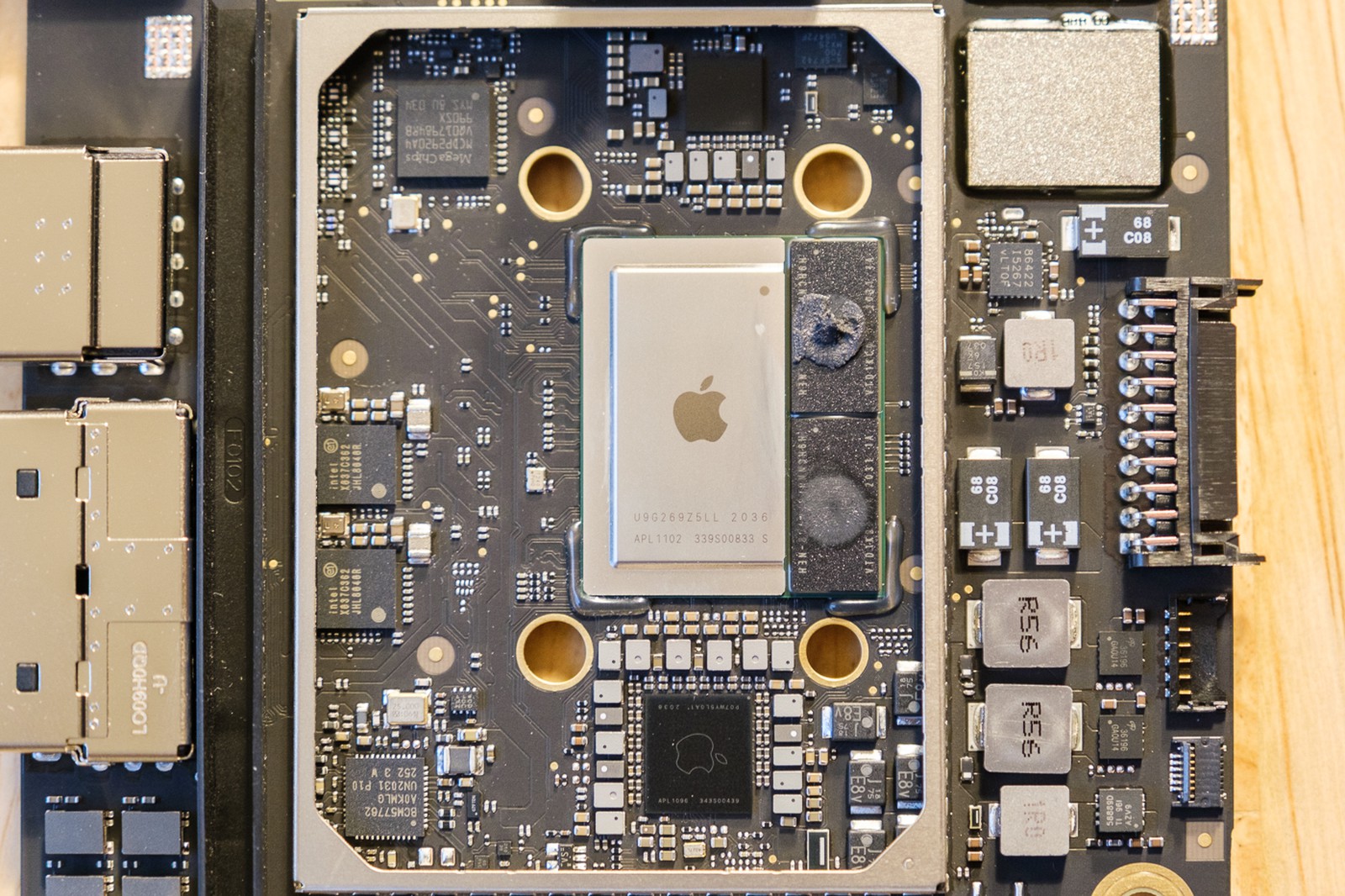
IIRC modern Apple devices integrate the memory into the whole SoC instead of making it separate on the board and replaceable. It's definitely not swappable like a DIMM or CAMM module would be. Can't find a photo of a decapped M4 chip to prove it, though...
Everyone always wants to charge as much as they possibly can, and if SK Hynix would be the only manufacturer prices would be 10x of what they are today. Especially new incumbents will not ruin the market prices as they have the highest upfront cost and their calculation of entering the market is probably based on the high prices that can be achieved. In the long run, more competition is still good as everyone ramps up production to profit more from the high prices and at some point supply will outpace demand and prices will fall (assuming no cartel / price fixing is involved).
It's the ultimate power user desktop system, in my opinion it even dwarfs MacOS in terms of how you can customize it and how it looks. It left Windows in the dust a long time ago in terms of functionality and usability (not that this would be particularly hard given how Windows has been degrading over the last decade). Everything is super snappy, smooth, built-in apps like Konsole and Dolphin are super polished, Konsole runs circles around the MacOS terminal app.
Of course running Linux on modern hardware is still a bit fraught with errors, though it has been getting much better. I run a current gen Thinkpad X9 Aura and apart from the webcam which has fundamental driver issues on all Linux kernels everything runs really well, power efficiency is also great at around 10W, not as good as a MacBook (which I also use daily) but close enough for me, and I still prefer Linux over MacOS any day.
Ironically KDE version of COM (KParts and D-Bus integration) is so much easier to use, I don't get why some folks at Microsoft always double down on making it so hard to use from C++, when it is the main API surface since Vista.
Interesting that you call out konsole because I think the UI is horrible, perhaps the worst KDE app. The defaults with multiple toolbars are the opposite of what I want in a terminal and the context menu is stuffed with dozens of irrelevant options like char encoding, which I’ve never changed over a thirty year career.
It’s cluttered enough that even though I prefer a GUI preference dialog, I’ll use e.g. alacri/ghost/ki/tty instead.
It's a positive and a negative. I use Konsole daily and have all the toolbars hidden. Every so often if I need something I toggle them on with Control + Shift + M, but it's once in a blue moon that I need that.
I've tried Kitty and Alacritty but the fact that you have to dive into the config file for everything right when you're starting out with the terminal was just not worth the time investment in my eyes.
I think it should be noted that there was a lot of dissatisfaction from users of the census data as far as I know. So it's not been banned just for politicals sake or because they hate privacy... Some people I talked to in the privacy field even called the whole thing a total disaster and weren't shy to put blame on John Abowd who apparently pushed this through despite a lot of internal opposition and concerns. Not sure if that's true, but what is definitely true is that the way the data was released produced serious issues downstream as most researchers and statisticians that ingested the data weren't prepared for receiving noisy data values. Differential privacy was applied in a way such that many invariants that data users cared about weren't preserved, which was expected as it's not possible as you can't preserve all invariants and at the same time add meaningful noise to the data. The thing is, with such a differentially private data release you need to adapt all of the downstream analyses to take into account the exact mechanism the data was altered in. And since the census bureau used a very intricate mechanism that didn't just add Laplace noise to data values but instead relied on a multi-stage process that preserved some invariants but not others it was very difficult to even write routines to account for the changes being made to the data. They essentially asked of every data user to rewrite their whole analysis pipeline based on the exact disclosure mechanism that contained a large number of bespoke choices regarding which data invariants to preserve and basically produced a mix of noisy, synthesized data that was just really hard to reason about. I don't even know if there even would've been a way to do this better, but the fact is that not every small county or school district has top-tier statisticians at hand that can just read a whole monograph on differentially private synthesized census data and then hotpatch their existing analysis systems to work with that data.
I was a big fan of differential privacy but now I think it might be doing more harm than good, as I haven't seen a single case where it was applied successfully in a problem where it actually mattered, and it contributed strongly to discrediting and preventing a lot of work on other anonymization techniques as it was deemed the only way to preserve privacy by the research community, so showing up with enhancements to k-anonymity or any other noise mechanism not rooted in it was a sure way to get ridiculed and ignored. And it's just not a practical mechanism, even when it works for a single disclosure you always end up having to blow up the privacy budget to a ridiculous amount in order to keep disclosing statistics as otherwise you would for almost all real-world data run out of budget after a few publications.
So, for me it's a technique that works in the areas where it doesn't really matter (publishing highly aggregated statistics that pose almost zero privacy risk even without differential privacy) and doesn't work in other areas where it would actually matter (publishing fine-grained data about individuals or small groups). There are some niche use cases but in my view the privacy community has really overblown the importance of differential privacy by portraying it as the only way to reliably anonymize data.
BTW the German census bureau has an interesting approach to anonymization which they use for several decades already and so far I haven't heard of any cases of successful de-anonymization of the data, maybe the US bureau should have a look at that for their own needs.
Of course there will be dissatisfaction from users of the data. Anyone that wants to use census data will prefer less privacy in the data. And anytime privacy is enforced the data becomes less useful. It would be certainly very convenient for both advertisers and gerrymandering political consultants to have detailed data on every citizen.
As the article says anytime you want to enforce privacy, the data becomes somewhat less useful, there is just no way around that.
The point of rights is that we have them and that they should not be trampled upon when they become slightly inconvenient to someone in power.
Are you sure about that? You are saying that differentially private census data couldn't be used for gerrymeandering and advertisement while non differentially private data could? Hard to believe, I'm not an advertisement or gerrymeandering expert but I would assume people running ads or cutting up districts are mostly interested in aggregate statistics i.e. they won't care about single households? And I would assume they can rely on voter files, party databases etc... And to the contrary there are reports [1] that indicate differential privacy actually makes gerrymeandering analysis more difficult or impossible. So, not really an argument for differential privacy, discriminatory action can be equally well taken based on differentially private data as the government cares about groups not individuals and groups aren't protected by differential privacy. It seems people really fundamentally misunderstand what this technique can achieve and what it won't do.
> You are saying that differentially private census data couldn't be used for gerrymeandering and advertisement while non differentially private data could?
They definitely didn't say that. You said that. And you said that because you would prefer to argue impossibility vs. possibility rather than more useful vs. less useful. You prefer this because for the first irrelevant question which no one asked (it is possible to use current census data in bad ways), you are obviously right; and for the second, relevant question (would allowing this data make it easier and far more useful for gerrymandering and advertisement), you are obviously wrong.
> for the second, relevant question (would allowing this data make it easier and far more useful for gerrymandering and advertisement), you are obviously wrong.
Really? Why? When has gerrymandering ever relied on identifying individuals? Have any advertisers ever tried to use census data to identify individuals? That strikes me as highly unlikely - they are gonna use Facebook and Google, not some government database they’d have to deanonymise.
> serious issues downstream as most researchers and statisticians that ingested the data weren't prepared for receiving noisy data values
They weren't prepared for data that was obviously noisy. The data has always been inherently inaccurate, and folks just chose to ignore that previously
No, there are dozens of articles discussing the mechanism and explaining the impact it had in different areas e.g. [1,2,3]. And the release mechanism wasn't just "add noise", far from it, you may read the original paper [4] to see how intricate it was, anyone wanting to make real use the resulting data would have needed to understand that approach in detail to work with the resulting data. The report of the national academies [3] is probably the most comprehensive analysis of the mechanism and the complications it introduced, so writing "it has always been inherently inaccurate" is just wrong, this new mechanism was way worse than just introducing unbiased sampling noise.
Can you point to any "great" projects on Lovable that would actually be useful as full blown SaaS software tools? Stuff that has been written/prompted by non software experts?
Please try to read my message again. I never said the things you're implying I said. I literally said not gonna replace all, and low effort low risk stuff.
Do you think that not even 0.00001 projects on those websites could have been a good payday for a software engineer/team? Do you think what took 3 people before for a low effort saas is not going to be done by 1 person now?
You're phrasing of "could have been a good payday" makes me think about why people pay for software at all. The bread and butter "quick job, get paid" gigs in software were always circumstantial and depended on humans understanding customer needs more than anything, and combining it with their own desires to grow in mastery of their work.
I'm reminded of the 'faster horses' remark from Ford - since AI by design produces what it thinks we are asking for, how will anyone know who to pay for true innovation?
Yeah Fable 5 is good but feels incremental and overhyped, also burned through my entire Cursor allowance in my Ultra plan in a single day. Ridiculous. They just want to create FOMO and appear mysterious so companies and users will feel so special for being allowed to use this model and pony up more money. After all they have to grow a few order of magnitude to pump their IPO valuation as much as possible, so I think this is just a strategy to justify their increased token pricing which starts to become absolutely insane. 10-20k per month per developer, do companies really think that's a good way to spend their IT budget? I assume 99 % of software shops wrtite run-of-the-mill web/mobile/desktop apps or some legacy backend APIs and CRUD code, you don't need a superintelligence to crank that stuff out. It sounds so ridiculous to have a model that supposedly can design biological weapons and then 99 % of users vibe code spaghetti Javascript with it. But the spice must flow!
Well you can just scale your AI employees up and down as much as you want. Companies already pay a large premium for freelancers just to be able to fire them on a whim, so spending 5-10k a month on something that more than doubles the productivity of a senior developer might be well worth it as you can just adapt spending based on your business needs. If you can deliver a feature that lets you write a 100k invoice with 10-20k of tokens within a month or have a senior dev crunch that out in 6 months instead I think it's clear who wins. It's all about money and the AI companies know that, they have their pricing down exactly to sit in the sweetspot where it hurts just enough that companies can still afford it but not enough that they would look for cheaper alternatives.
I mean even cheap keycaps won't wear out for many years for most people, so I don't think quality is a big factor. I got tons of keycaps from Ali Express which are just as good as the high quality stuff, in fact most of them are made on thre same machines...
So not sure if that was really the issue, people ordered keycaps because they liked the design, e.g. the Dasher MT3 set was super popular due to a similar one being used in the "Severance" show.
Keycaps were the expansion that came after the era of group buys and keyboard/headphones/audio/EDC curated niches. I'd say because the preceding eras weren't sustainable.
If you think about it, keycaps makes sense strategically. They're cheap and small enough for hoarding, with a wide range of easy customization, with all sorts of trends that could be capitalized on for seasonal/repeat customers, they also last basically forever and are light so it's dirt cheap to ship. All for probably 90%+ profit margin.
Why grind away at heavy, expensive, complex, fragile, or specialized hardware for thin margins when you can ship colorful plastic at high markup? Sell the disposable personalized accessories to the hardware: keycaps, cases, dongles, cables, straps!
Well, customers like you wise up and cut out the middleman and buy straight from the source. If there's a profit to be made for those things, almost anyone can make those things for niche sized demand.
Seems like Corsair is taking it one step further, why even have a quality/niche hardware base? Just do trendy accessories or modifications to commodity hardware.
This is really cool! I am trying to find a way to accelerate LLM inference for PII detection purposes, where speed is really necessary as we want to process millions of log lines per minute, I am wondering how fast we could get e.g. llama 3.1 to run on a conventional NVIDIA card? 10k tokens per second would be fantastic but even at 1k this would be very useful.
Yeah I mean we have a mechanism that can bypass AI models for log lines where we are pretty sure no PII is in there (kind of like smart caching using fuzzy template matching to identify things that we have seen before many times, as logs tend to contain the same stuff over and over with tiny variations e.g. different timestamps), so we only need to pass the lines where we cannot be sure there's nothing to the AI for inspection. And we can of course parallelize. Currently we use a homebrew CFR model with lots of tweaks and it's quite good but an LLM would of course be much better still and capture a lof of cases that would evade the simpler model.
For that you only need high throughput which is much easier to achieve compared to high latency, thanks to batching -- assuming the log lines or chunks can be processed independently. You can check TensorRT-LLM benchmarks (https://nvidia.github.io/TensorRT-LLM/developer-guide/perf-o...), or try running vllm on a card you have access to.
People with such strong beliefs can be unpleasant to work with as well. Not saying you are, but there are often considerations beyond the immediate needs of developers that dictate tool choice in a company, and I find it not great if people complain about such minor inconveniences all the time (it's ok to discuss to some degree, but not in an overzealous way). Same goes for tech stacks, frameworks etc., I avoid hiring people that express extremely strong views (e.g. "JS is utter garbage") as they tend to be difficult to work with since they drag the team down with endless tech stack discussions and make others feel bad/inferior.


reply